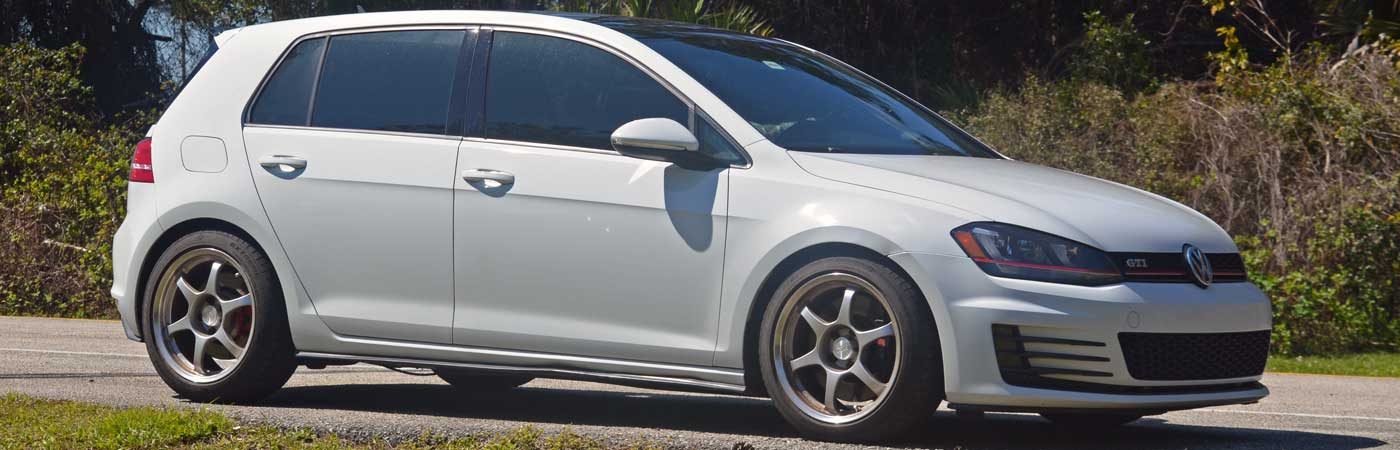
Background:
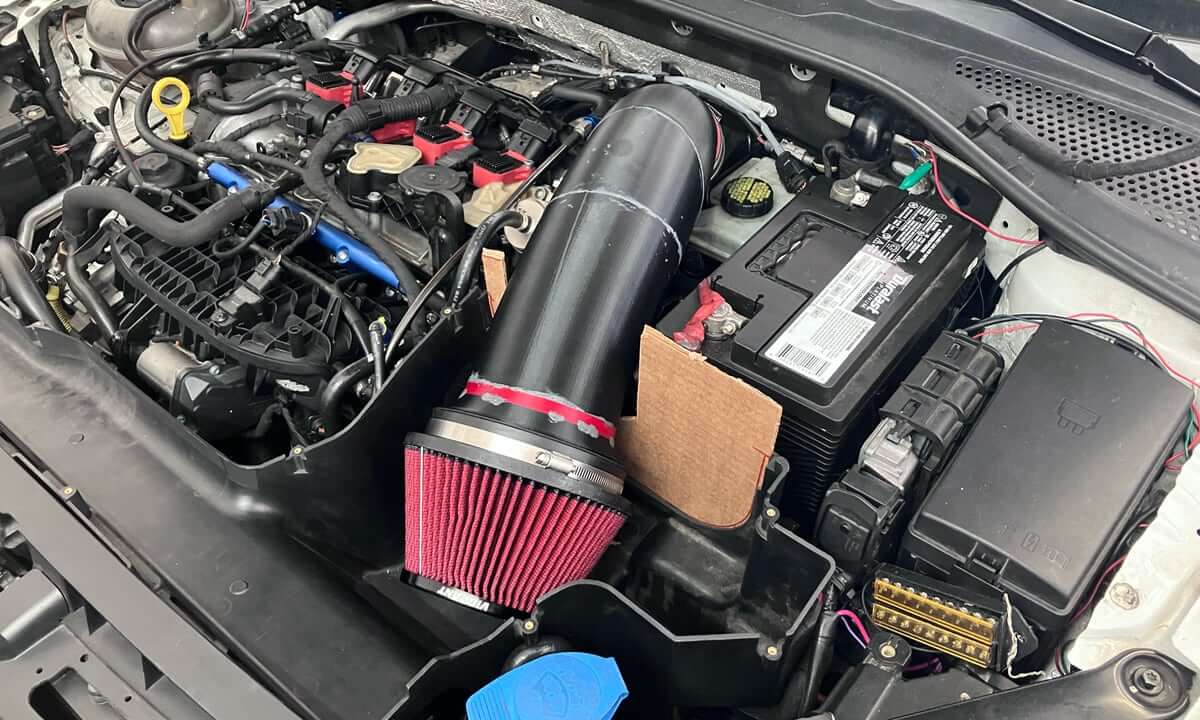
The latest update to the MGM7 intake was printed using ABS, which is more durable and heat-resistant than the PLA I usually use. The change was made because I planned to test-drive the intake, and the heat in the engine compartment might cause issues with the PLA version.
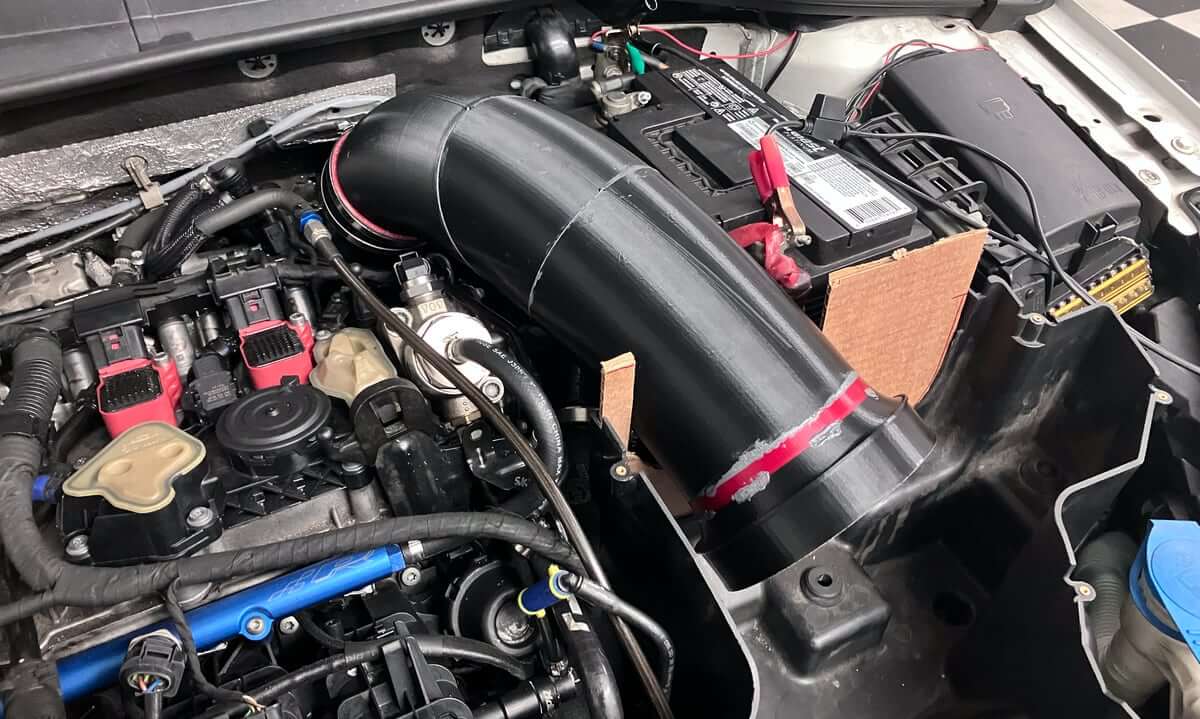
It fits inside the engine compartment well, and I fashioned a heat shield out of cardboard to help reduce the amount of warm air from the engine compartment being drawn into the air filter.
I’m using the lower half of a Racingline R600 airbox to avoid designing an enclosure for the MGM7 intake. This is saving time, but the MGM7 intake isn’t a good fit with the airbox.
Flow Test:
I conducted a flow test on the intake and elbow to compare the latest version with previous designs.
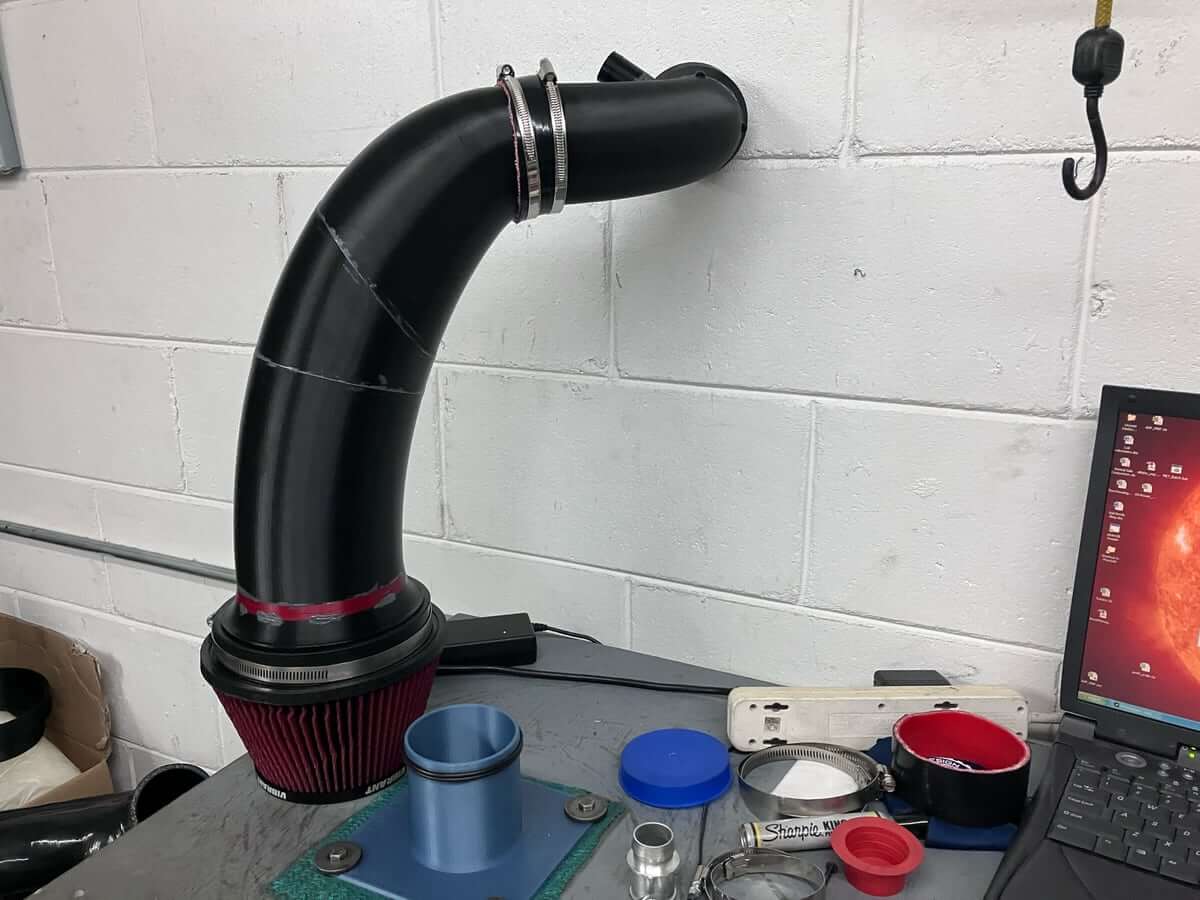
The shorter Vibrant air filter is being used, which performed well in a previous test compared with the taller Vibrant air filter I’ve tested with before.
The intake setup is being tested at 16″ of H2O.
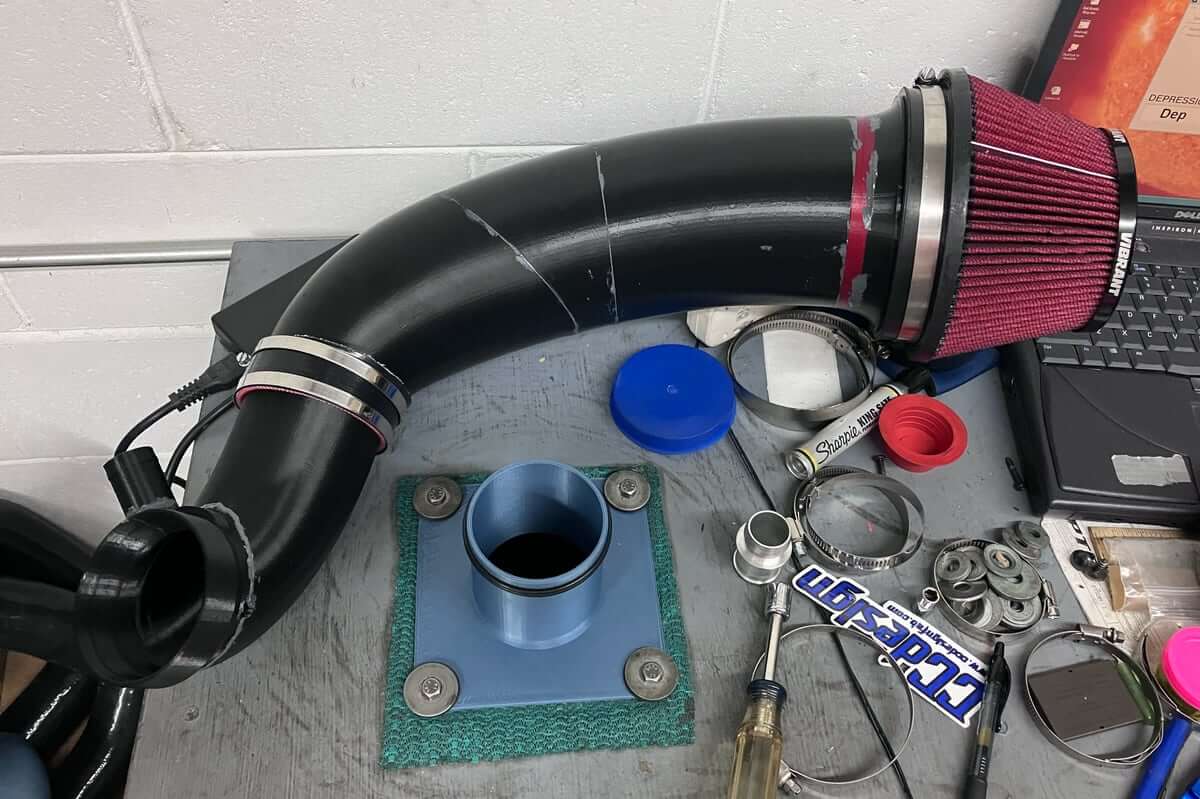
Airflow was measured at 578 CFM @ 16″ of H2O, which is comparable to the highest flow rates I’ve measured using other versions of the MGM7 intake and elbow.
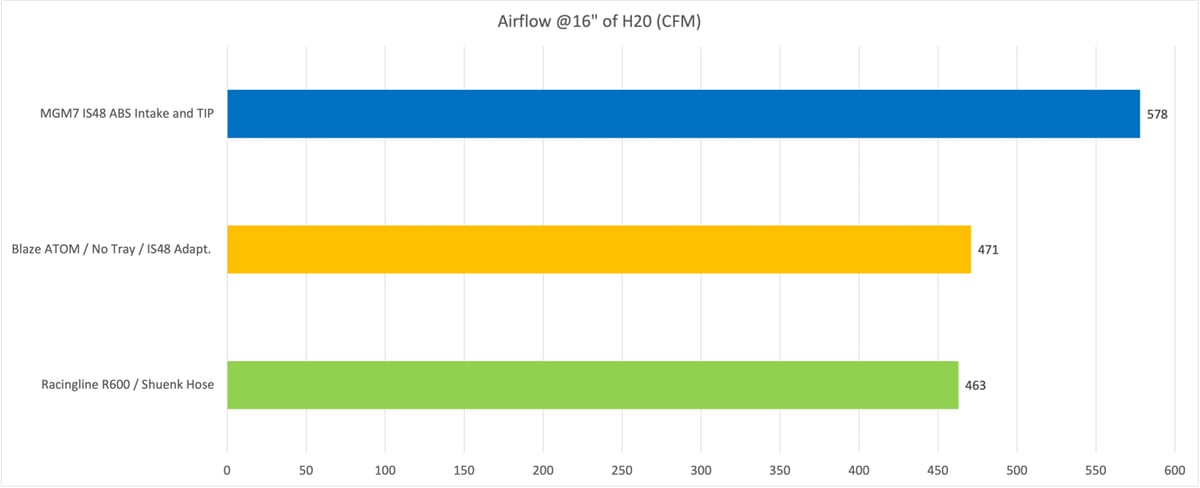
This flow rate represents a 23% increase over two popular commercial intakes.
Test Drive:
Next up was a test drive to log the car and compare it with the same vehicle configuration, except for the new intake.
Datalogging is being performed using the Shuenk IS48 turbocharger with a 93-octane Russell Road & Racing tune.
There was a slight decrease in the turbocharger wastegate duty cycle by approximately 4%.
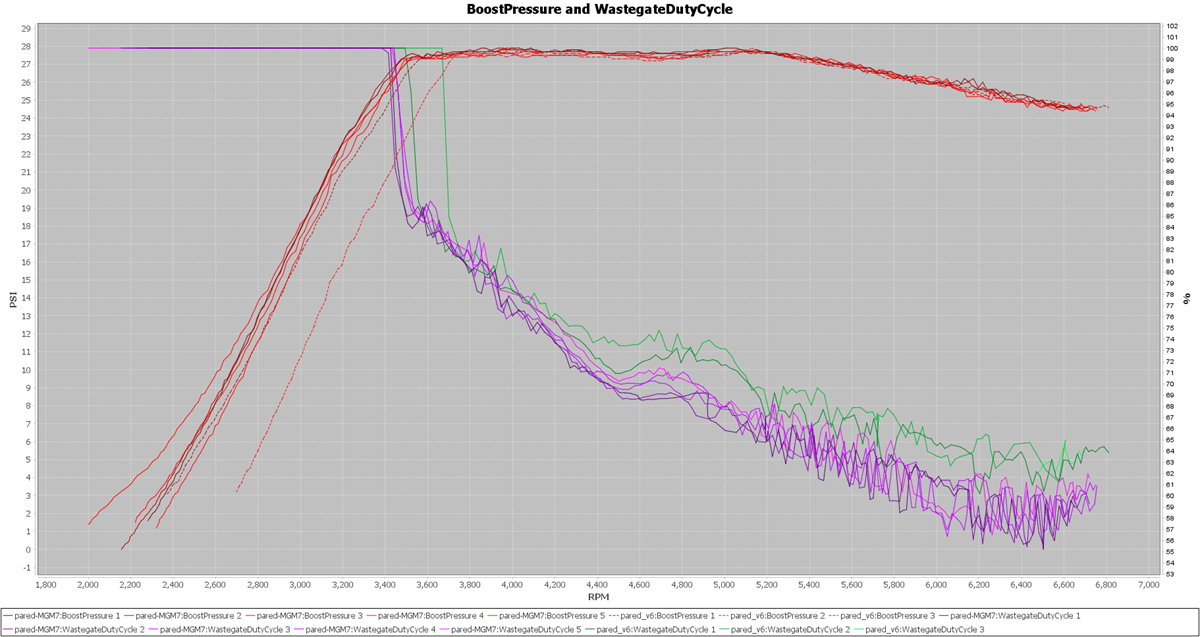
While the intake helped turbocharger performance a little, I doubt it will translate to a noticeable power change with the 93-octane tune, even with a tune revision.
A weakness of the PCV port design was revealed when the port broke along the JB Weld expoy seal.
I made the PCV port separately so I could orient the part during printing to achieve a very smooth surface. Since the part fits with the PCV hose using an o-ring, to hold vacuum, I had prioritized the smooth surface finish.
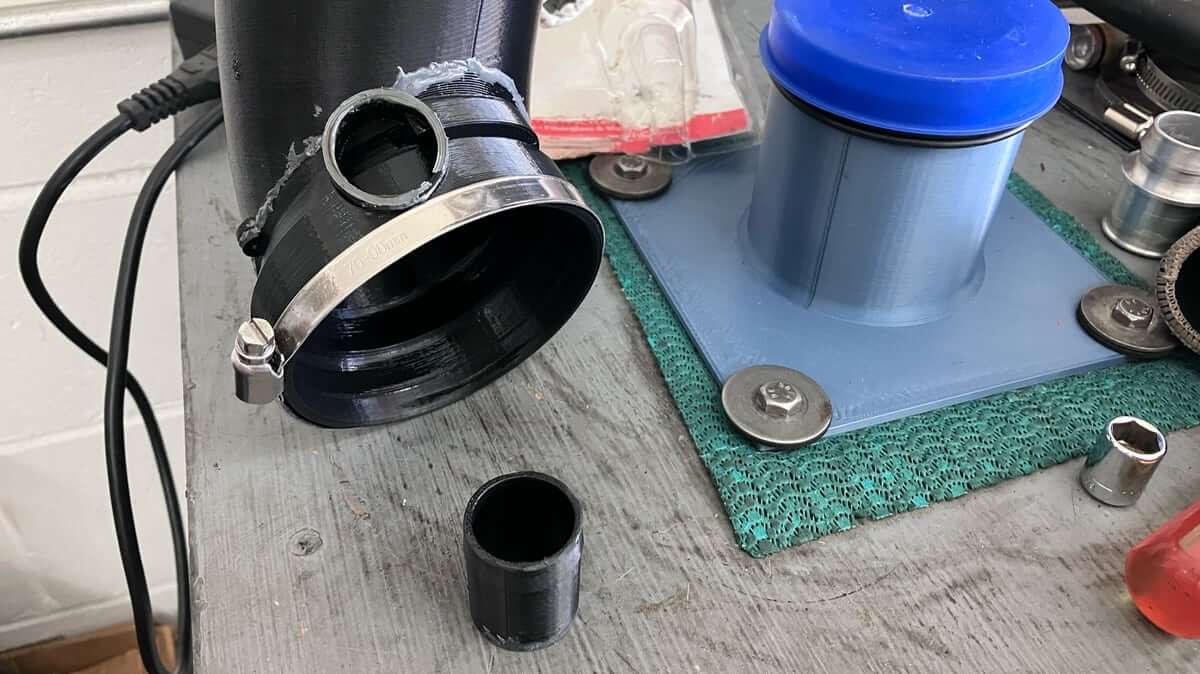
At the time of design, I had considered making a slip fit, where the PCV port would slide into a larger diameter base piece, but had thought the epoxy, along with the design of the part, which is angled in a way meant to minimize stress, would hold up – but that was not the case.
Conclusions:
The MGM7 intake and elbow had a successful test drive. Some performance increase was measured using a 93-octane tune, making around 25-28 psi of boost pressure.
I have lingering questions about how the intake will affect performance at higher boost levels, where more wastegate duty cycle is needed from the turbocharger.
The MGM7 intake and elbow flow significantly higher than some popular commercial options, but the operating demands of the IS48 turbo with an IS38-equivalent boost level might not require more capacity than what the commercial intakes offer.