

Introduction
In February 2026, EQT announced a new engine and transmission mount kit for the MQB platform. The product bears striking visual and specification similarities to Black Forest Industries’ established mount design.
When a consumer called this out publicly, EQT’s owner Ed Susman responded. His response is worth examining carefully — not just for what it says about the mount situation, but for what it reveals about how EQT develops and markets its products more broadly.
This post reviews the visual evidence, tests Susman’s specific claims against that evidence, and places both in the context of documented patterns across EQT’s product catalog and communications history. Everything cited here is drawn from publicly available images and statements.
What EQT Is
Equilibrium Tuning is primarily a catalog reseller. Most of its hardware catalog consists of established third-party products sold under their original brands. Its turbocharger lineup carries the EQT label but is sourced from Asian manufacturers. Its core offering — ECU calibration — involves modifying tables within Volkswagen’s licensed Continental Simos 18 engine management software, which Susman resells under the EQT name.
Susman’s documented professional background is in web application development. His LinkedIn work history lists no mechanical engineering experience. This is a relevant context when evaluating claims of independent hardware product design.
What Independent Engineering Looks Like
The Mk7 engine mount market contains several competing products, all solving identical vehicle fitment requirements. Looking at them together is instructive.
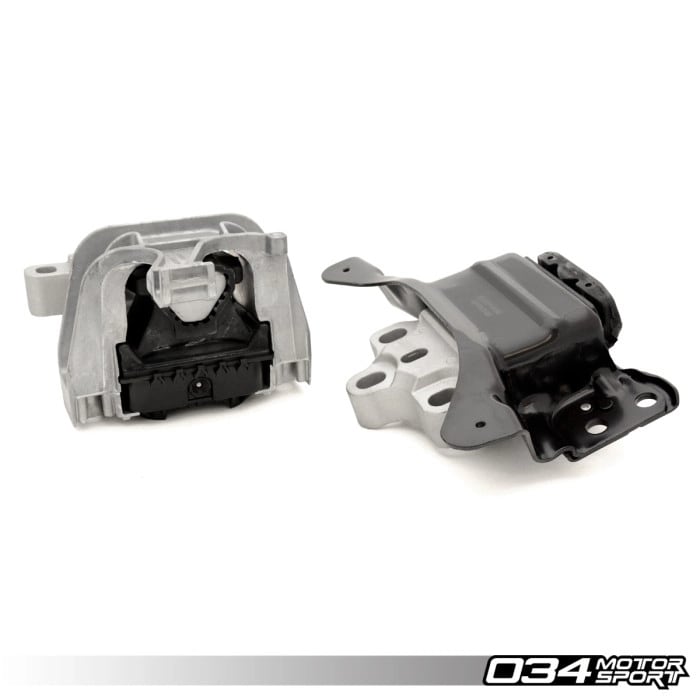
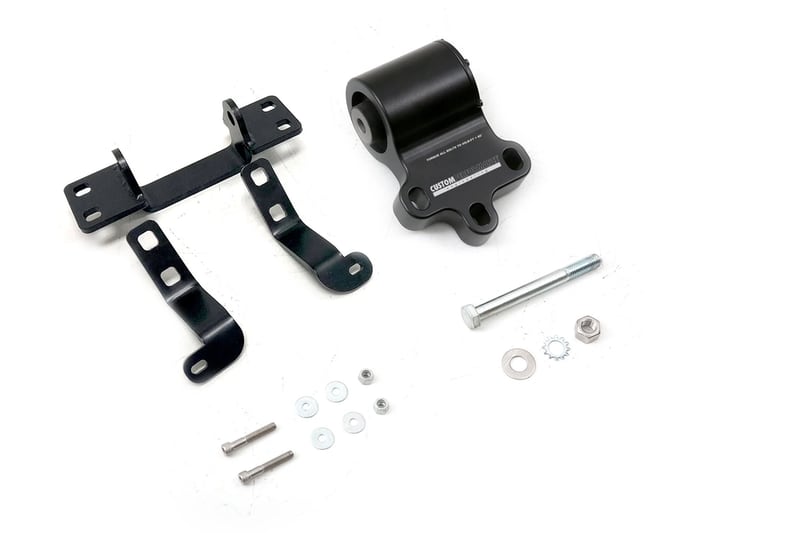
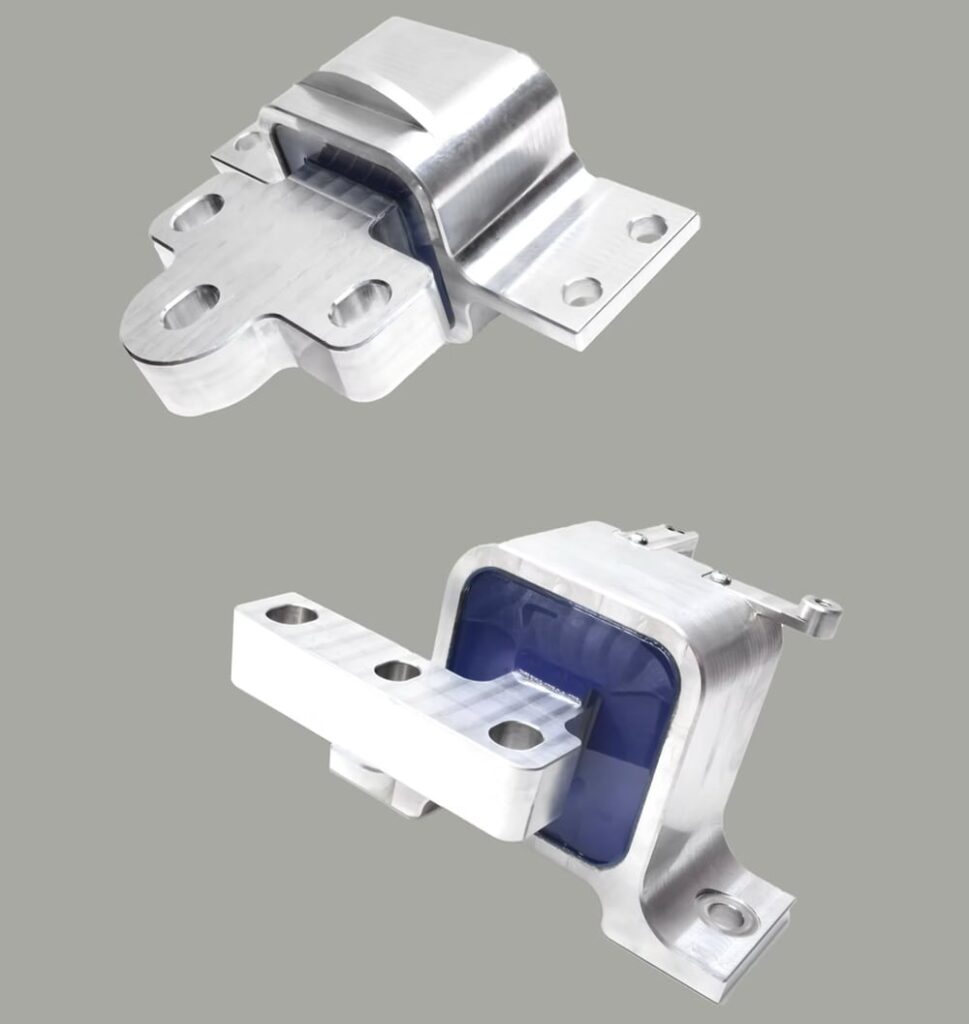
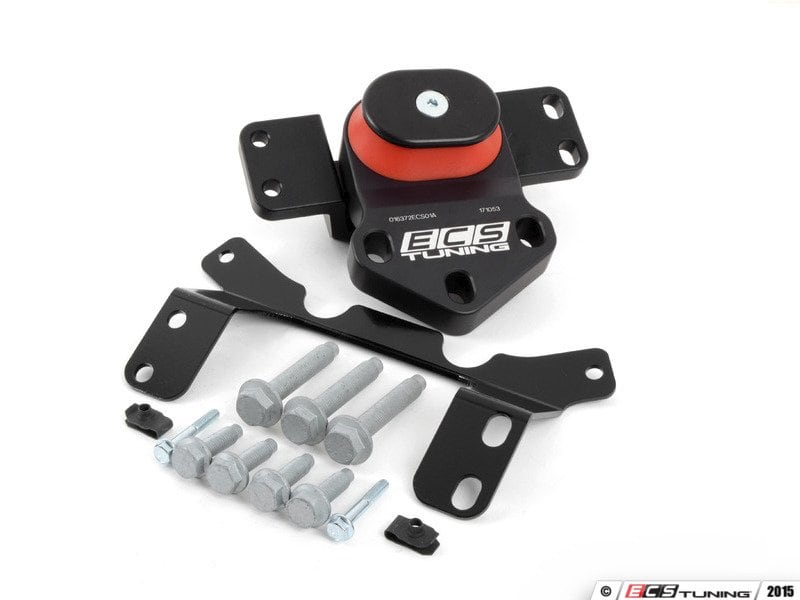
034Motorsports retained OEM-derived geometry. CP-E used a separate cylindrical bushing in a two-piece bracket system. Racingline went fully billet CNC with solid polyurethane fill. ECS Tuning chose a round puck insert in a symmetric flat-plate carrier. Each team, working independently from the same fitment constraints, arrived at a visually distinct solution.
This is what independent engineering looks like. When multiple teams solve the same problem without sharing work, they diverge — because many valid solutions exist. Keep this baseline in mind when evaluating what follows.
The BFI/EQT Mount Comparison
Below are the BFI engine and transmission mounts alongside EQT’s announced product.
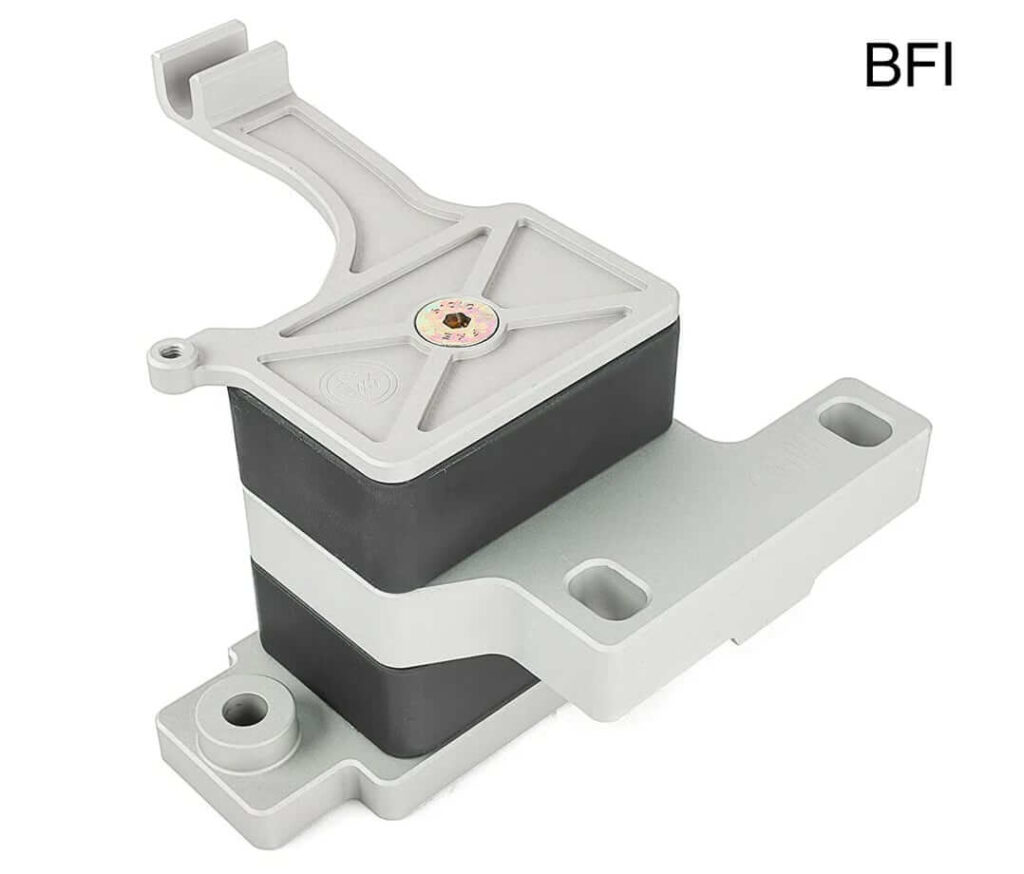
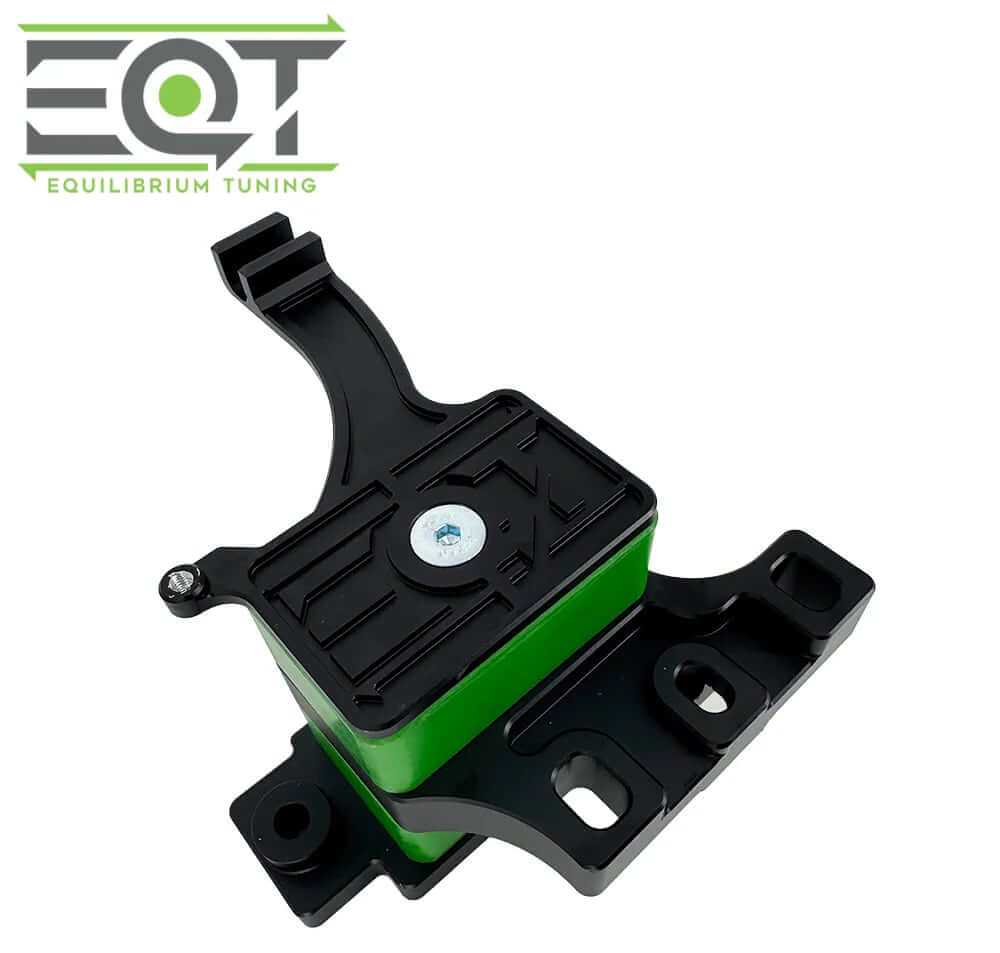
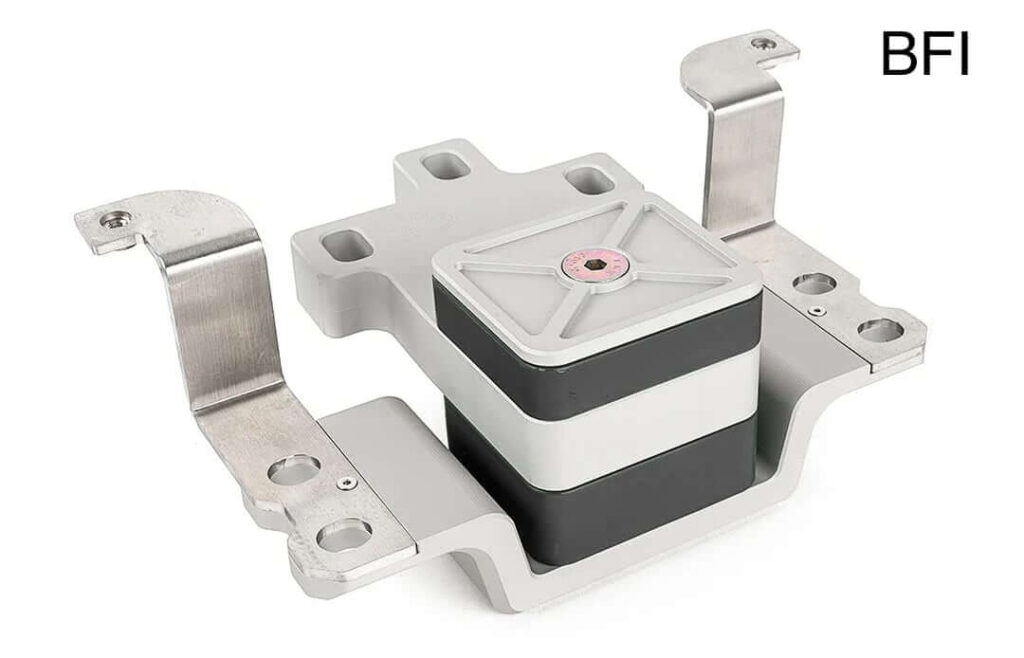
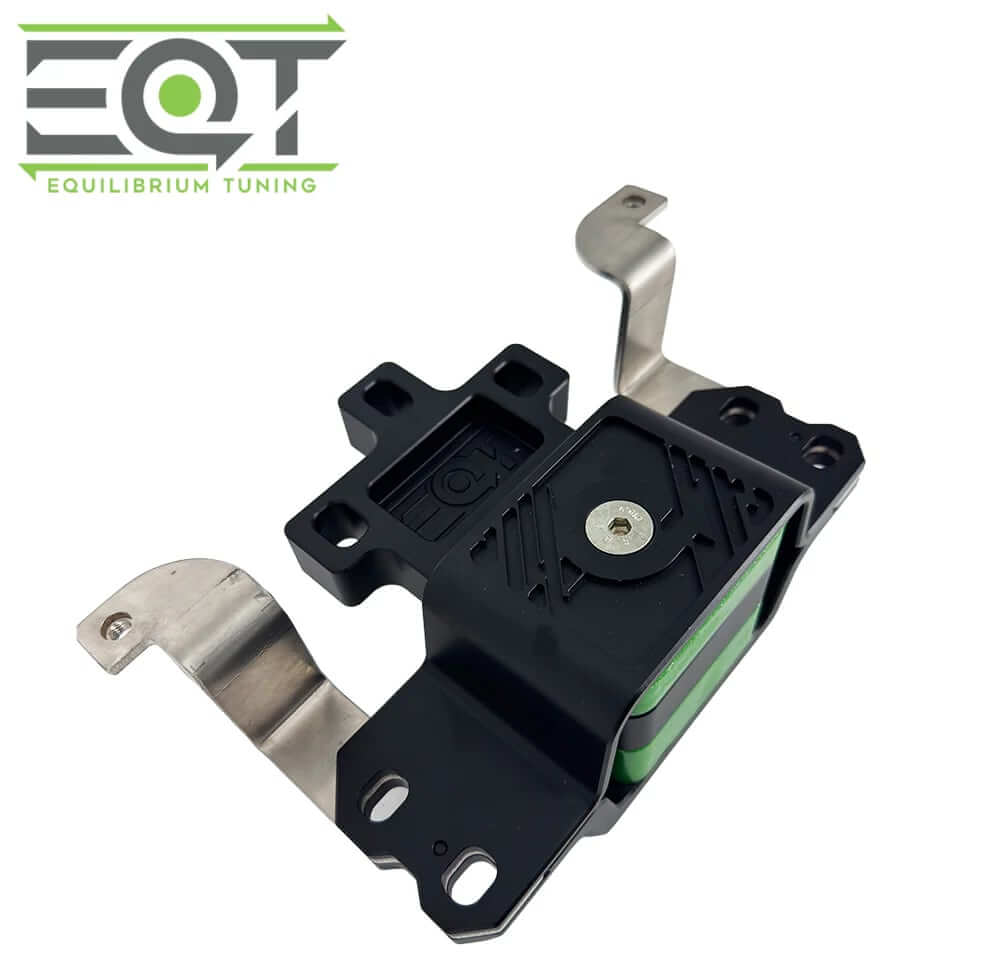
A comparison of design features — rated by how much design freedom each feature has — produces the following:
| Feature | Design Freedom | BFI | EQT | Match? |
|---|---|---|---|---|
| Upper bracket arm sweep profile | High | Asymmetric curved sweep | Identical profile | Yes |
| Rubber/aluminum insert stack format | High | Layered sandwich | Identical profile | Yes |
| Insert footprint dimensions | Medium | Square | Square | Yes |
| Center fastener placement | Medium | Top Center | Top Center | Yes |
| Stainless wing bracket profile | High | Curved sweep, specific span | Identical profile | Yes |
| Rubber durometer specification | None — free choice | 70A | 70A | Yes |
| Color scheme | None — free choice | Silver/gray | Black/green | No |
| Surface branding/texture | None — free choice | BFI logo pattern | EQT logo pattern | No |
Features with high design freedom — where many valid alternatives exist — carry the most evidential weight.
The upper bracket arm sweep on the engine mount is the single most significant data point. It is a distinctive, functionally unconstrained shape that appears nowhere in the competitive landscape except on these two products. Color and branding are the primary observable differences. Those are not engineering decisions.
The matching 70A durometer compounds the visual evidence. Durometer selection involves a tradeoff analysis between NVH characteristics and power handling. It is not a value that fitment requirements dictate. Both manufacturers arrived at the same number.
The Advertisement
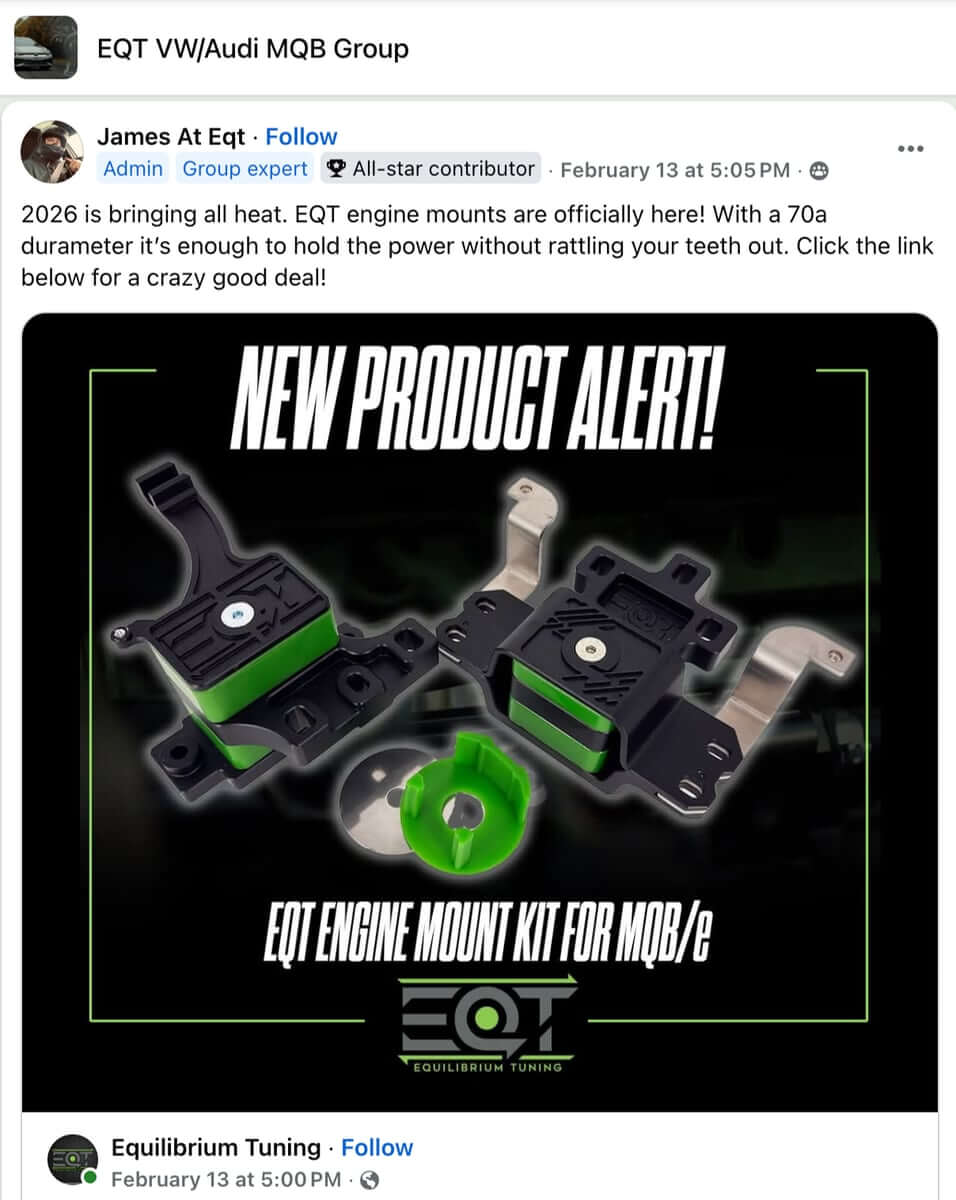
EQT’s announcement described this as a “New Product Alert.” A buyer viewing this advertisement has no basis for knowing the product’s relationship to BFI’s established design.
Under FTC advertising standards, omitting material information that would affect a consumer’s purchasing decision is a deceptive practice. The provenance of a product (source, origin) — particularly when it closely resembles a direct competitor’s established design — is material information. It was not disclosed.
Susman Responds
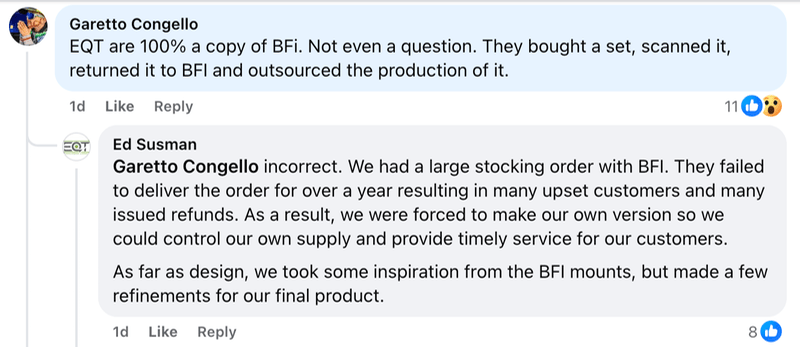
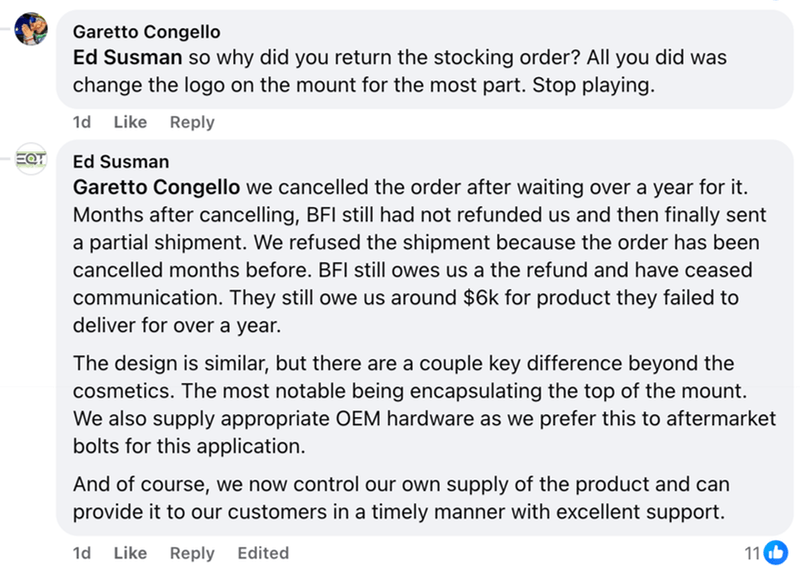
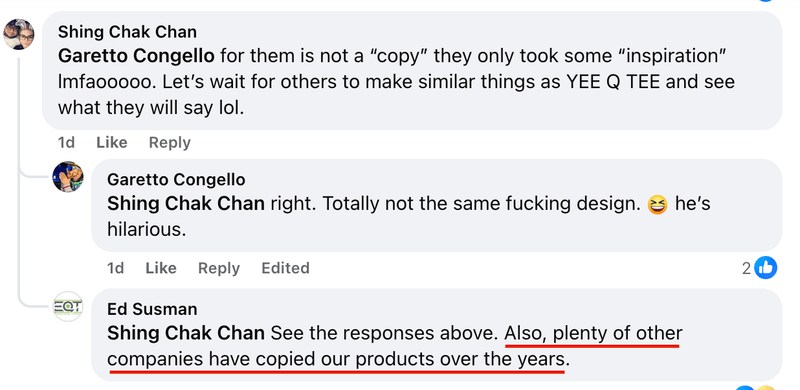
When consumers publicly raised the design similarity, Susman responded. His comments are presented below, followed by an analysis of each claim.
Examining the Claims
Claim 1: “We were forced to make our own version.”
Supply chain failures are a real business problem. But supply constraints don’t determine bracket arm profiles. When 034Motorsports, CP-E, ECS Tuning, and Racingline each faced the same engineering challenge, they produced distinct designs.
A catalog reseller facing a supplier failure also had an obvious alternative: source from any of the other established manufacturers already in this market. The choice to replicate BFI’s specific geometry — rather than source a visually distinct alternative — has a straightforward commercial explanation.
EQT’s customers knew and trusted the BFI design. Replicating it with EQT branding preserves that association. That is business logic, not engineering necessity.
Claim 2: “We took some inspiration from the BFI mounts, but made a few refinements.”
“Inspiration” is Susman’s word, not an external characterization. Look at what inspiration produced in this market — the competitive landscape shows four manufacturers who were aware of existing products and nonetheless arrived at distinct designs.
More tellingly, the word “refinements” implies a base design that was modified. Refinements to whose base design?
Claim 3: “The most notable difference is encapsulating the top of the mount.”
That difference is real and visible in the images. It is also a surface feature on an otherwise structurally identical design. Reviewing the feature comparison table: out of every significant structural decision — bracket geometry, insert architecture, base plate layout, wing profile, material specification — one surface treatment differs.
That is the design language of a derivative product.
Claim 4: “We also supply appropriate OEM hardware.”
Hardware in the box is not a design element. Its inclusion as a “key difference” is informative — it suggests the list of meaningful structural differences is short enough that packaging content is needed to supplement it.
Claim 5: “Plenty of other companies have copied our products over the years.”
This is the most revealing statement in the exchange. Moral equivalence arguments only work by accepting the premise — you cannot argue that copying is acceptable because others copied you without first acknowledging that copying occurred.
But more fundamentally, this establishes a double standard: when others copy EQT, it is a harm worth citing as grievance; when EQT copies BFI, it is justified by circumstance. A consistent ethical framework would apply the same standard in both directions.
It is also worth noting that by citing copying as a harm EQT has experienced, Susman is making BFI’s argument for them.
The Charge Pipe Parallel
The mount situation is not the only instance of an EQT-branded product bearing close visual resemblance to an established competitor’s design. Below are EQT’s branded charge pipe kit alongside Neuspeed’s product, which predates EQT’s version.
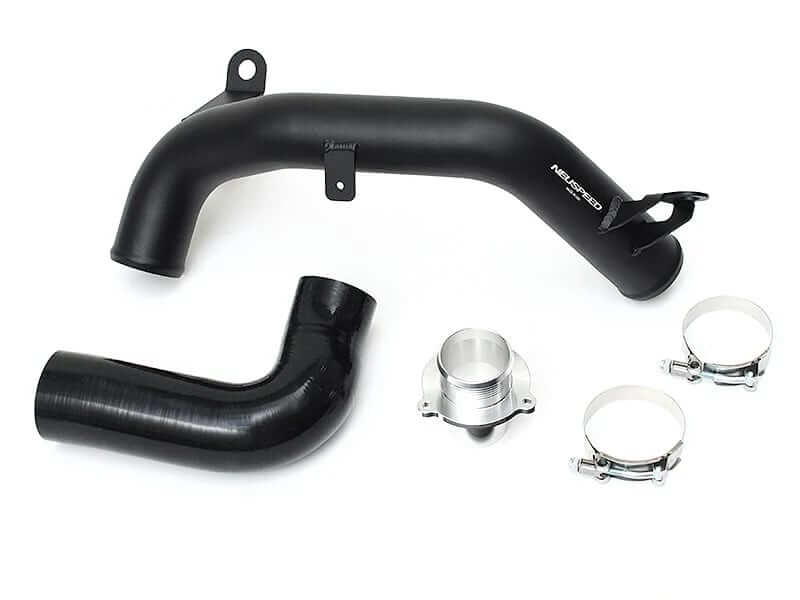
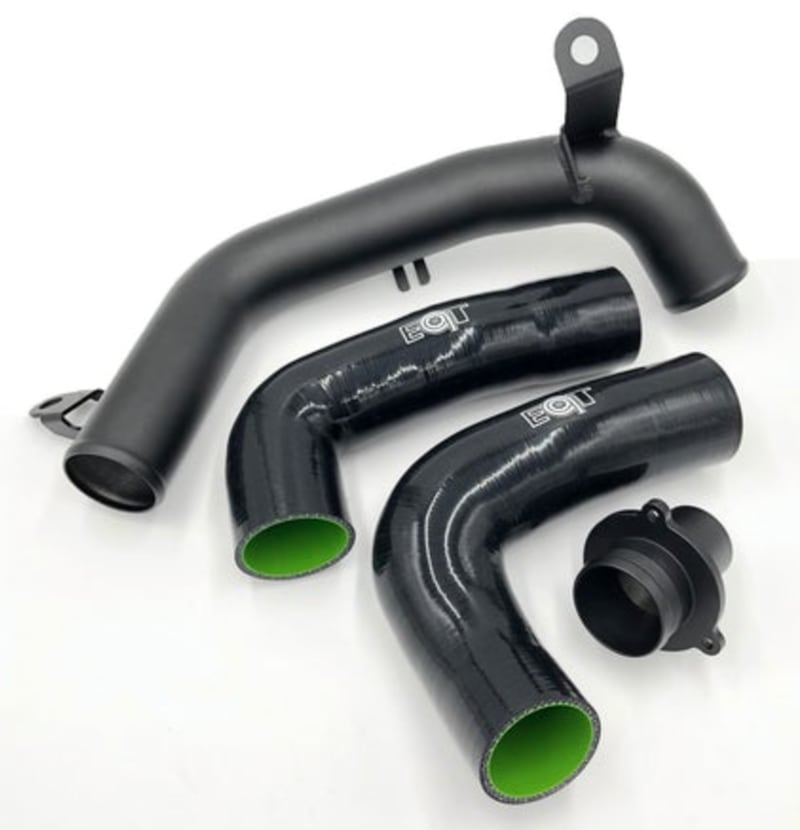
The discharge pipe — the most geometrically complex component in both kits — shares the same curve radius, bracket placement, and overall silhouette.
The charge pipe case is cleaner than the mount case in one respect: there is no supply chain narrative available. Neuspeed was not EQT’s supplier. If supply chain failure explains the mount situation, what explains the charge pipe?
Two product categories. Two established originating manufacturers. Two EQT-branded products with closely corresponding designs. No disclosed relationship in either case. At some point, the hypothesis of coincidence becomes unsustainable.
A Documented Pattern
Susman’s public response to the engine mount accusations is consistent with a communication pattern documented across multiple prior instances on this blog:
Cancelled independent testing orders (×3): Susman has publicly stated he loves seeing independent tests of EQT products. When this author attempted to independently test EQT’s ECU tune, Blaze ATOM intake, and Blaze Typhoon inlet hose, all three orders were cancelled. [Link]
Unverifiable performance claims: EQT advertised the Blaze ATOM intake as “best-performing” and “verified by independent testing.” The independent testing claim was never substantiated. [Link]
Cherry-picked dyno promotion: Susman promoted a customer dyno result using maximum curve smoothing, a favorable correction factor, and cold ambient conditions without disclosing any of these choices. [Link]
The pattern across all three instances is the same: favorable information is promoted prominently; independent scrutiny is suppressed; consumer-facing presentation is actively managed.
The mount response follows the same playbook — acknowledge just enough to appear transparent, pivot to favorable framing, and rely on brand loyalty to absorb the pushback.
The Employee Signal
One final observation: Susman’s public defense of the mount situation received “Like” reactions from four EQT employees.
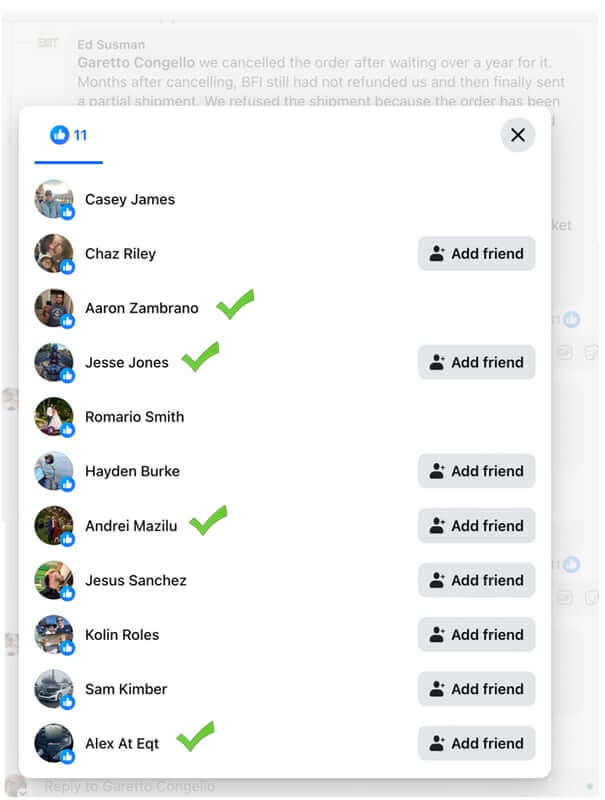
Employees endorsing their employer’s social media posts is routine. The specific context here is what makes it notable — the posts being endorsed were defenses of practices that multiple consumers had identified as ethically problematic.
Active endorsement, rather than silence, suggests that the ethical framework Susman expressed publicly — that copying is justified by circumstance and that others do it too — reflects organizational norms rather than individual rationalization.
Consumers evaluating EQT products across any category should factor that in.
Conclusion
The question this post has examined is not whether EQT provides functional products — that is a separate question with separate evidence. The question is whether EQT’s marketing accurately represents what consumers are purchasing.
Across the mount kit, the charge pipe, and the documented advertising history reviewed here, a consistent pattern emerges: products whose source/origin is not disclosed, performance claims that cannot be independently verified, and a communication strategy oriented toward managing favorable impressions rather than providing accurate information.
Consumers are entitled to know what they are buying and where it came from. The evidence reviewed here suggests that with EQT-branded products, that question is worth asking directly — and worth researching independently — before purchasing.
Disclaimer: This post represents analysis based on publicly available information and documented statements.