

Background:
Testing various exhaust components for the CC Design exhaust system currently on my GTI has been a recent focus. I had the opportunity to ride in a stock Mk7 GTI and decided to capture some sound and vibration recordings to compare with the aftermarket setups I am using on my modified GTI.
Procedure:
The recordings are made using an iPhone with applications that use the phone’s microphone and accelerometers to log the sound level and vibrations. The phone is placed on the dashboard to measure vibration and on the armrest for the sound levels.
Results:
The chart below compares the dashboard vibration of this stock GTI with my GTI, which was equipped with 034 Motorsport Street Density mounts and a Fluidampr.
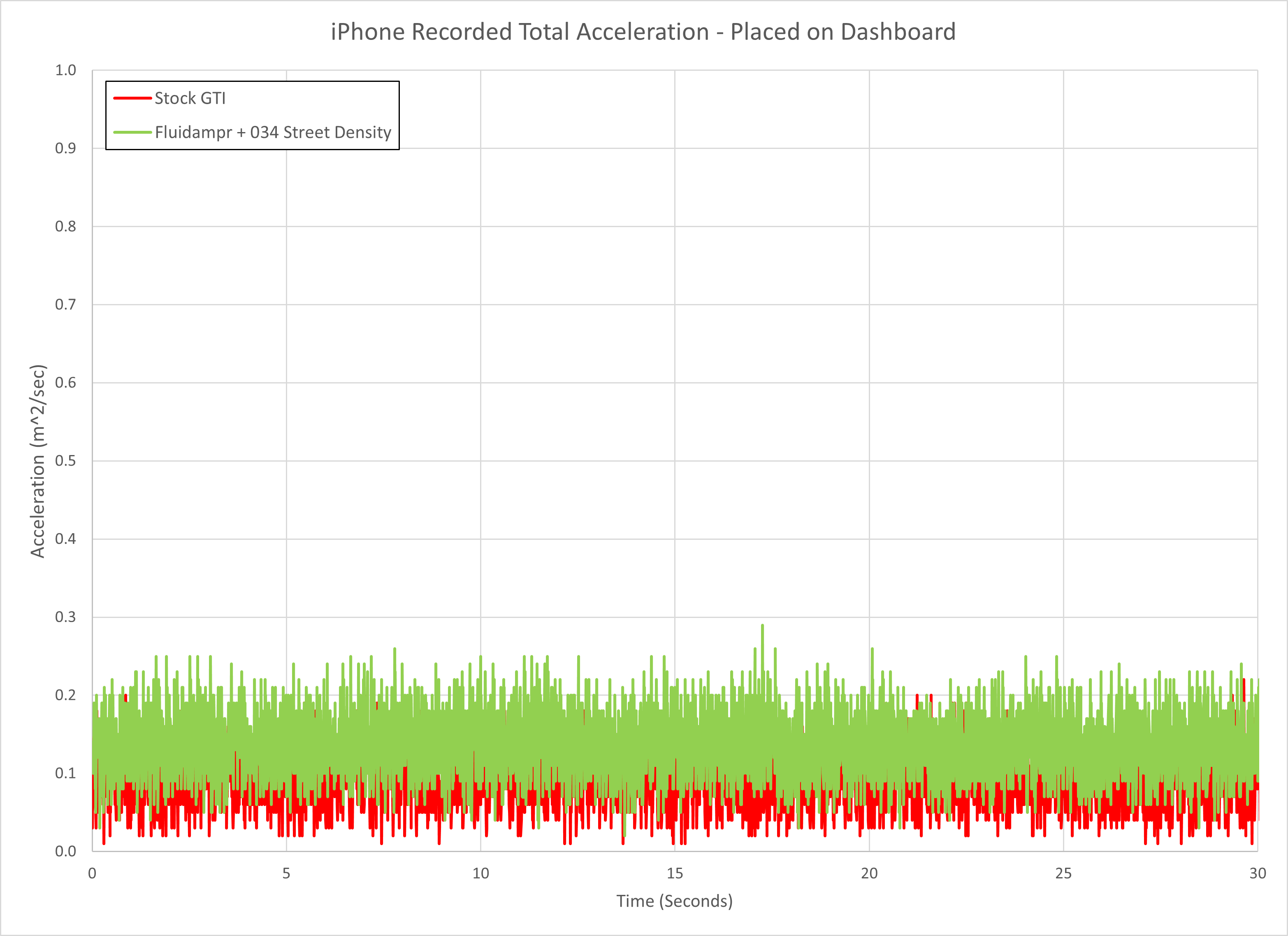
Not surprisingly, the stock GTI exhibits less vibration.
Next is a comparison between the stock GTI and my GTI, using the Black Forest Industries Stage 1 mounts.
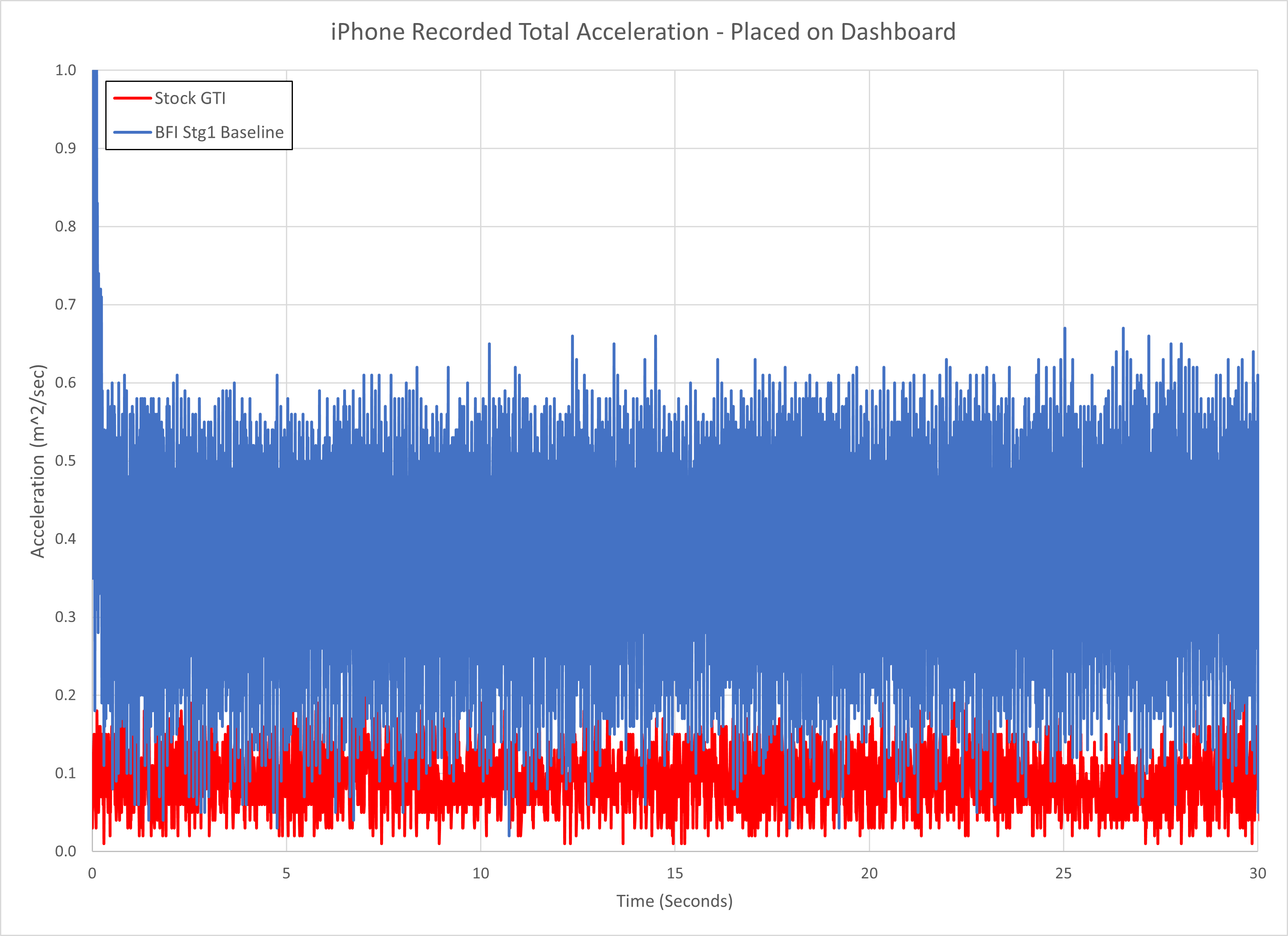
Again, no surprise that the stock GTI has less vibration.
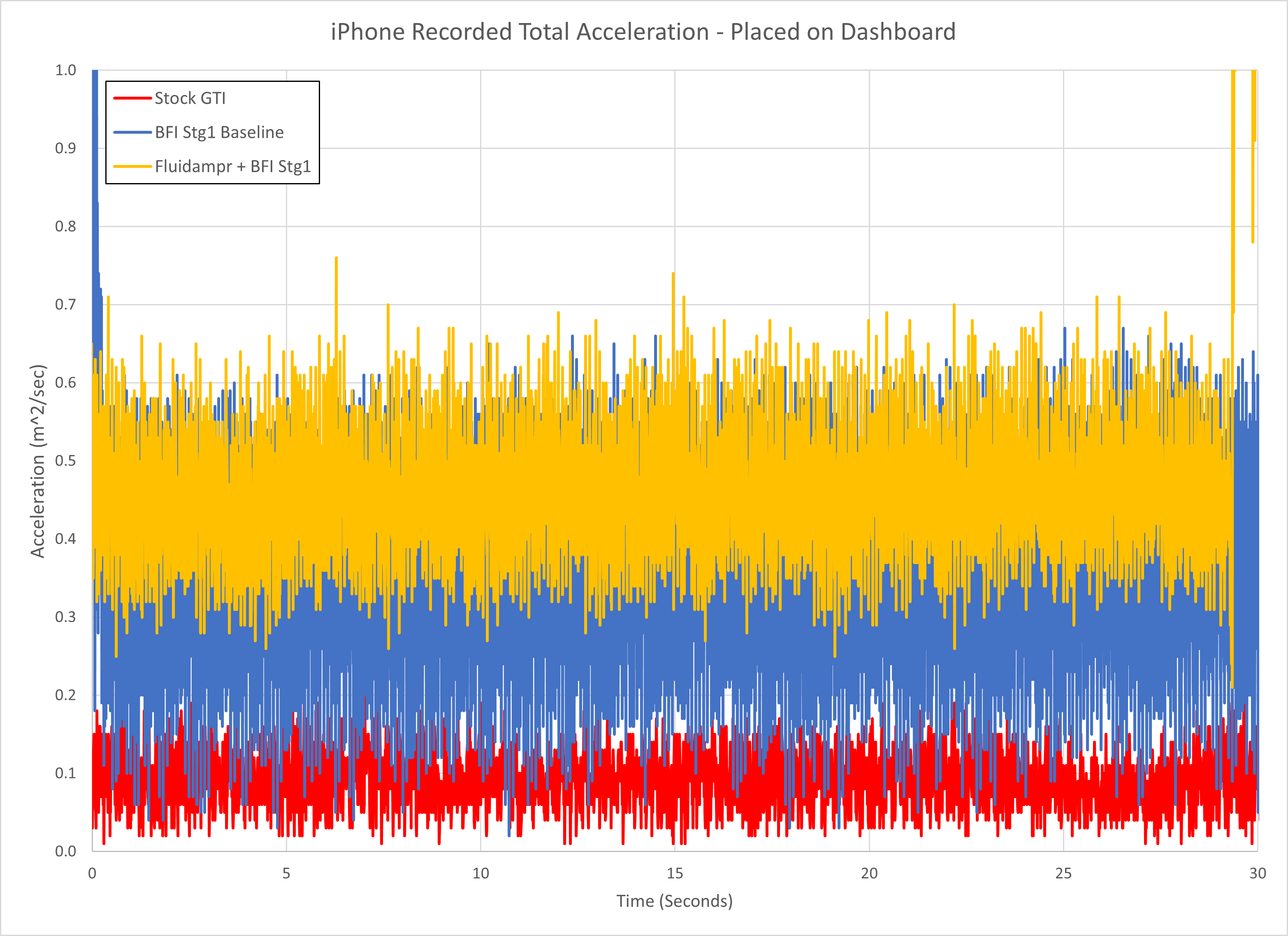
The next chart compares Stock with the BFI mounts, and the BFI mounts with the addition of a Fluidampr.
Noise Level:
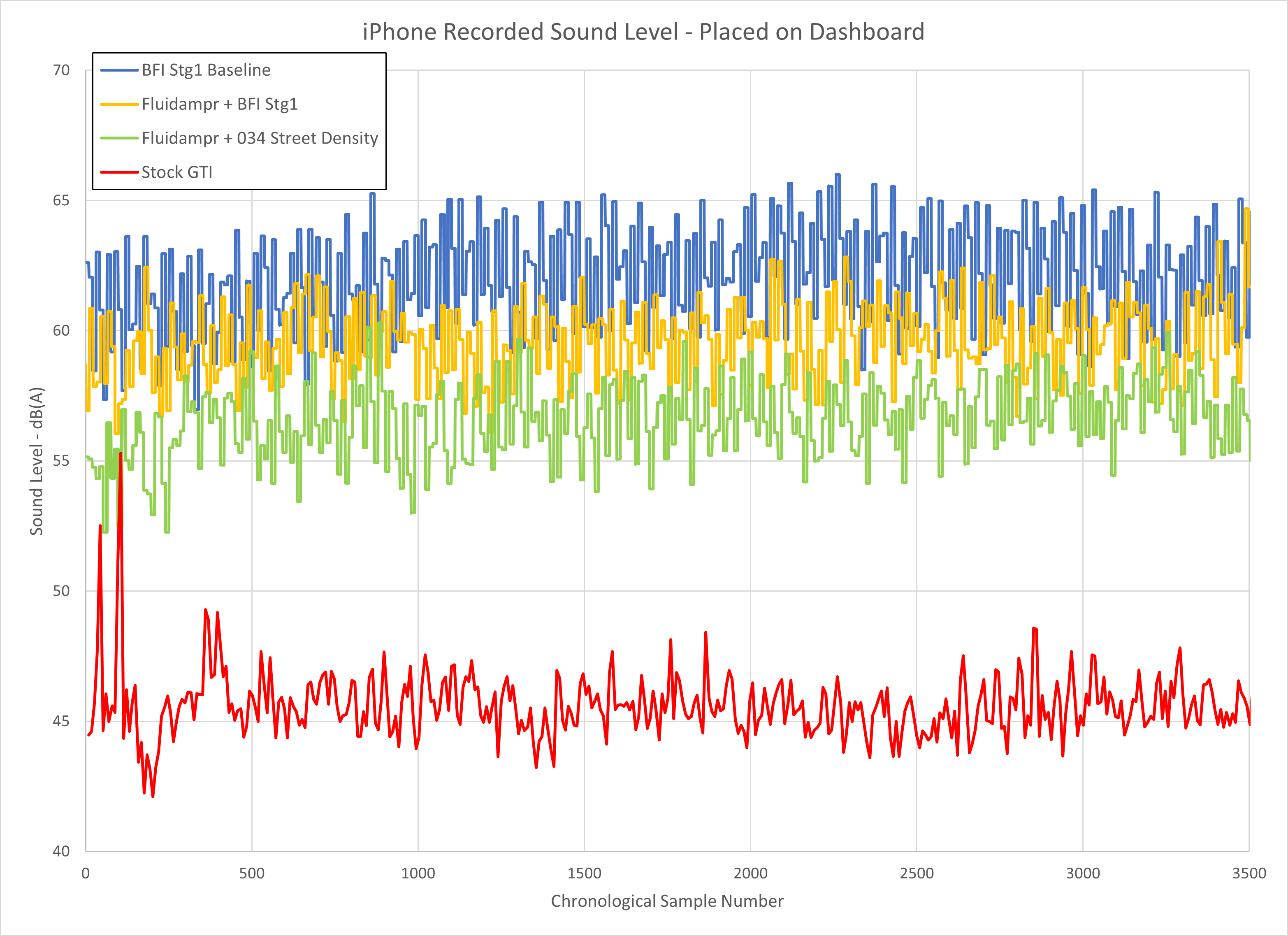
The next chart provides some perspective on how much louder a modified GTI is compared to stock.
Part of the difference between the modified and stock GTI is the exhaust, whereas the differences between the aftermarket configurations are due to the mounts and Fluidampr, since the modified GTI used the same aftermarket exhaust.
Versus aftermarket:
Expanding the sound-level comparison to include recent testing with the CC Design configurations. The next chart shows the average noise level during test drives.
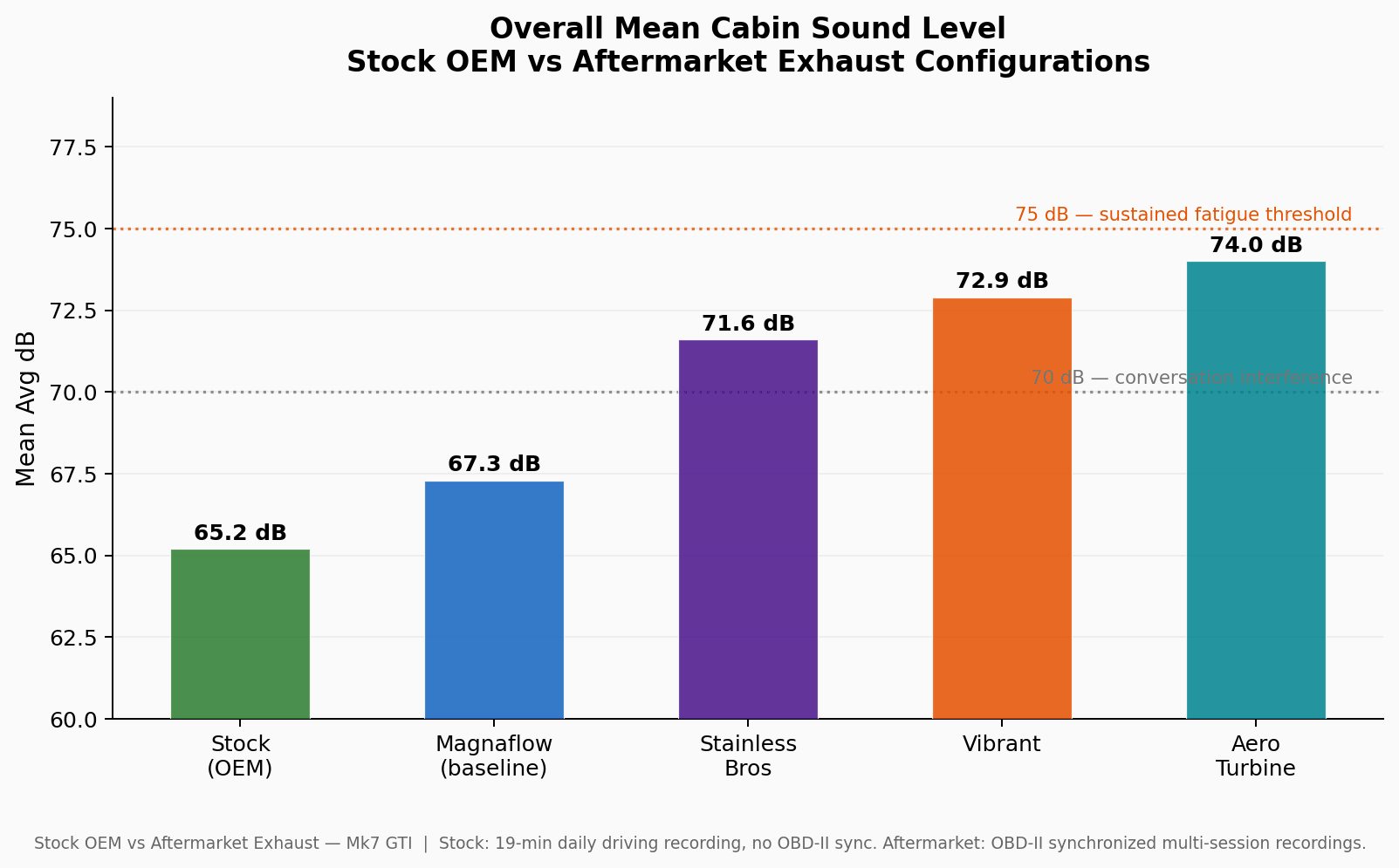
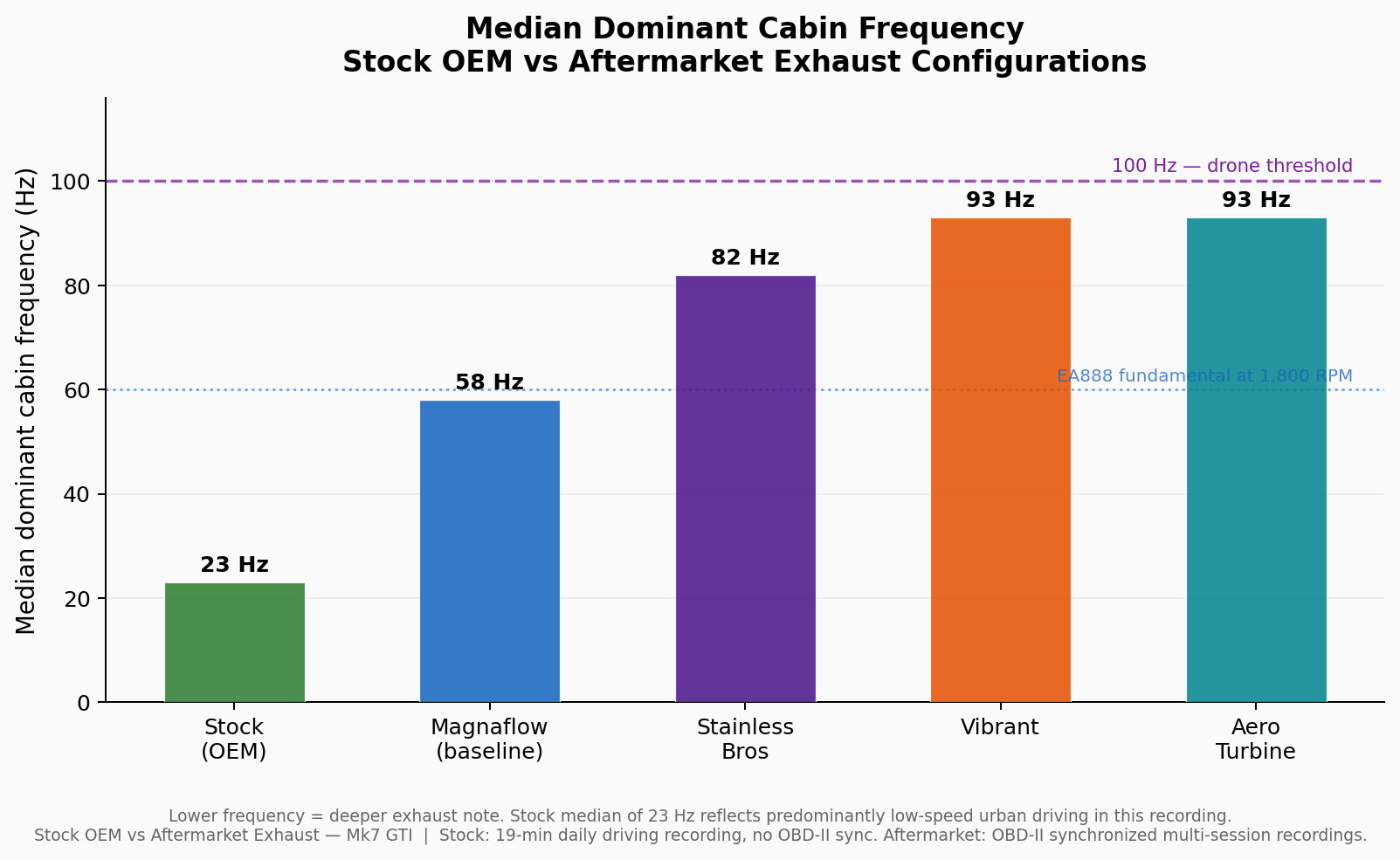
The next chart compares the dominant frequency inside the cabin. As the frequency is shifted lower, it moves to a range that is felt more than heard, helping to diminish the audible sound level in the cabin.
Conclusion:
The stock GTI performed as expected with lower sound volumes and less vibration than the aftermarket parts-equipped GTI.