
Background:
I came across this post by an owner of a Mk8 in which they make a comparison between the 034Motorsport Stage 2 and EQT Stage 2 tunes by measuring acceleration time from 60-130 MPH using a Dragy GPS logging device.
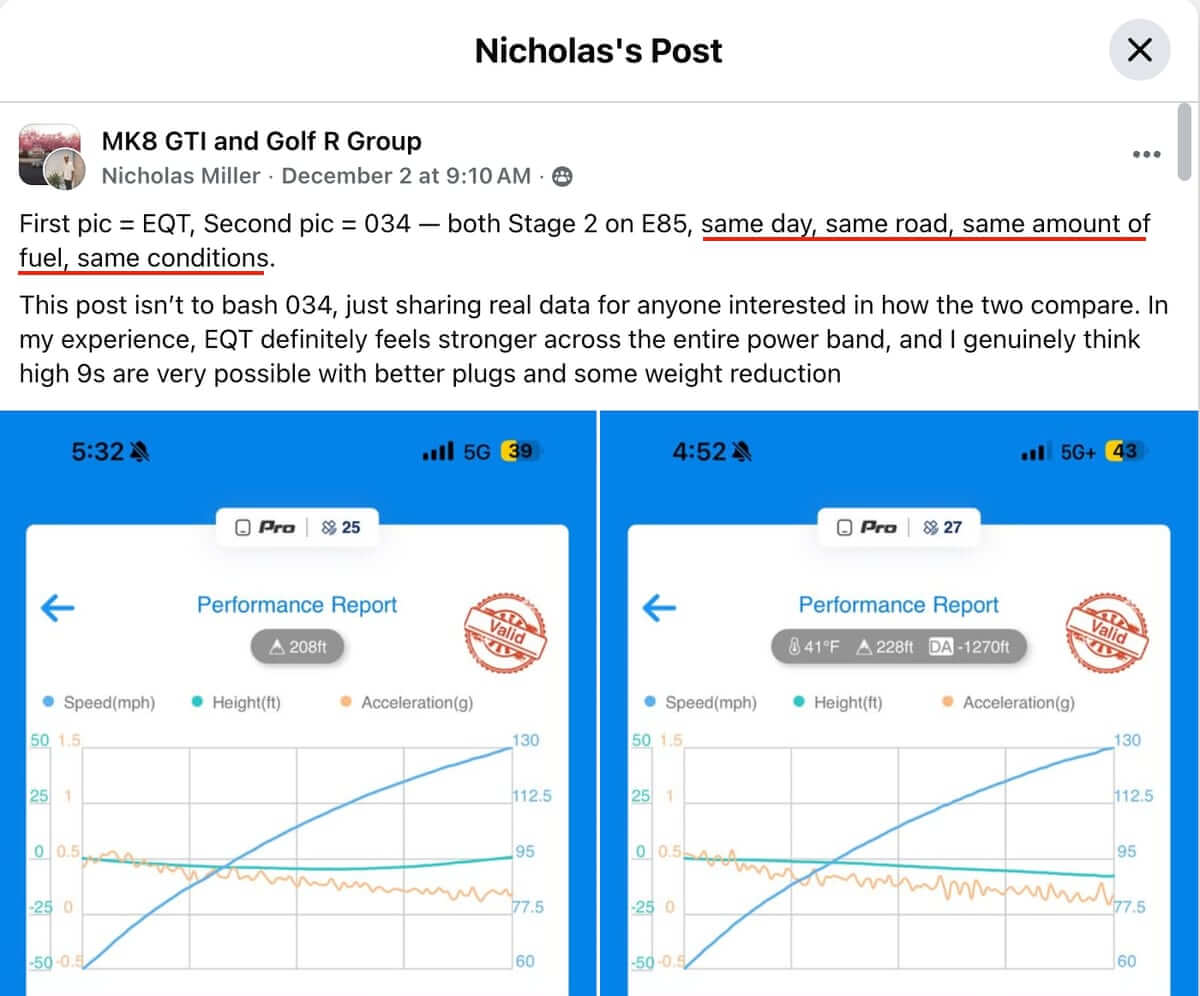
In this post, I will analyze the information provided and assess the reliability of the results.
Initial impressions:
The owner stated, “same day, same road, same amount of fuel, same conditions,” implying that the only change is the vehicle’s engine software.
I’m skeptical that they were able to control the conditions to the extent they suggest, especially given that the process of changing the engine software requires the car to be stationary for a while.
A person who thinks they have controlled all the conditions suggests they don’t appreciate how challenging that is, which makes it more likely they haven’t adequately controlled the conditions.
Additionally, they present a single 60-130 run for each product. This is not a positive sign that the person making the comparison is accounting for run-to-run variations; failing to do so is further evidence that the results might be unreliable.
Numbers:
At first glance, the results appear to indicate that the EQT tune accelerates the car 0.59 seconds sooner (10.37 vs. 10.96) than the 034Motorsport tune.
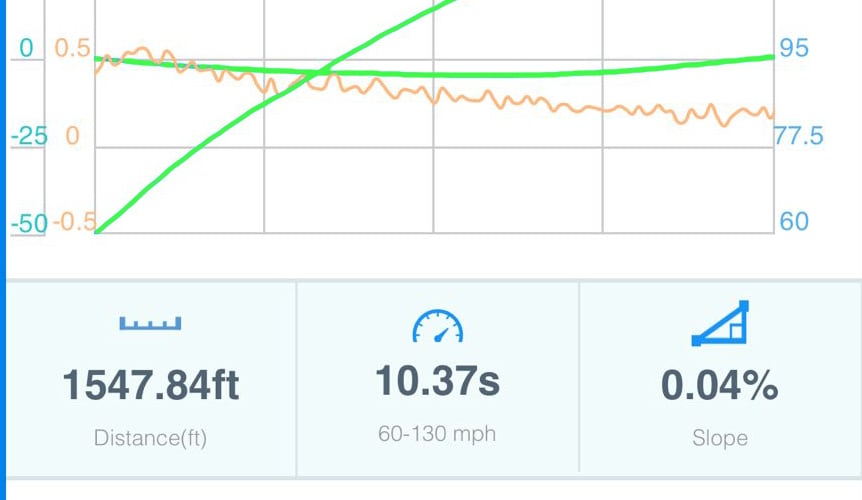
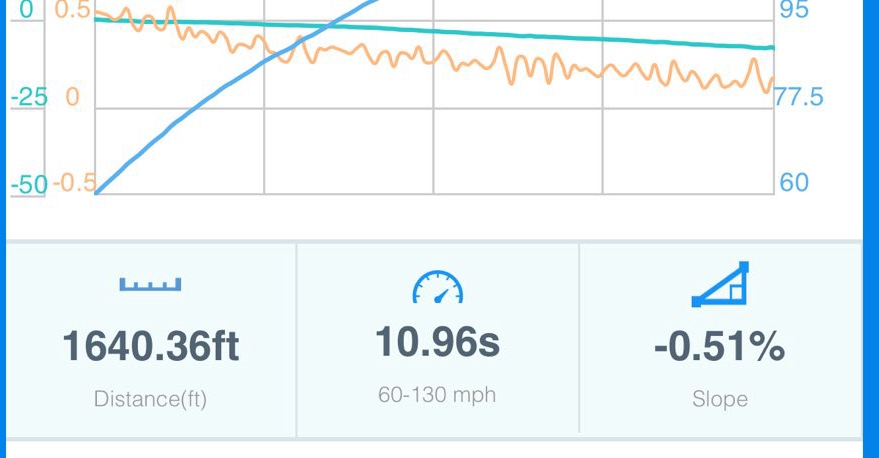
It also appears that the run with the 034Motorsport tune had a slight advantage due to a negative road slope (-0.51%), compared to the EQT tune (0.04%).
Closer look:
Looking more closely at the elevation curves, it is evident that the numeric value reported by the Dragy does not capture the whole picture.
Overlaying the chart areas and applying some opacity to one image shows that the EQT elevation data (highlighted in light green) has a greater downward slope during the initial acceleration until roughly 2/3 of the way to the final speed.
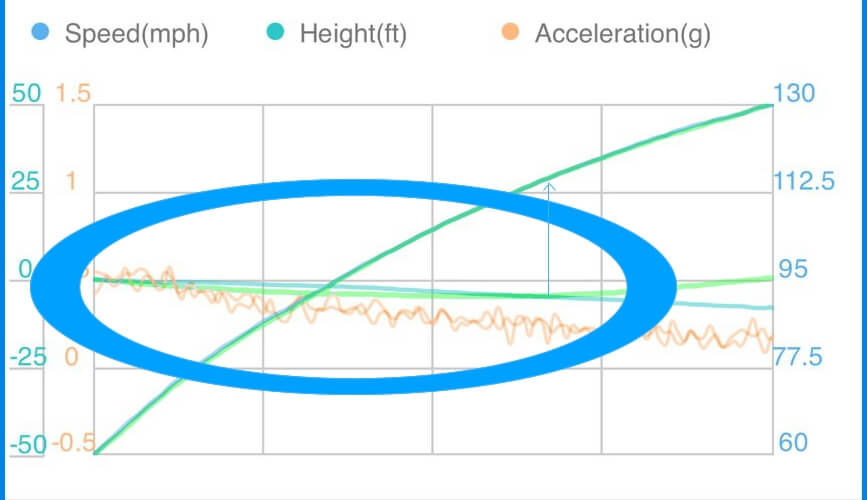
Looking at the point where the elevation curves start to diverge, where the 034 session begins to have a greater downward slope, it appears that the speed at this divergence is approximately 115 MPH.
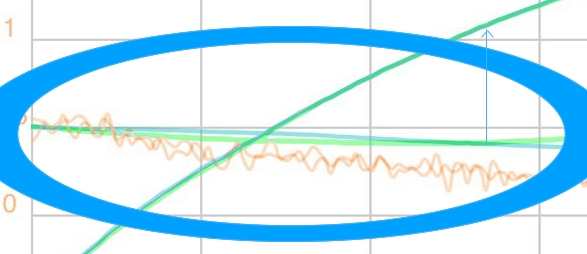
This would mean that, for approximately 80% of the speed range (60-115 / 60-130), the EQT data were collected with a road-slope advantage.
A couple of readers raised this point, and the person logging the data clarified that they had not tried to record the data over the same stretch of road but rather on the same road. As the results show, this caused the slope to differ between sessions.
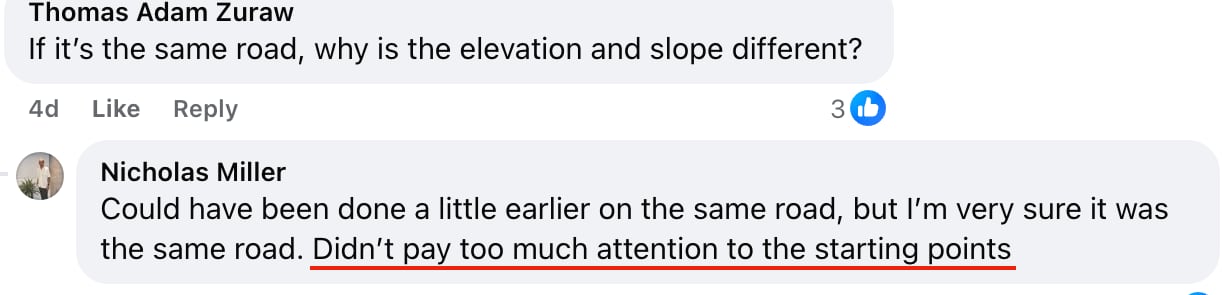

It is more work to log data along the same stretch of road, but when comparing single data points, the importance of logging over the same stretch increases. The person’s statement about “same day, same road…” implies a degree of consistency that was not present.
Metric comparison:
To gauge the possible effects of the different slopes, a comparison was made between the tunes using time intervals. These are based on the values reported by the Dragy over speed intervals such as 60-70, 60-80, etc.
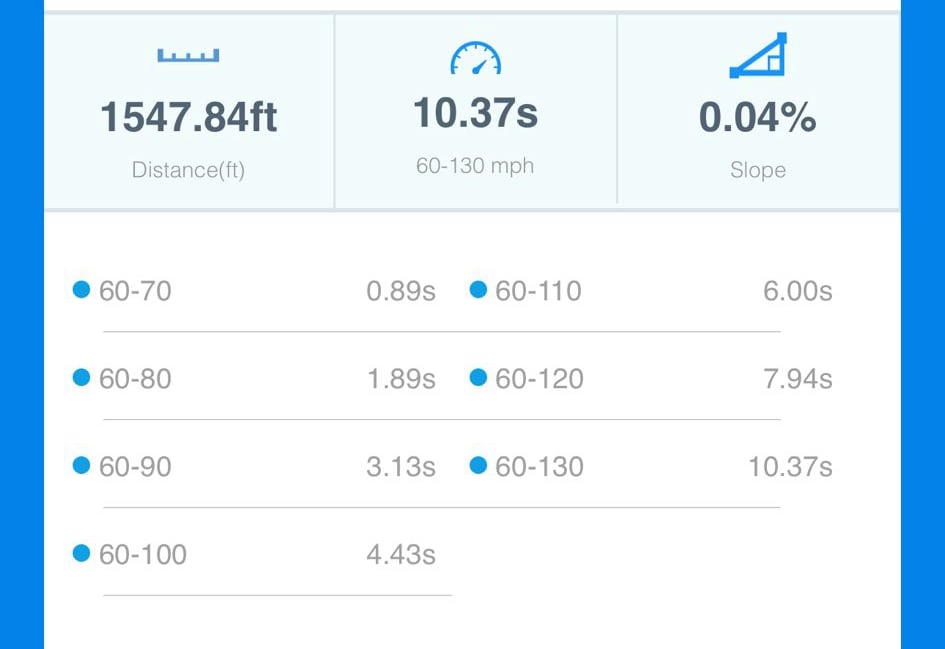
The 034Motorsport tune is used as the reference case, and the differences between it and the EQT tune are calculated so that subtracting the 034Motorsport time from the EQT time yields a positive time difference.
In the first chart, speed range intervals (60-70, 70-80) are used as categories. The difference in the amount of time the vehicle took to accelerate across this range is presented as the Time Difference.
Blue bars indicate when the road slope favored the EQT tune, red indicates where the flat road transition occurs, around 115 MPH, and green indicates where the road slope favors the 034Motorsport tune.
From 60-70 MPH, the car accelerated in the same amount of time using both tunes. From 70-80 MPH, the 034Motorsport tune trailed by 0.03 seconds. From 80-90 MPH, the 034Motorsport tune fell behind by 0.09 seconds, etc.
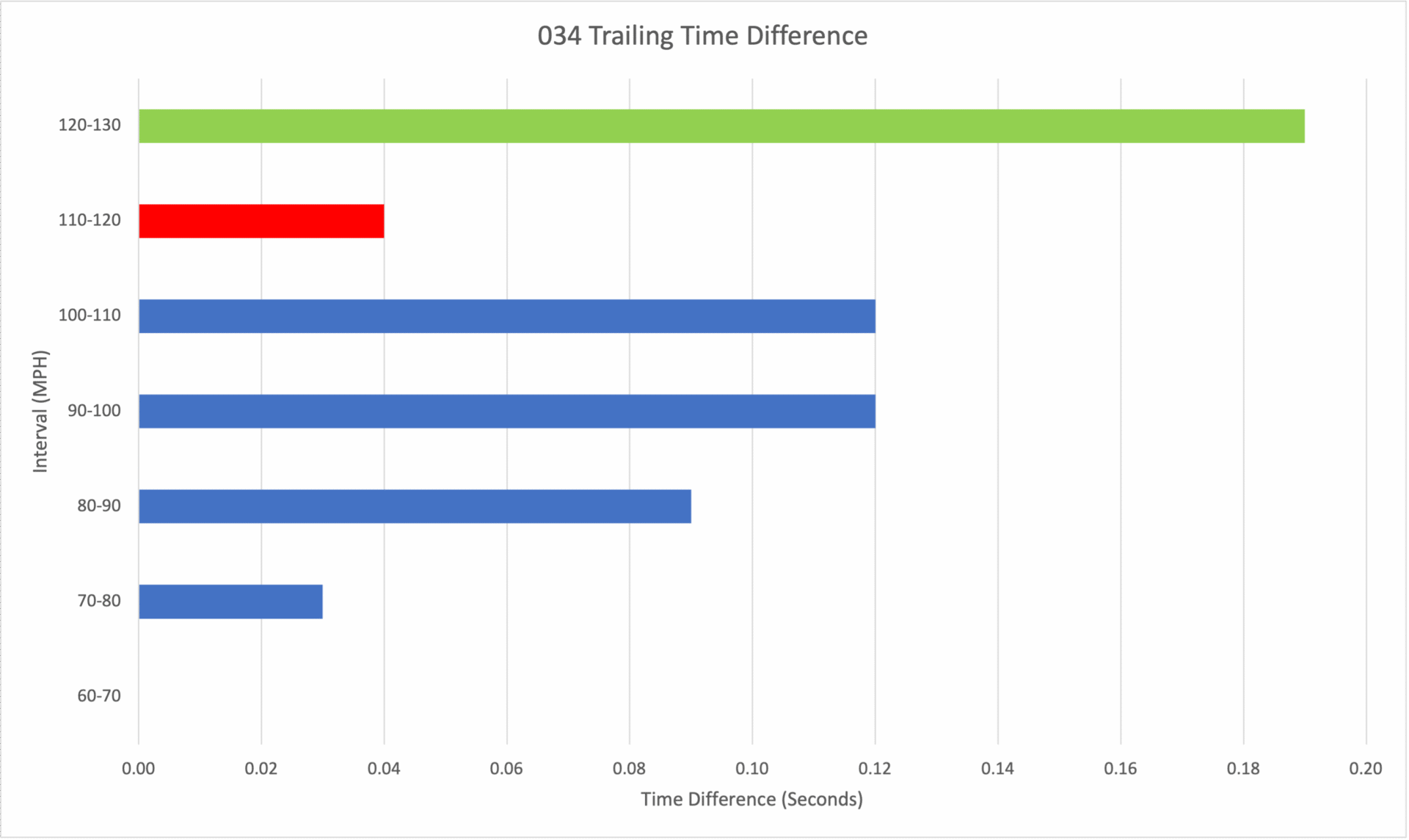
Assuming the tunes were identical, and only the road slope changed, the results are consistent with the road slope influencing the outcome.
The EQT tune builds a time-difference advantage in the speed range where the road slope is favorable, and when the road slope becomes equal, the advantage drops by roughly 2/3rds.
The last interval, from 120-130, has an inconsistent outcome if only the road slope were factoring into the outcome, the road slope favors the 034Motorsport tune, but the EQT experiences a time advantage larger than across any other speed interval.
Note: My initial thoughts on this are that the engine might have been reaching an operating speed at which the power output between the tunes differs significantly, or that a condition with the vehicle, such as rising intake air temperature (IAT), is affecting the engine power output. Whatever the cause, something abnormal happens at the final 10 mph increase.
The following chart shows the cumulative time difference as the vehicle traverses the speed range.
Across the first 10 MPH, the vehicle does so in the same amount of time with both tunes, zero (0) time difference. When it has gained 20 MPH, the time difference is 0.03 seconds, with the 034Motorsport case trailing. When 30 MPH of speed has been achieved, the time difference has increased to 0.12 seconds, with the 034Motorsport case trailing.
Once again, the blue bars indicate that the EQT tune case has a road slope advantage. The red bar is when the road slope advantage is removed, and notably, the difference in time change decreases noticeably. The green bar indicates where the road slope favors the 034Motorsport tune, and again, the inconsistent result is seen.
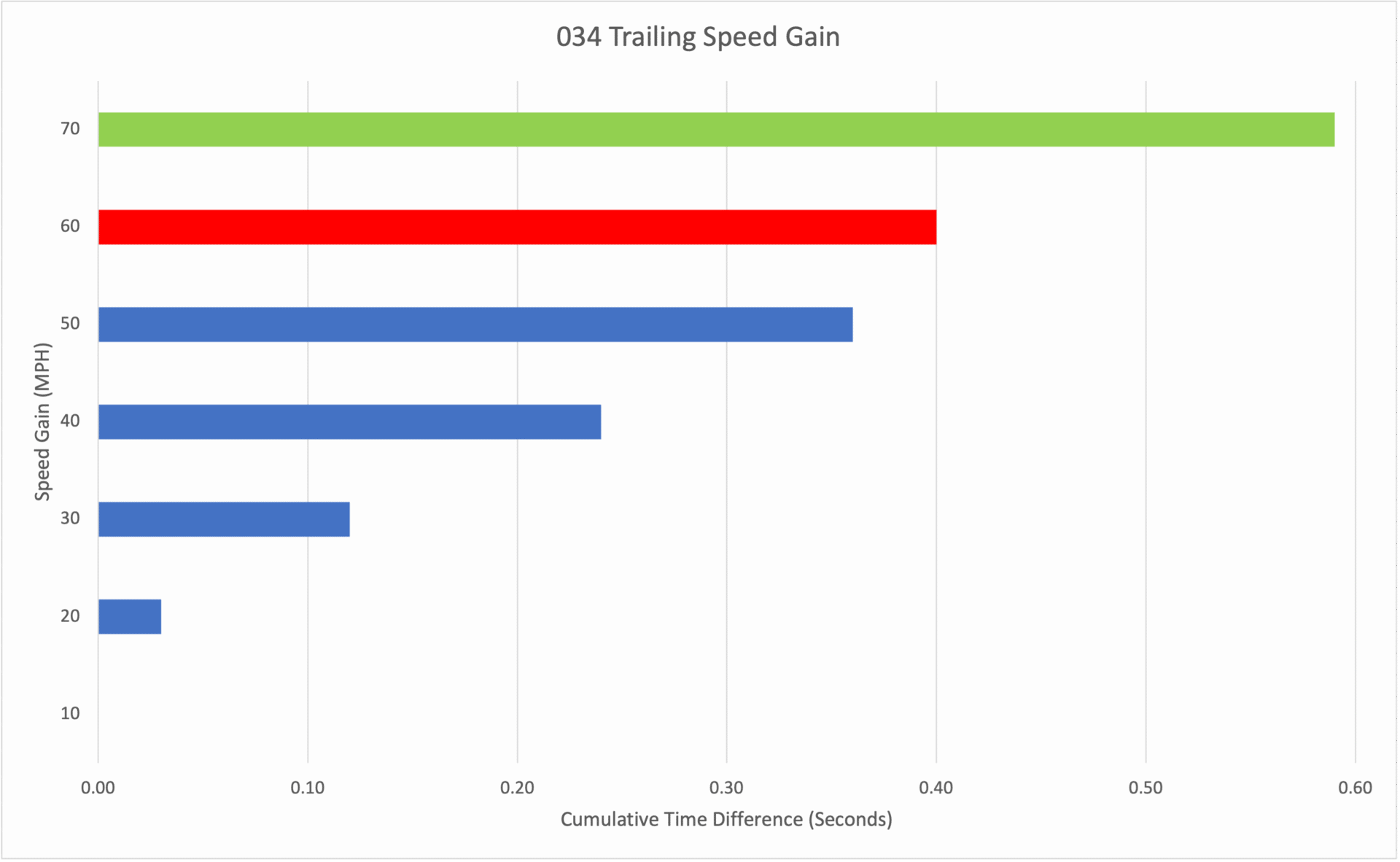
I characterize the green bar as inconsistent because when one looks at the difference in size of the blue bars as speed increases, the change in length is relatively consistent.
The short growth of the red bar is expected as the road slope becomes similar, and the two tunes accelerate the vehicle at a similar rate. Then, when the road slope advantage favors the 034Motorsport tune, the bar length should increase only slightly compared to the red bar, but instead, it makes the most significant increase of any interval. This is inconsistent with the data spanning the other six speed categories.
Additional owner comment:
The person posting the data also stated, “just sharing real data…“
Yes, it is “real data“, but the data has inconsistencies that point to a lack of control over conditions during the data collection.
Conclusion:
An owner of a Mk8 vehicle posted a comparison that they made of their car accelerating from 60-130 mph using tunes from 034Motorsport and EQT.
The person stated that they had maintained consistent conditions during each data collection. Still, their Dragy data logger indicates that, at a minimum, the road slope was not consistent between recording sessions.
Critically, only a single data point for each configuration was recorded. When collecting “real data” on the street, the size of the sample directly impacts the reliability and accuracy of the results. A larger sample size generally provides more accurate estimates, while a smaller sample size can lead to greater variability and potential errors.

Overall, concerns about the data collection method raise doubts about the validity of the results.