
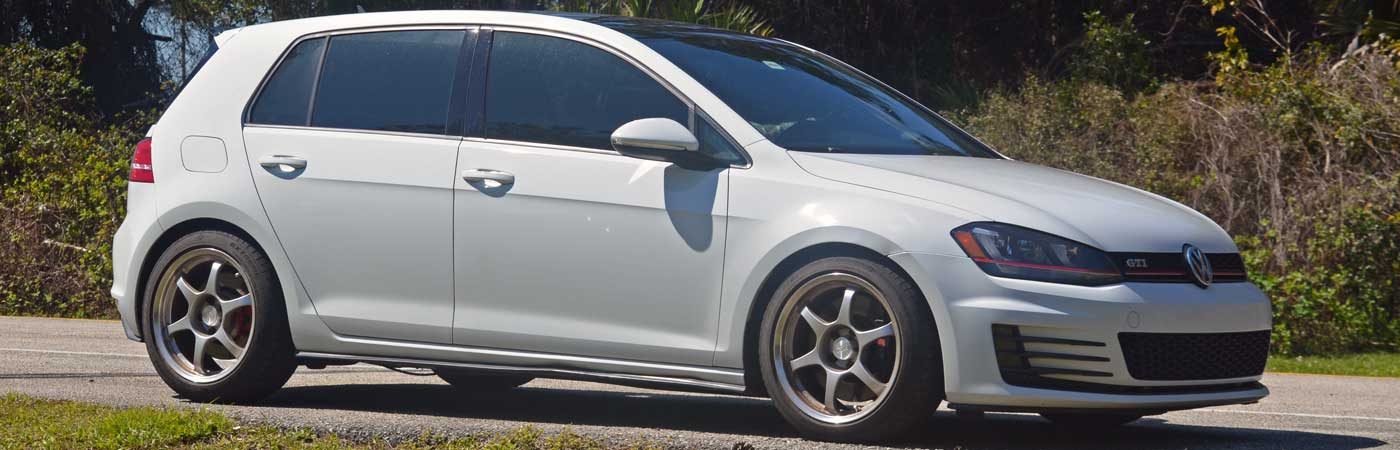
Background:
I came across this question posed to a group of Mk7 GTI enthusiasts about using a catted aftermarket downpipe with the stock GTI ECU tune.
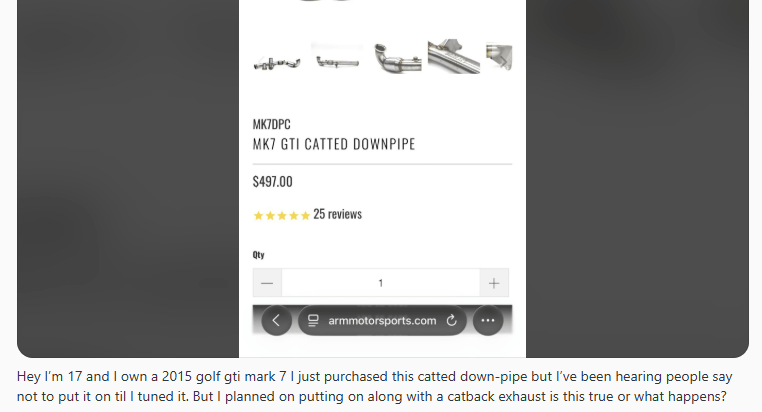
The car owner received advice from several other people in the enthusiasts group:

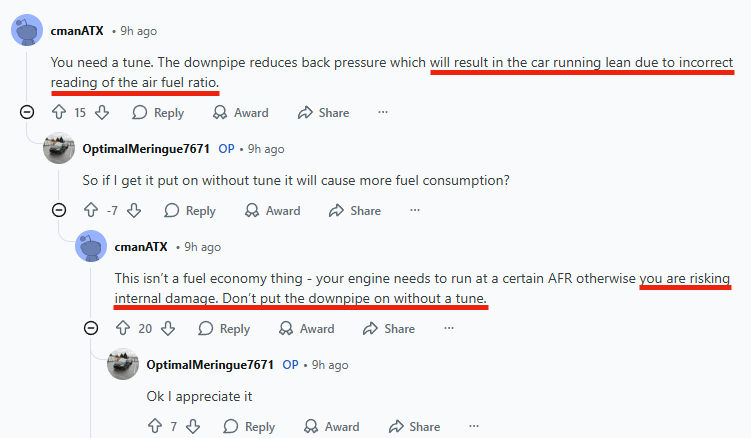
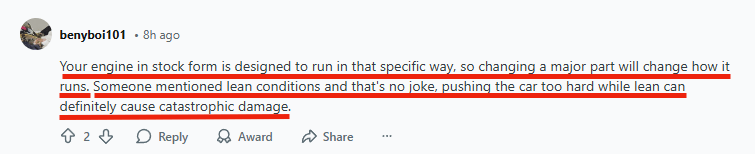
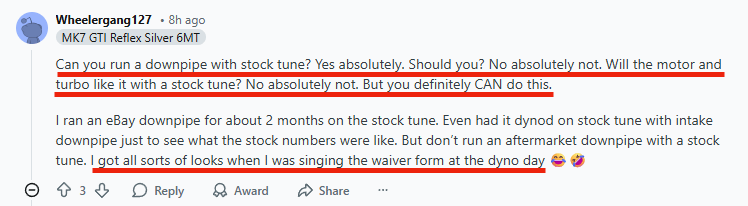
The consensus of these owners seems to be that the car will run lean because of either 1) a large increase in flow, or 2) an incorrect reading of the air-to-fuel ratio, or 3) the engine is designed to run in a specific way, or 4) the motor and turbo won’t like it.
Readers of this blog might remember that when I was comparing Stage 2 tunes for the Mk7 GTI, I conducted a baseline data collection with the stock GTI tune using a Baun Performance aftermarket dowpipe – precisely the part exchange that these owners are advising against.
To determine if their recommendations are valid, I pulled up the datalogs from my street pulls and dyno session using the stock tune with the aftermarket downpipe.
Data review:
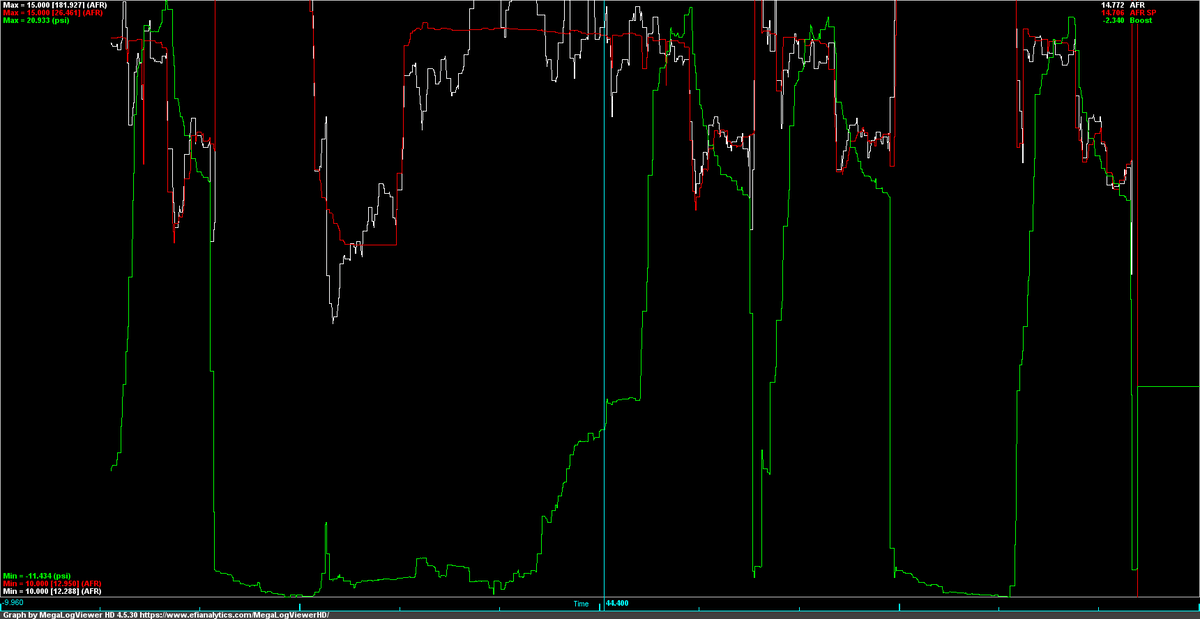
The overview of the street data collection session comparing the AFR setpoint with the actual AFR does not show the engine running leaning other than momentarily. Likewise, the engine also runs rich momentarily.
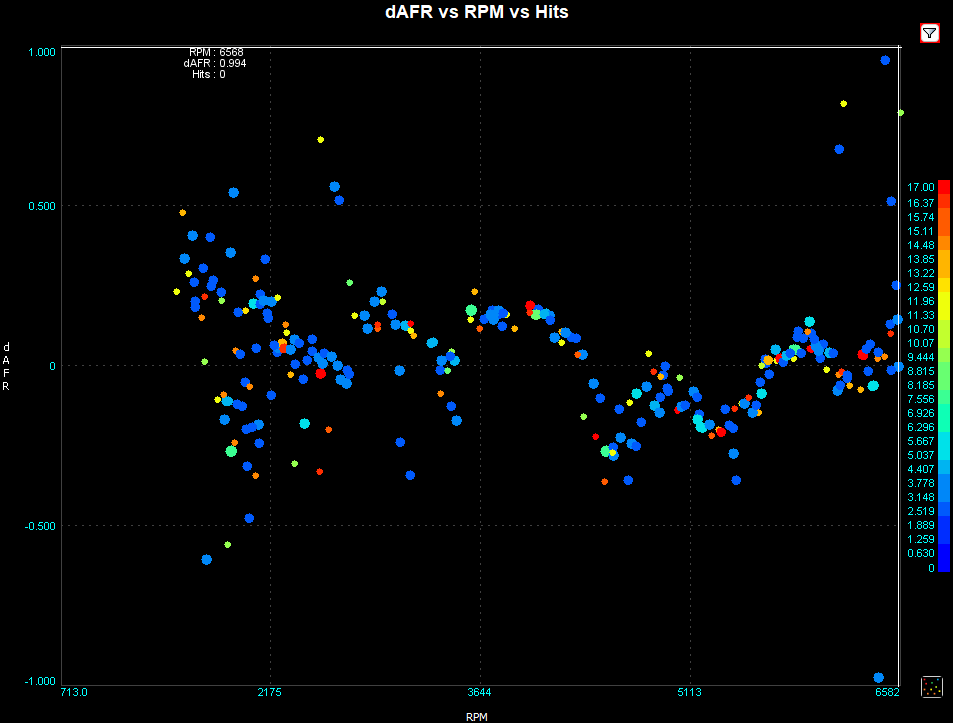
Calculating a delta AFR (Setpoint minus Actual) and plotting it against engine speed with the Throttle Position Sensor at 10% or greater, it’s clear that the difference is predominantly below 0.5, with slight variations above and below zero.
Looking at the Lambda value during the dyno session, 4th gear pull, the air-to-fuel ratio starts at stoichiometric and then goes rich (Lambda < 1). There is no indication that the ECU is having difficulty keeping the AFR near the setpoint.

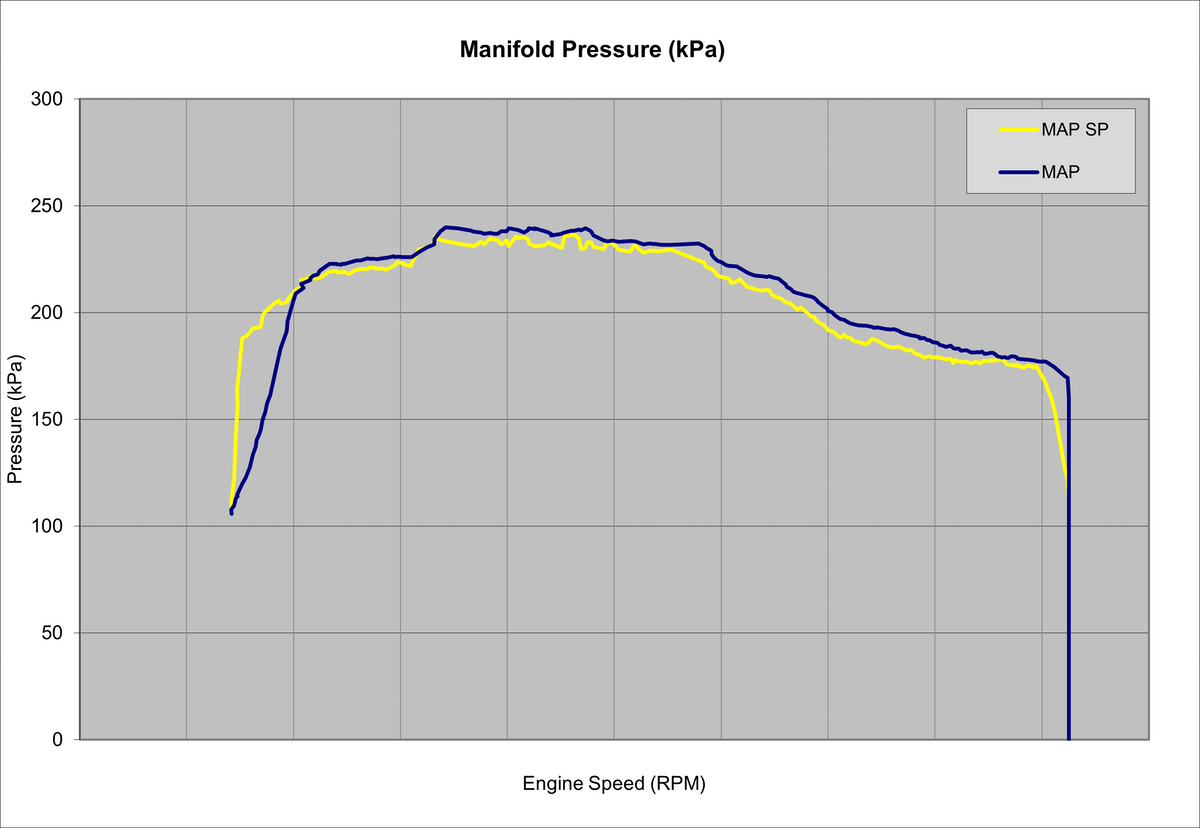
Next, looking at the manifold absolute pressure to see if there might be a significant increase in airflow compared to what the ECU expects, the actual pressure tracks closely to the setpoint pressure (within ~0.7 psi), indicating that the turbocharger is not generating more boost pressure than the ECU has targeted.
Conclusions:
There is no evidence to support the recommendations to avoid using a catted aftermarket downpipe with the stock Mk7 GTI ECU tune.
It was claimed that the vehicle’s air-to-fuel ratio would become lean after this swap, potentially damaging the engine. Still, the evidence indicates that the vehicle’s engine computer can operate the car as intended with the downpipe swapped to an aftermarket catted model.
This example illustrates a case in which the ‘consensus‘ of car owners’ advice does not agree with reality.