
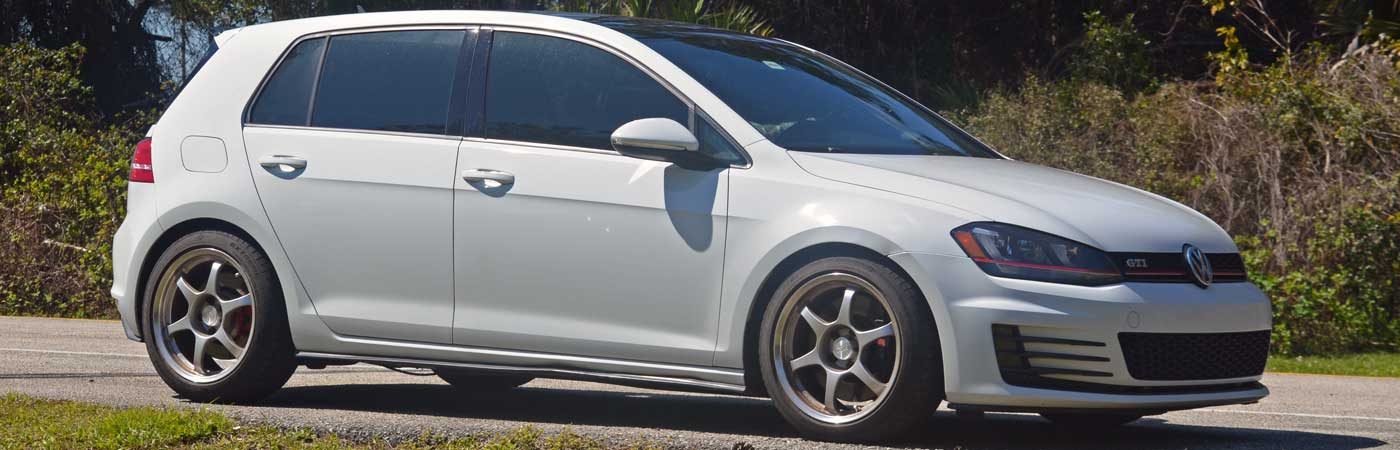
Background:
The aFe Power turbo inlet elbow is the subject of a flow test to measure airflow through the elbow and the vacuum at the PCV port.
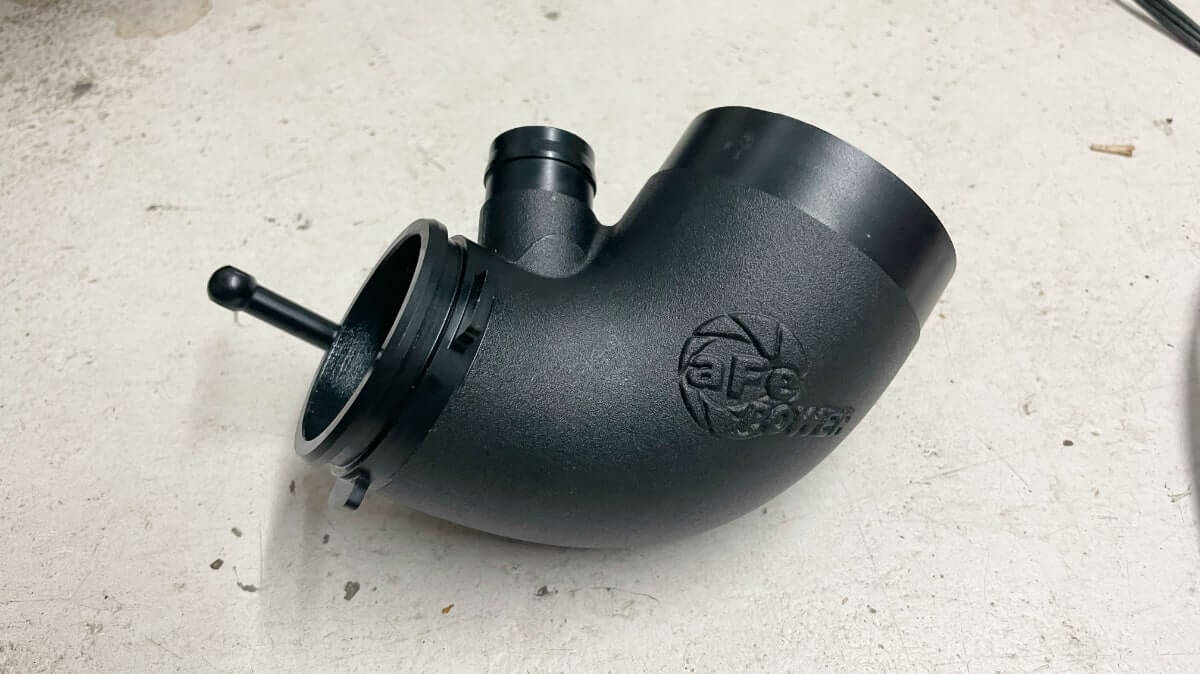
The aFe Power elbow uses a larger than stock 3″ inlet, and the outlet is sized to match the IHI IS20 and IS38 turbocharger compressor housings.
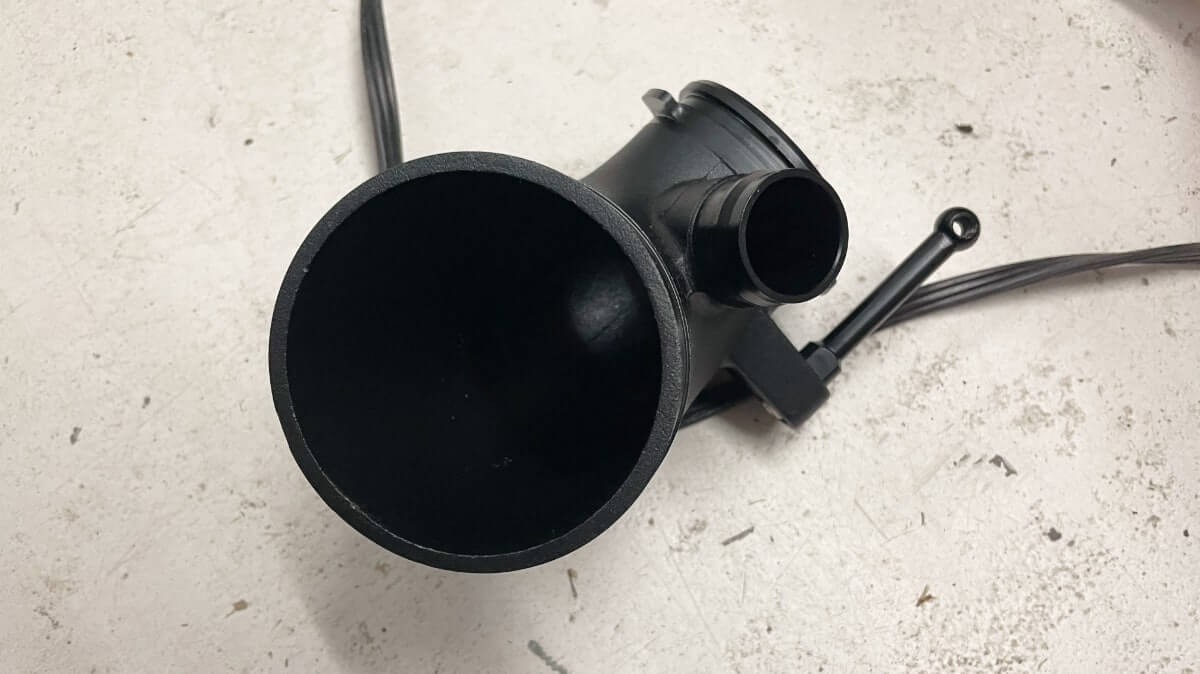
The inlet inside diameter is 68.5 mm, and the outlet inside diameter is 49 mm.
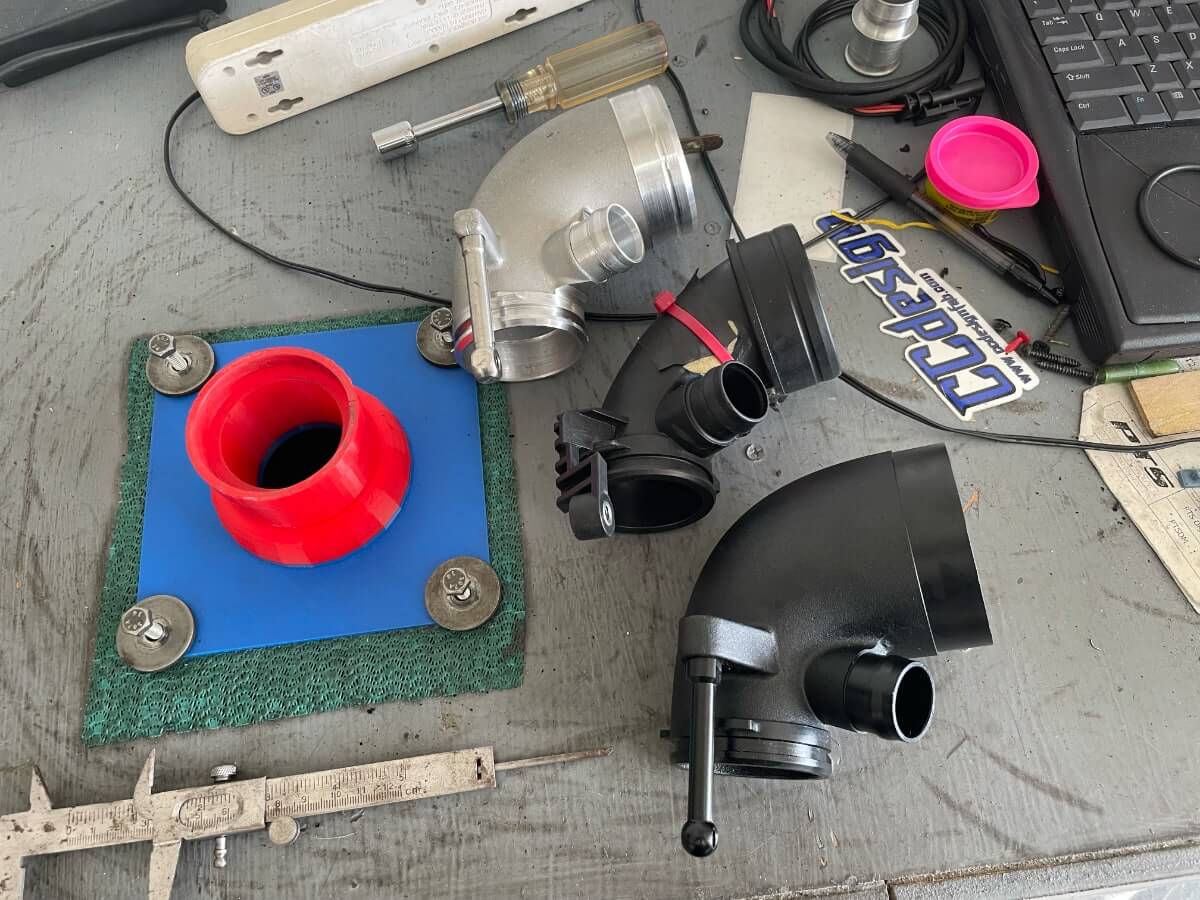
A stock TIP and APR clone (Epman) elbow is also being tested for comparison. Both have been tested previously, and testing is being repeated only to verify consistency.
Test Process:
The inlet elbow is joined with the top half of a stock airbox using the stock accordion hose, in the tests of the stock and Epman elbows, and with an MST silicone hose with the aFe Power elbow, due to the 3″ inlet diameter, which is larger than stock.
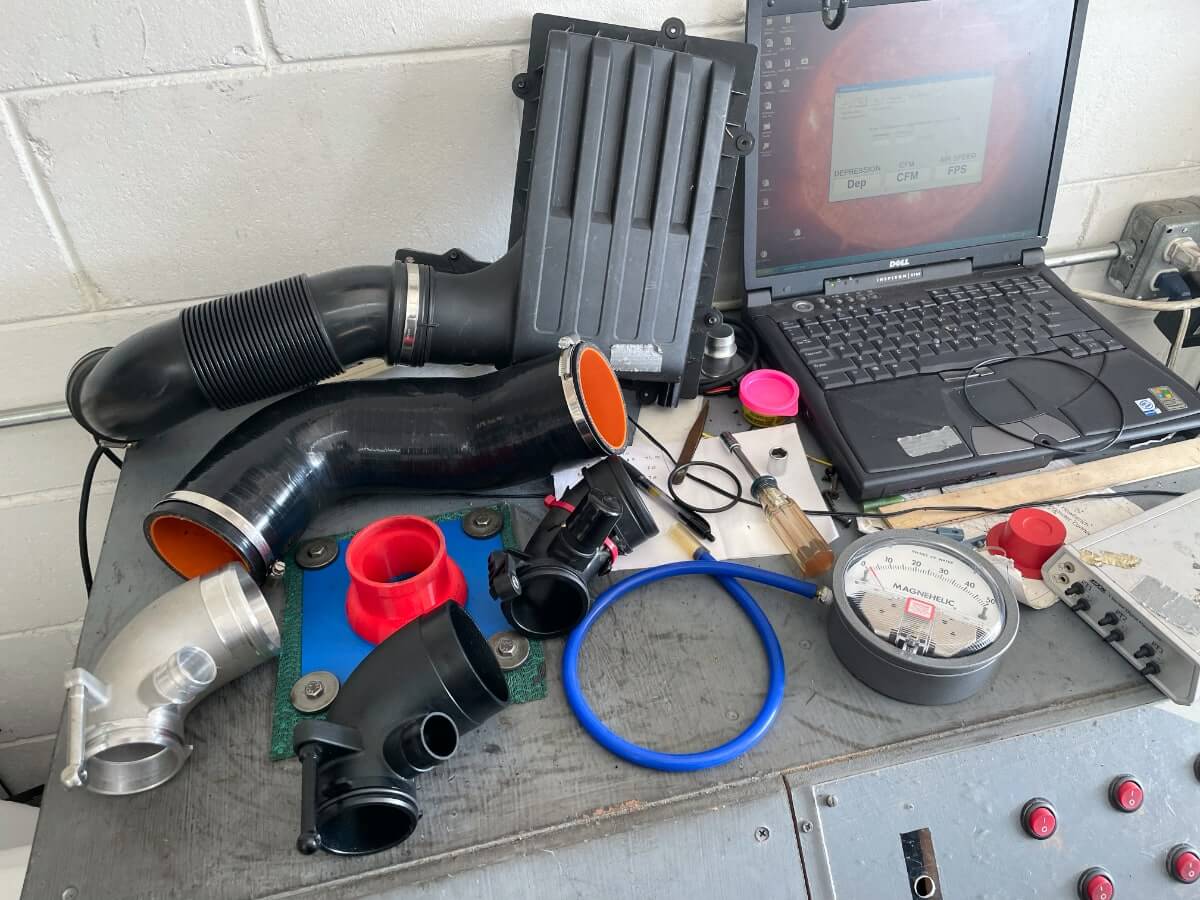
The flow rate test is performed at a depression of 28″ of H2O.
To check the vacuum at the PCV port, a Magnehelic differential pressure gauge is used to take a reading at an airflow rate of 350 CFM. A Mann air filter is installed in the top half of the stock airbox to increase the pressure drop across the intake for the PCV port test.
Test Results:
The aFe Power elbow flows 388 CFM @ 28″ of H2O.
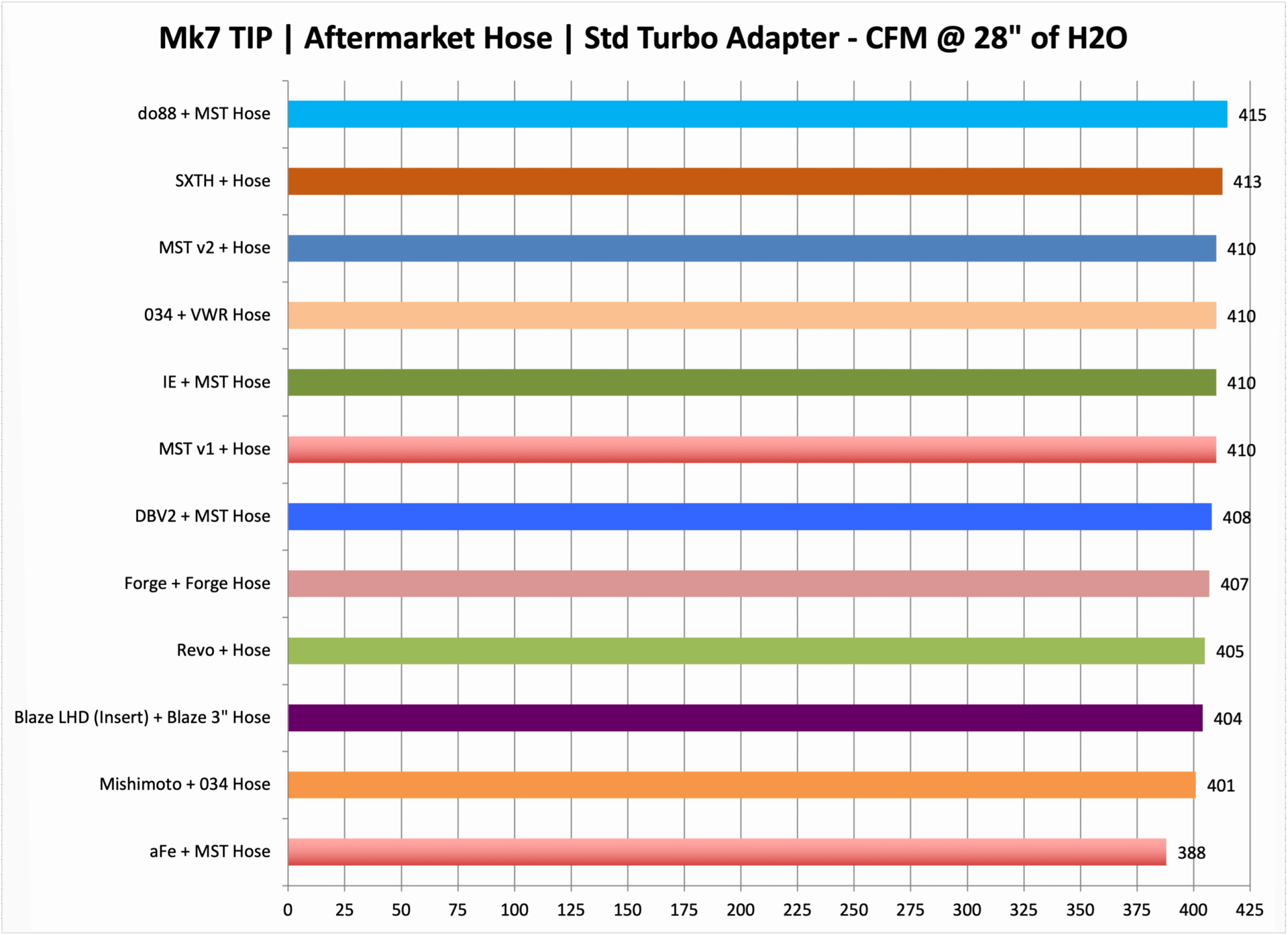
This is at the low end for elbows tested with the stock turbo housing adapter and an aftermarket inlet hose.
Note: The differences in the readings across all of the products tested are relatively small.
The vacuum at the PCV port is 35″ of H2O @ 350 CFM.
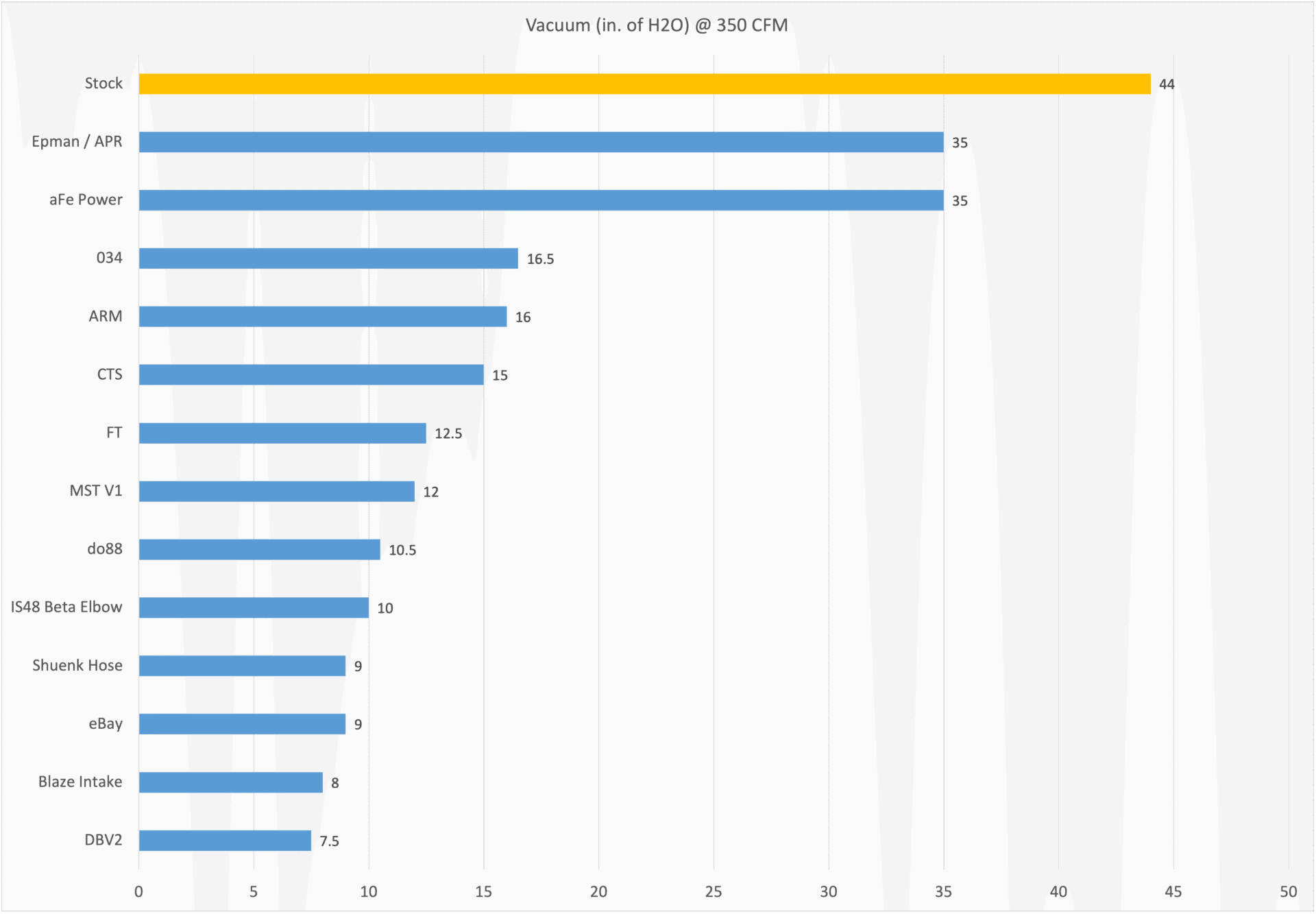
This is at the top end of products tested, trailing only the stock elbow and tied with the Epman elbow. The aFe and Epman elbows generated approximately 75% of the vacuum that the stock elbow generates, compared to approximately 30% from other aftermarket elbows that have been tested.
The tradeoff between maximum airflow and PCV port vacuum has been observed during previous testing of inlet elbows.
Hybrid Experiment:
Despite the aFe Power being sized to work with a stock compressor housing inlet, a measurement was taken with the elbow attached to a hybrid size adapter (56 mm diameter versus 49 mm for the stock adapter).
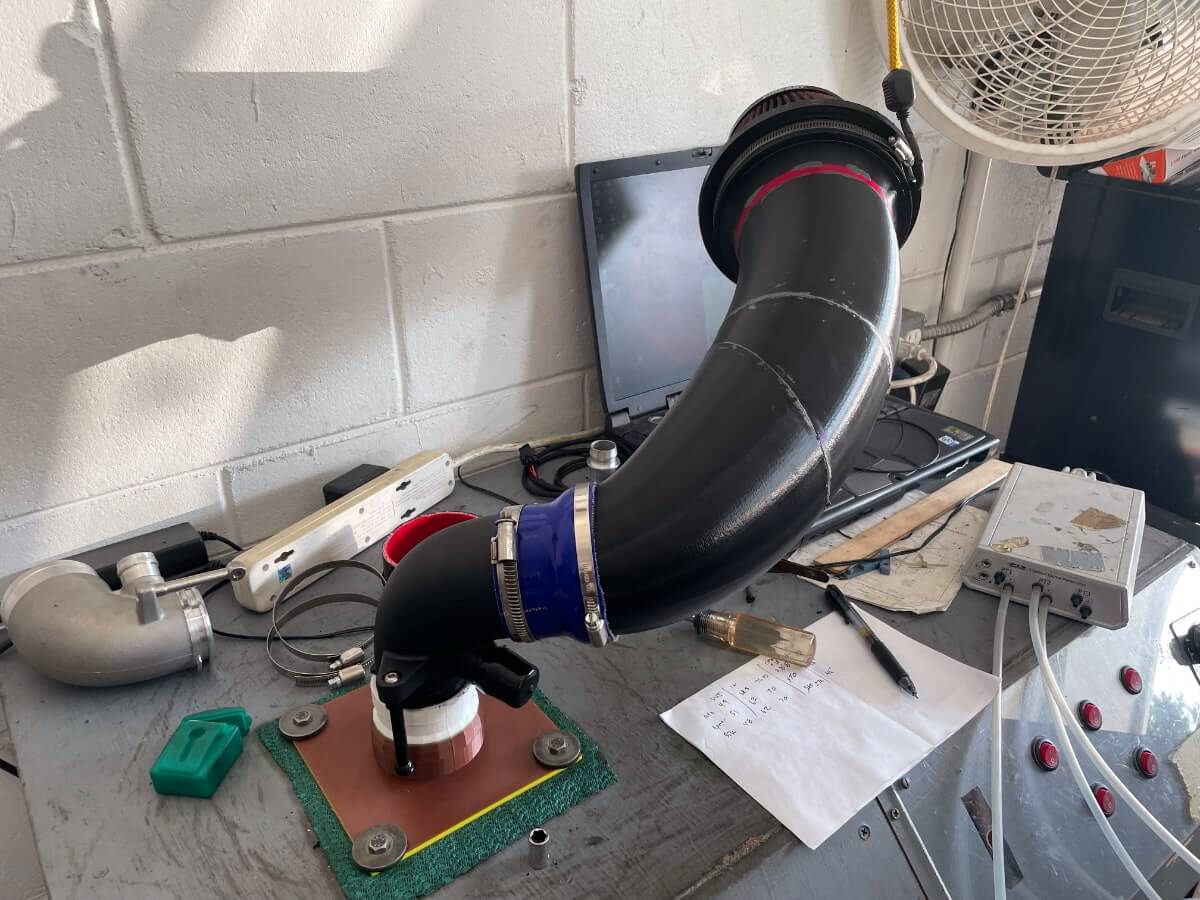
The latest version of the MGM7 intake was connected to the aFe Power elbow using a silicone reducer.
This configuration flowed 407 CFM @ 28″ of H2O.
For comparison, the DBV2 hybrid-sized turbo inlet elbow was swapped in for the aFe Power, and the system flowed 526 CFM @ 28″ of H2O, a nearly 30% increase in airflow.
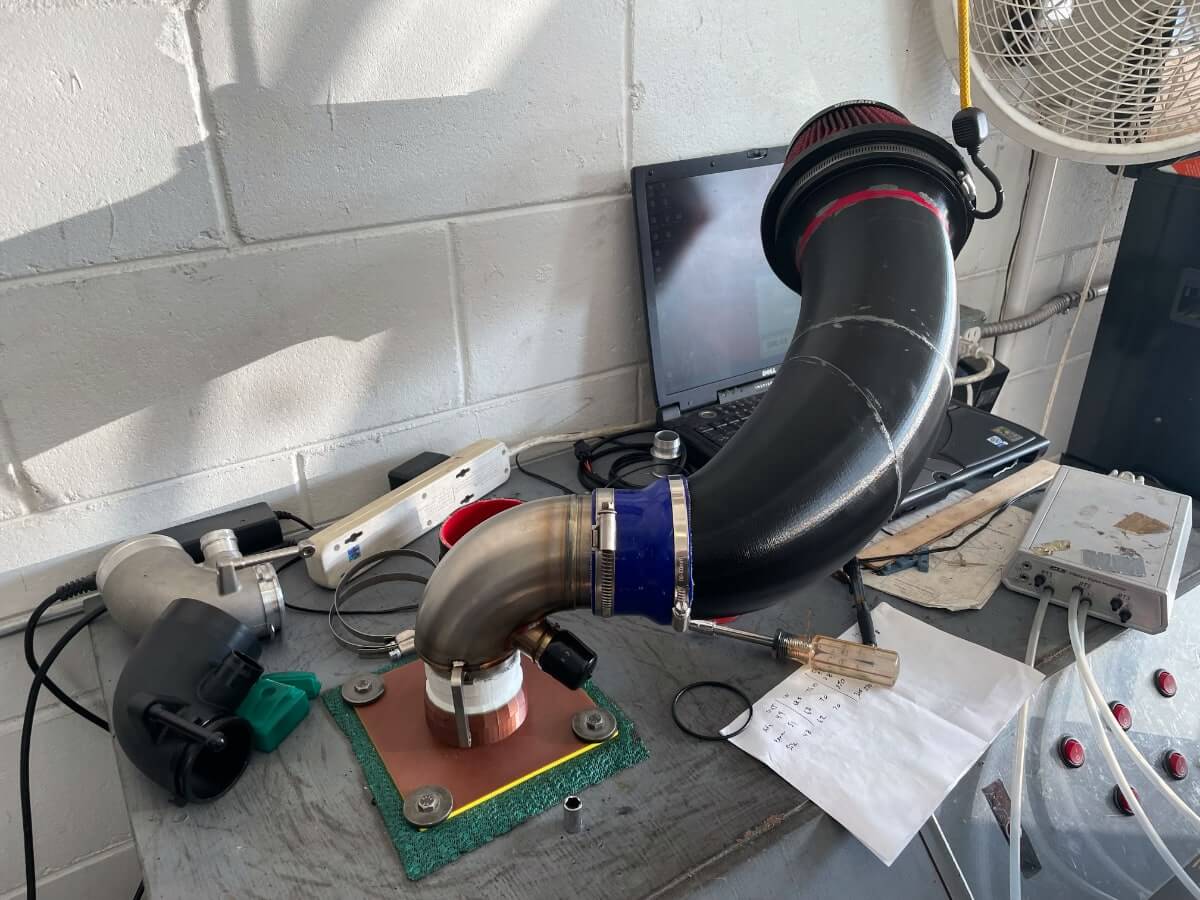
The difference attributable to the inlet elbow is shown in the following chart.
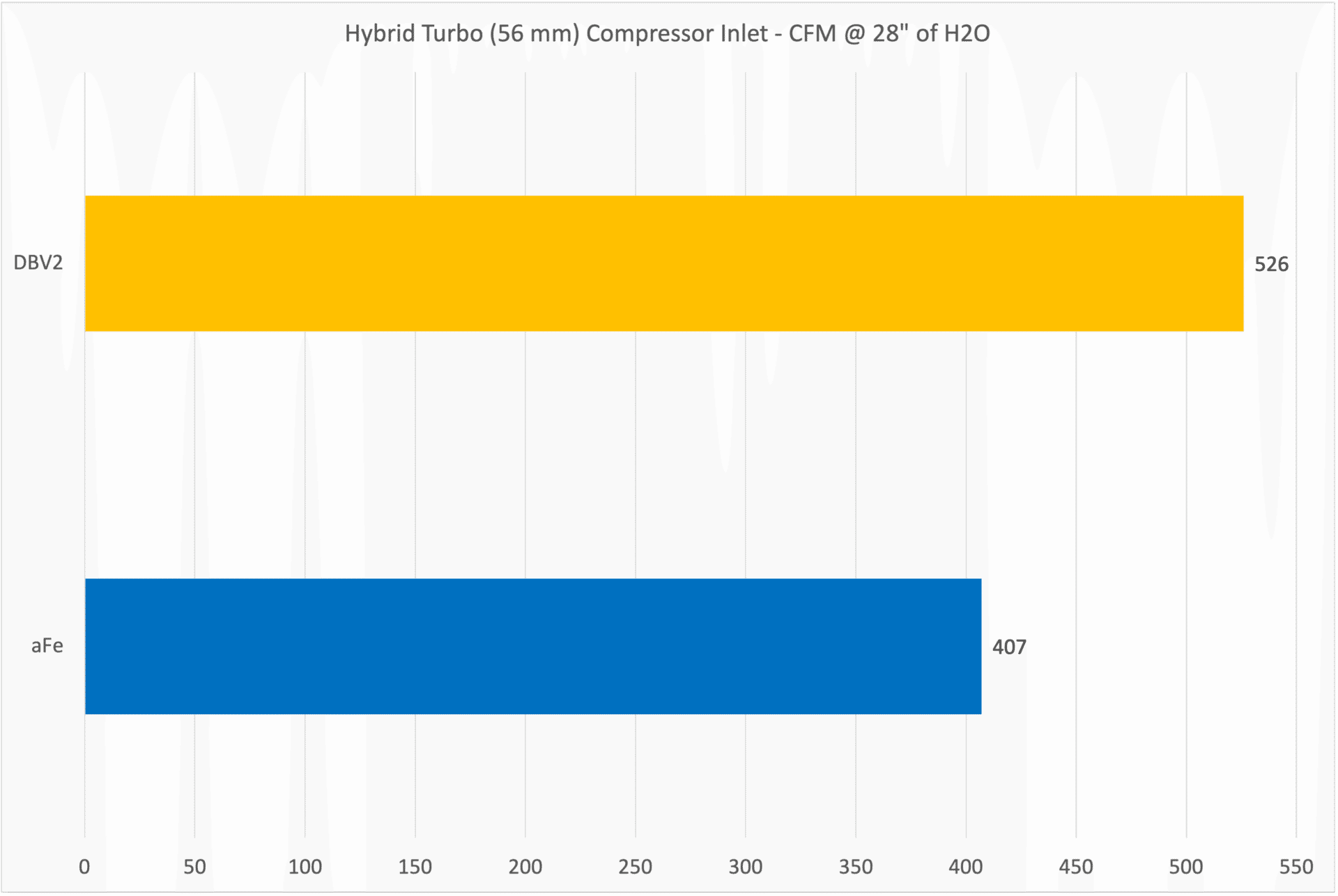
This large disparity in airflow rates between two inlet elbows that use 3″ diameter inlets, but different diameter outlets, 49 mm (aFe) versus 55.3 mm (DBV2) illustrates the significant contribution that the elbow outlet diameter has on the maximum airflow rate through the elbow.
Conclusions:
The aFe Power turbo inlet elbow was flow tested and found to flow 388 CFM @ 28″ of H2O, which is at the low end of elbows flow tested using an aftermarket inlet hose and stock turbo-sized adapter.
PCV port vacuum with the aFe Power elbow is approximately 75% of the vacuum generated by the stock elbow, significantly higher than the 30% average measured with most aftermarket inlet elbows.
The trade-off between flow rate and PCV port vacuum has been observed previously.
The aFe Power inlet elbow offers a unique combination of support for a 3″ inlet hose, moderately high airflow through a stock-sized turbo adapter, and moderately high PCV port vacuum – qualities that make it an appealing alternative to the stock inlet elbow.