
Background:
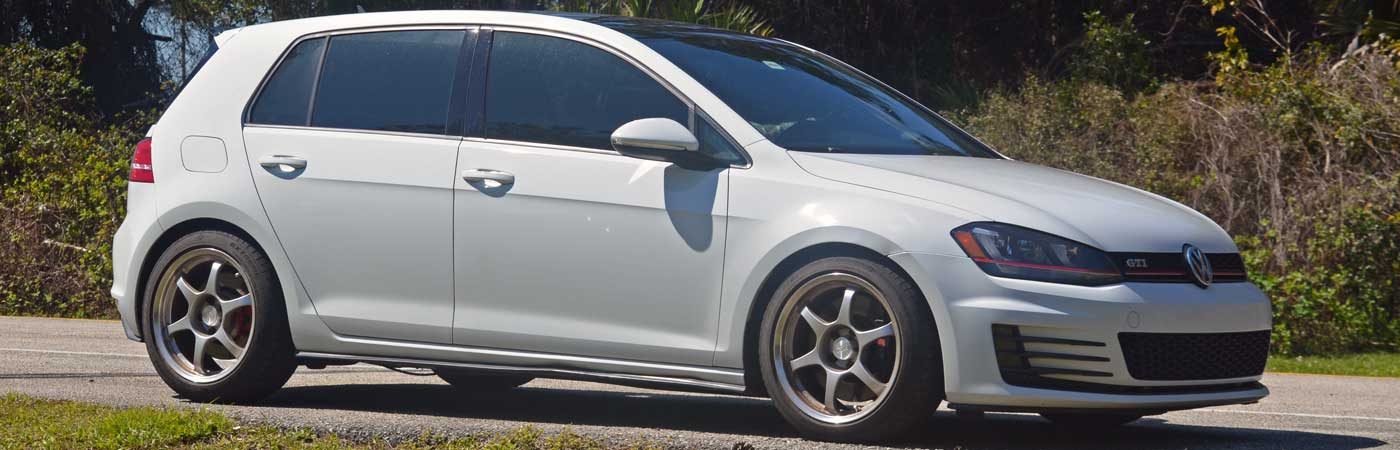
Any chance it comes up where I can flow test a downpipe to add another data point, I will. The CC Design catless downpipe that I am using on my Mk7 GTI is a 4″ diameter along the entire length of the downpipe, which is the first DP of this size that I have had the opportunity to test.
Test Procedure:
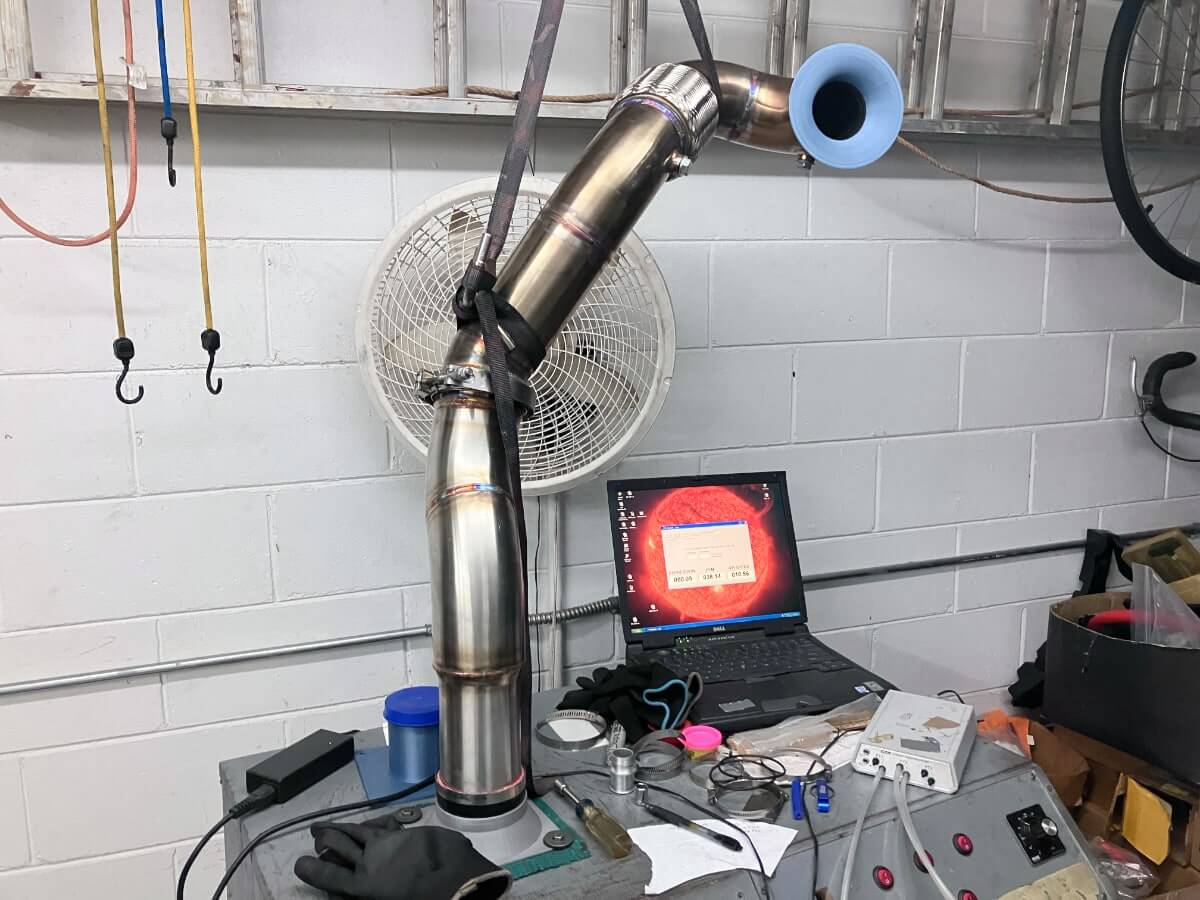
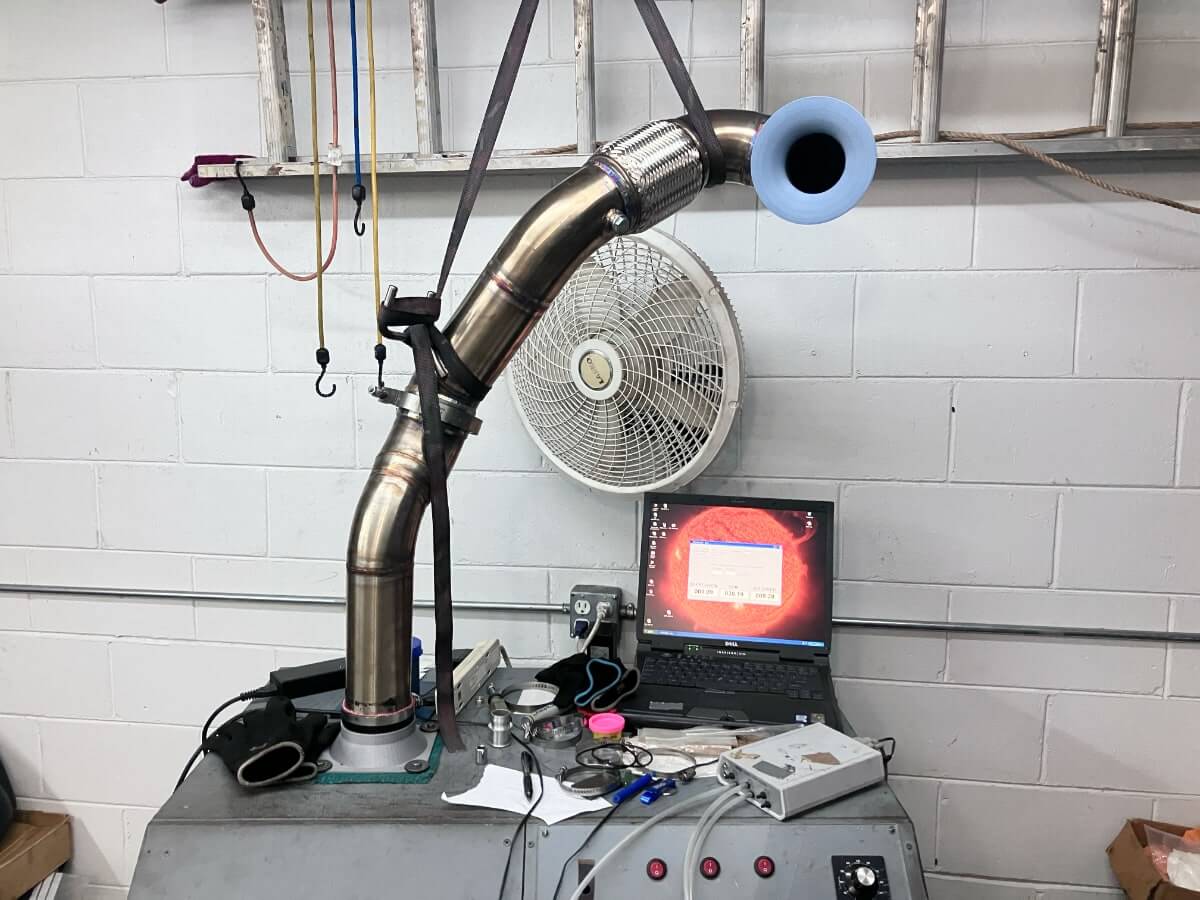
The downpipe is attached to the flow bench using a silicone coupler and adapter that match the outlet diameter. On the inlet end, a bellmouth is attached to smooth the airflow into the pipe.
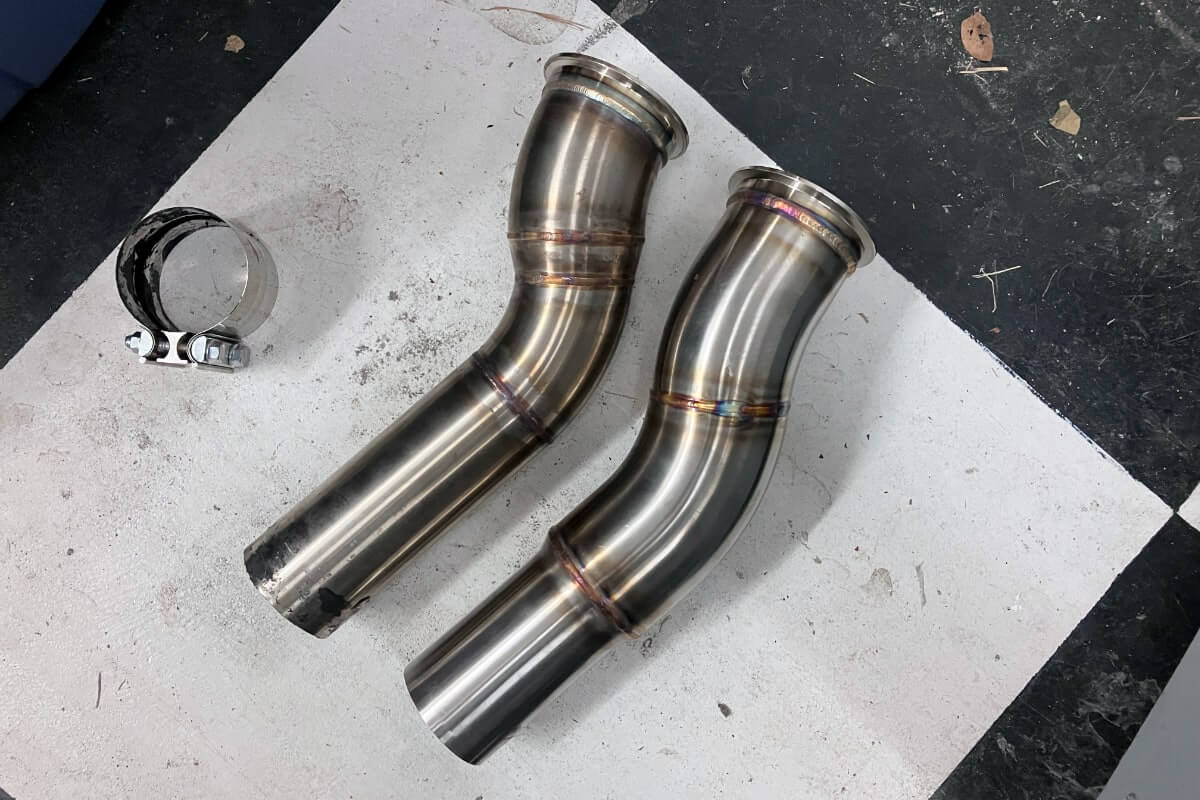
The CC Design midpipe adapters I have are different designs. One tapers prior to the bend, and the other tapers after the bend. This part will be added and then swapped to see the effect on airflow through the joined pipes.
The downpipe is flow-tested at 9″ of H2O, and the results are extrapolated to 16″ of H2O to compare with other downpipes that have been tested.
Note: The test depression is lower than I usually test downpipes at due to the flow rate the downpipe supports. Due to having little resistance, the maximum CFM flow rate of the bench is met at less than 16″ of depression.
Test Results:
The CC Design 4″ catless downpipe flows 585 CFM @ 9″ of H2O. This scales to 764 CFM at 16″ of H2O. This is shown along with other downpipes that have been tested on the chart.
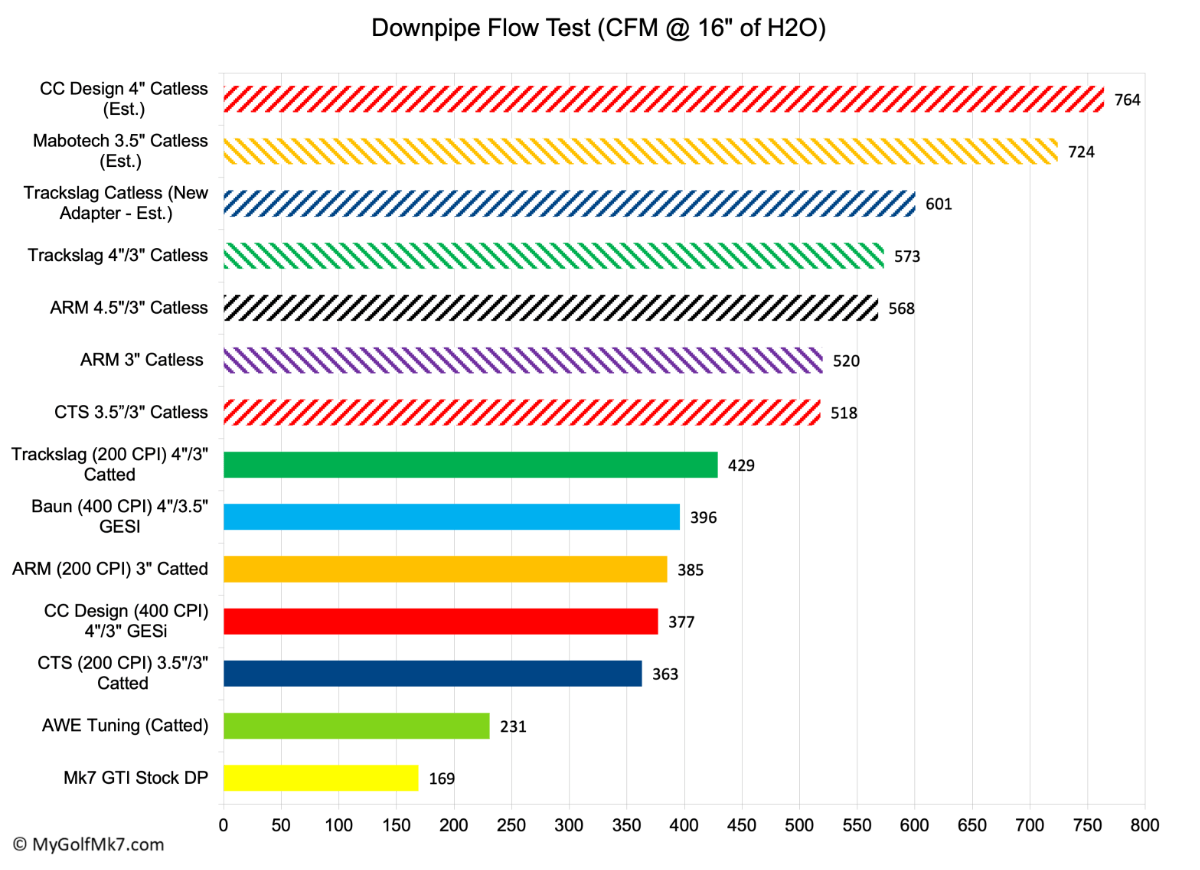
The addition of the 3.5″ midpipe section reduces the flow rate to 669 CFM @ 16″ of H2O with the midpipe that has the 4″ to 3.5″ transition prior to the bend. The midpipe with the transition after the bend flows 680 CFM @ 16″ of H2O. This result is consistent with the principles of fluid dynamics, which dictate that pressure losses increase with air velocity and that the transition prior to the bend increases the velocity before a point of relatively greater restriction.
Conclusion:
The CC Design 4″ catless downpipe for the Mk7 GTI was flow-tested and delivered 585 CFM at 9″ of H2O. This scales to 764 CFM at 16″ of H2O.
This flow rate is the highest that has been measured from any of the downpipes that have been tested in this manner.