
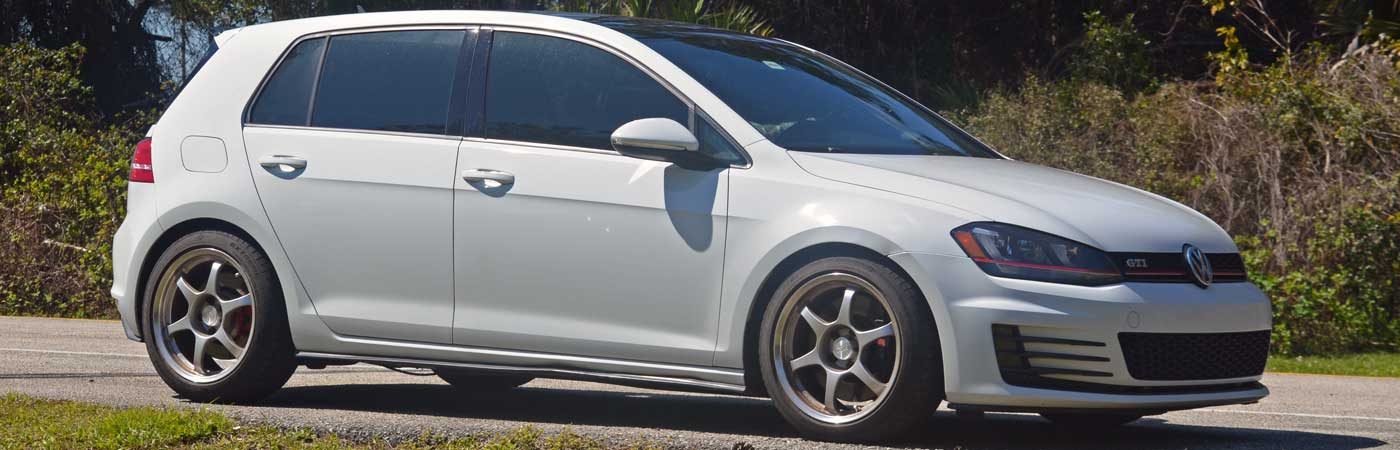
Background:
During a discussion about the effects of exhaust back pressure in the turbine housing, it was suggested that the O2 sensor in the turbine housing could be removed so a pressure sensor could be installed. I thought that was a very good idea.
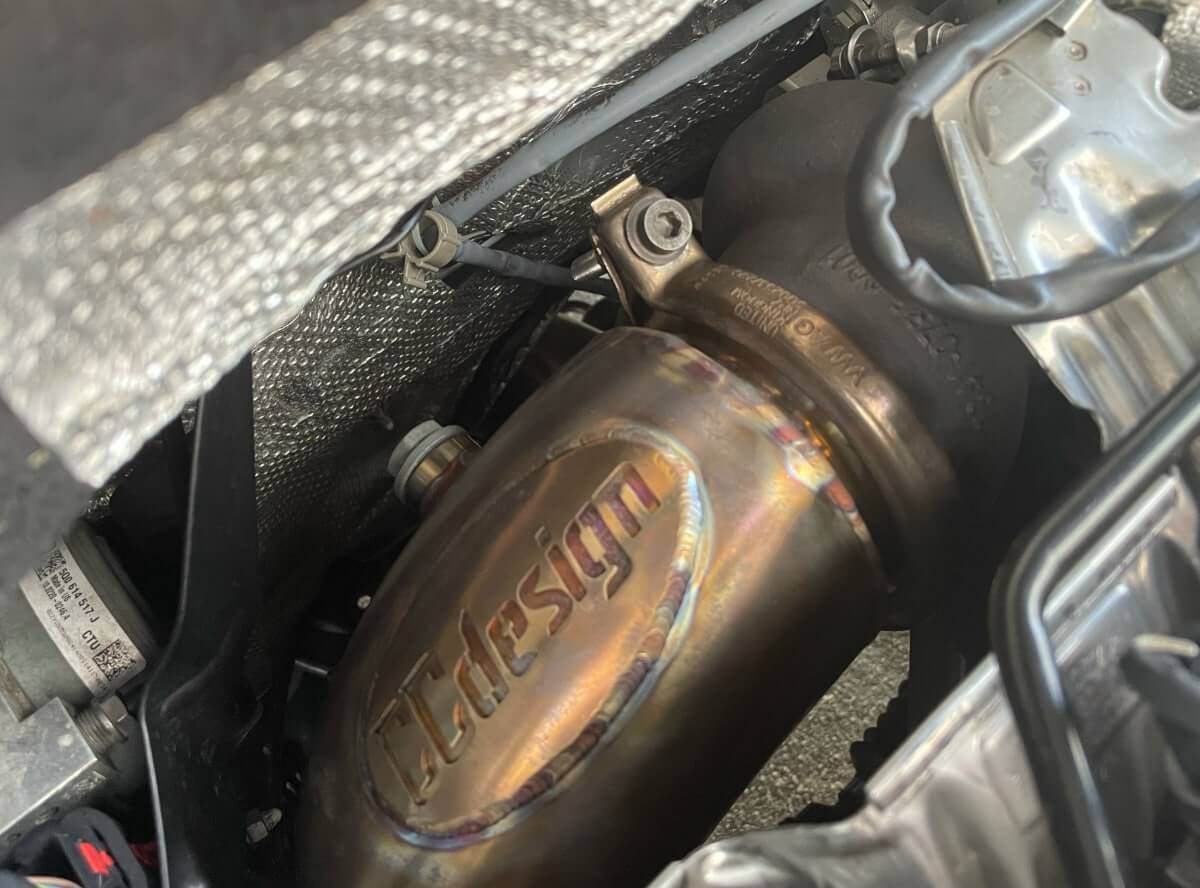
When CC Design made my downpipe, I requested they add a bung after the turbo so I could measure the exhaust gas temperature; it now occurred to me that this could be repurposed to hold the O2 sensor, and the pre-turbine exhaust pressure could be measured at the upstream O2 sensor location.
For some additional information on backpressure in a turbocharged system, this video presents an overview of the topic.
Exhaust Pressure Setup:
I began to assemble the components I would need for this. The exhaust gas presents a couple of challenges to measurement: temperature and pulses; therefore, I was going to need hardware made for this purpose.
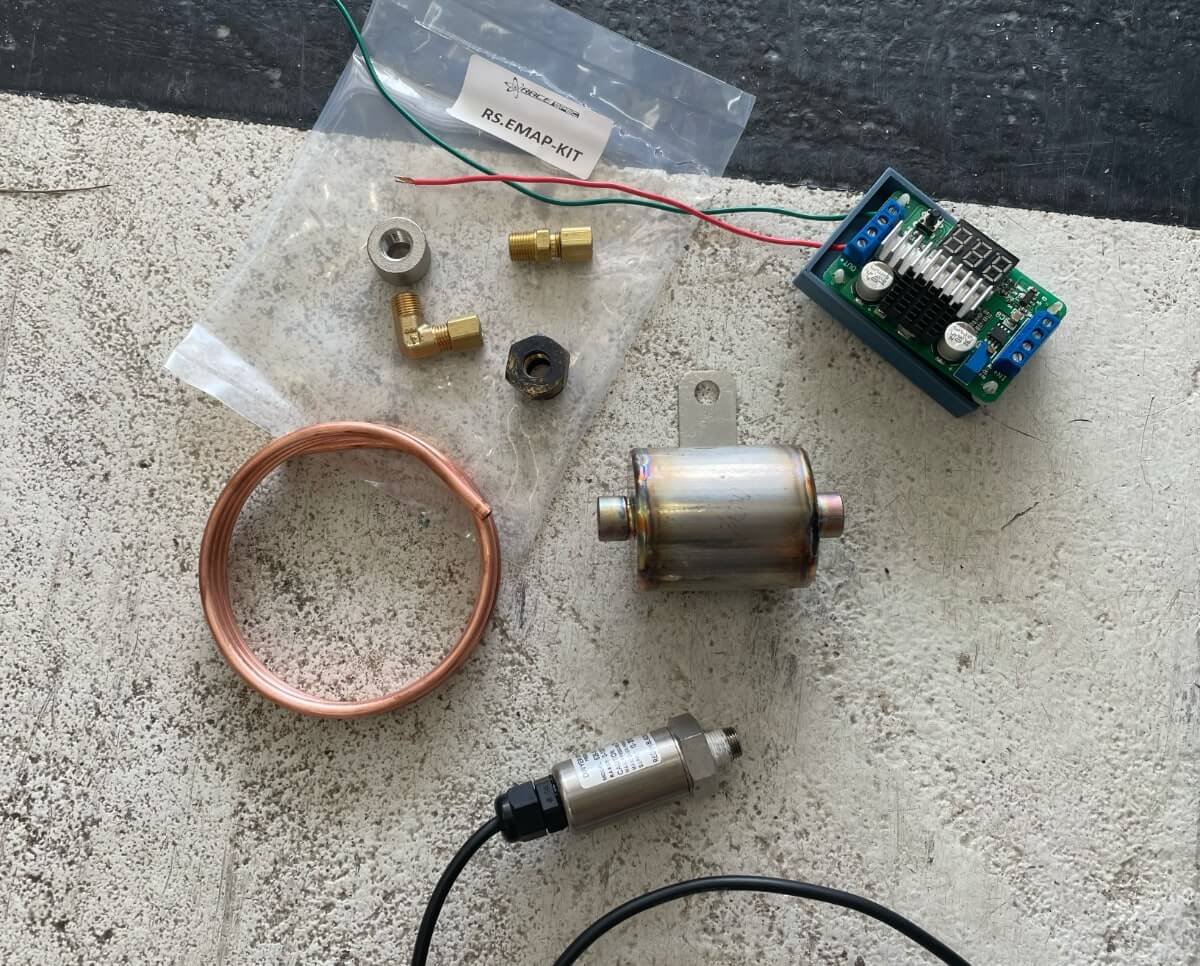
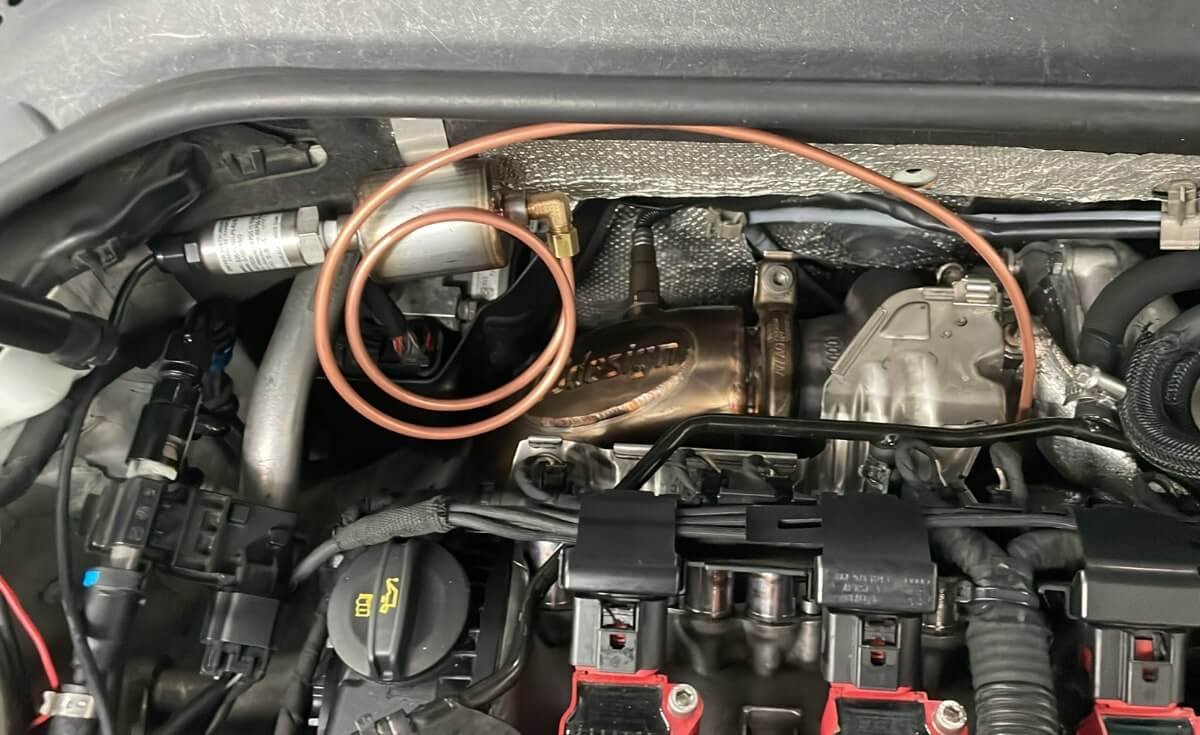
An adapter that fits the O2 sensor port and has an opening for attaching a copper tube is the first piece of the sensor setup.
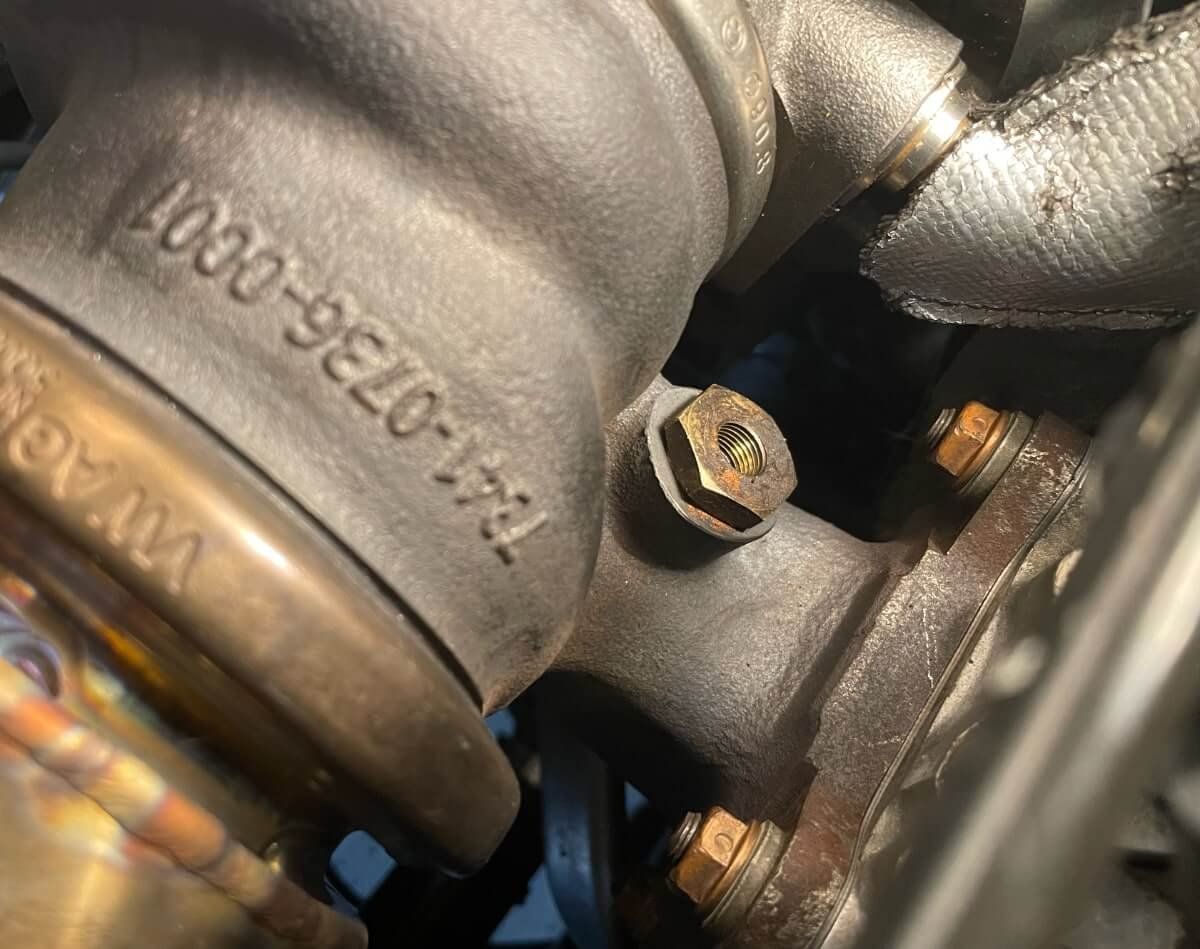
The copper tube is then attached
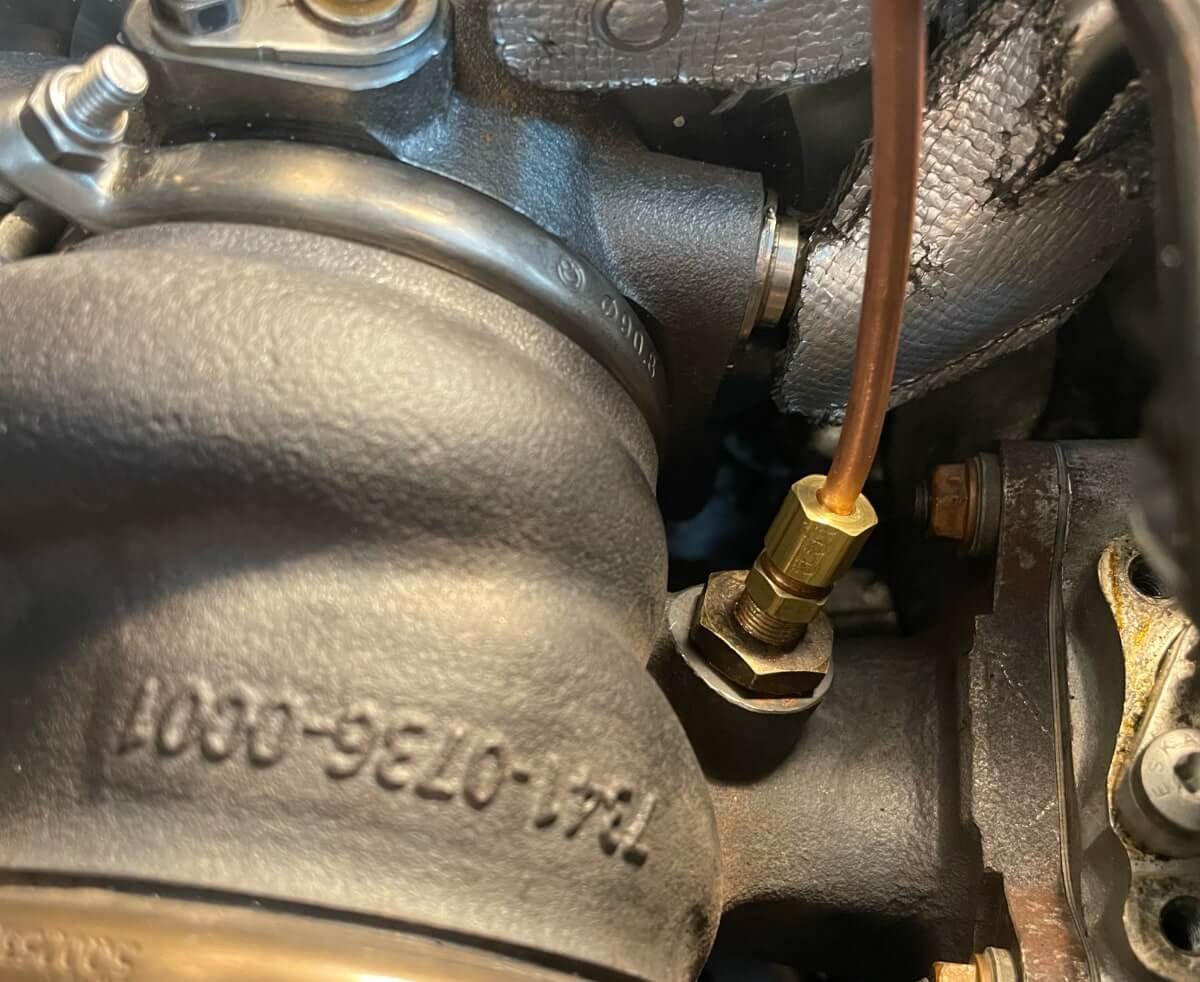
The O2 sensor is relocated to be downstream of the turbine. It just fits in this location; presumably, if I were using a smaller downpipe than the 4″ that I have, this may not be such a tight fit.
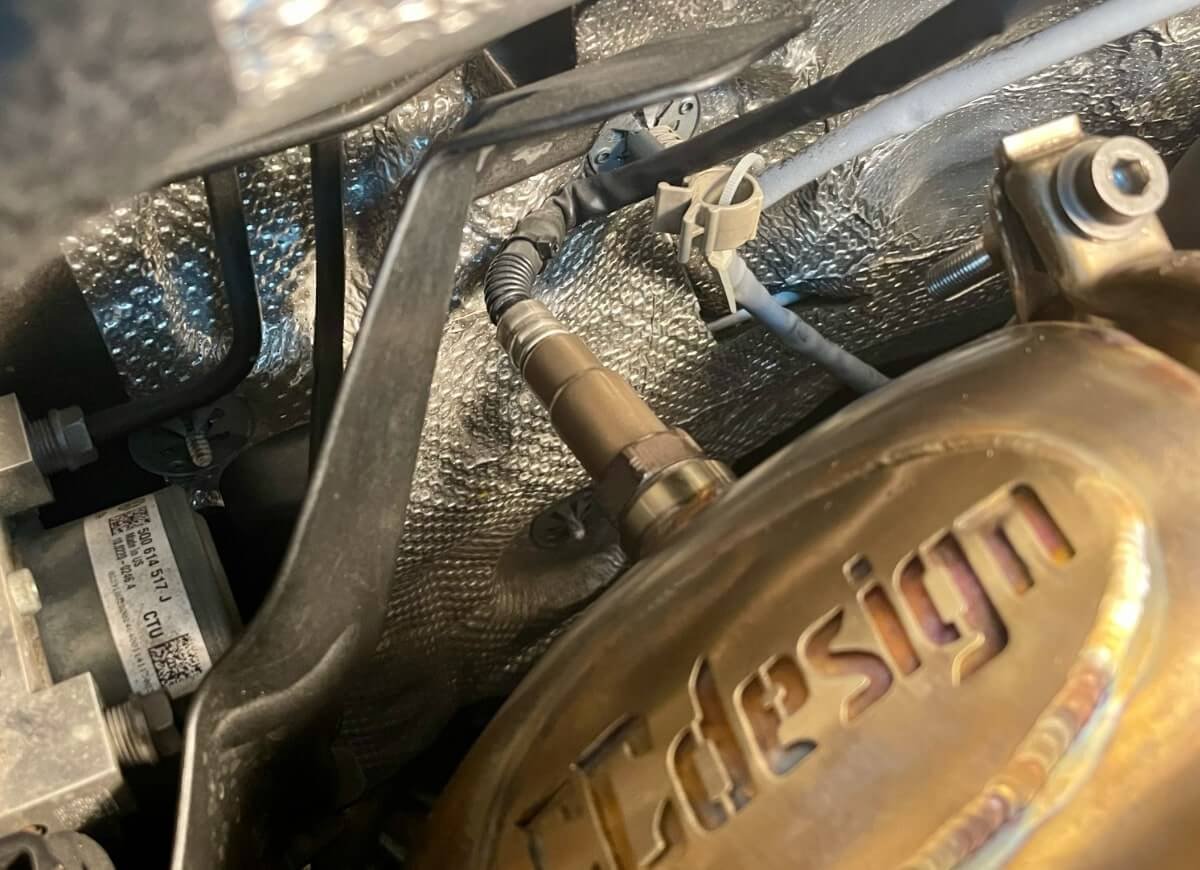
The copper tubing is run to a pressure pulsation damper. This is needed because the pulsed exhaust is stronger upstream of the turbine and would cause problems for the pressure sensor if it were trying to read the exhaust pulses directly.
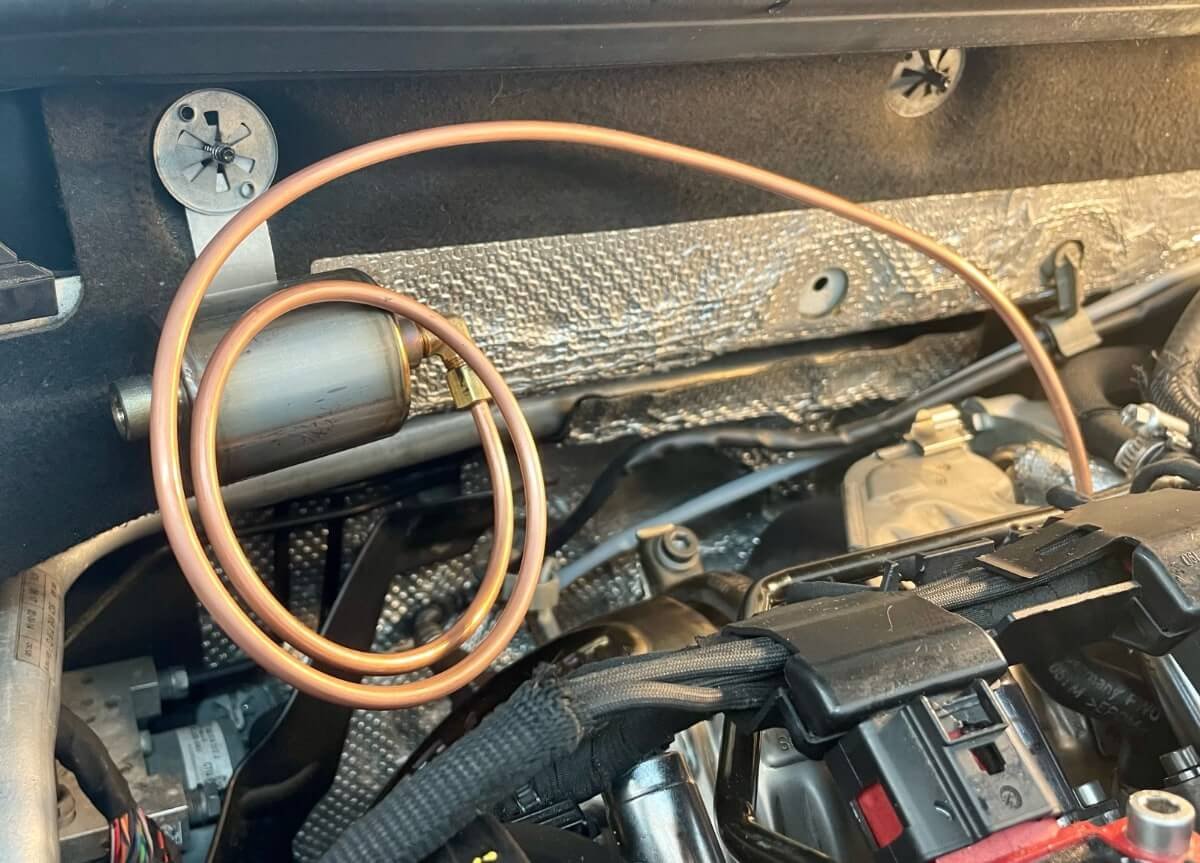
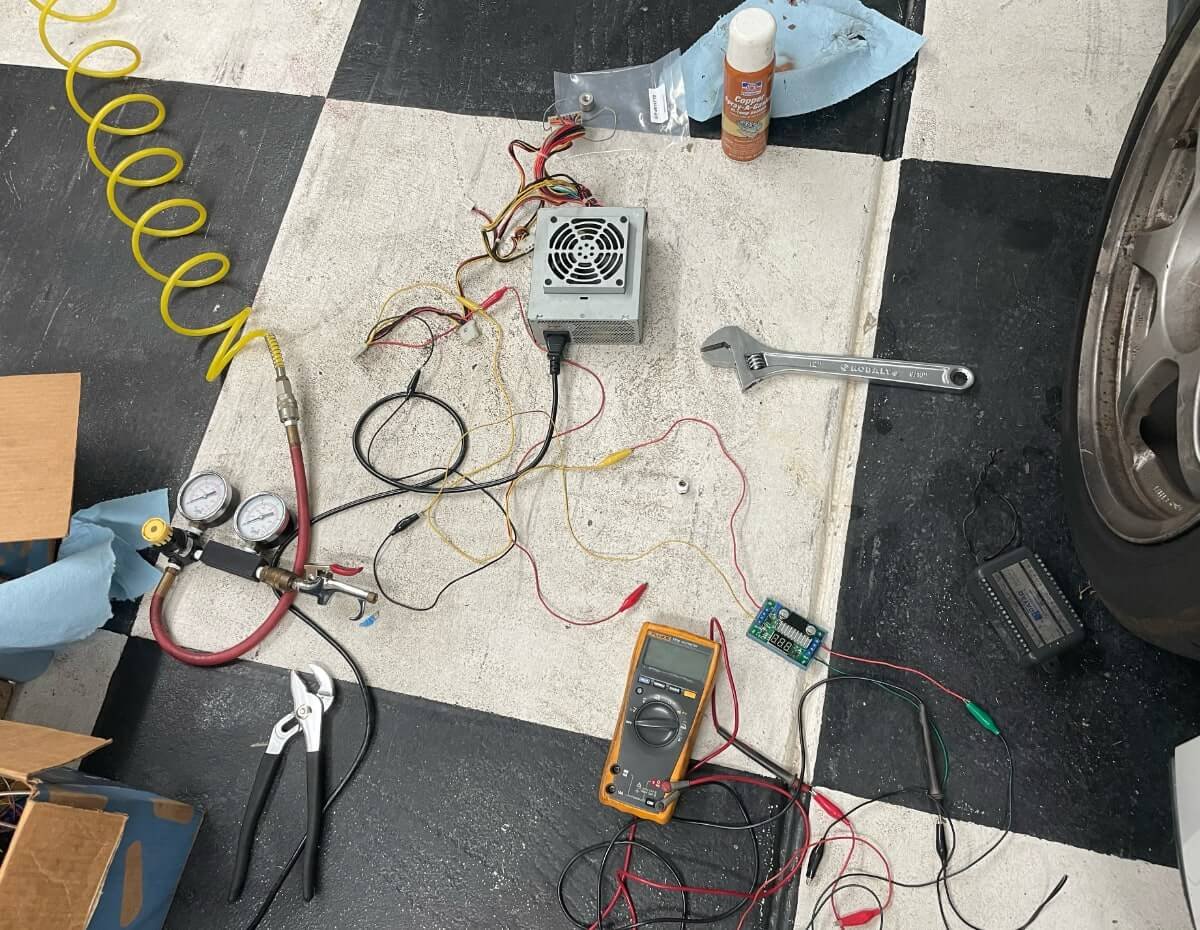
Pressure is read with a Dwyer 0-100 psi transducer. Dwyer offers custom configurations for this transducer model, and when I ordered mine several years ago, I inexplicably chose one that requires more than 12VDC. Add a voltage converter to the mix.
I checked the pressure transducer before installing it onto the damper to verify it was functioning.
The last step was installing the transducer and securing the components inside the engine compartment.
Next up will be measuring the pre-turbo exhaust gas pressure of the Shuenk IS48 turbocharger with the 5+5 splitter turbine wheel.