
Introduction:
A recurring problem in the MQB aftermarket is vendors making technical claims that aren’t supported by data. Intakes are a good example. While preferences about sound or aesthetics are subjective, airflow performance is not.
In controlled flow testing, the CTS Turbo intake consistently ranks among the highest‑flowing options available. As shown in the test data:
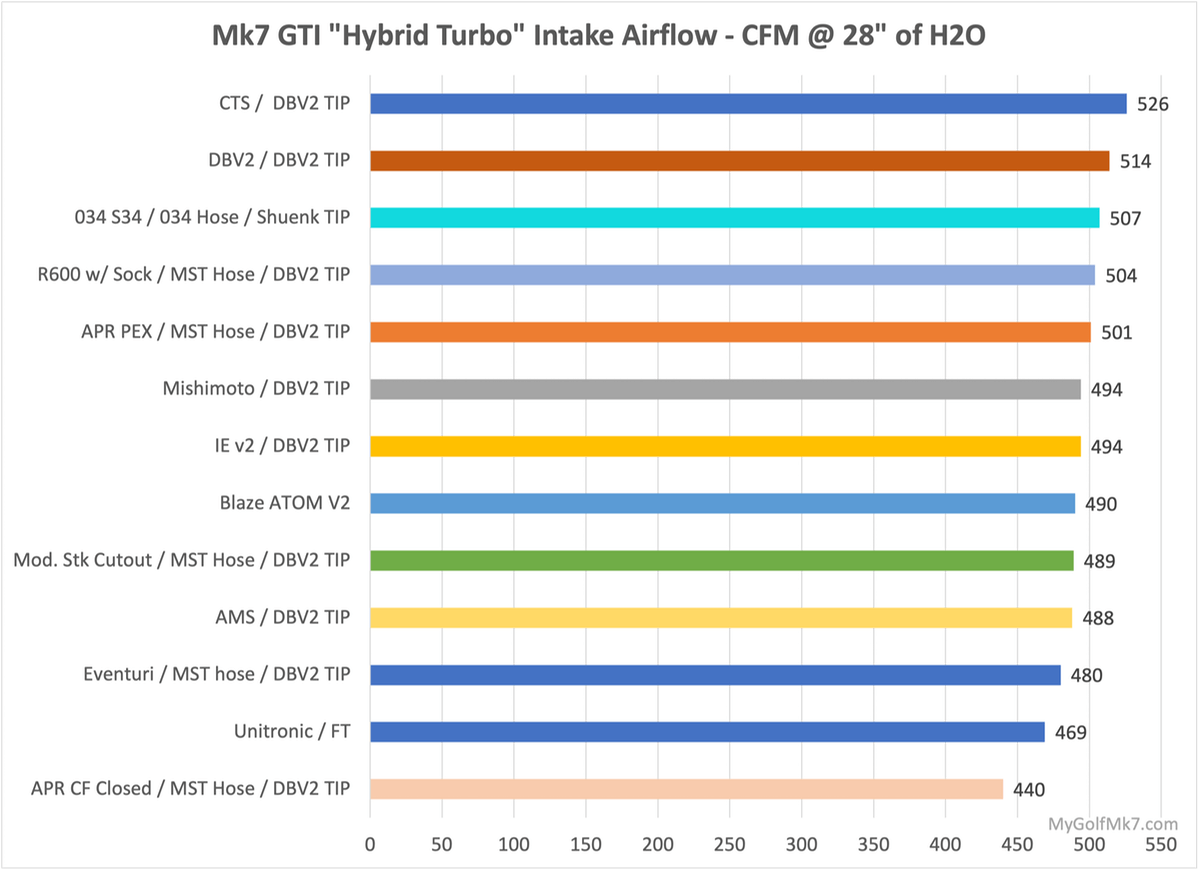
Despite this, EQT representatives recently told a consumer that his CTS intake would be a “fair” or even “significant” restriction — claims directly contradicted by published measurements.
This post examines the exchange, compares EQT’s statements against test data, and explains why unsupported claims like these can mislead consumers.
What John asked vs. What EQT answered:
In this post, John asks if the CTS Turbo intake will bolt up to the Vortex XL turbocharger.
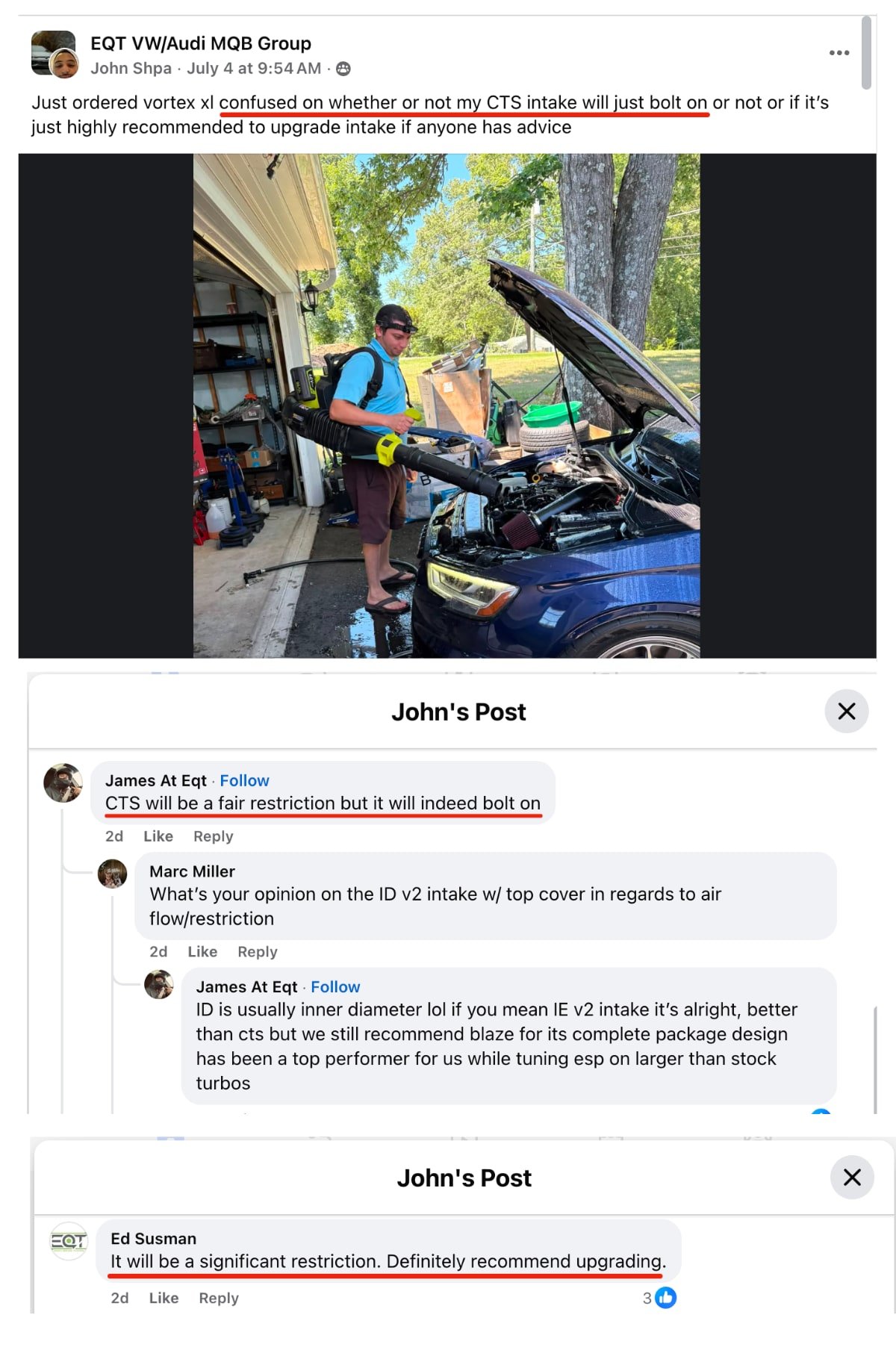
James, responding for EQT, wrote that the CTS intake “will be a fair restriction but it will indeed bolt on.” When another member, Marc Miller, asked how the IE V2 intake compared, James replied that it’s “it’s alright, better than cts,” while noting EQT still recommends the Blaze AToM “for its complete package design.” Ed Susman then added, “It will be a significant restriction. Definitely recommend upgrading.”
| John’s Question | EQT’s Answer |
|---|---|
| Will my CTS intake bolt up to the Vortex XL? | “CTS will be a fair restriction.” / “It will be a significant restriction.” |
| Fitment question | Sales‑driven performance claim |
Product design:
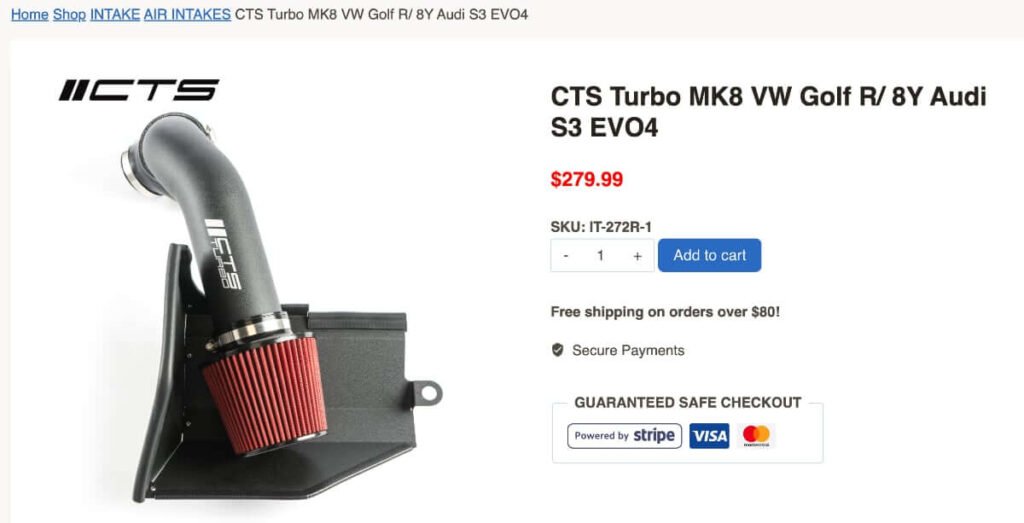
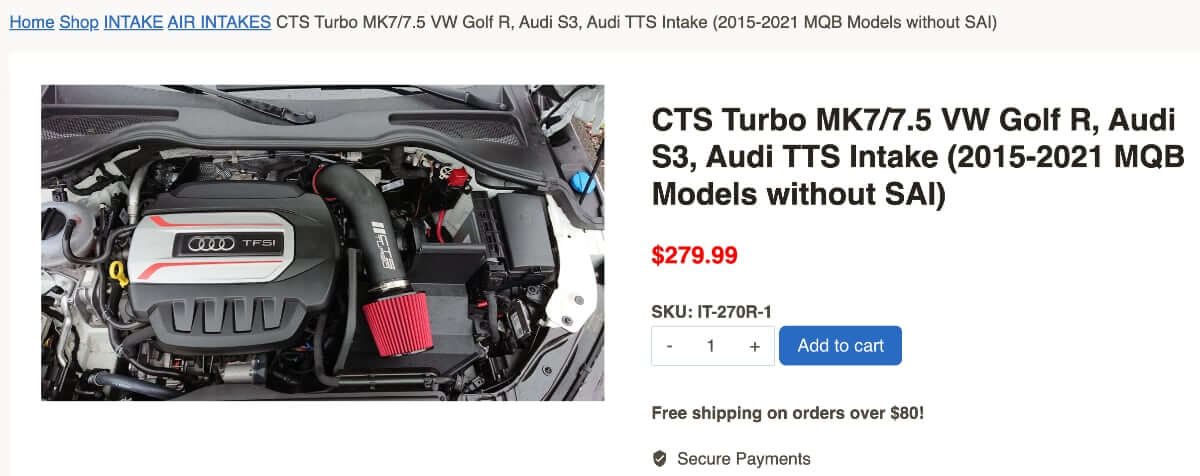
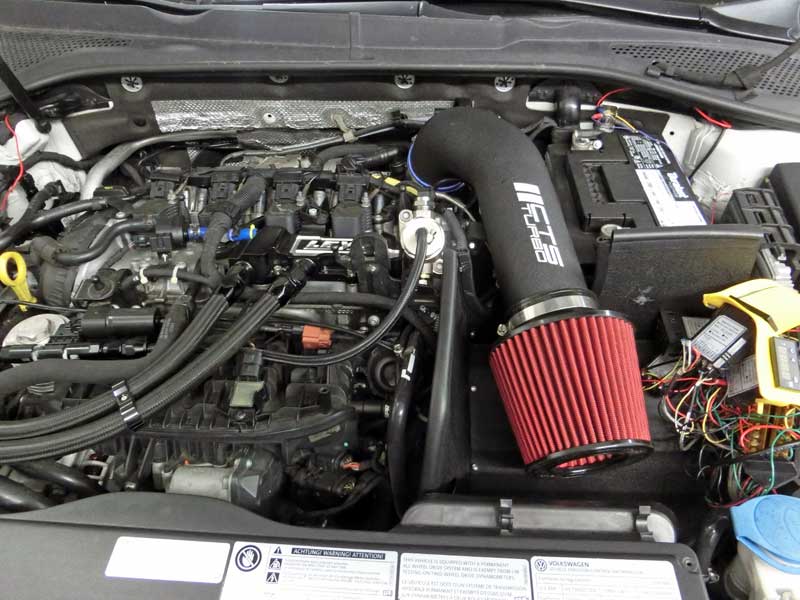
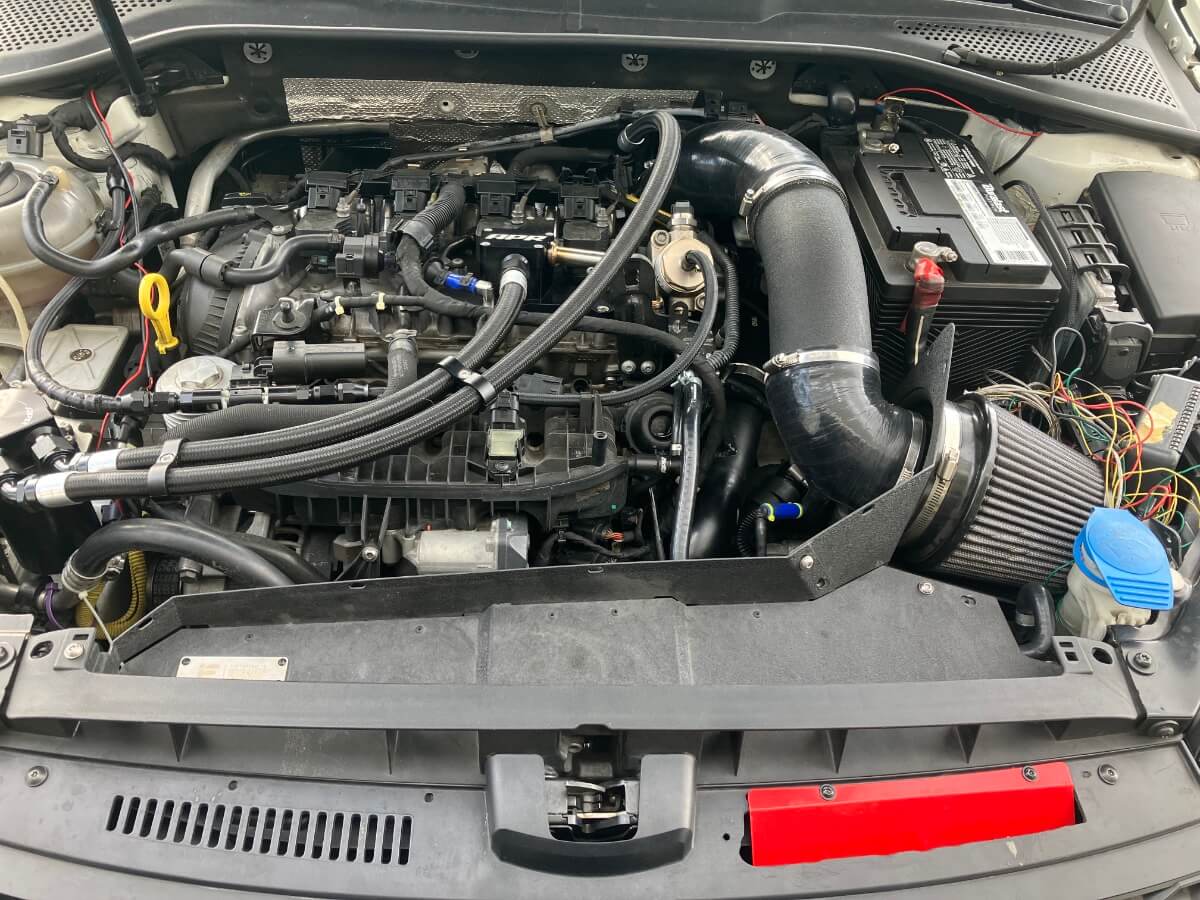
Looking at the picture John posted, the CTS intake is clearly visible.
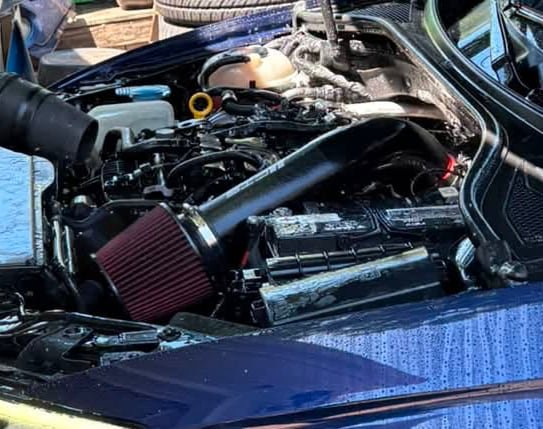
This model of CTS Turbo intake for the Mk7 and Mk8 is the same “filter on a stick” design as far as I can tell.
CTS Turbo
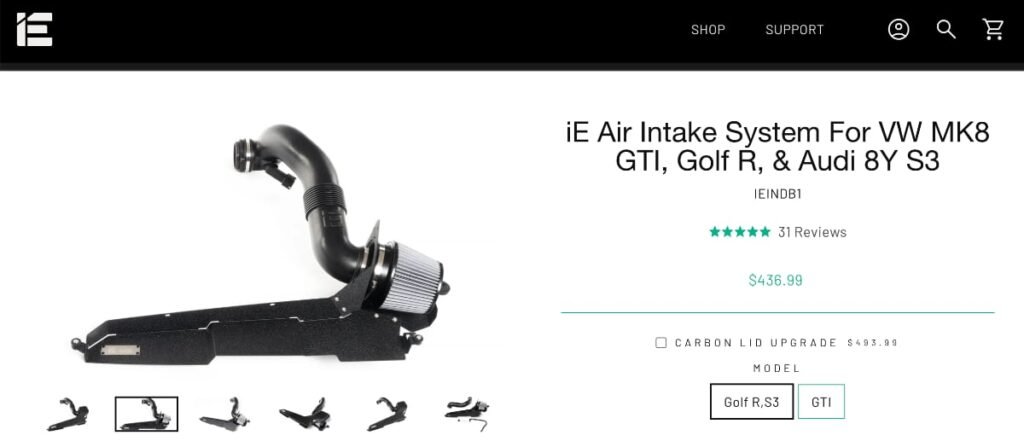
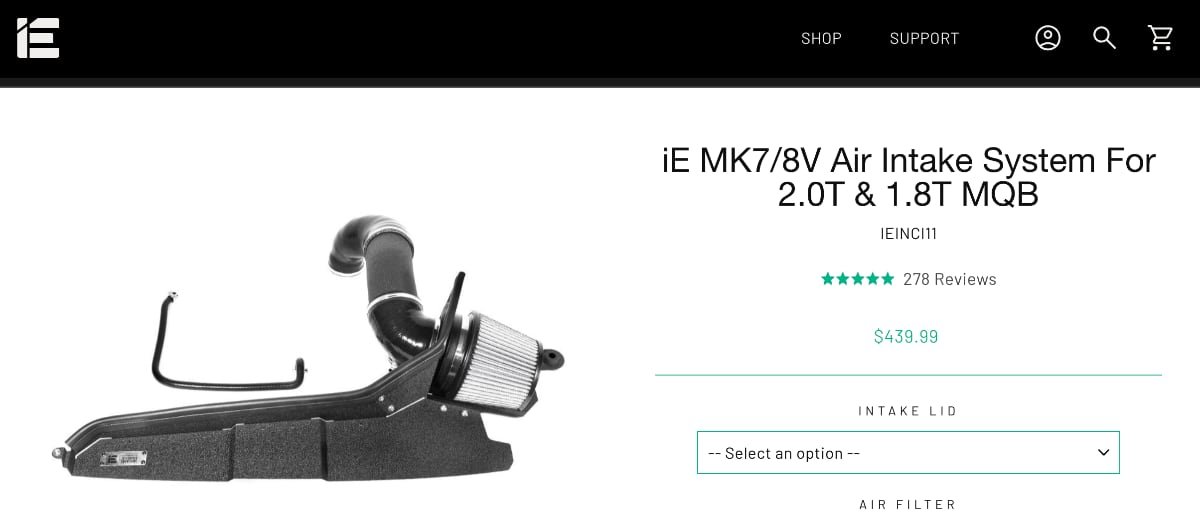
Integrated Engineering
Similarly, the Integrated Engineering intake is very similar between the Mk7 and Mk8 platforms.
Blaze Performance AToM
Also, the Blaze AToM appears unchanged between platforms.
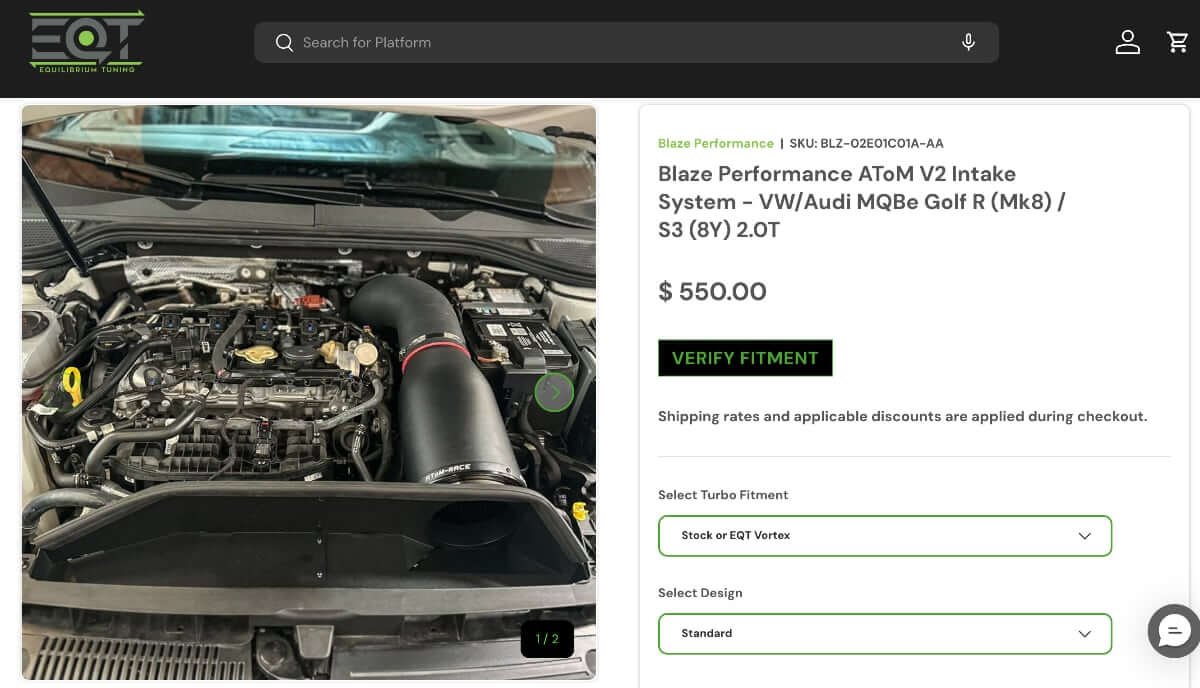
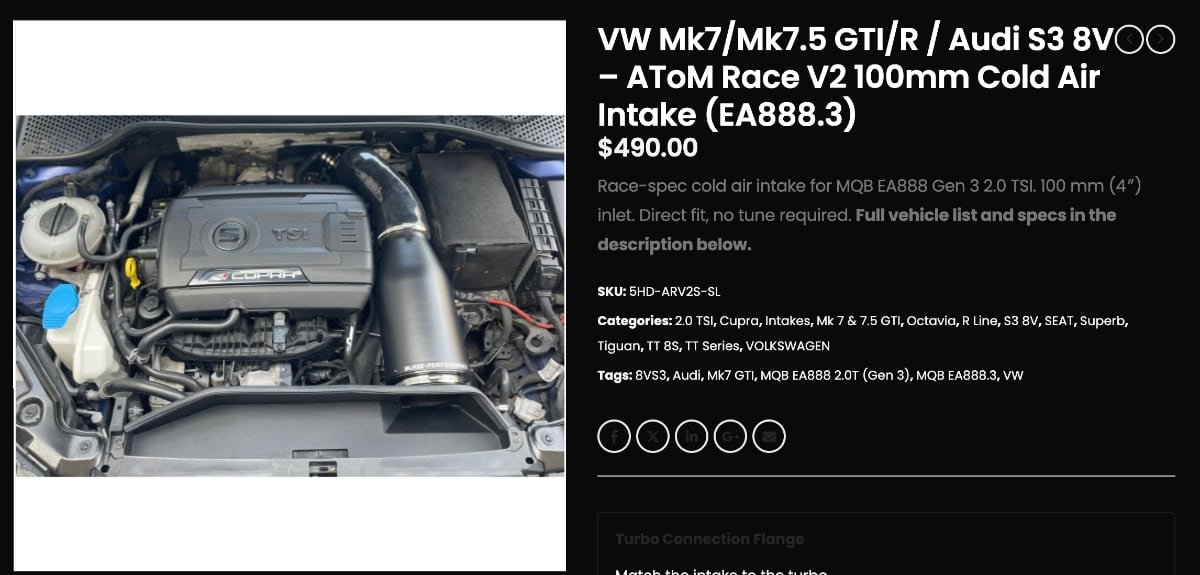
These similarities are all logical given the evolutionary nature of the Mk7 to Mk8.
What the testing shows:
As was presented at the start of the post, controlled testing of all of these intakes has been conducted to provide objective comparison data.
CTS Turbo

Integrated Engineering
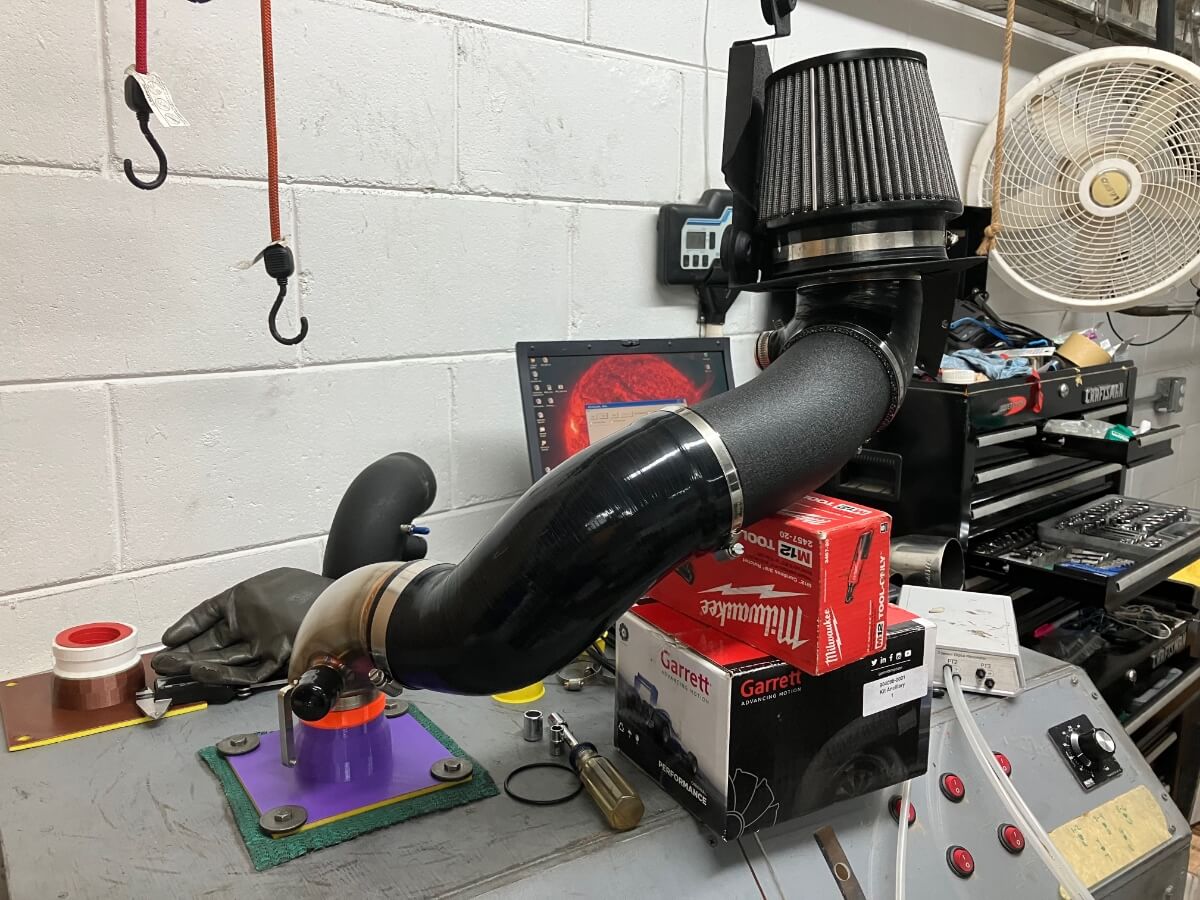
Blaze AToM V2
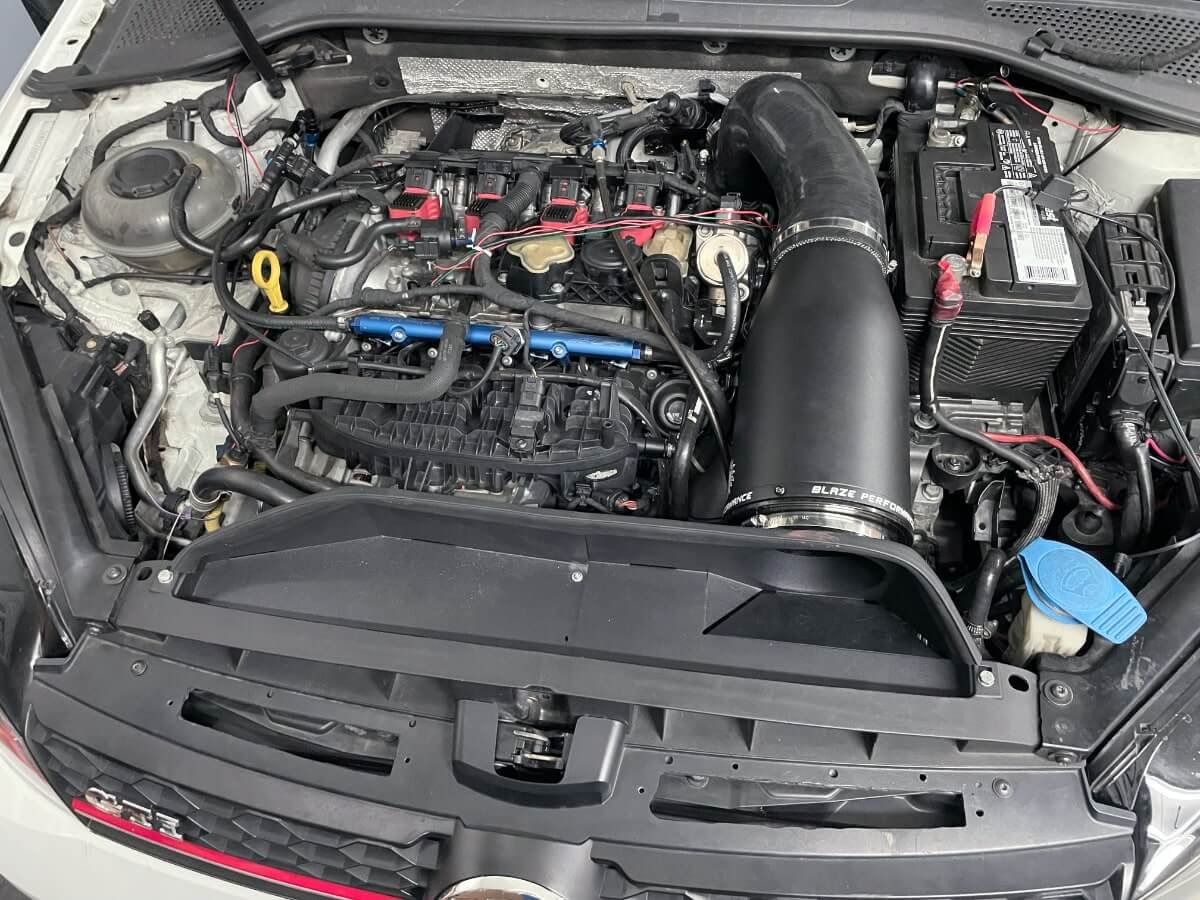
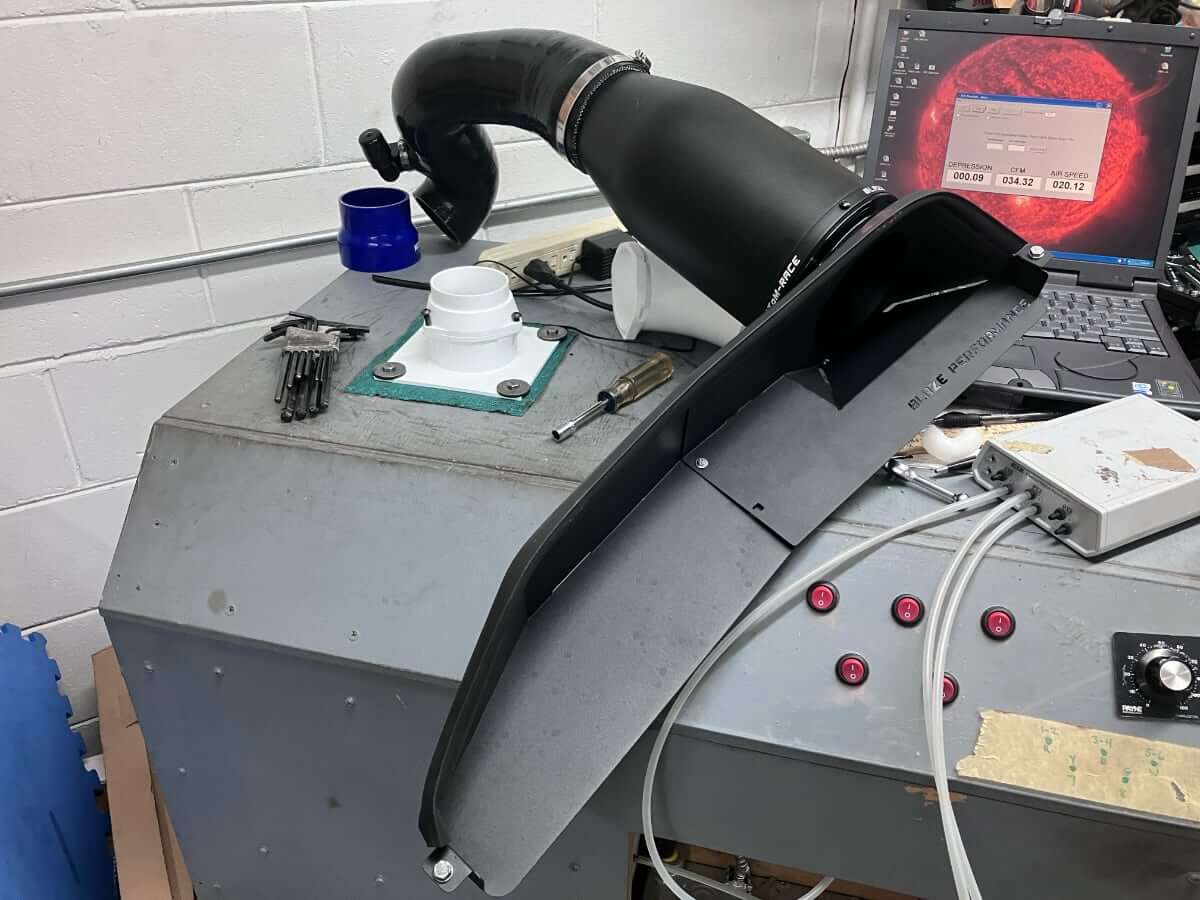
I’ve flow-tested (and operated with) all three intakes that James and Ed are referencing, using the same hybrid-turbo test setup, so this is a straightforward comparison against measured data rather than opinion.
In a post titled Intake Testing for Hybrid Turbos, I discussed the testing and the results.
- CTS Turbo w/ DBV2 TIP: 526 CFM
- IE V2 intake w/ DBV2 TIP: 494 CFM
- Blaze AToM V2: 490 CFM
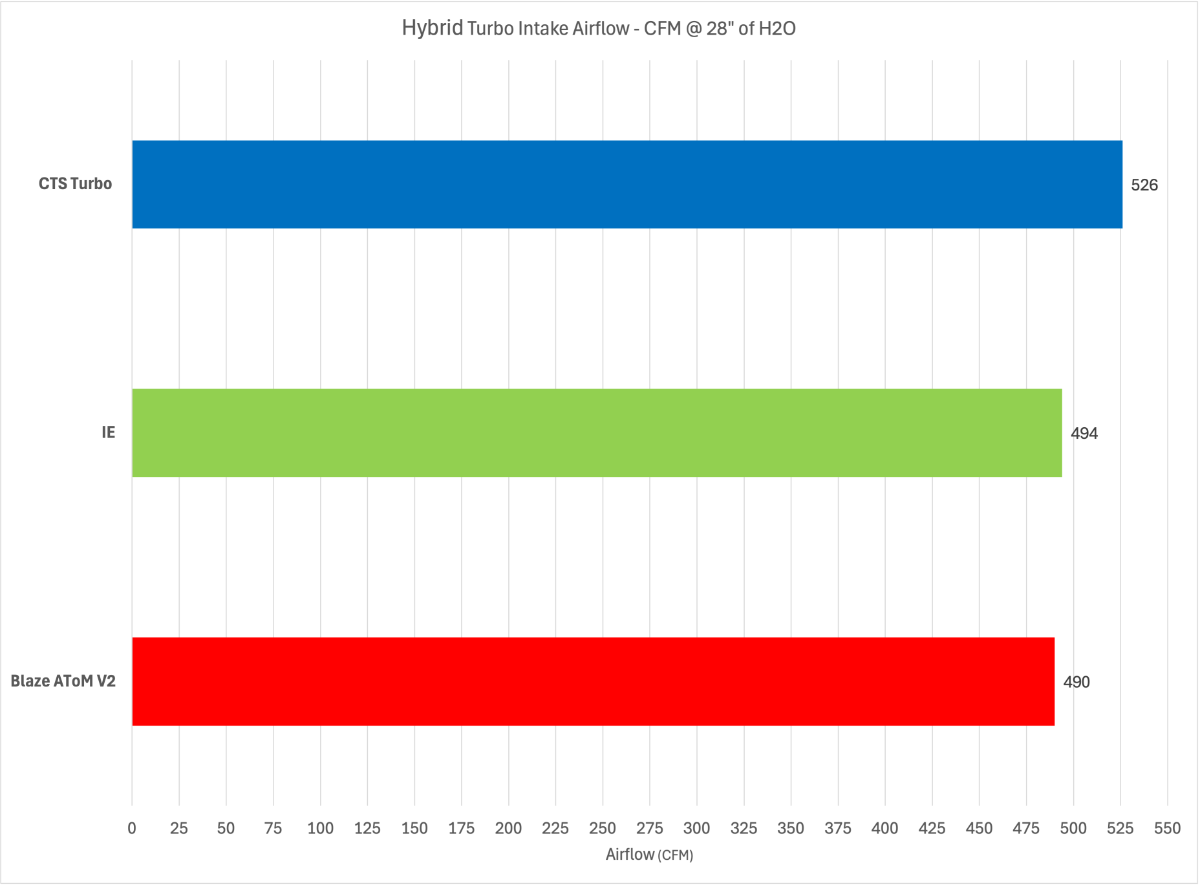
The data show the CTS intake is the highest‑flowing of the three. EQT’s claims are not just unsupported; they are directly contradicted by measured results.
CTS will be a fair restriction but it will indeed bolt on
James At EQT
It will be a significant restriction. Definitely recommend upgrading.
Ed Susman, owner of Equilibrium Tuning

The unasked question:
In a recent post, I address the subject of technical claims being made without proof to support them.
Interested to know if the EQT owner and employee had evidence to support the claims they were making to John about his CTS intake, I sent an email to EQT asking what the basis was for the claims.
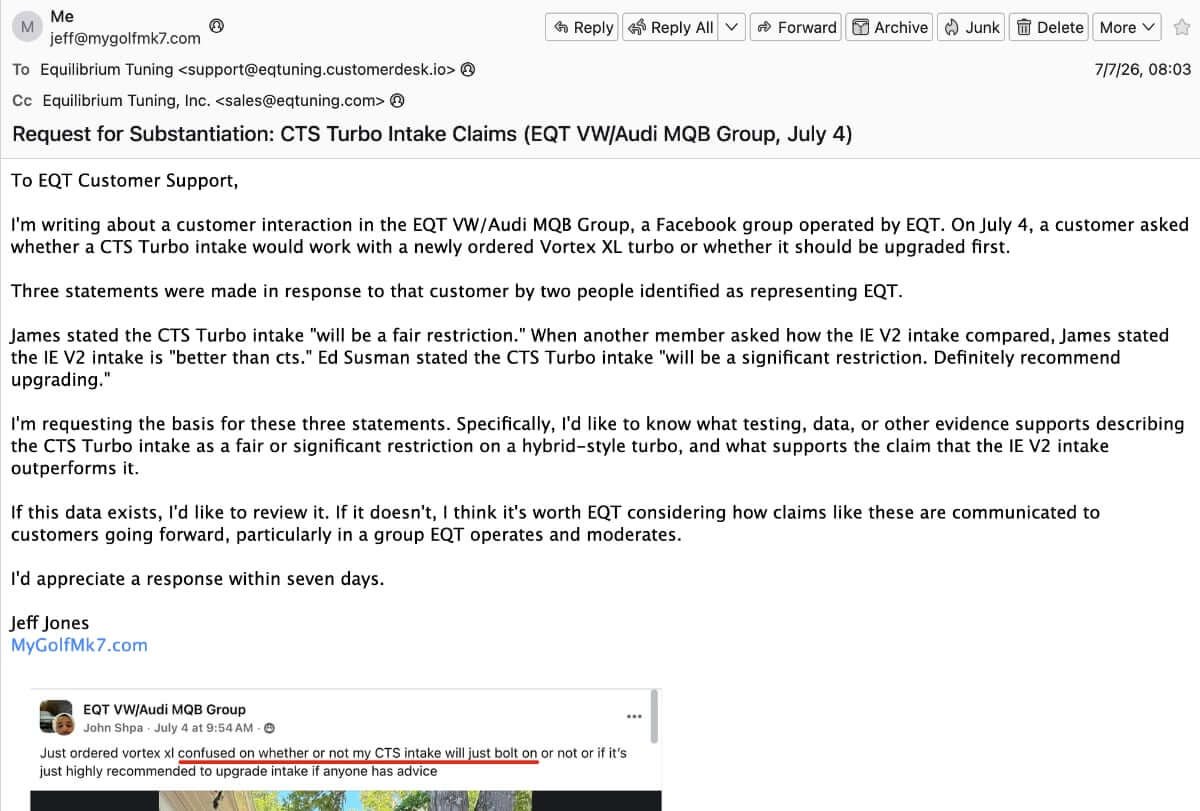
As of the date of this post, more than five weeks later, EQT has failed to respond to this request.
This conduct of ignoring consumer requests to substantiate sales claims is the same as was documented in the post about Claiming “Proof” Without Proof.
A follow‑up attempt — more silence:
Four weeks after sending EQT the email requesting substantiation for their CTS intake claims, I encountered another opportunity to ask the same question — this time directly in a MQB enthusiasts Facebook group.
A consumer had asked about an intake manifold EQT sells. A reply came from James At EQT, who wrote:
“Hey RJ I’d be happy to help answer any questions you may have.”
James At EQT – Equilibrium Tuning Inc. employee
Since James had previously described the CTS Turbo intake as a “fair restriction” and claimed the IE V2 intake was “better than cts,” I used his invitation to ask again what testing or data supported those statements.
As of this writing — more than a week later — James has not responded.
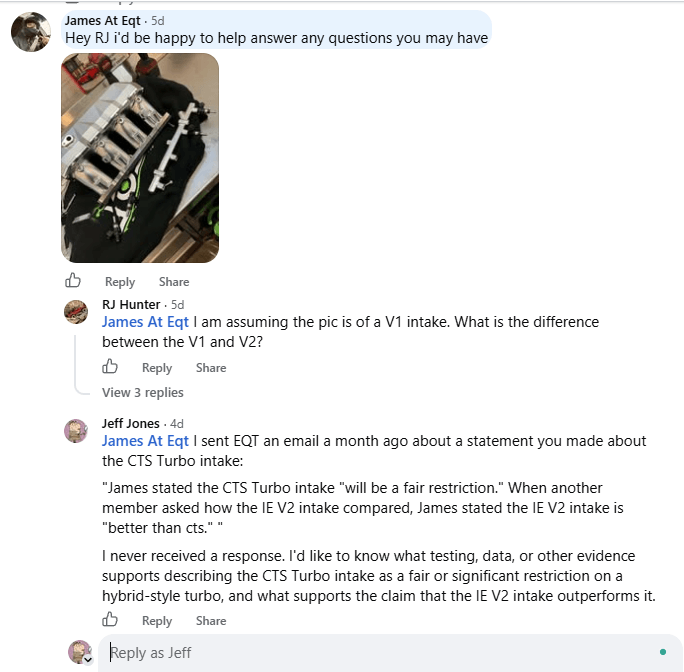
This mirrors the earlier email I sent to EQT, which also went unanswered, and it aligns with prior experiences documented on this site where EQT representatives make technical claims but do not provide evidence when asked to substantiate them.
Part of a pattern:
These exchanges aren’t isolated. They follow a pattern I’ve documented on this site before: a consumer question is answered with a claim that doesn’t align with available data, paired with a recommendation for a specific EQT-sold product.
When a vendor repeatedly makes claims that contradict available data and consistently recommends their own products, it becomes difficult for consumers to trust that the advice is technical rather than commercial.
Bottom line:
Three claims were made in this thread about how the CTS Turbo intake performs relative to other intakes. All three run contrary to measured flow data I’ve published.
This post is not just a disagreement about airflow; it’s an example of how unsubstantiated claims can mislead consumers into unnecessary purchases and hurt ethical businesses.
References:
- Understanding Equilibrium Tuning – Tactics EQT uses with consumers