

Background:
Previously, I posted about trying a 5+5 splitter turbine wheel with the Shuenk IS48 turbocharger, starting with a flow test of the splitter wheel and the standard version’s IS38 turbine.
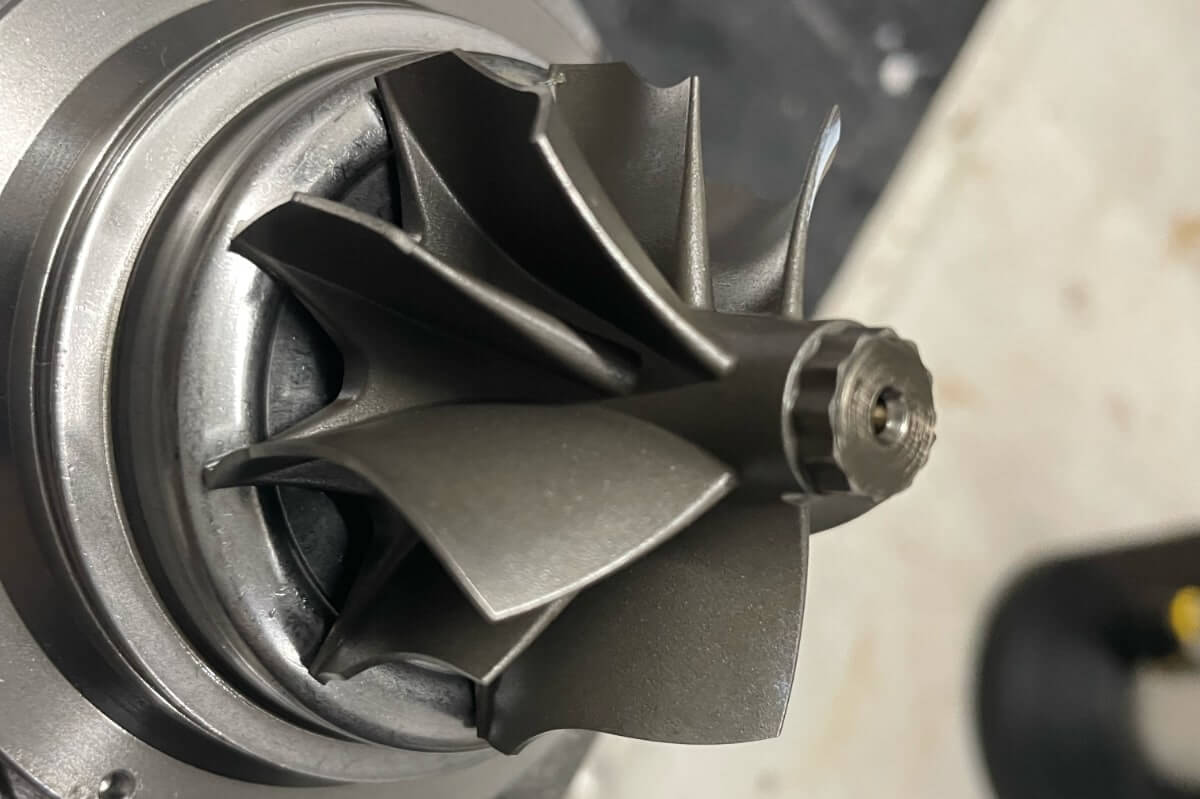
The goal of this design change is to see how boost onset and engine power are affected. With half the blades reduced from full-size to splitters, there is less blade surface area for the incoming exhaust gas to act on, but a more open path for the exhaust gas to pass through, potentially allowing the exhaust to travel with less backpressure seen by the engine.
Installation:
The standard version was removed so that the 5+5 version could be installed and tested.
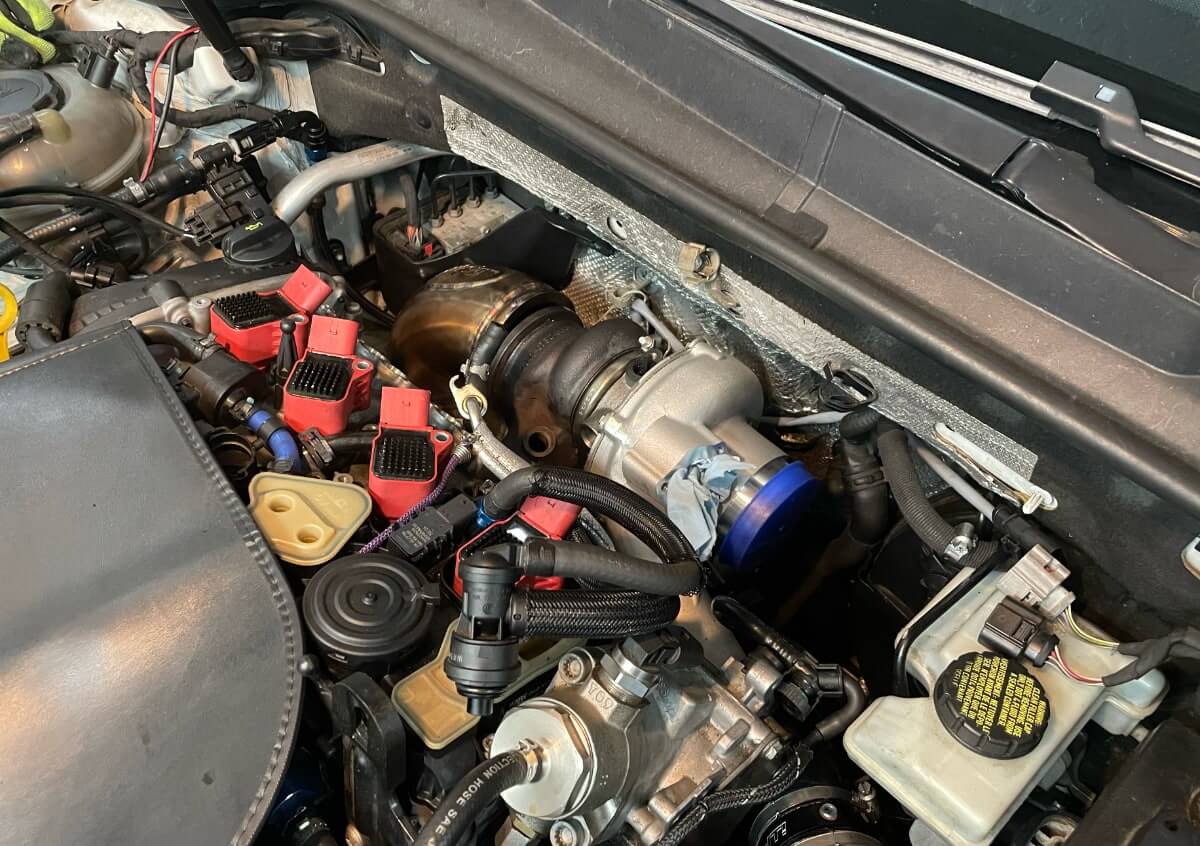
The splitter turbine wheel version is referred to as the IS48T, whereas the standard turbo is referred to as the IS48. The T in the name indicates the use of a different turbine wheel.
Test Procedure:
To evaluate boost onset, the GTI is operated in third gear at engine speeds ranging from just over 1500 RPM up to around 3500 RPM.
While out of boost, the accelerator is fully depressed until the boost pressure exceeds 20 psi. After passing 20 psi of boost pressure, the accelerator pedal is released to allow boost pressure to drop to zero and the vehicle to slow.
Once the engine RPM enters the start range, the accelerator is depressed again. This is repeated several times to record data across a range of engine speeds.
Test Results:
The chart shows the amount of RPM increase that occurs from crossing 1 psi to reaching 20 psi.
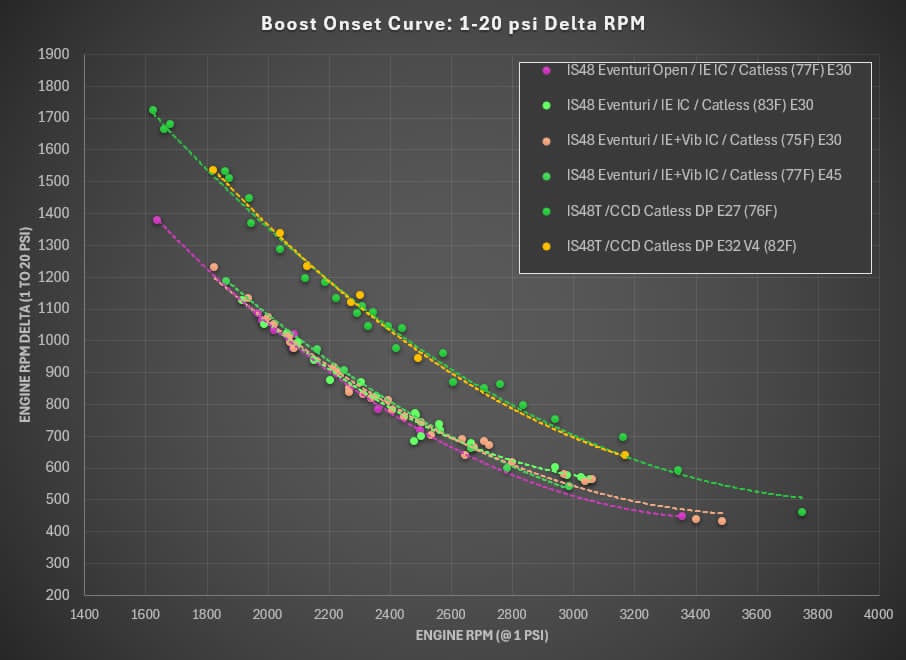
The 5+5 splitter turbine requires a larger RPM range to reach 20 psi compared to the standard version. This difference varies based on the engine speed at which one psi is crossed. For the engine speeds tested, the difference varied from approximately 150 RPM to approximately 300 RPM.
Conclusions:
A 5+5 splitter design turbine wheel was installed on a Shuenk IS48 turbocahrger and tested to measure boost onset. Compared to the standard IS38 turbine wheel, the splitter wheel shows a slower boost onset, requiring 150 to 300 RPM more to increase from 1 to 20 psi.