

Background:
A previous post from the beginning of June described a bench test of the IS20 turbocharger turbine housing to measure the airflow rate through that turbocharger for a future comparison with a Shuenk IS48 turbine wheel using a splitter design.
The alternate turbine wheel was delivered, and after removing the IS48 turbocharger from the GTI, I undertook more flow testing.
Test Articles:
The IS48 turbocharger installed uses an IS38 turbine wheel, and since that turbocharger was already assembled, it will be tested first to establish the baseline performance.
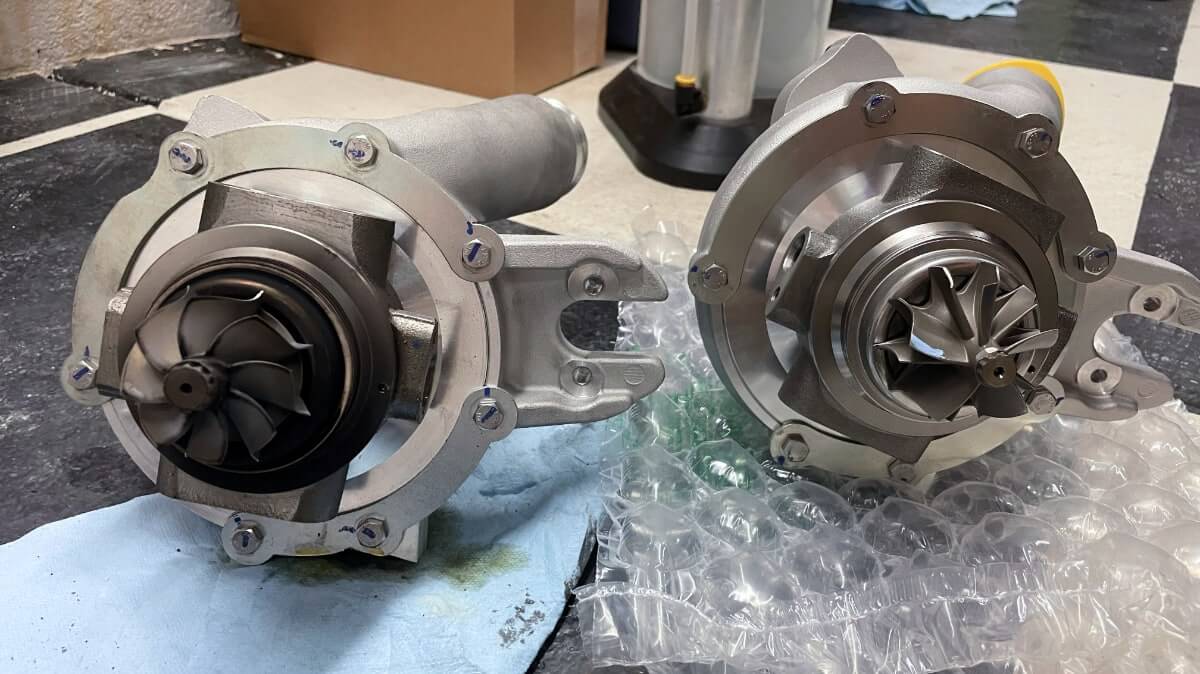
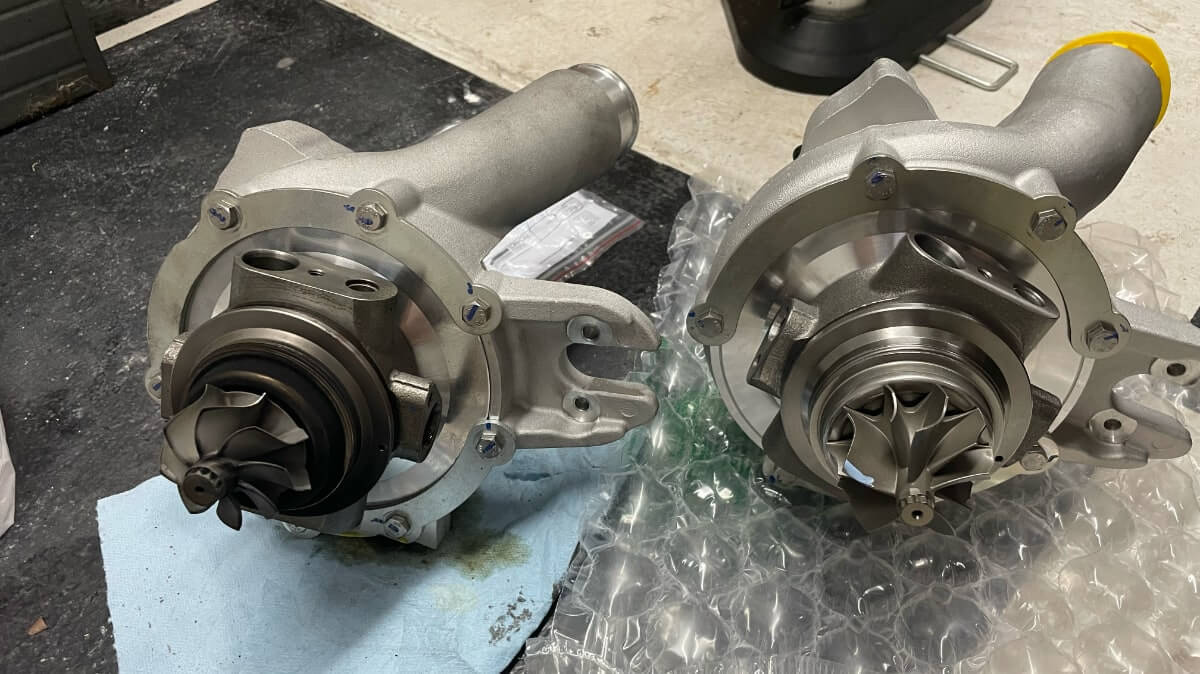
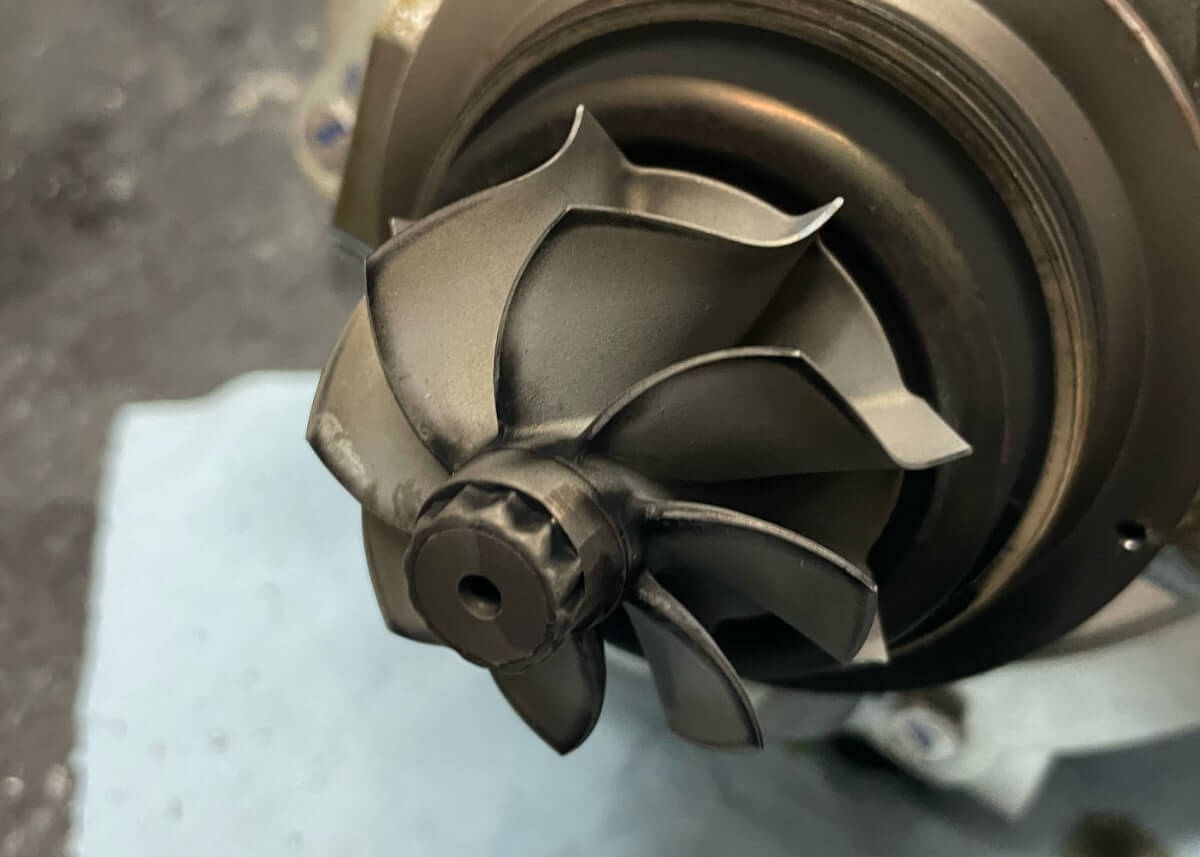
The difference between the IHI IS38 turbine wheel and the 5+5 design of the splitter wheel is clear from the pictures of both
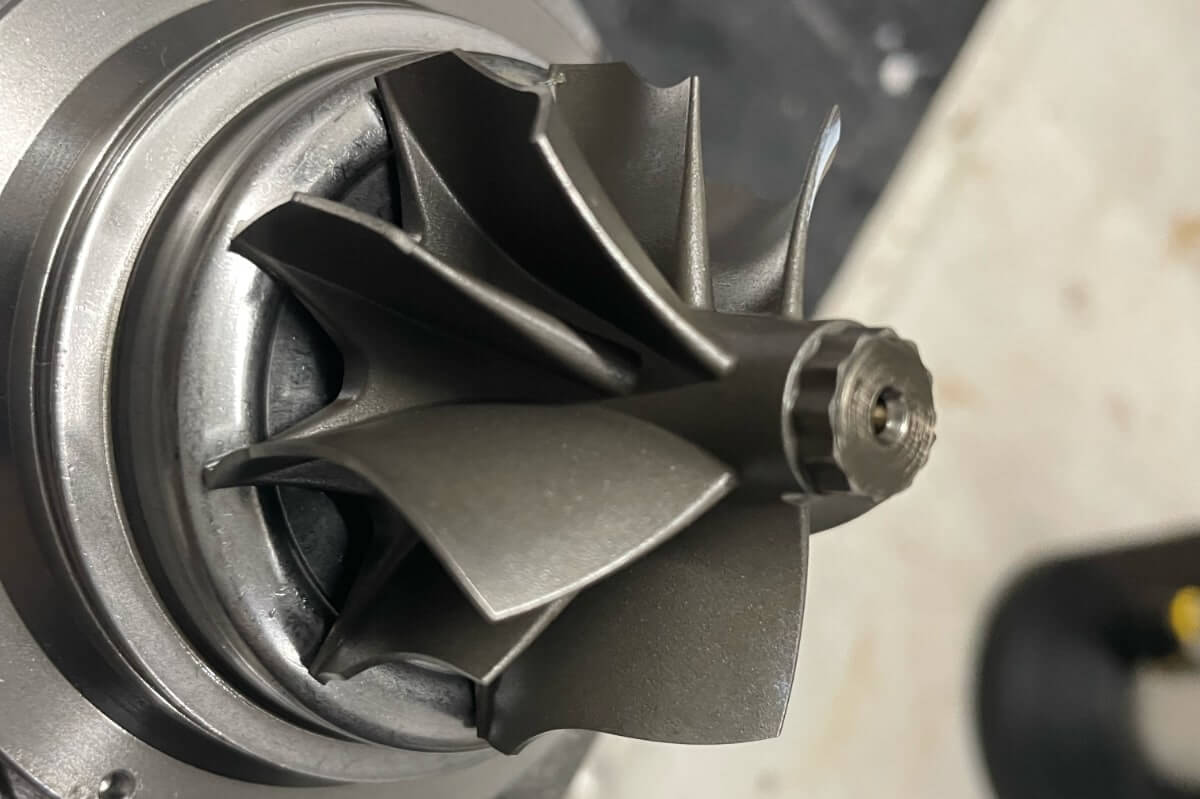
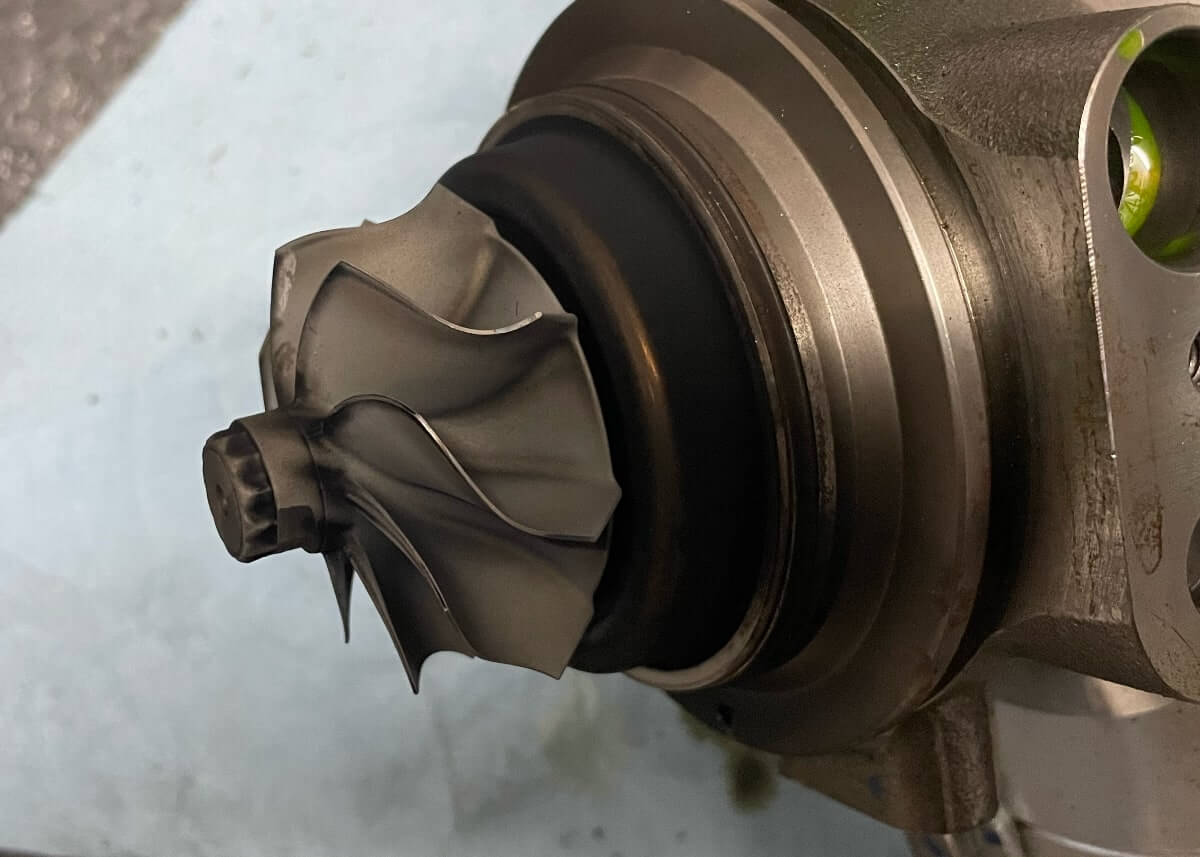
The hypothesis being tested with the splitter design is that the IS38 may be limiting power output at higher power levels, and that the splitter wheel may reduce backpressure, thereby allowing the engine to generate more power.
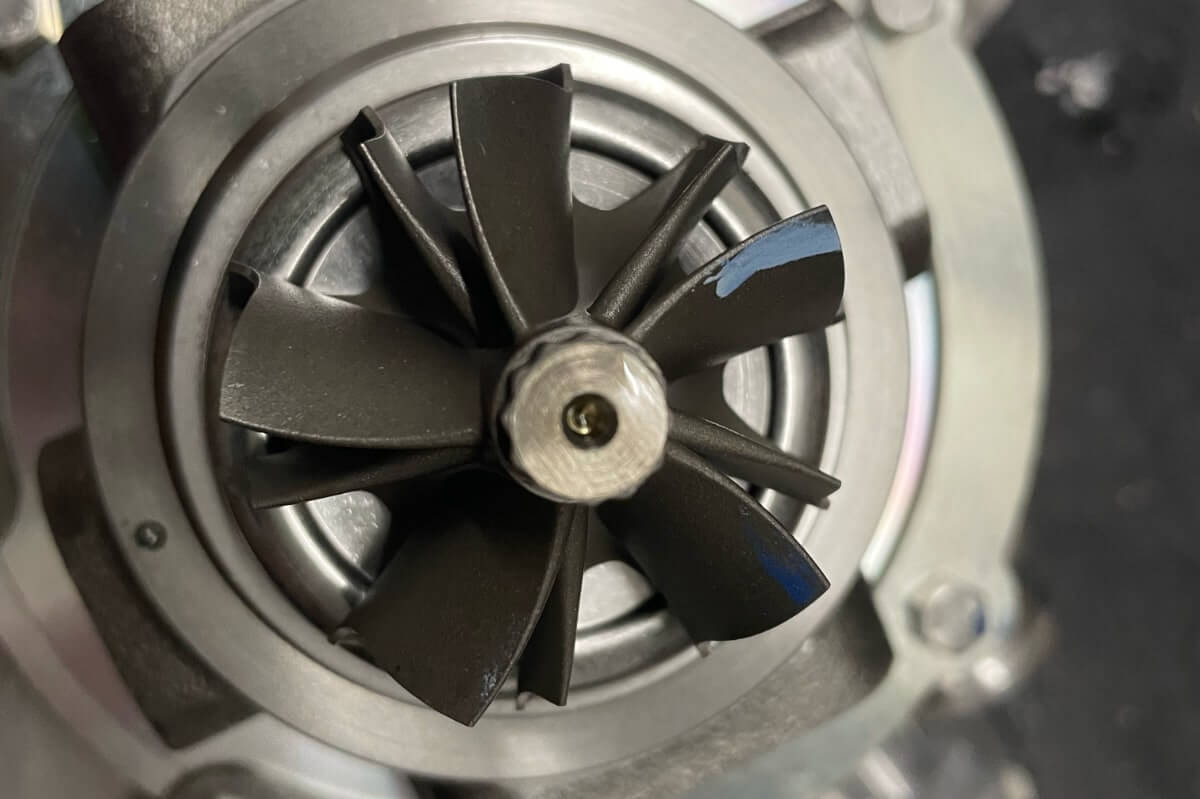
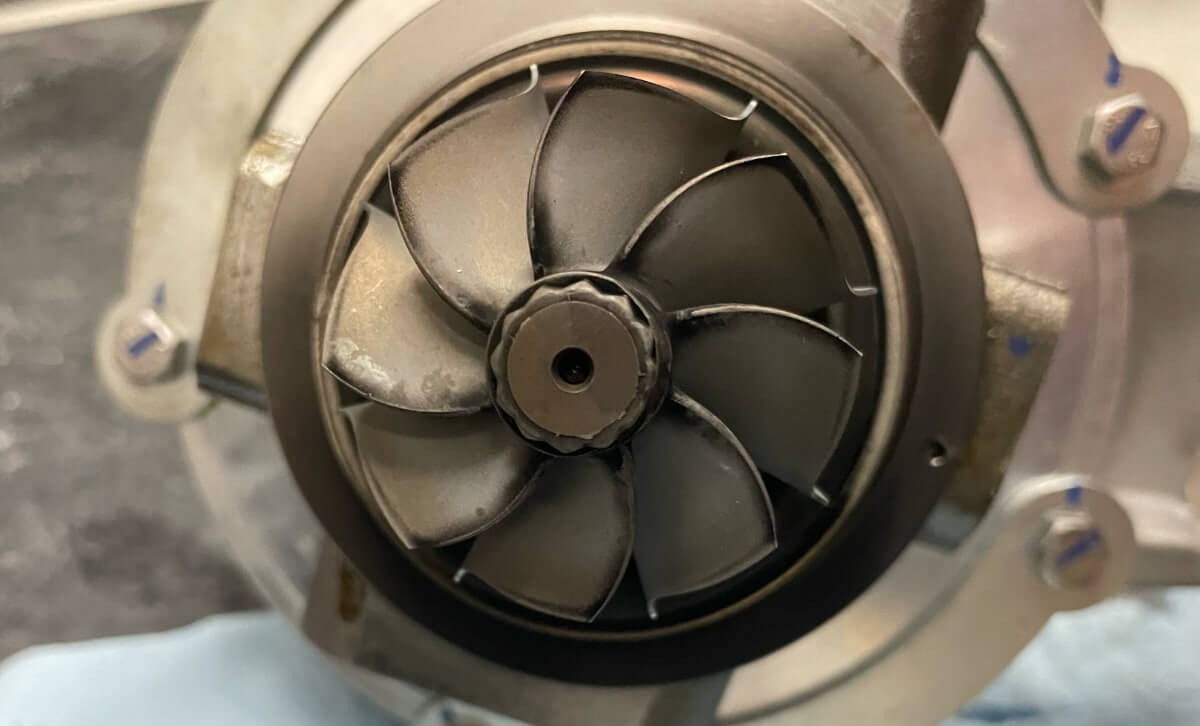
The revised turbine is the same size and shape as the IS38, allowing it to be used in the IS38 turbine housing without any alterations.
Test Process:
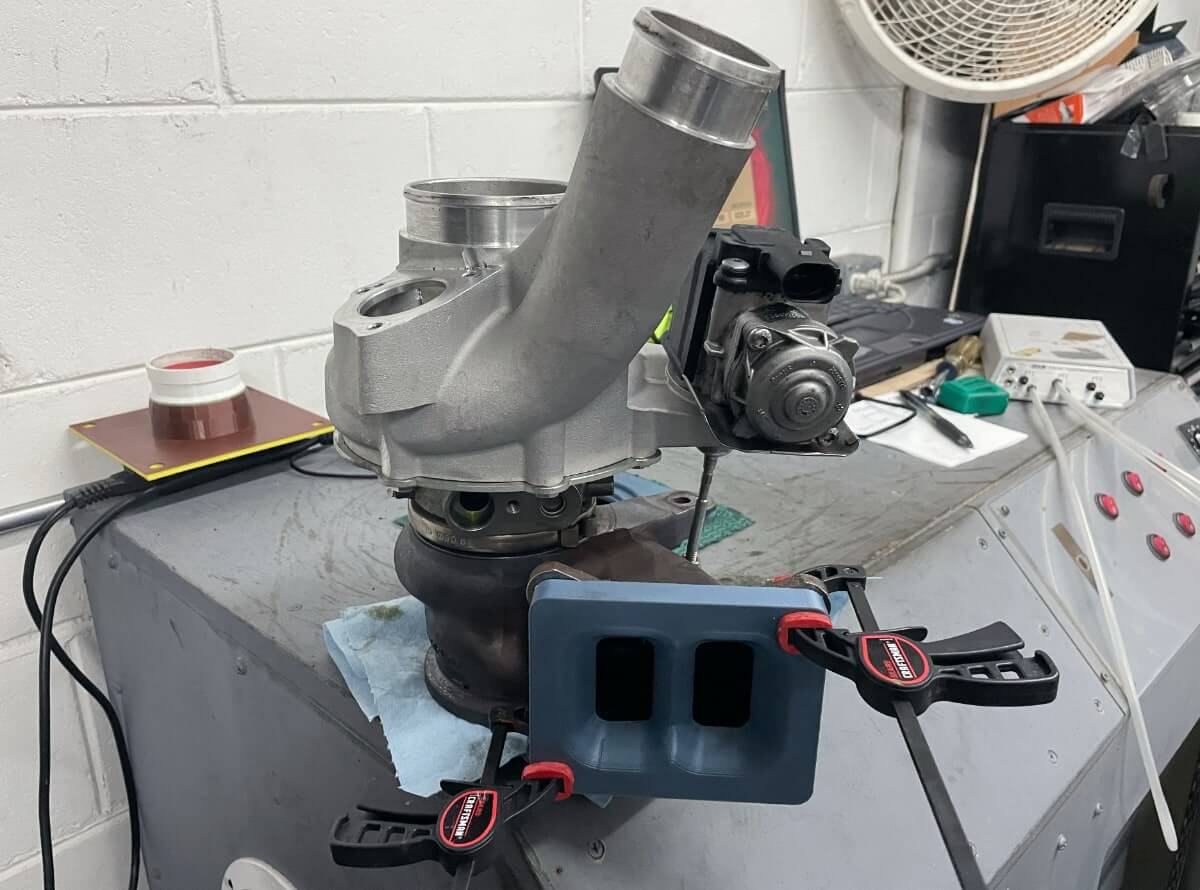
The assembled turbocharger turbine housing outlet is mounted on an adapter that seals it to the flow bench, and a fixture is then added to the turbine inlet to smooth airflow entry into the housing.
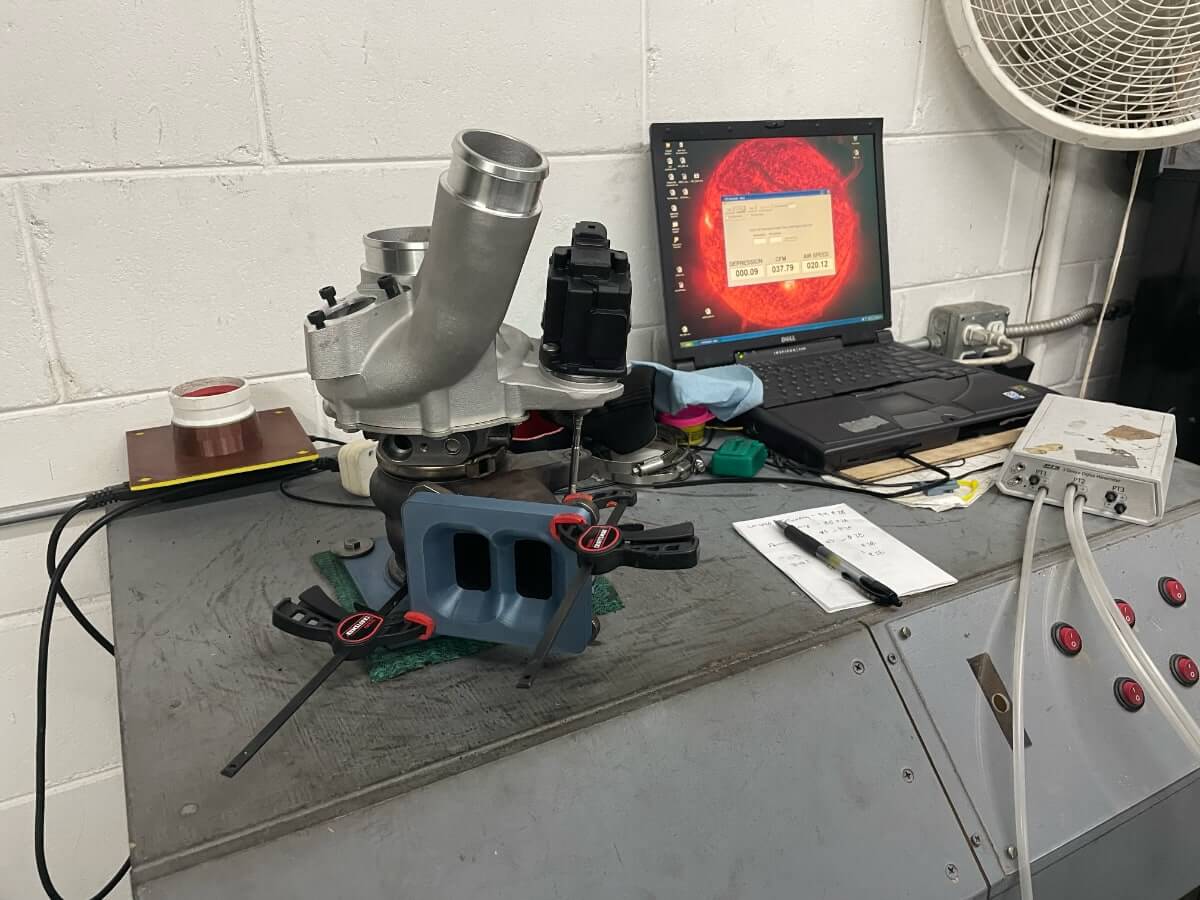
The airflow through the turbine housing is measured with the turbine wheel held stationary, and then again with the turbine wheel free to rotate.
Both measurements are recorded at a depression of 28″ of H2O.
After the test with the IS38 turbine wheel, the turbine housing is swapped to the splitter-wheel turbine, and the test is repeated.
Note: A reader pointed out to me the absence of oil supply lines and the potential for the state of oil in these journal bearings to influence the outcome of the spinning test case. This is a potential confounding factor that is going uncontrolled. I did pour some oil into the bearing housing beforehand, but the intent was to have some oil on the bearings, and it wasn’t done with consideration for how the oil’s condition in the bearings could affect the measurements.
Test Results:
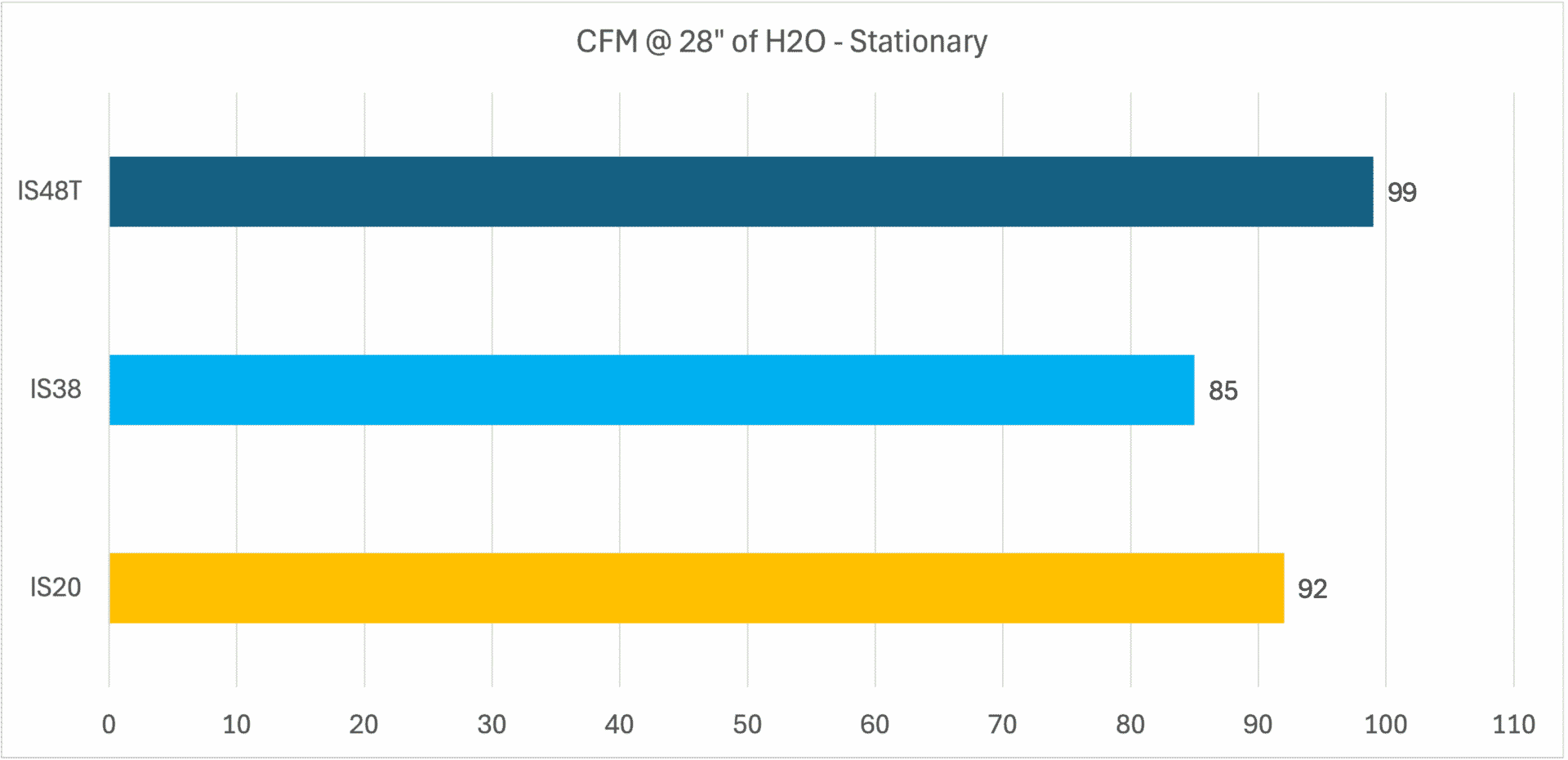
With the turbine wheel stationary, the IS38 flowed 85 CFM @ 28″ of H2O. The splitter wheel flows 99 CFM @ 28″ of H2O, for a 16% increase in airflow.
With the turbine wheel free to rotate, the flow rate through the IS38 turbine was 83 CFM @ 28″ of H2O, and through the splitter wheel was 96 CFM, also a 16% increase in airflow.
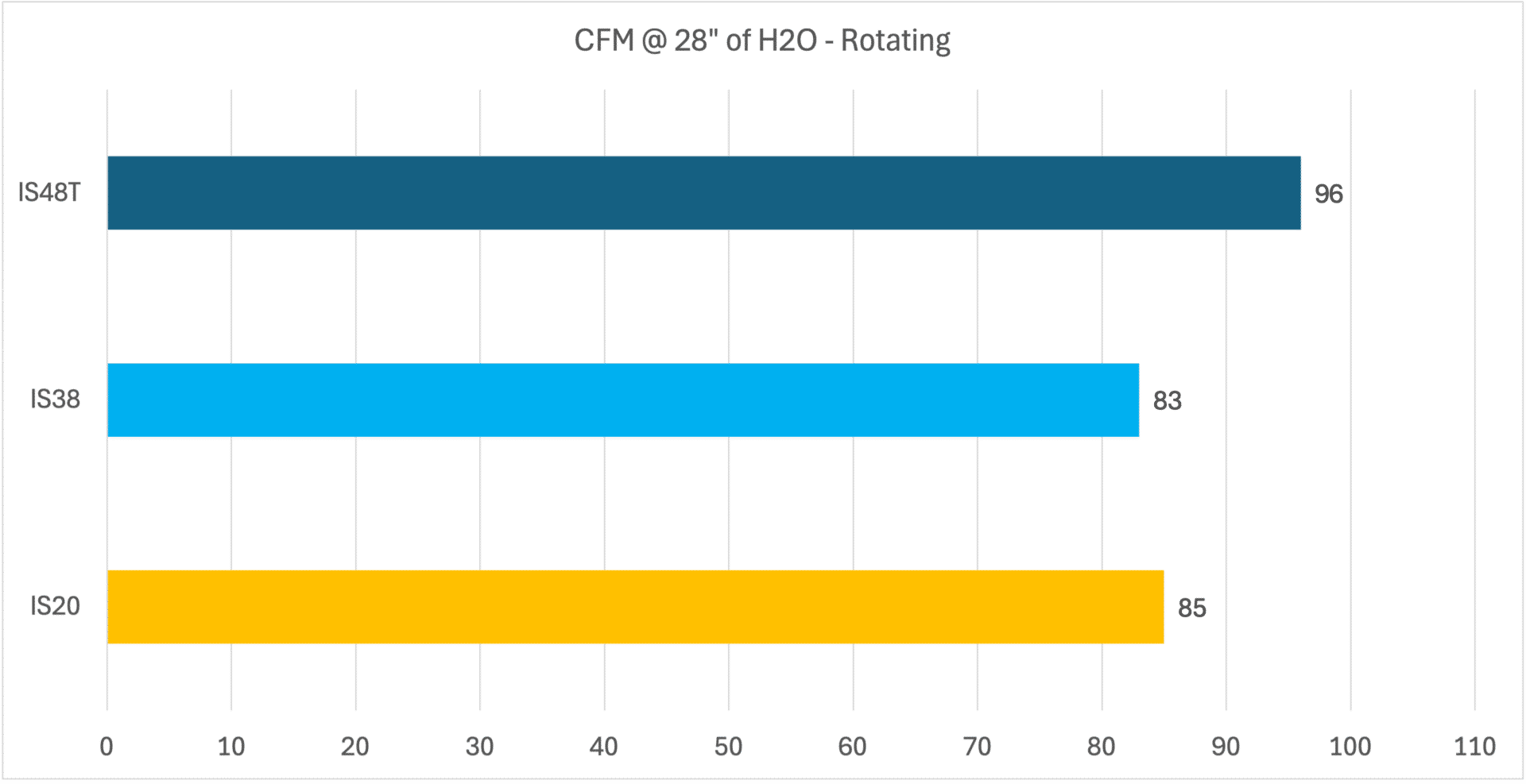
Unexpectedly, the IS20 turbine housing measurements were greater than those of the IS38.
Notably, the flow rate through these parts is relatively very low compared to other parts that airflow passes through, most likely as a result of the function of the turbine housing to increase the exhaust gas velocity prior to passing through the turbine wheel, a process that would raise pressure and reduce the flow rate of a fixed depression test.
Conclusions:
A Shuenk IS48 turbocharger was flow-tested to measure the airflow rate through the turbine housing using two different turbine-wheel designs.
At a depression of 28″ of H2O, the splittler wheel design flows 16% more air than the IS38 turbine wheel, in both cases where the turbine wheel is held stationary or is free to rotate.
Next Steps:
Installation of the splitter design turbine on the GTI and street testing to compare operational performance differences.