

EQT has long promoted its tuning products by citing extensive engineering experience. Those claims appear not only in staff biographies but also on product pages, where they support statements about tuning quality and safety.
After reviewing archived versions of EQT’s website, Ed Susman’s publicly available professional history, and Susman’s own descriptions of his background, I found a discrepancy worth examining.
Why I Looked Into This
This comparison began with a Cease and Desist (C&D) letter. In June 2023, an attorney representing Susman sent me one, and it included claims about Susman’s professional credentials.
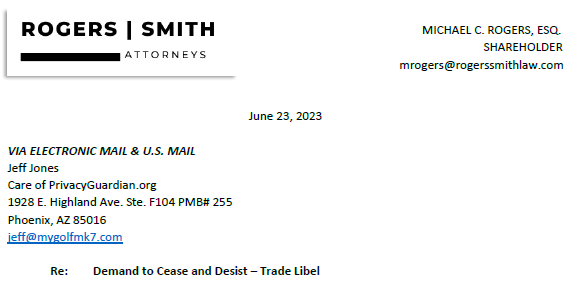
That prompted a closer look at what Susman has said about his background elsewhere—on EQT’s website, his LinkedIn profile, and his own social media.
The Core Issue
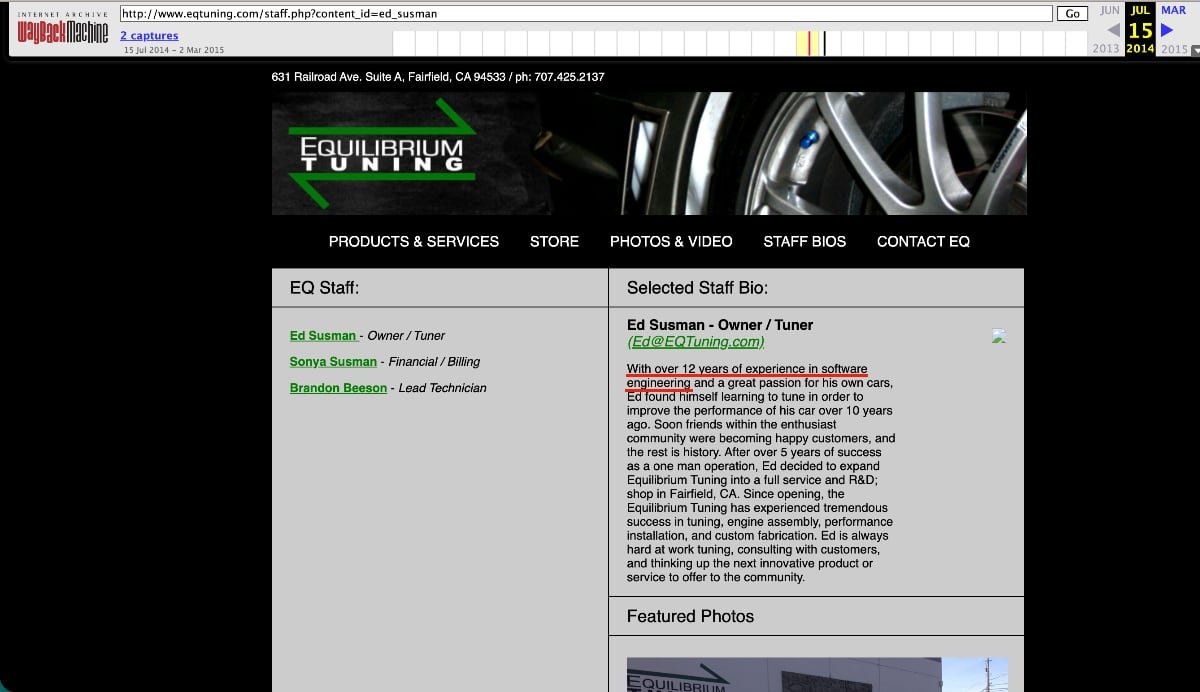
The most easily verifiable claim appears in EQT’s staff biography material. An archived EQT staff page from July 2014 stated:
With over 12 years of experience in software engineering…
Selected Staff Bio: Ed Susman – Owner / Tuner
A screenshot of the About Us page from November 3, 2023 — more than nine years later — carries a reworded but substantively identical version of the same claim:
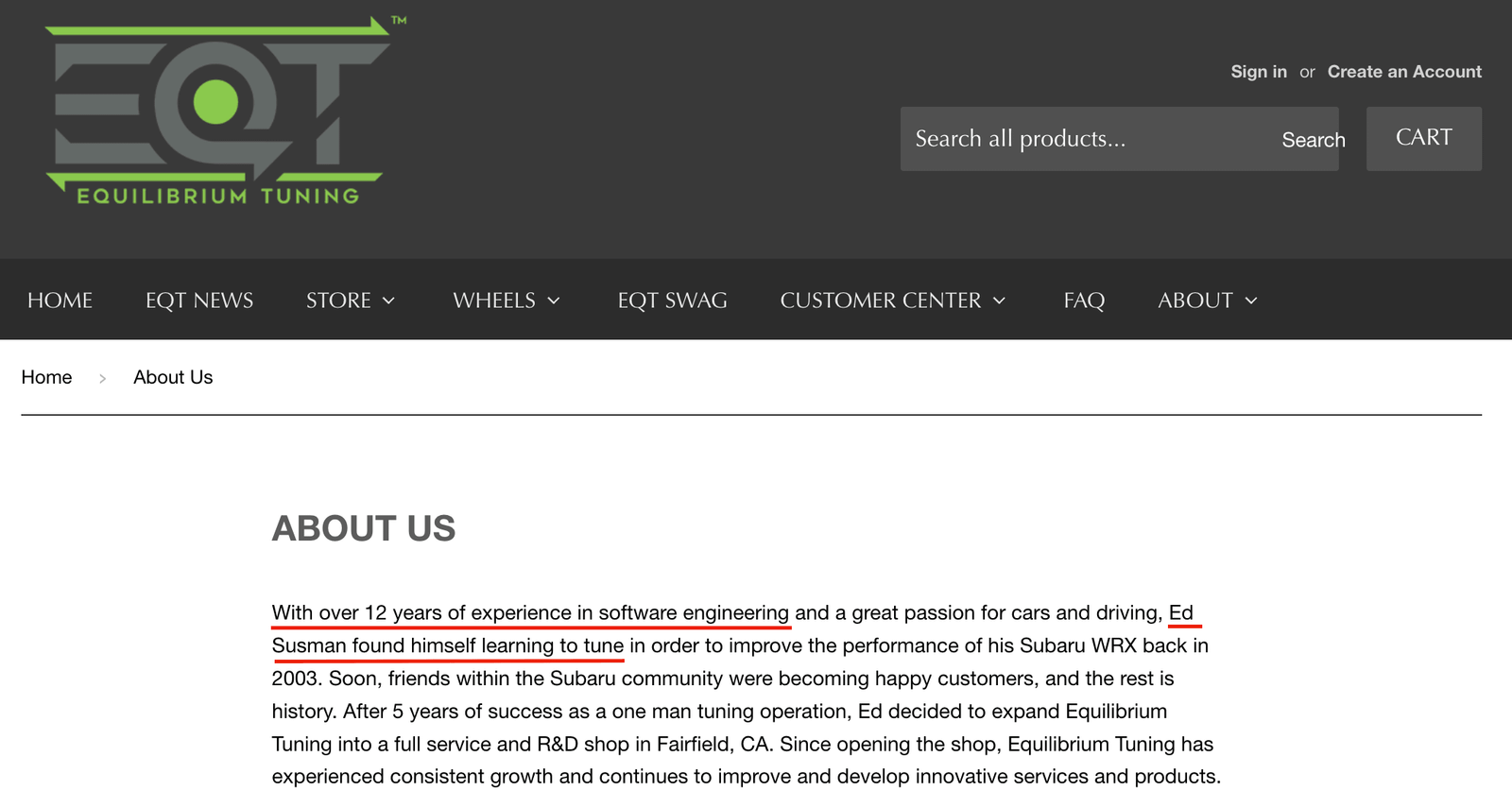
On its face, the statement is straightforward. Consumers reading it would reasonably understand that the person described had more than twelve years of software-engineering experience.
The question is how that figure was calculated.
What the Record Shows
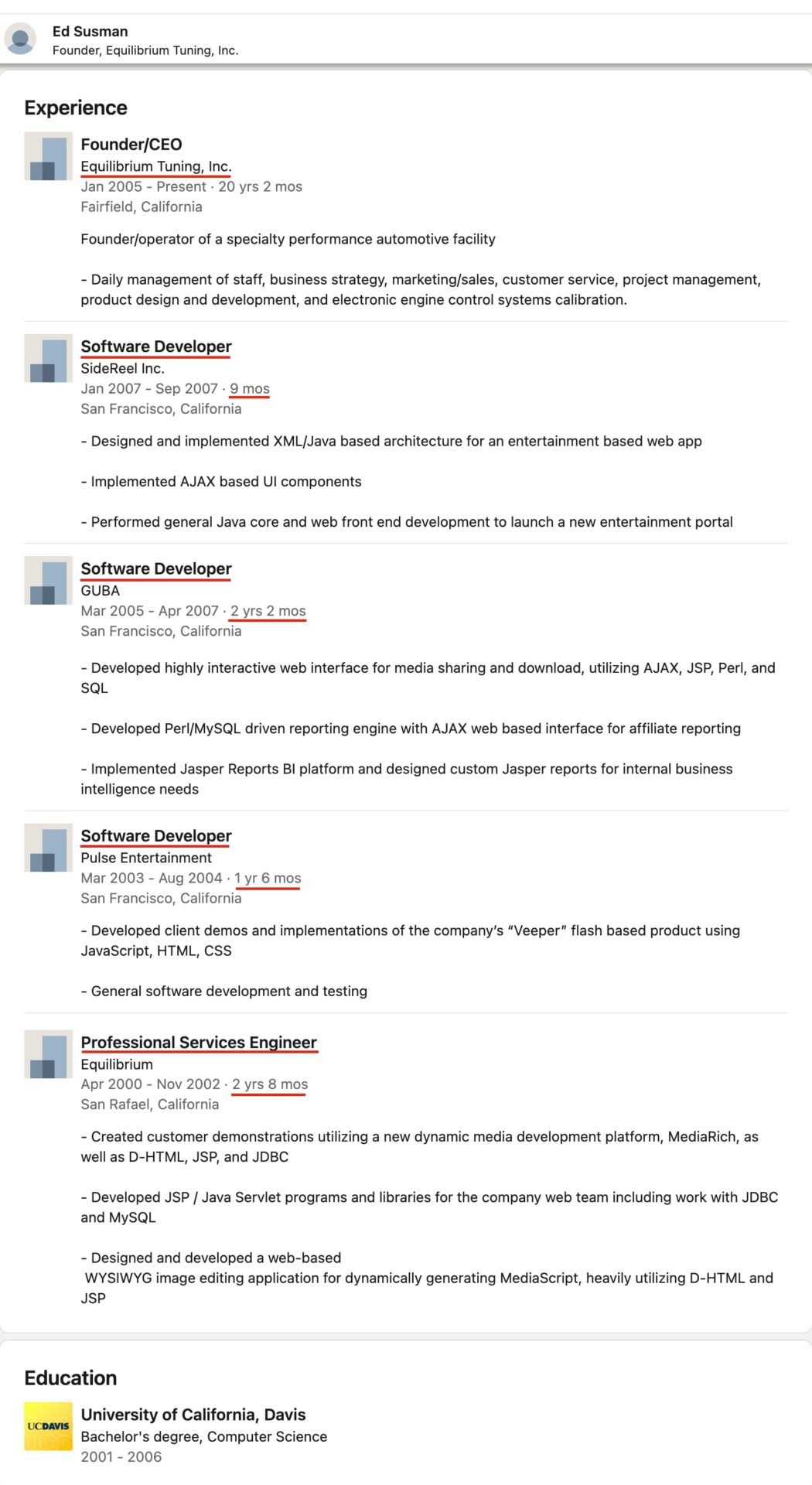
Ed Susman’s LinkedIn profile lists four software development jobs between April 2000 and September 2007, along with a 2006 Computer Science degree.
The positions listed involve web applications, user interfaces, reporting systems, Java development, Perl development, AJAX components, and related software-development work.
When you add the durations of those positions and remove the documented overlap between two positions, the publicly documented employment history totals about 6 years and 9 months of software-development work.
The issue is that the public record does not explain how that documented software development employment history becomes “over 12 years of experience in software engineering.”
Additional Context
The 2014 claim is not the only experience claim that appears in EQT’s marketing.
A July 2019 archive of EQT’s ECU tune product page stated:
Working with these ECUs requires an intimate knowledge of engine dynamics and software engineering… Luckily, we have decades of experience in both fields…
Equilibrium Tuning, Inc. – EQT ECU Base Map Tune, archived July 19, 2019
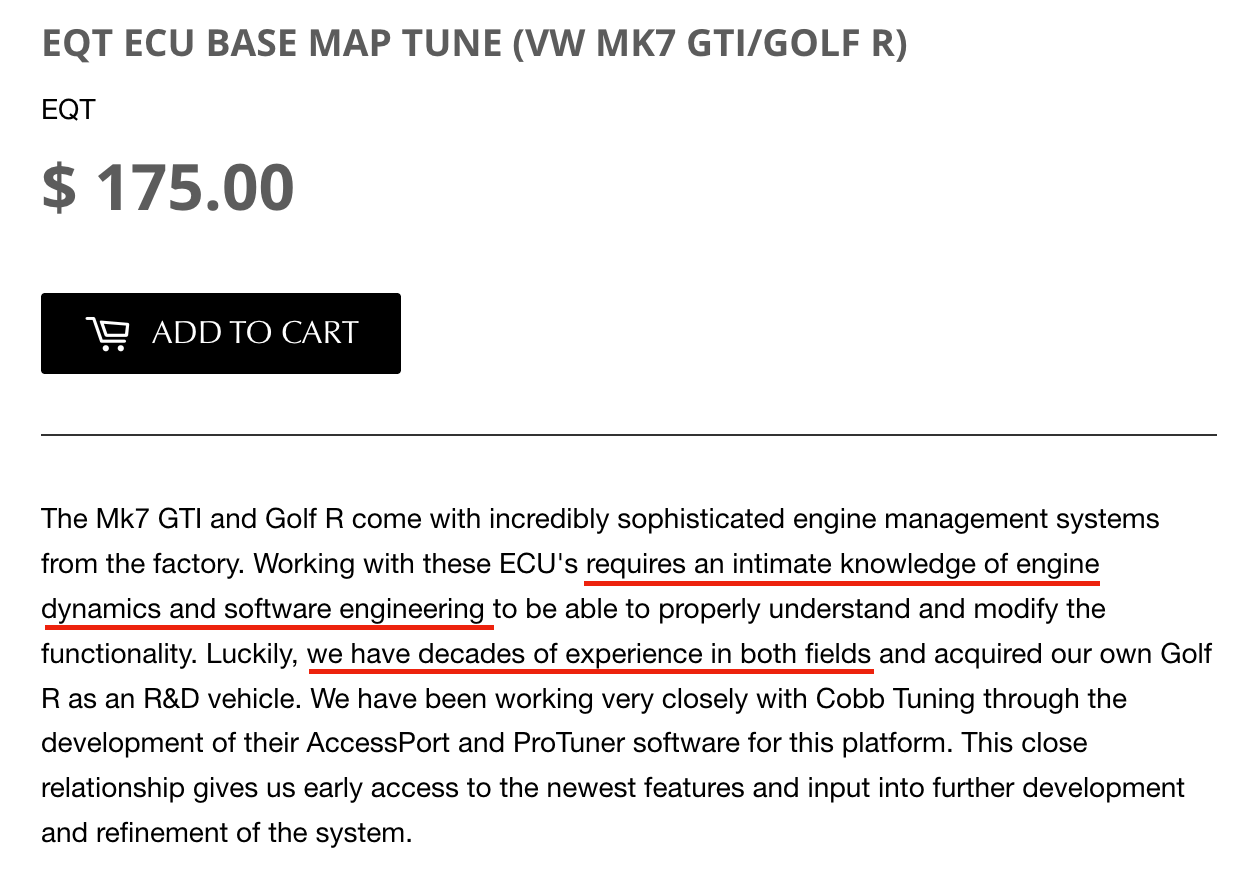
A substantially similar statement remains on current EQT product pages years later.
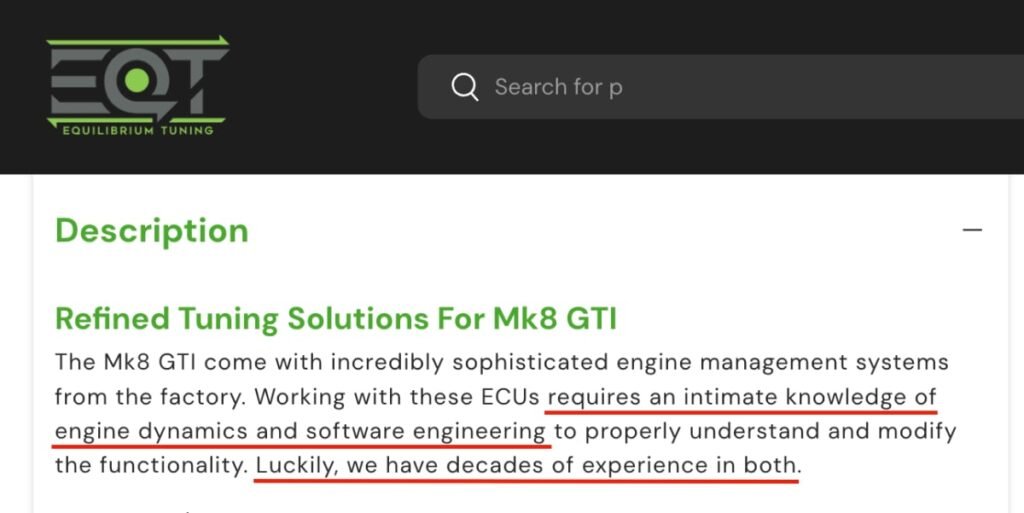
This statement raises a separate question. When consumers read “decades of experience” in “engine dynamics and software engineering,” what experience are they being asked to rely on?
Susman’s publicly documented professional history clearly contains software-development work. What it does not clearly document is professional employment in engine dynamics.
The issue is that consumers are being asked to accept the claim without being shown how it was calculated.
Susman’s Own Description of His Background
In a biography published on EQT’s Facebook page, Susman wrote:
I used to be a software engineer… Tuning became a self taught hobby back in 2001-2002…
Ed Susman, Equilibrium Tuning Facebook page, Jan. 17, 2019
Meanwhile, the marketing claims present broad experience figures without explaining how they arrived at them. The difference between those two presentations- decades of intimate knowledge of engine dynamics and tuning became a self-taught hobby– is worth noting.
The Bottom Line
Susman’s own published record — his LinkedIn profile, his Facebook bio, his forum posts — documents:
- a general software‑development career of about seven years ending in 2007
- a Computer Science degree rather than a Software‑Engineering degree
- no engine‑dynamics credential at any point
EQT’s marketing, in his name, has told customers for over a decade that he has “over 12 years” of software‑engineering experience and “decades” of combined experience in software engineering and engine dynamics.
Why This Matters
If EQT were selling T-shirts, few people would care. But tuning companies routinely ask consumers to trust them with expensive engines and transmissions. As a result, experience claims become part of the sales pitch.
When a vendor’s product page discusses safety, calibration quality, and engineering expertise, consumers naturally evaluate those claims against the credentials presented. That is why the underlying experience matters. Consumers deserve accurate, transparent information when deciding whose expertise to trust.
Conclusion
At the center of this issue is a simple discrepancy.
EQT told consumers that Ed Susman had:
Over 12 years of experience in software engineering.
Yet Susman’s publicly documented employment history shows approximately 6 years and 9 months of software-development work.
Viewed alongside later claims of “decades of experience” in engine dynamics and software engineering, this becomes part of a broader pattern of experience claims that exceed what the publicly documented record readily supports.
This post aims to place the claims and the evidence side by side. Once that is done, the central question remains: How were those experience figures calculated?