
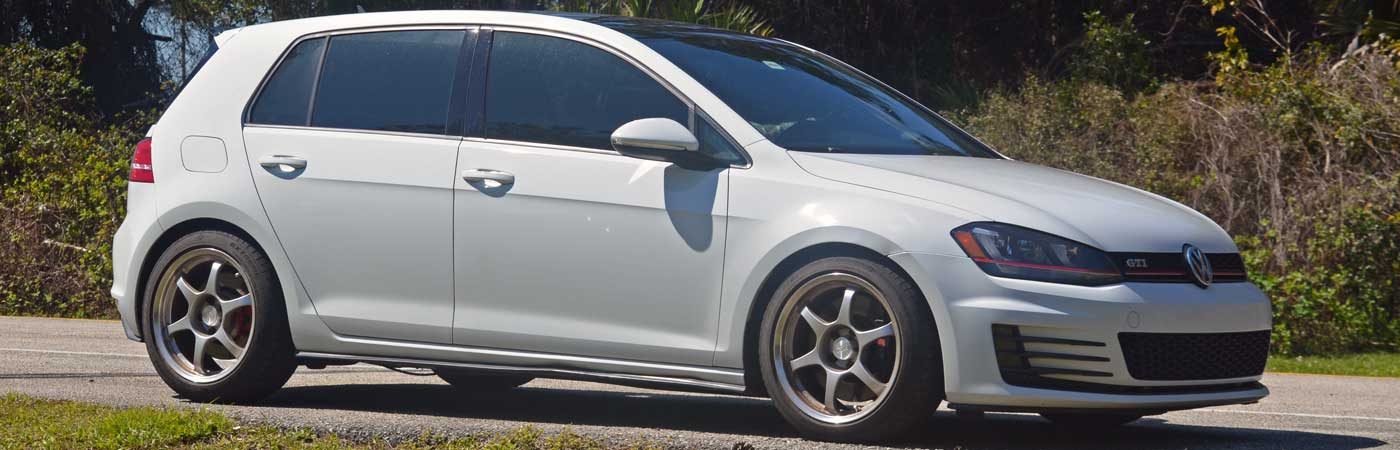
Background:
The CC Design downpipe I use was custom-built with an O2 bung a couple of inches downstream of the turbocharger turbine housing.
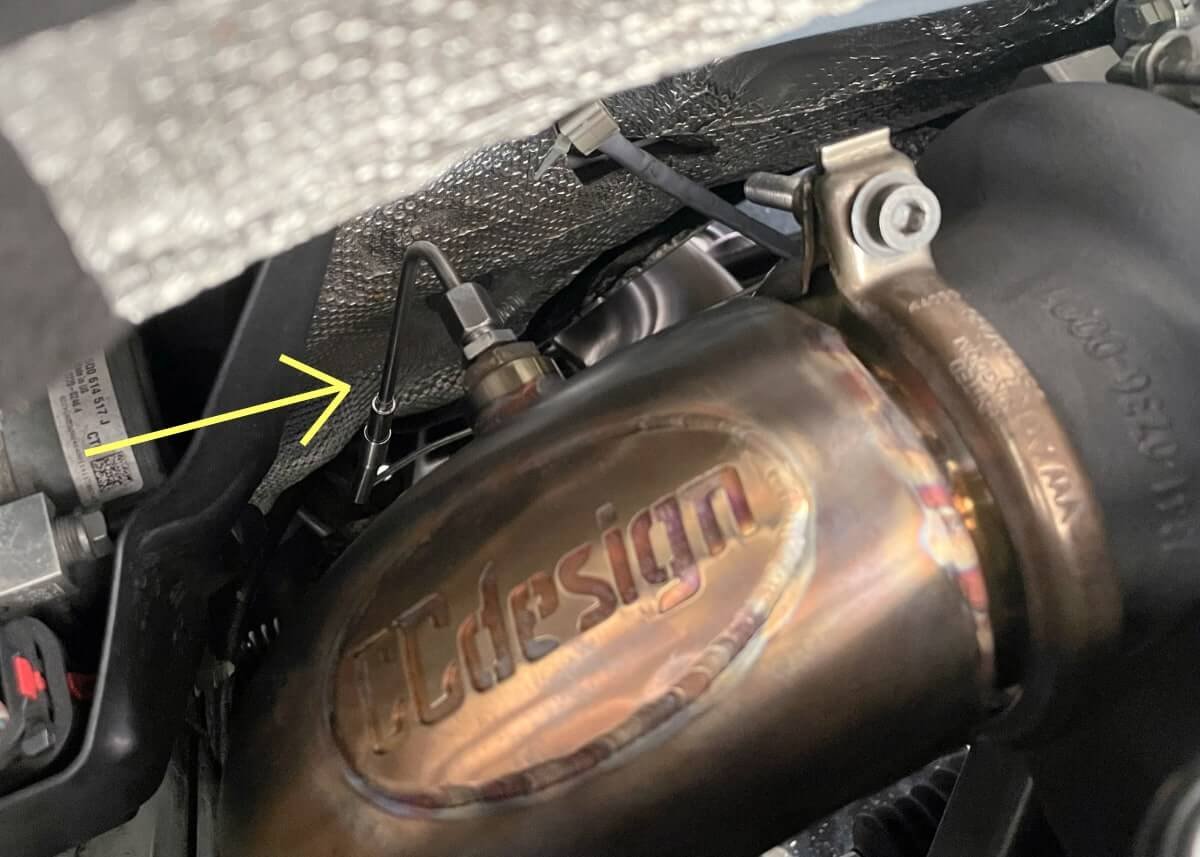
The intent was to allow measurement of the exhaust gas temperature (EGT) as it exits the turbine housing and to measure backpressure in the exhaust system.
Setup:
To measure EGTs, I installed a K-type thermocouple with an exposed tip that has a maximum working temperature of 1800 degrees Fahrenheit. (A sealed tip thermocouple has a higher temperature limit but a slower response time.)
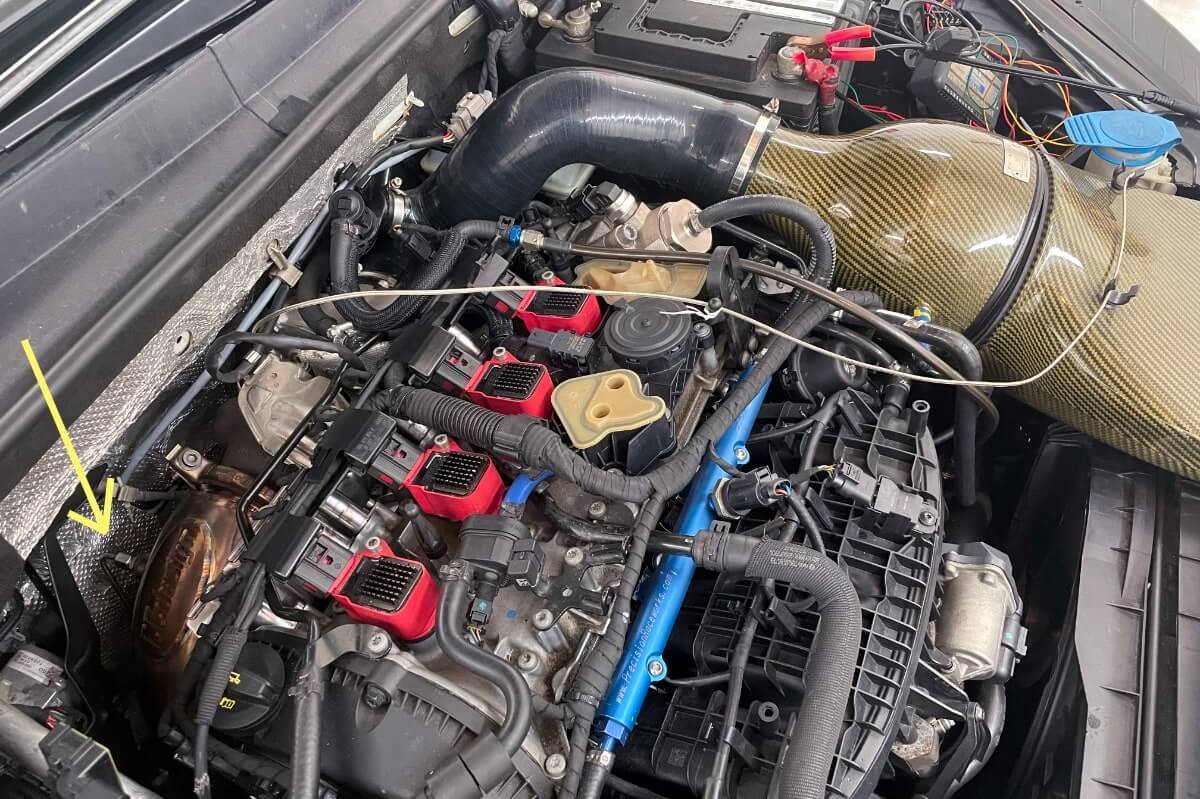
The thermocouple was wired into a Dataq data logger, and I was ready to record EGTs.
Note: I also log boost pressure with the data logger so that I can synchronize the EGT data with the information logged over the OBD2 port using SimosTools. Although I did not log the OBD2 data during this session, I accidentally disabled logging shortly after I started the recording.
The GTI is operating with the Shuenk IS48 turbocharger with a 5+5 splitter turbine wheel – which is not the turbine wheel that the publicly available turbocharger utilizes.
The GTI is operating on a 93 octane tune.
Results:
The chart below shows an overview of the central portion of the data collection session. It begins with a drive out to the test area, several third-gear pulls and a single fourth-gear pull, and then steady-state driving.
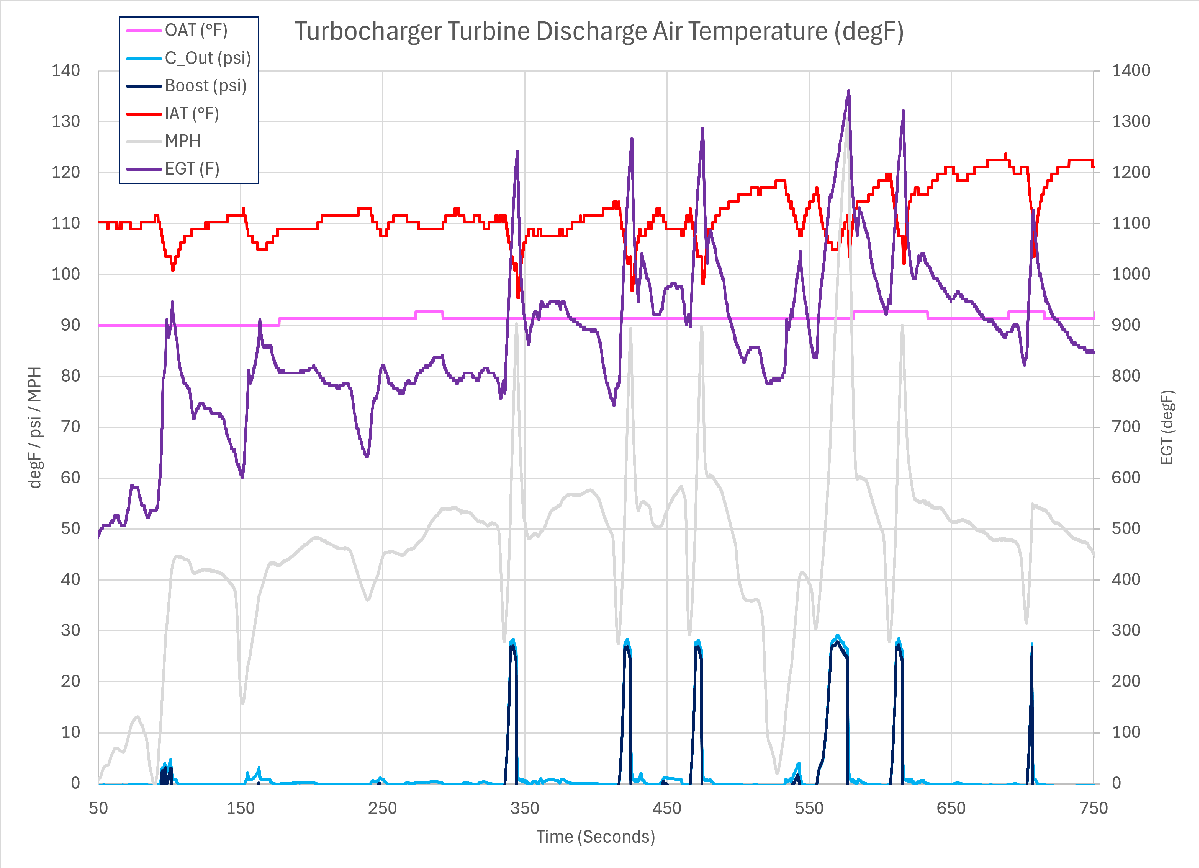
Note: All of these charts have time along the x-axis.
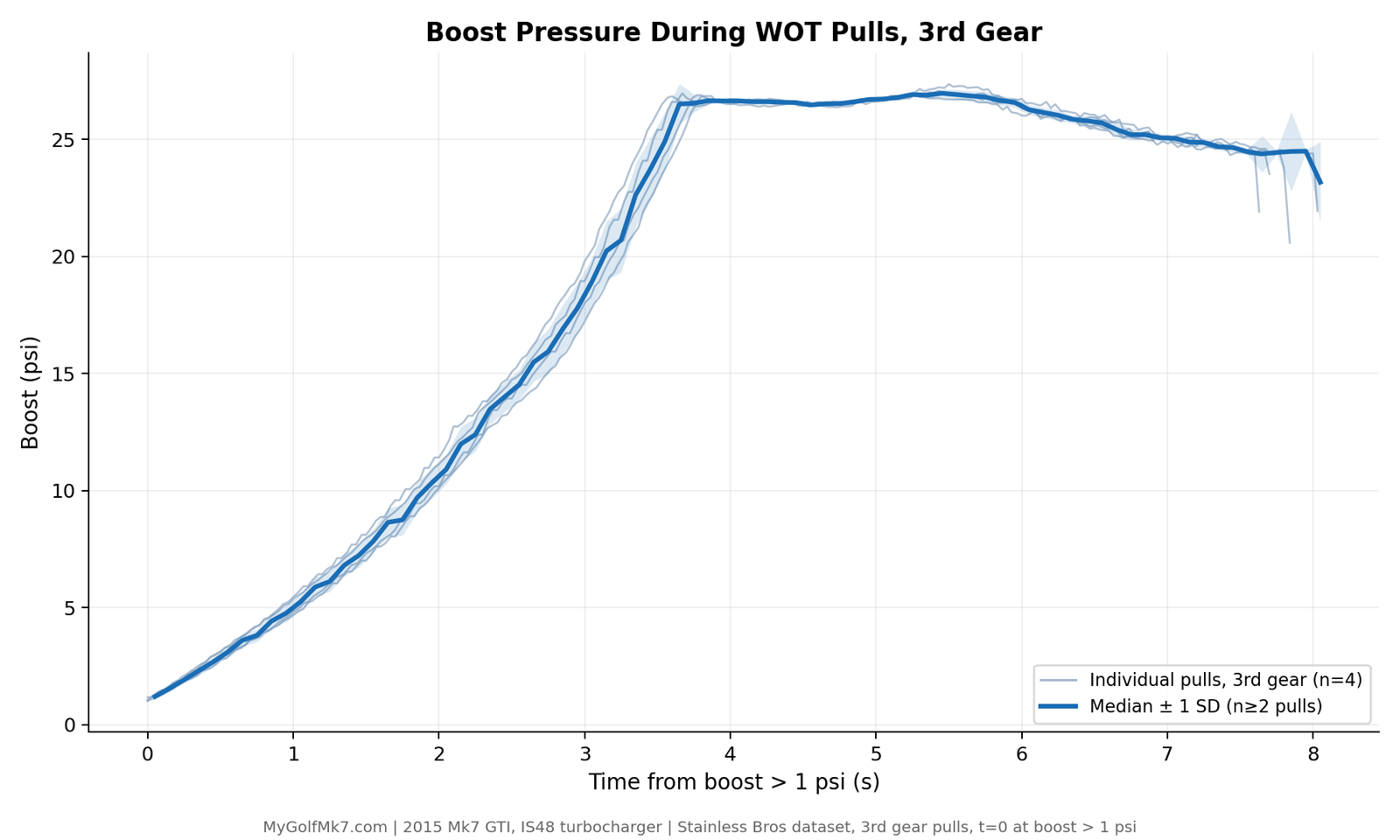
Boost holds around 27 psi and tapers down to slightly more than 24 psi.
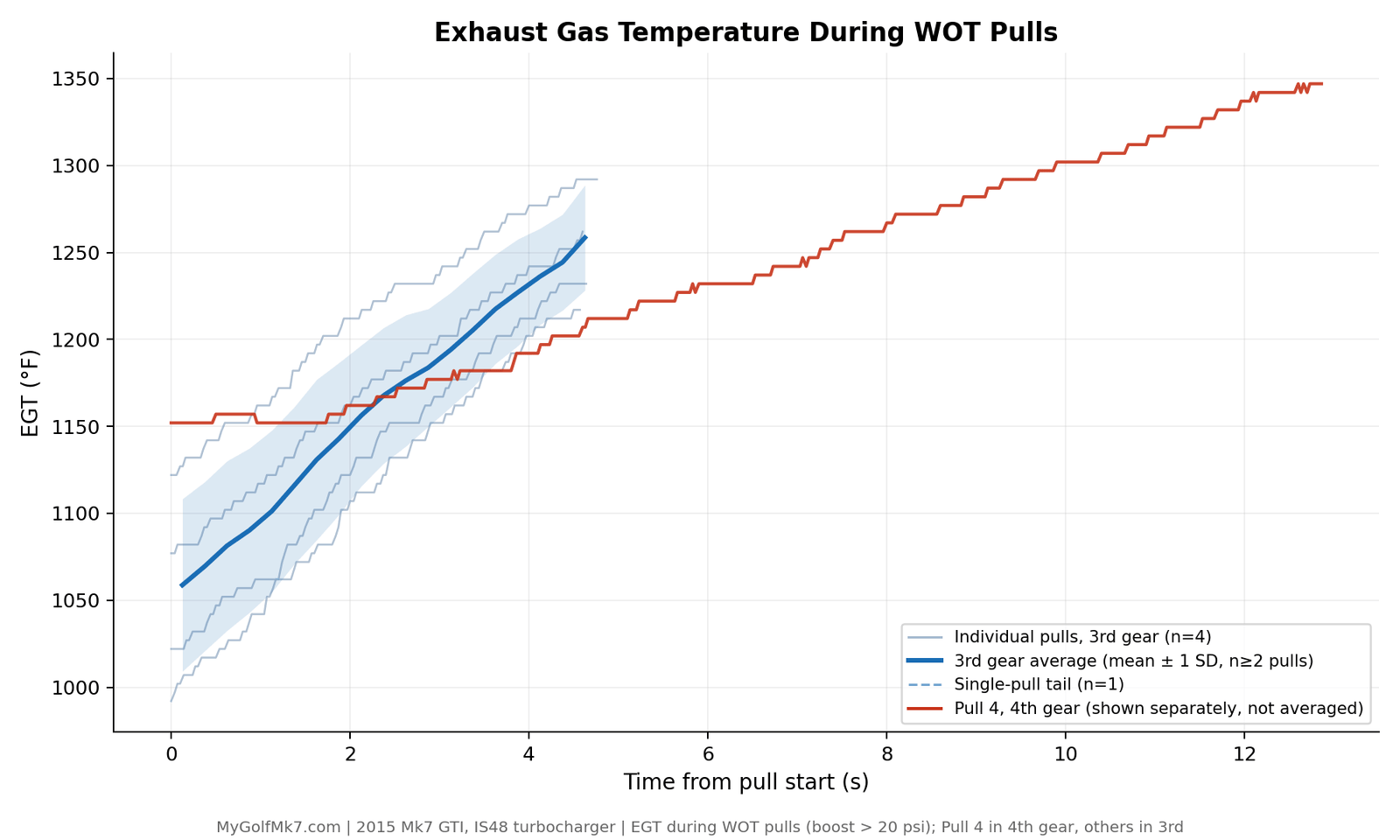
The EGTs during the third and fourth gear pulls are shown next:
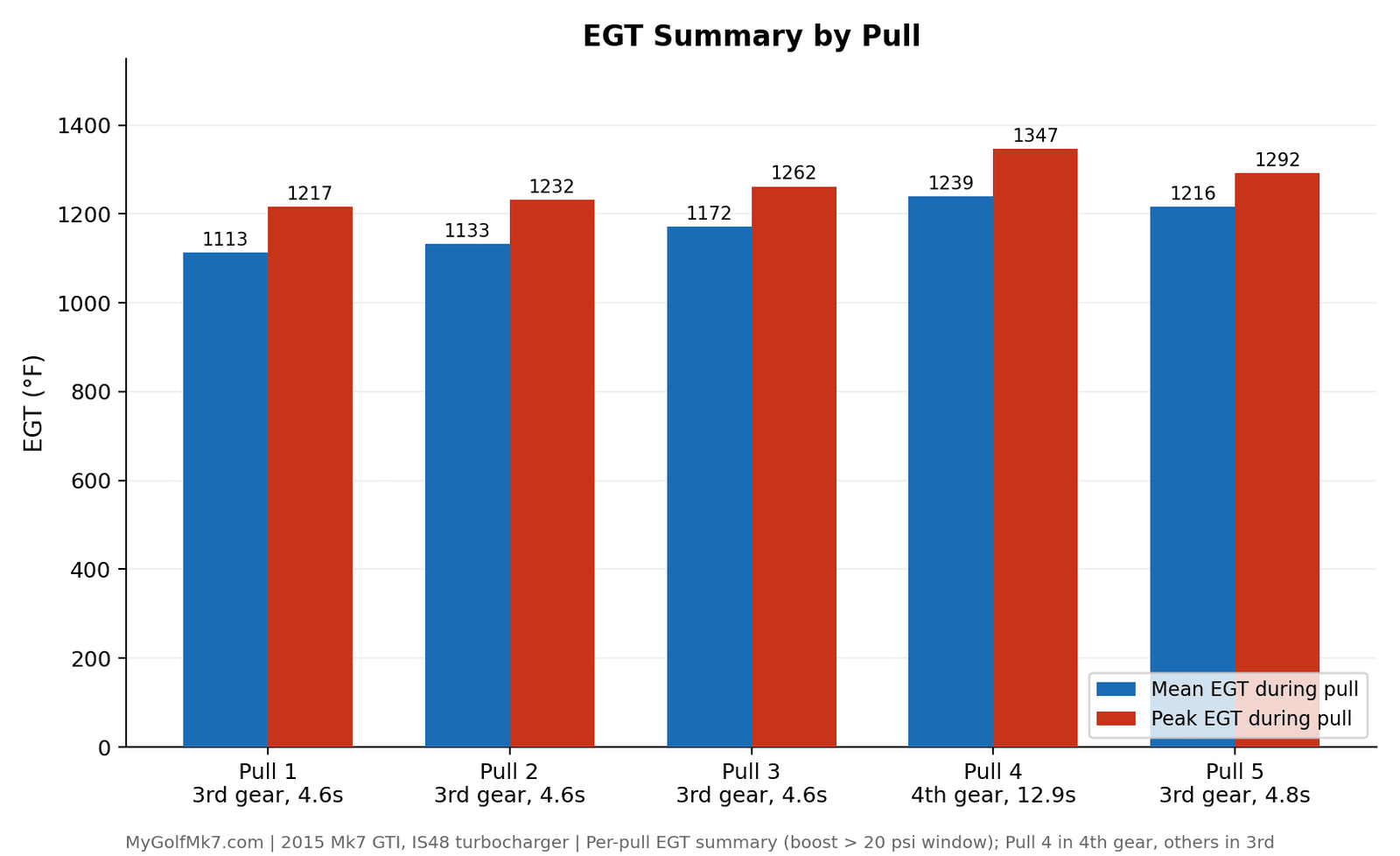
The peak and mean temperature during the full-throttle pulls are shown next:
Conclusions:
A thermocouple was installed in the downpipe of a Mk7 GTI just after the connection with the turbocharger turbine housing.
During third gear full throttle pulls, the post-turbine EGT climbs from roughly 1060°F to 1260–1290°F over the course of the pull.
A single run in 4th gear reached a higher mean EGT (1239°F) and higher peak (1347°F) than any 3rd-gear pull, and sustained boost for nearly three times as long (12.9 s vs. ~4.6 s).
I have no data to compare this with.