

Background:
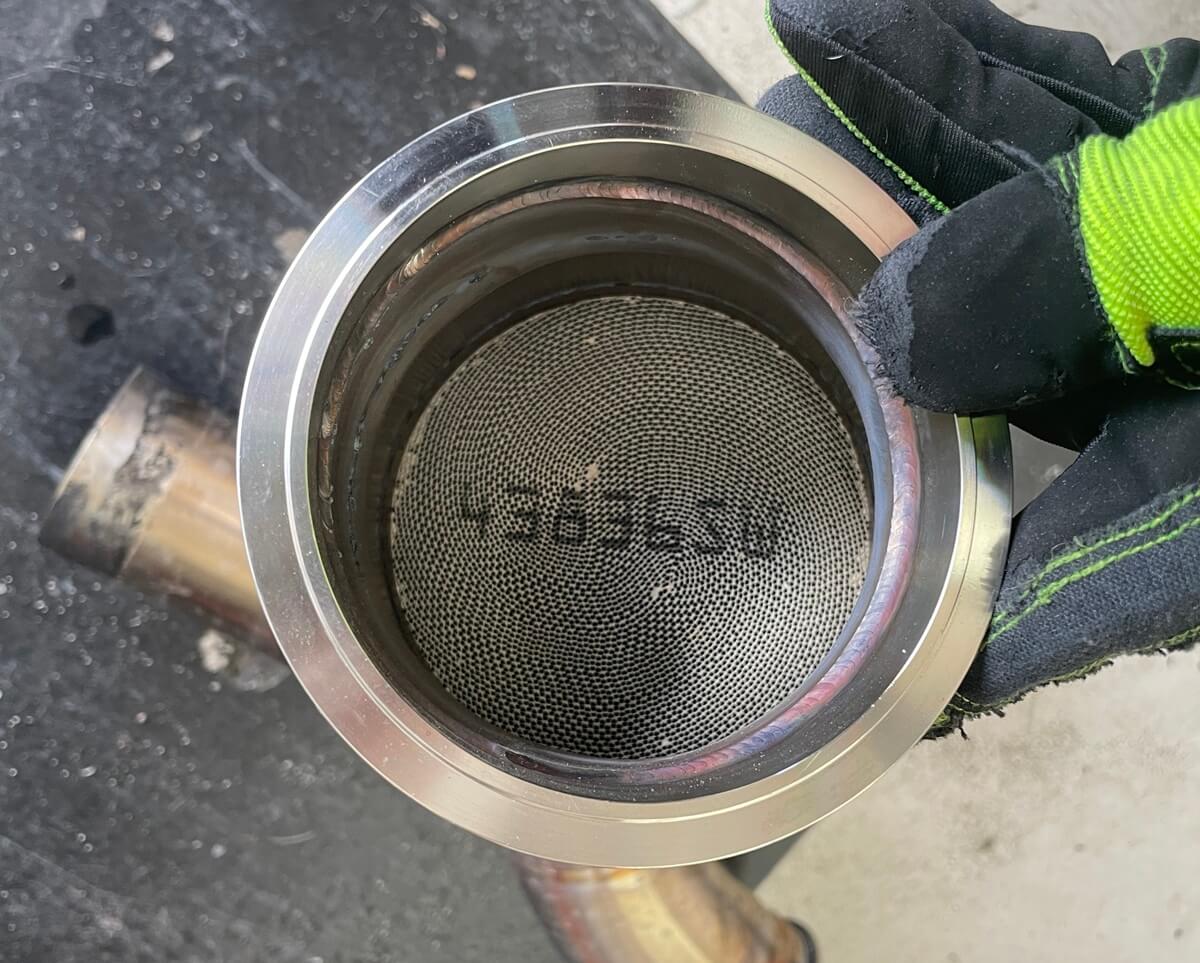
As discussed in the last post, an exhaust measurement system was installed in the IS48 turbocharger to measure the turbine inlet pressure. During the first test, the exhaust was catless. For the next test, a GESi catalytic converter was added to the exhaust system to assess the effect of the high-flow cat on turbine inlet pressure compared to the catless case.
Test Procedure:
The GTI is set up as follows:
- Shuenk IS48 5+5 splitter turbine turbocharger
- Russell Road and Racing E40 ECU tune
- Eventuri Intake
- Shuenk Inlet Hose
- aFe Power charge pipes
- Majesty Competition IC & FMIC
- Stock “Euro” intake manifold
- CC Design 4″ GESi cat downpipe
- CC Design 3.5″ catback exhaust
The car is being tested in 3rd gear. A full-throttle pull begins around 2500 RPM and ends around 6500 RPM.
Test Results:
Note: There are two data points measured with the catless exhaust, which makes the comparison less conclusive.
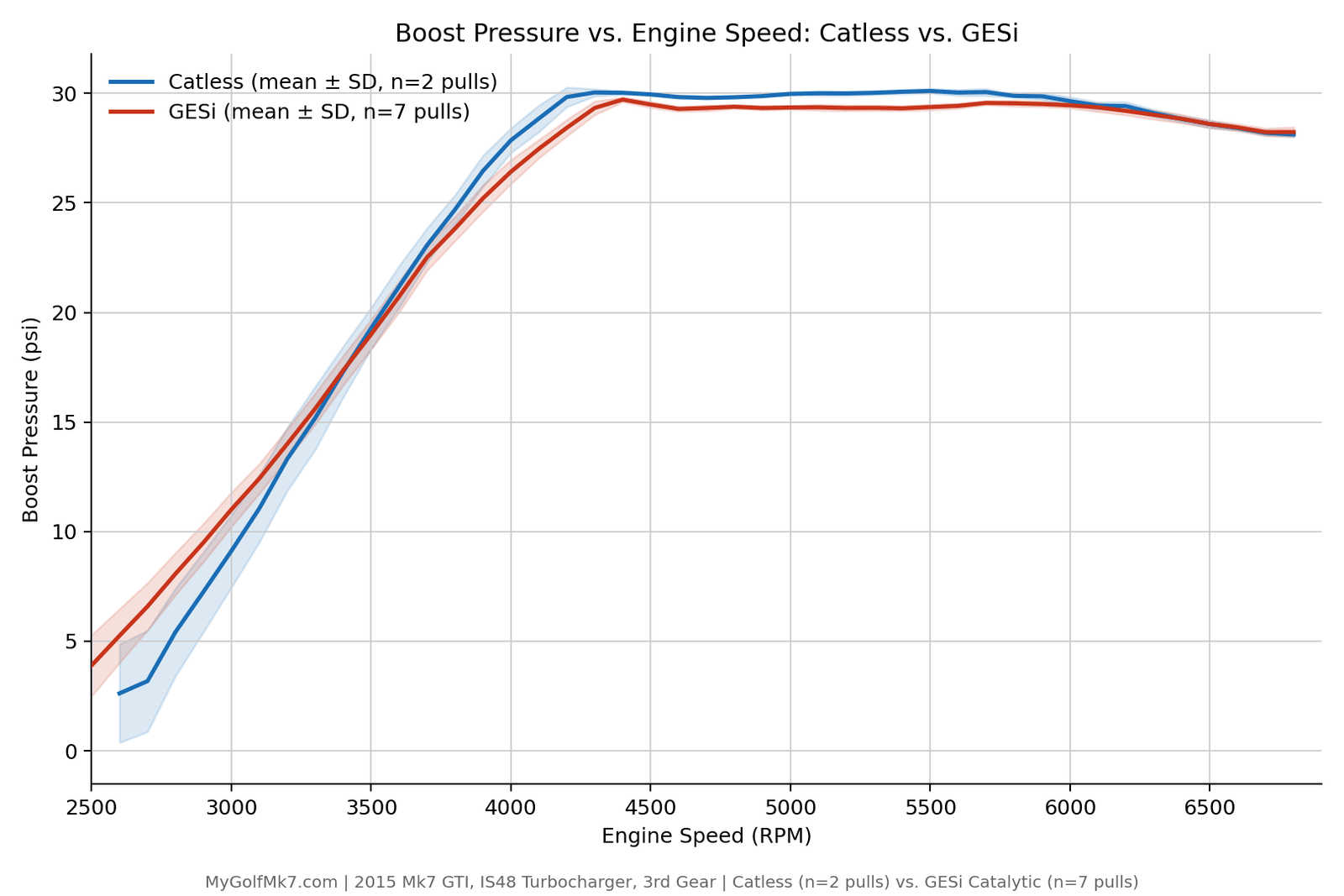
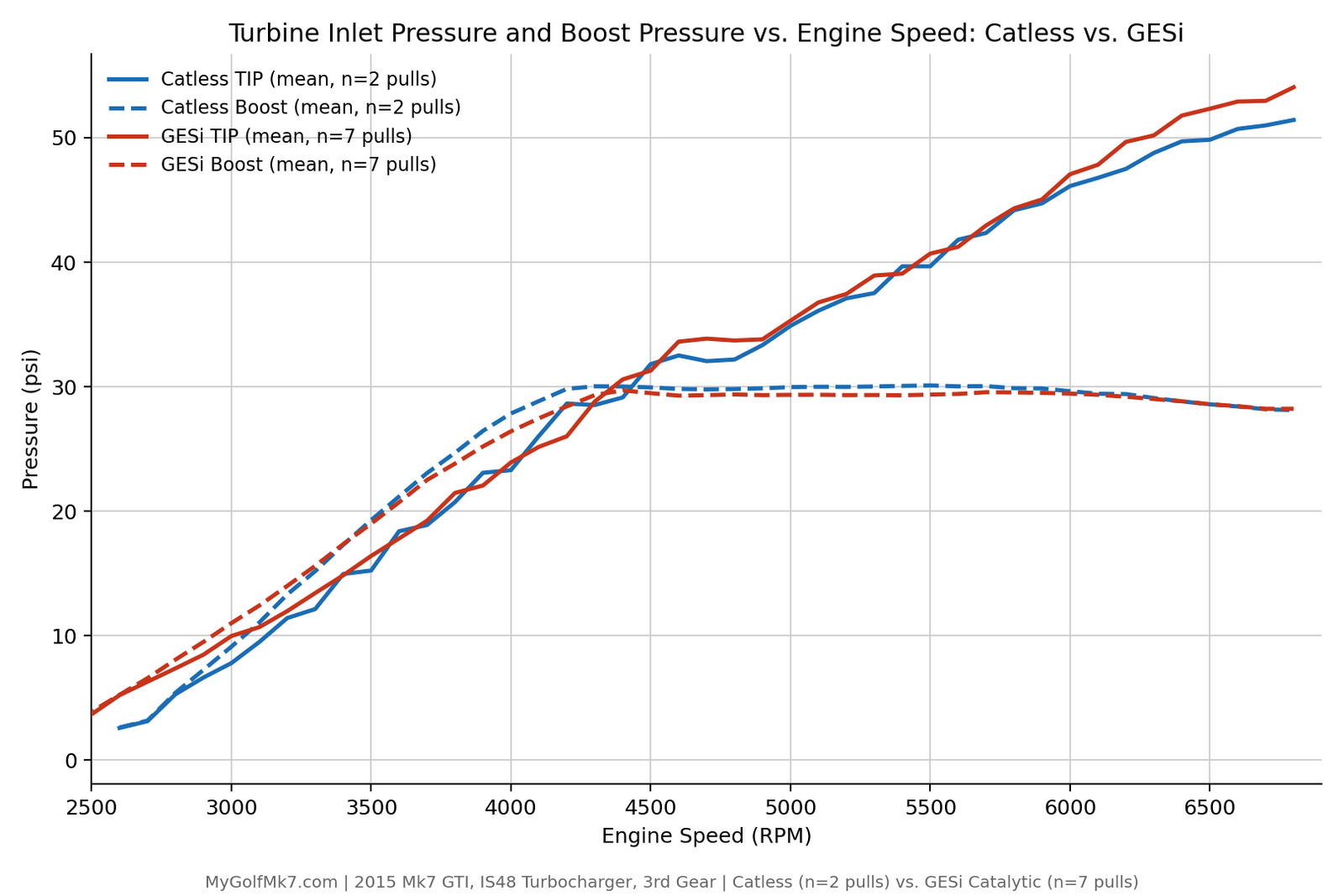
The boost pressure increases slightly more quickly and holds slightly higher with the catless downpipe.
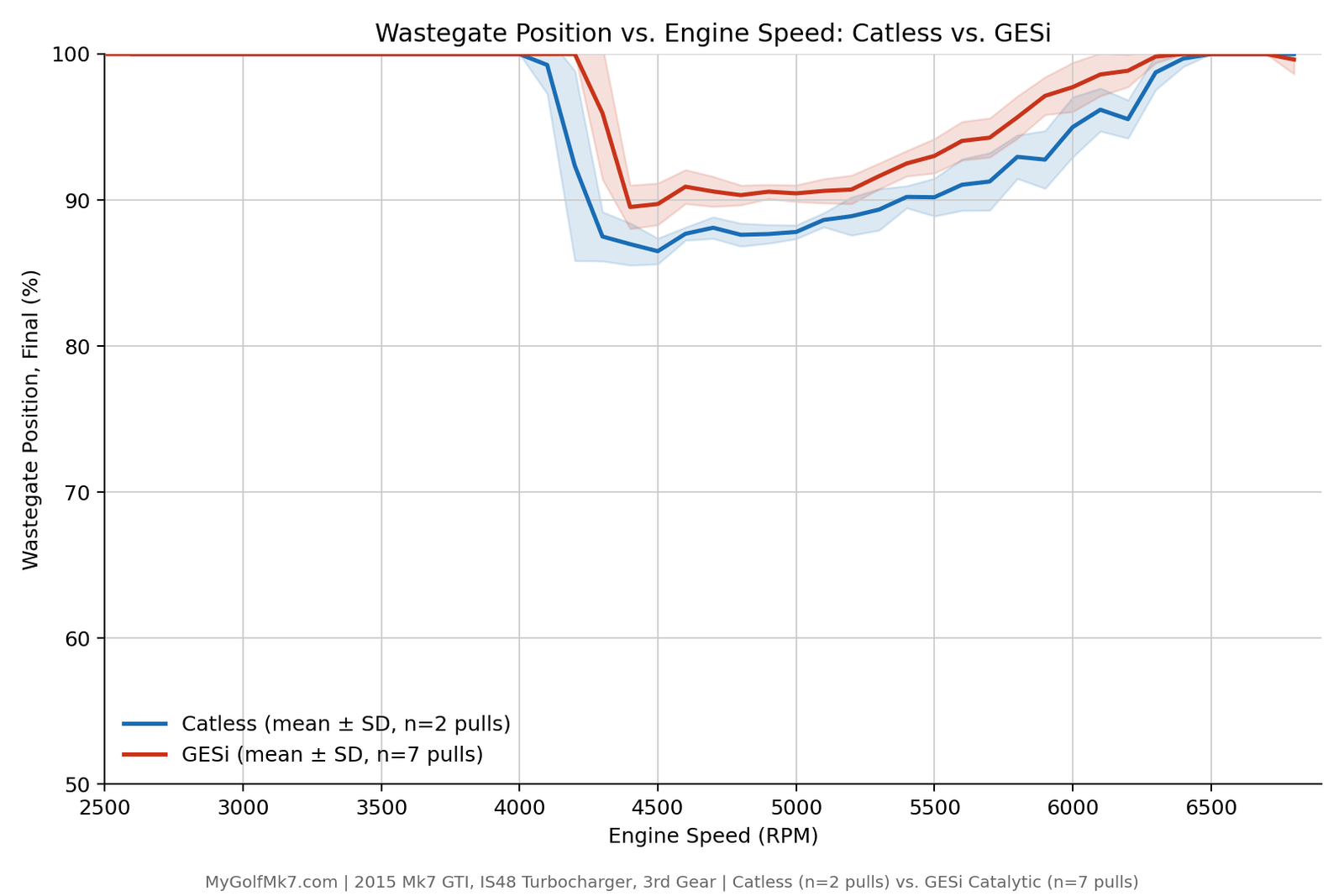
The catless downpipe operates with a lower wastegate duty cycle.
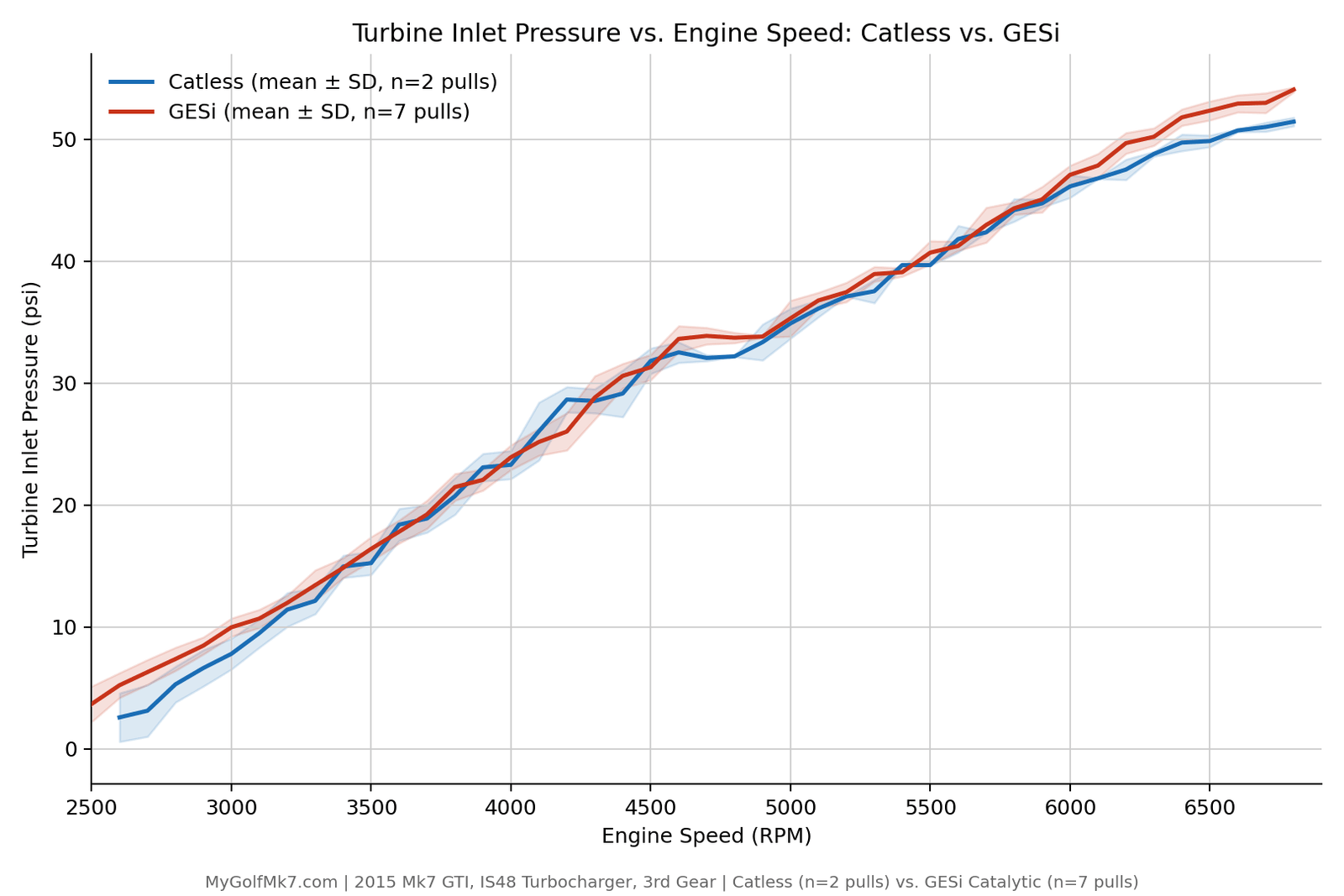
Looking at the turbine inlet pressure comparison, the GESi cat setup has a slightly higher turbine inlet pressure, as was expected.
The boost pressure and turbine inlet pressure are shown together.
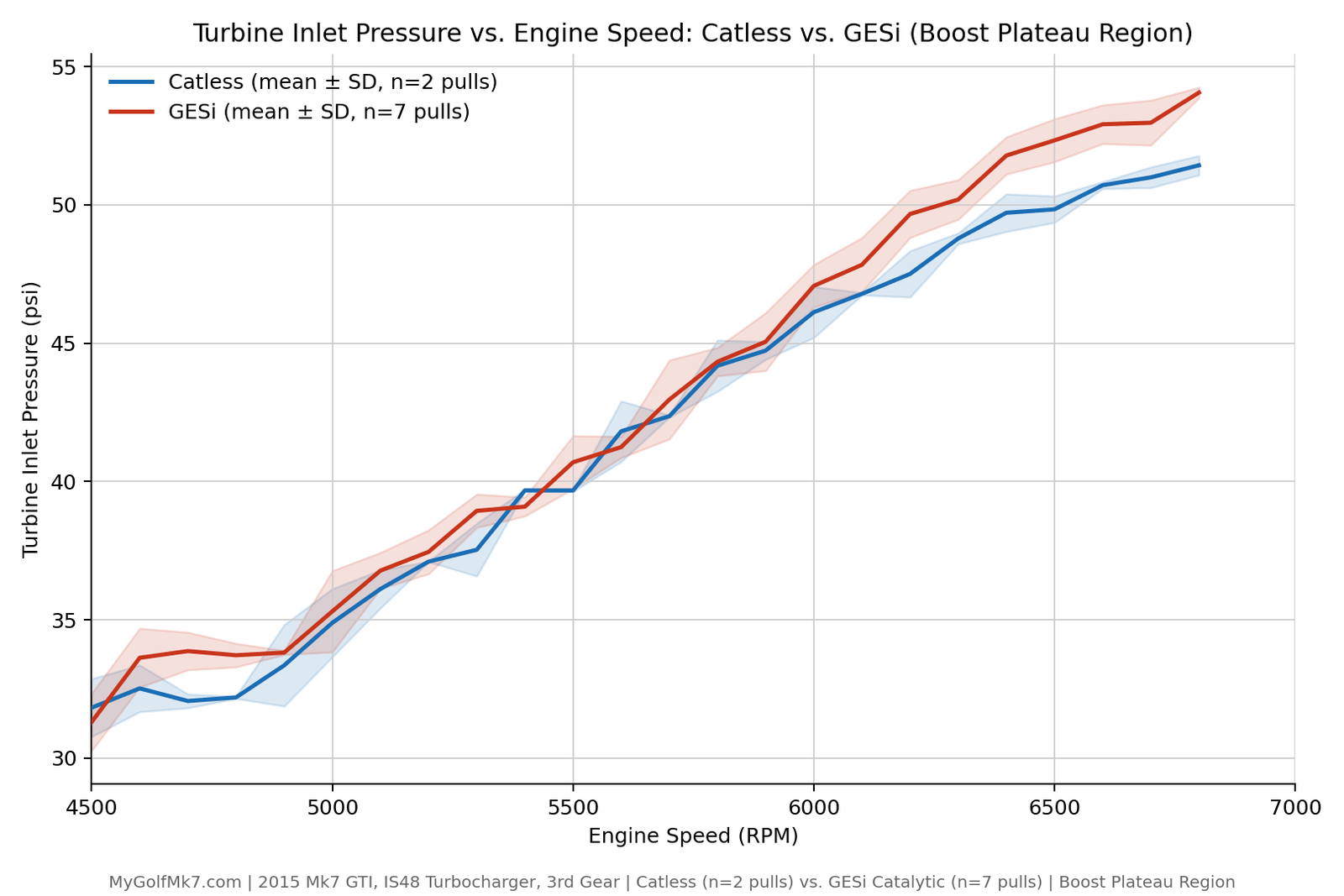
The next chart compares turbine inlet pressure across the engine speed range at which boost pressure has leveled off.
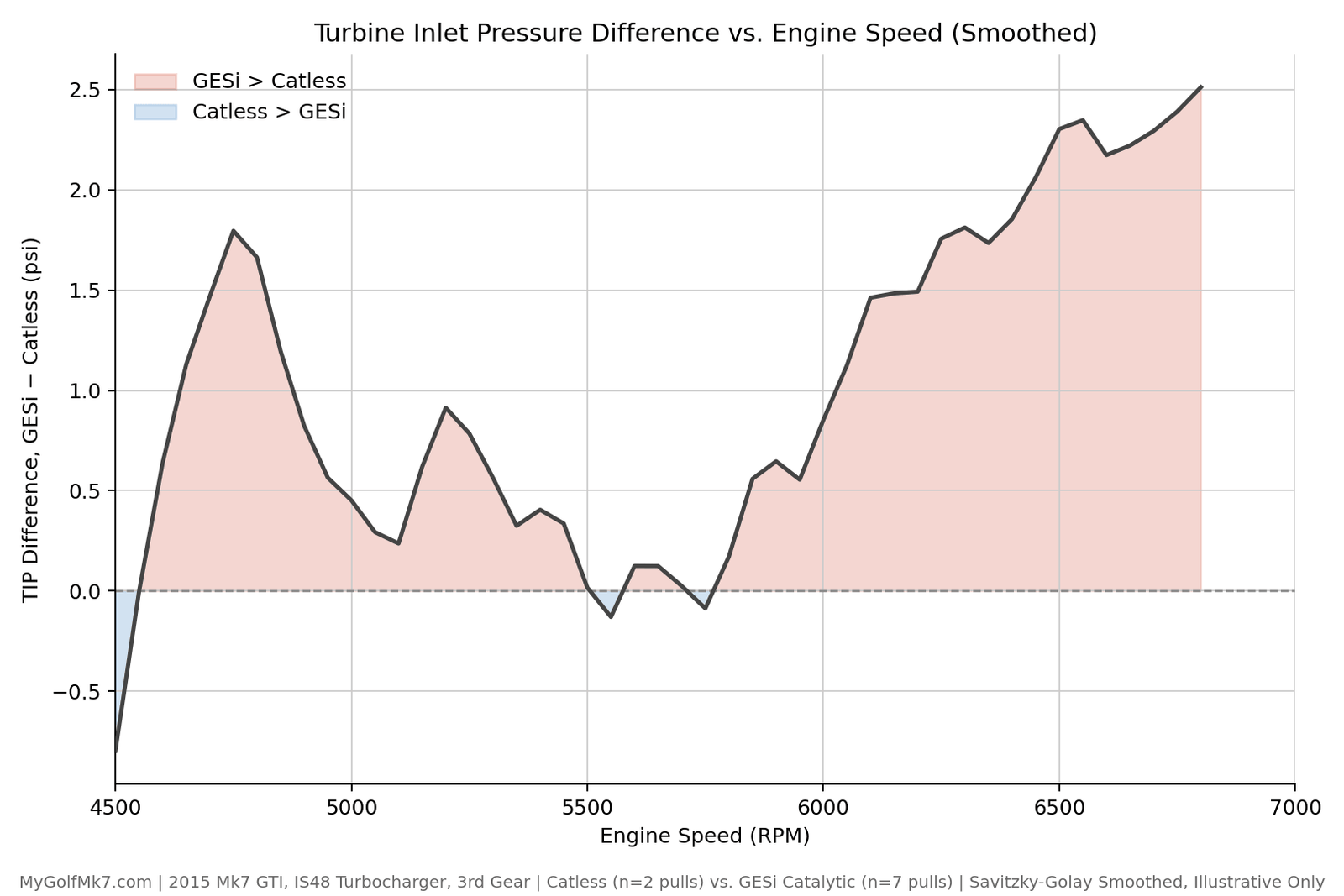
The difference between the GESi cat and catless turbine inlet pressures is shown with a smoothed curve.
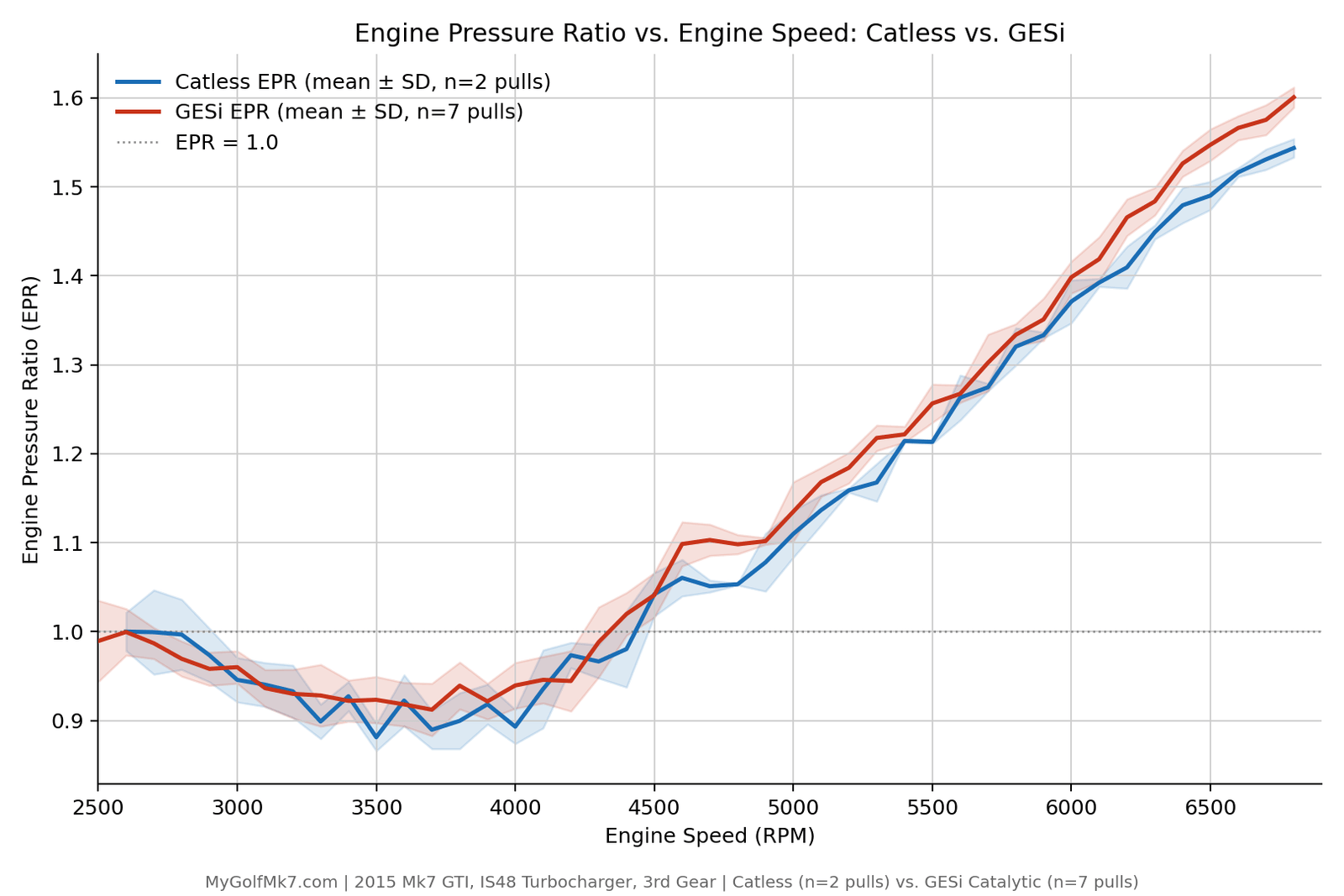
The engine pressure ratio (Engine Pressure Ratio, (EPR) compares the pressure on the exhaust side of the engine to the pressure on the intake side of the engine) is slightly greater with the GESi cat, as expected.
Conclusions:
Exhaust pressure readings of the turbocharger turbine inlet pressure were compared between vehicle configurations with a catless downpipe and a GESI cat downpipe. The GESI cat configuration showed a higher turbine inlet pressure that increased steadily when engine speed passed ~5800 RPM.