Background:
A previous post discussed installing equipment to measure exhaust backpressure upstream of the turbine inlet.
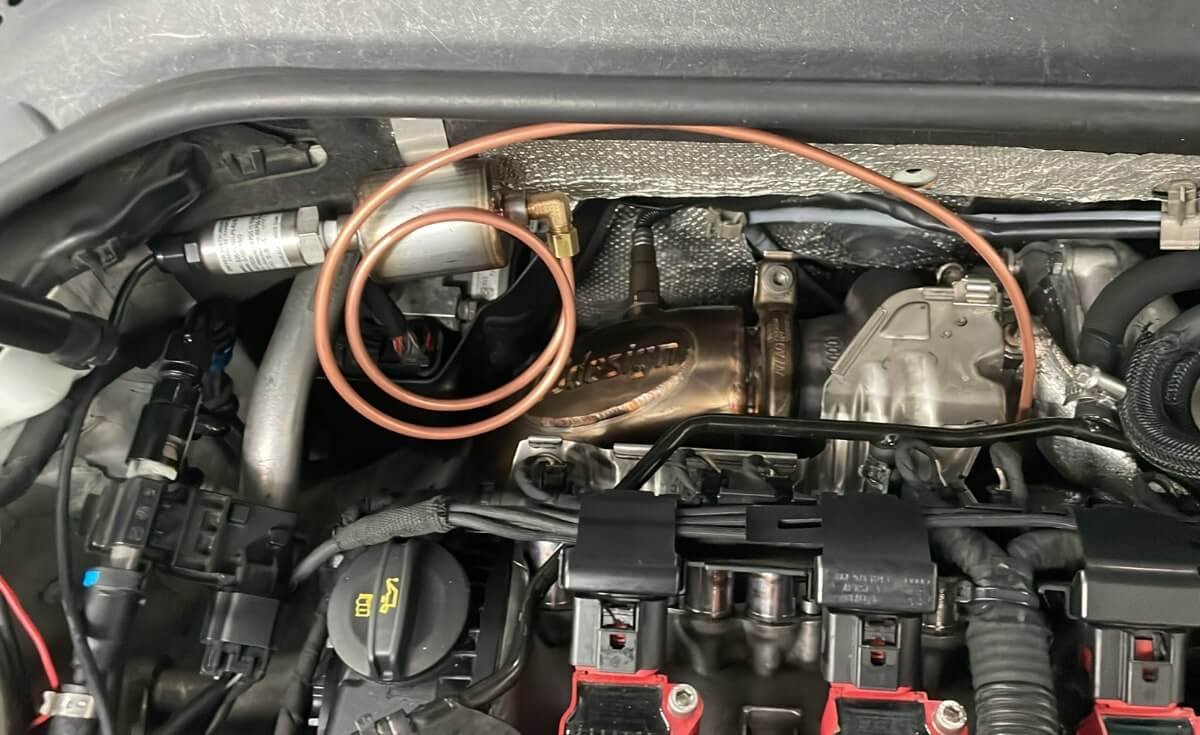
With the measurement equipment installed I took the GTI for a test drive to record pressure levels in the turbine housing upstream of the turbine wheel, what is referred to as the Turbine Inlet Pressure in the charts below.
Test Setup:
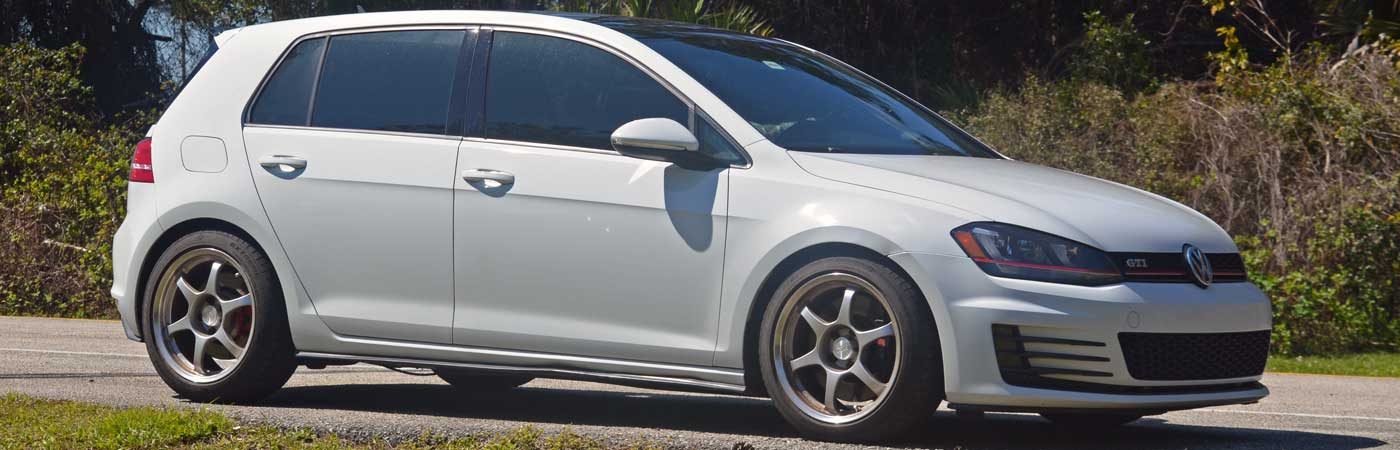
The GTI is set up as follows:
- Shuenk IS48 5+5 splitter turbine turbocharger
- Russell Road and Racing E40 ECU tune
- Eventuri Intake
- Shuenk Inlet Hose
- aFe Power charge pipes
- Majesty Competition IC & FMIC
- Stock “Euro” intake manifold
- CC Design 4″ catless downpipe
- CC Design 3.5″ catback exhaust
The car is being tested in 3rd and 4th gears. A full-throttle pull is begun around 2500 RPM and concluded around 6500 RPM.
Test Results:
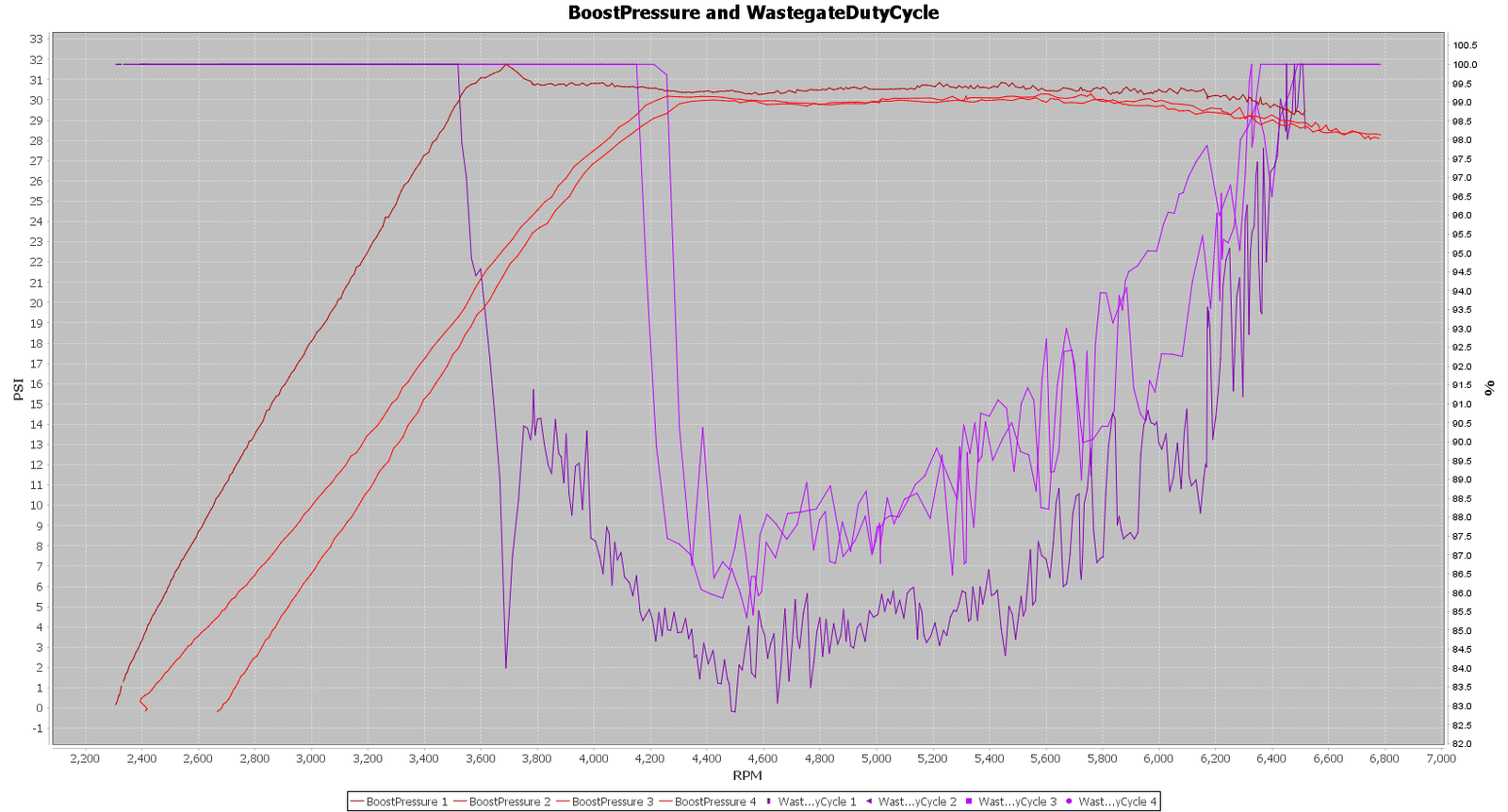
The boost pressure curve and WGDC are shown on the first chart.
Notably, the combination of the 5+5 splitter wheel, ambient temperature around 90F, and the Eventuri intake resulted in a maxed WGDC above ~6200 RPM. The splitter turbine wheel is less efficient than the full blade turbine wheel, the Eventuri flows less than the R600 intake I normally use (the swap was made to free up space for the datalogging equipment), and higher ambient air temperature reduces the intake air density, all of which cause the turbocharger to work ‘harder‘. A benefit of the car being down on power is being able to log in third gear without encountering wheel slip.
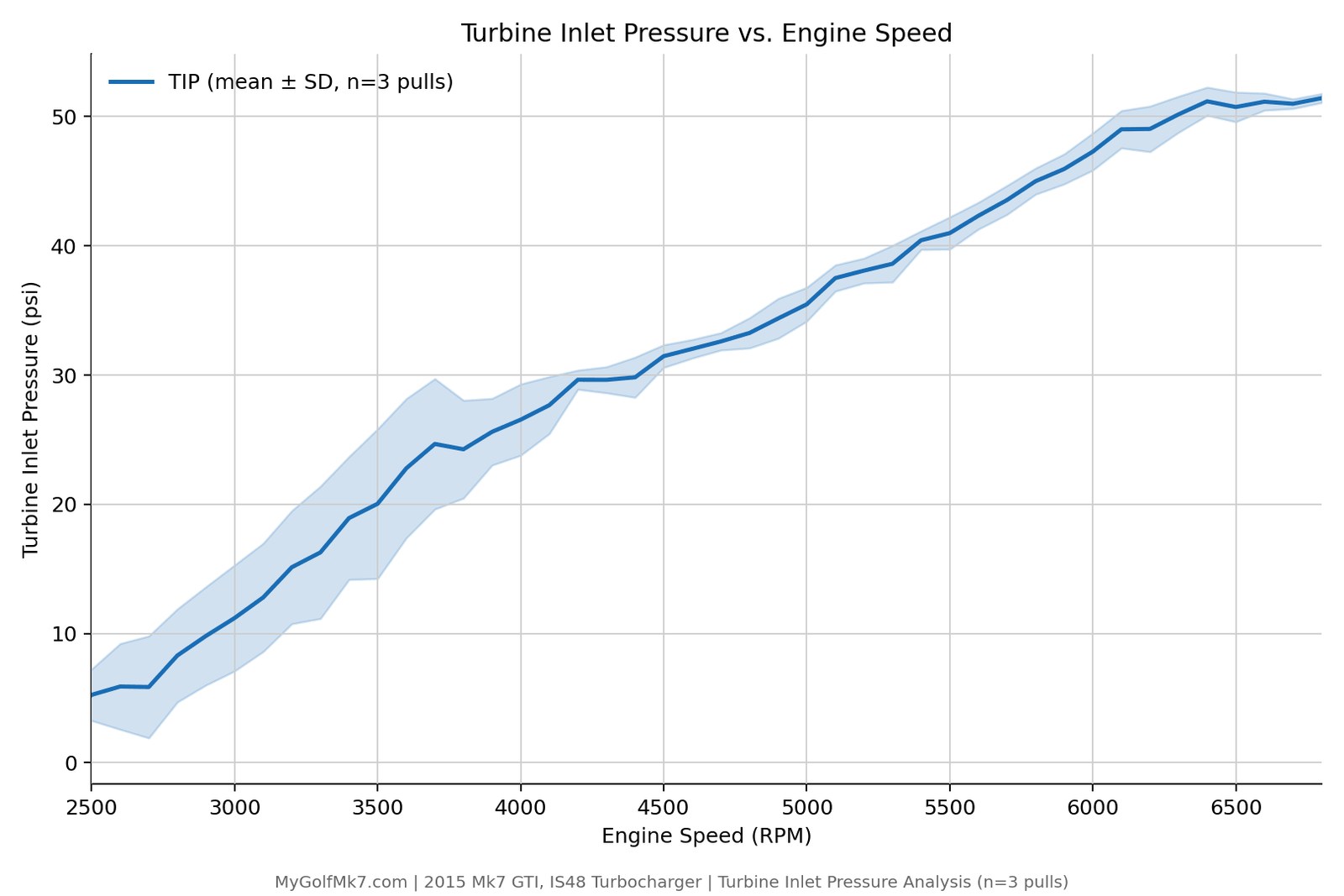
The average turbine inlet pressure and standard deviation bands are shown in the next chart.
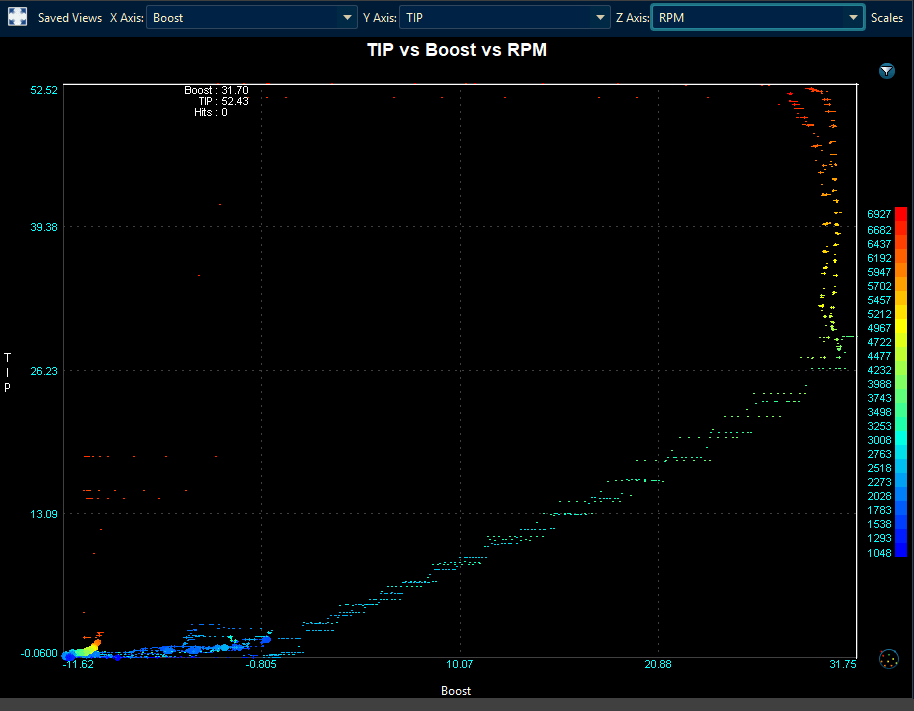
The next chart shows turbine inlet pressure increases roughly linearly with the boost pressure and then once boost pressure plateaus the turbine inlet pressure continues to increase with the increasing engine speed.
Note: Engine speed is shown via the color bar.
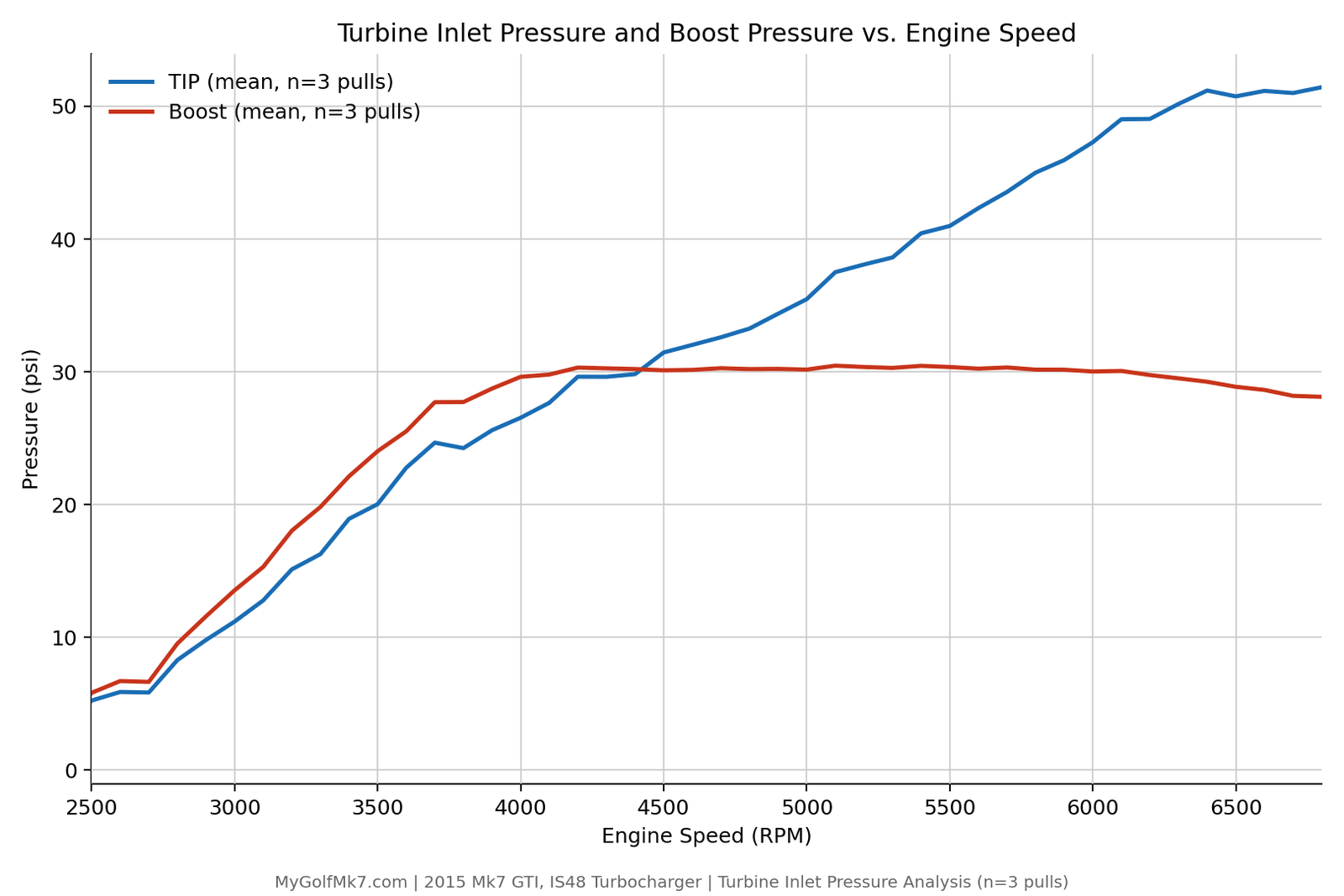
The next chart shows how the boost pressure and turbine inlet pressure increase with engine speed. Around 6100 RPM, boost pressure begins to taper, which correlates with the turbine inlet pressure transitioning from a steady increase to flattening out.
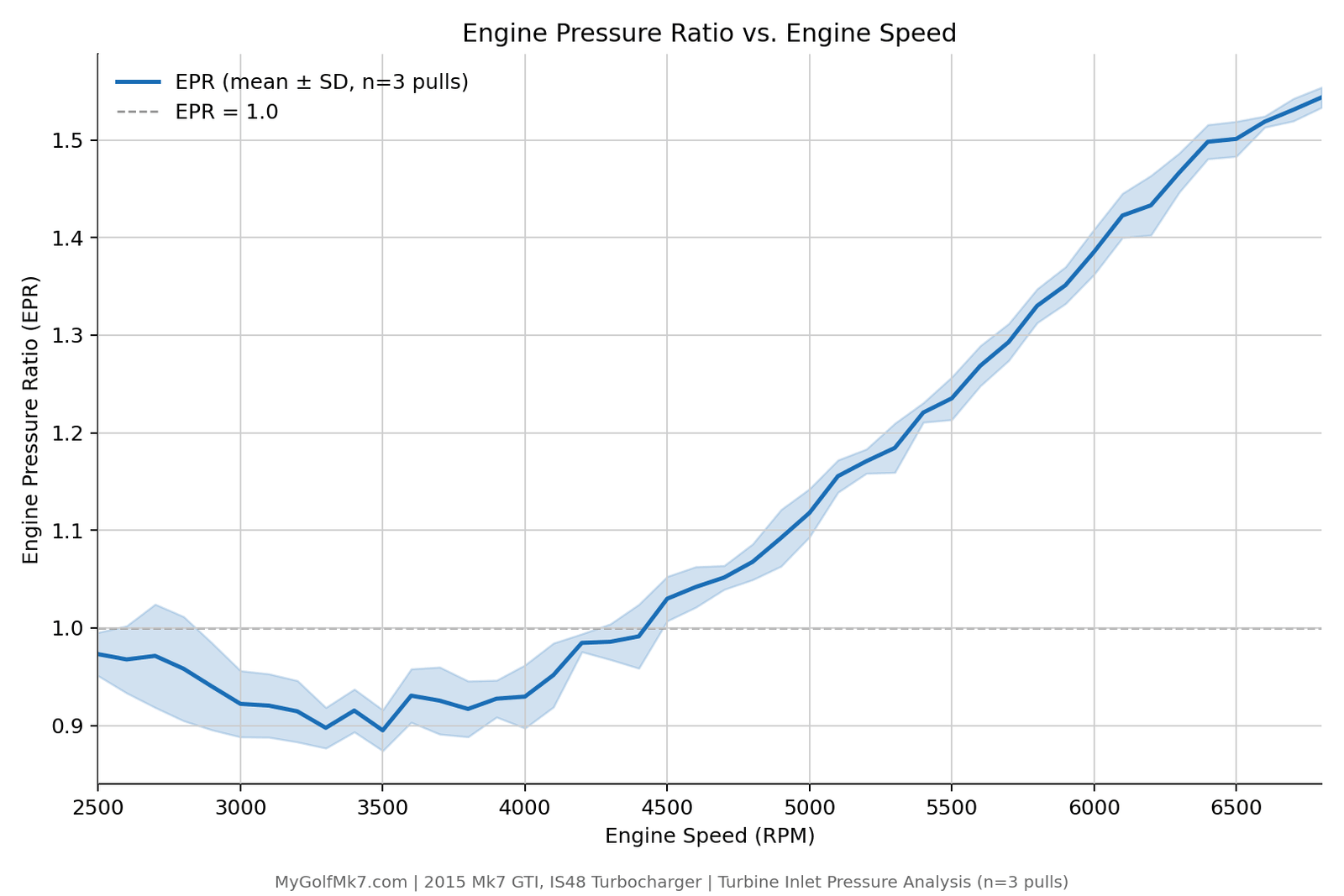
Next, an Engine Pressure Ratio (EPR) is calculated.
Engine Pressure Ratio (EPR) compares the pressure on the exhaust side of the engine to the pressure on the intake side of the engine. It’s the turbine inlet pressure (exhaust manifold side) divided by the boost pressure (intake manifold side), with atmospheric pressure added to both before dividing, so the comparison reflects absolute pressure rather than just gauge readings.
EPR = \frac{TIP + Ambient}{Boost + Ambient}An EPR of 1.0 means the exhaust-side pressure and the intake-side pressure are equal. Below 1.0, boost pressure is higher than the exhaust backpressure — a favorable condition where the engine isn’t working against much resistance to expel exhaust gas. Above 1.0, the exhaust side is under more pressure than the intake side, meaning the engine has to do extra work pushing exhaust out against that backpressure during the exhaust stroke.
Conclusions:
Testing was conducted using a Mk7 GTI equipped with a Shuenk IS48 turbocharger incorporating a 5+5 blade splitter turbine wheel to measure the turbine inlet pressure.
Measurements show that the turbine inlet pressure increases with increasing boost pressure and increasing engine speed, peaking around 51 psi at a boost pressure of 28-29 psi.
Next Step:
I will be reinstalling the GESi catalytic converter to see how the turbine inlet pressure is affected by the cat.