
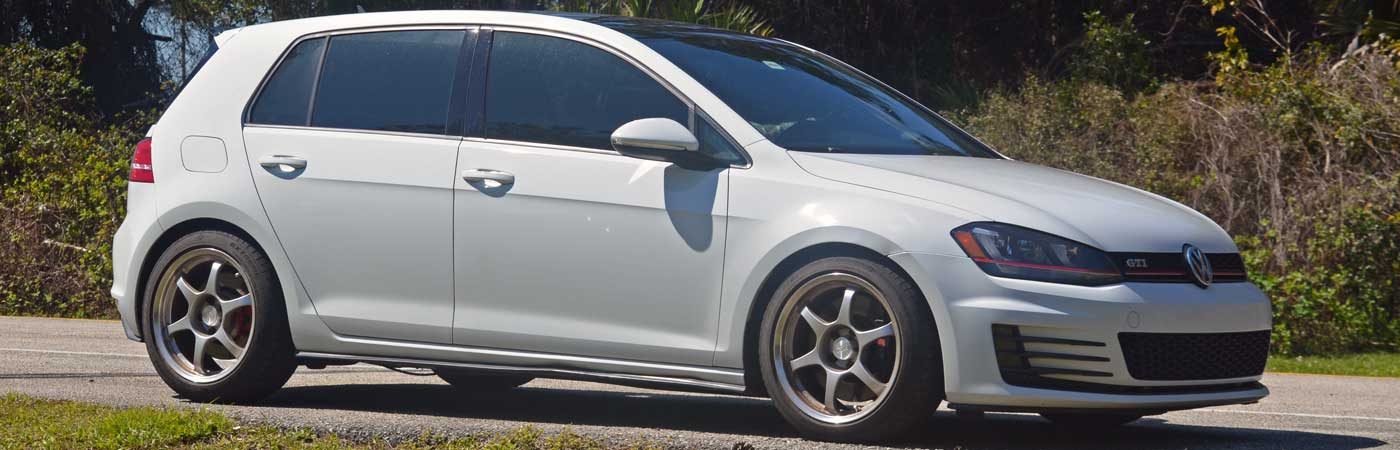
Background:
Previous posts have discussed measuring turbine inlet pressure on the Shuenk IS48 turbocharger with a 5+5 splitter turbine wheel. To compare the standard IS38 turbine wheel with the 5+5 blade splitter wheel, I removed the turbocharger and swapped the center section back to the IS38 turbine.
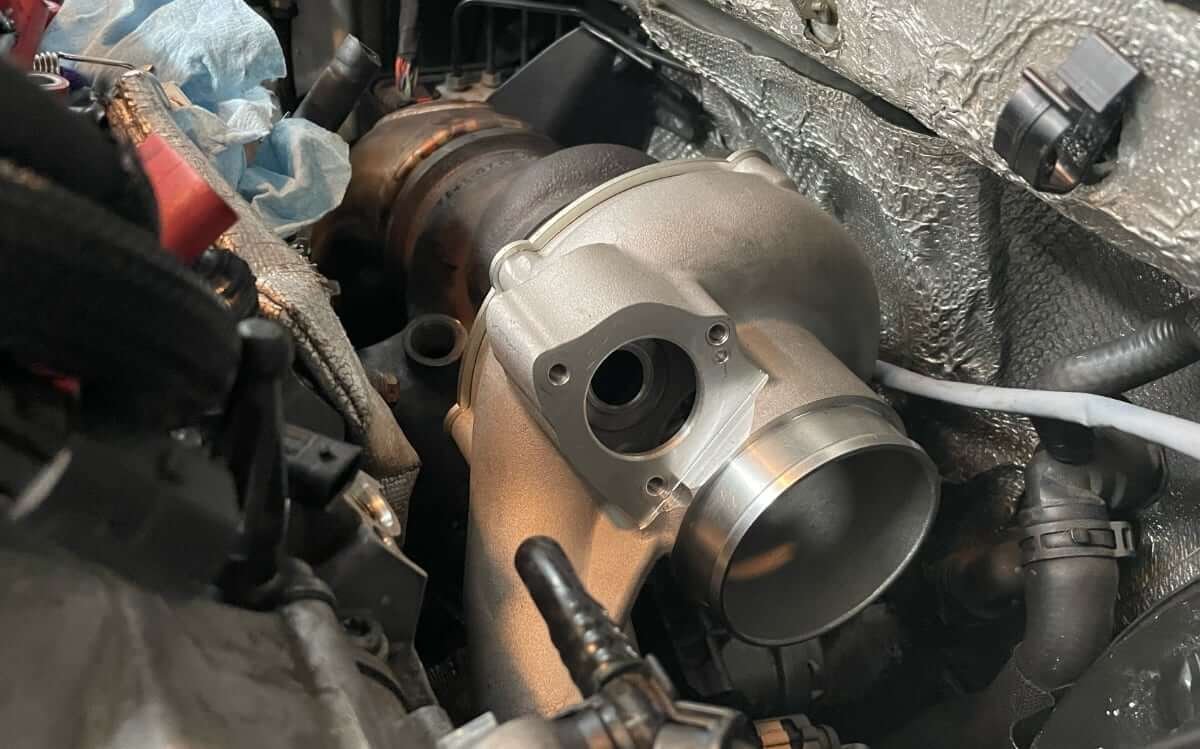
With the IS38-equipped turbine wheel CHRA installed, I reinstalled the turbo.
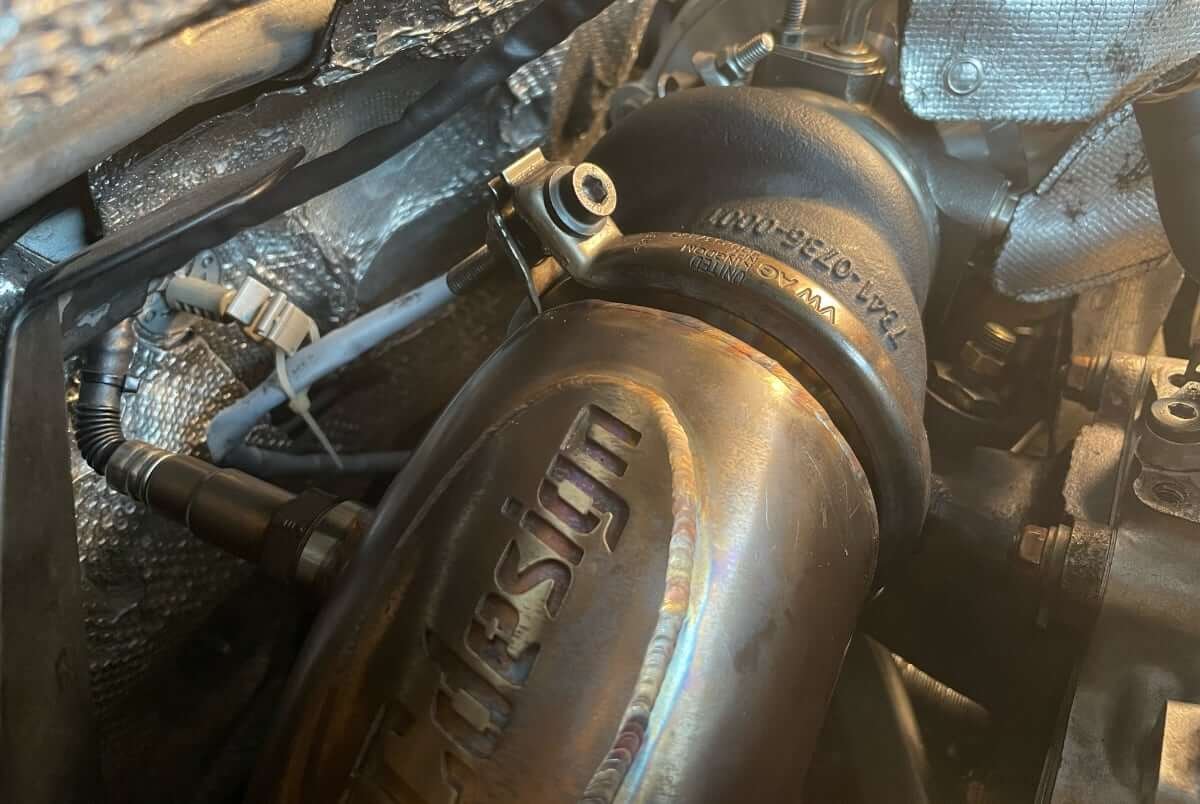
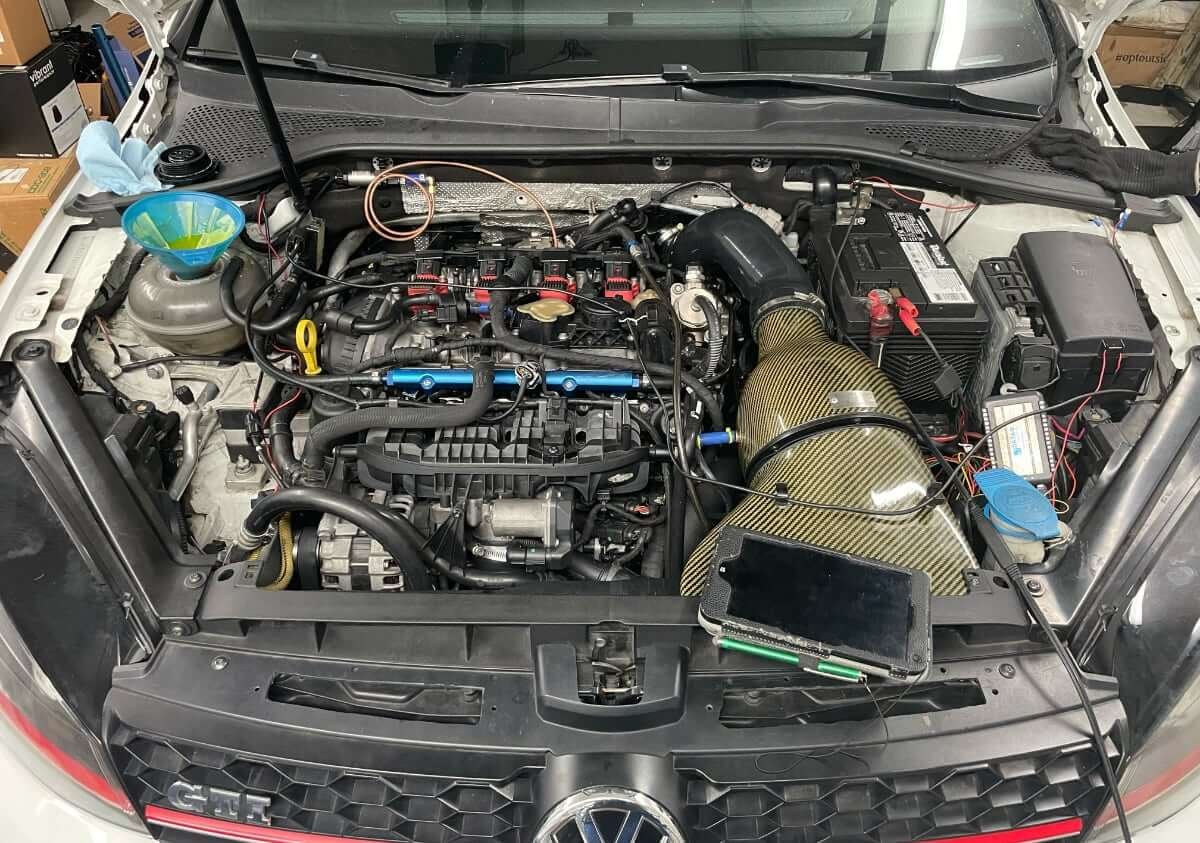
With the turbocharger swap complete and the pressure measurement equipment installed, the GTI was ready for another test.
Test Setup:
The GTI is set up as follows:
- Shuenk IS48 (IS38 turbine) turbocharger
- Russell Road and Racing E40 ECU tune
- Eventuri Intake
- Shuenk Inlet Hose
- aFe Power charge pipes
- Majesty Competition IC & FMIC
- Stock “Euro” intake manifold
- CC Design 4″ catless downpipe
- CC Design 3.5″ catback exhaust
Data collection is done at full throttle in third gear, beginning around 2,000 RPM and concluding around 6,500 RPM.
The car runs on an E40 tune.
Test Results:
In the following charts, the legend distinguishes the Shuenk IS48 and IS48T. The IS48 is the standard turbo with the IS38 turbine wheel, the configuration Shuenk sells, and the IS48T is the 5+5 splitter wheel being tested for comparison.
Testing conditions are similar. Ambient air temperature differs by less than 5°F.
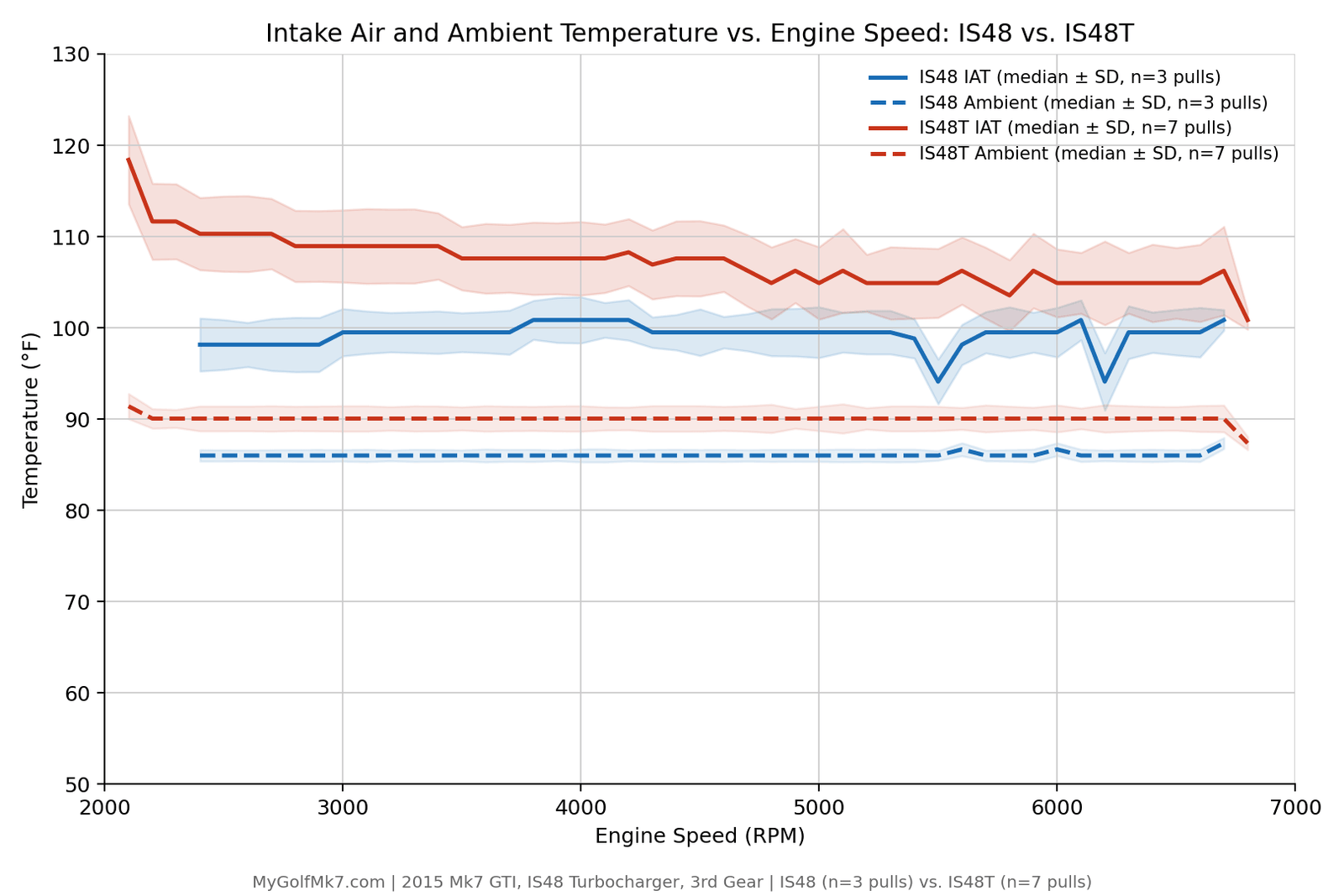
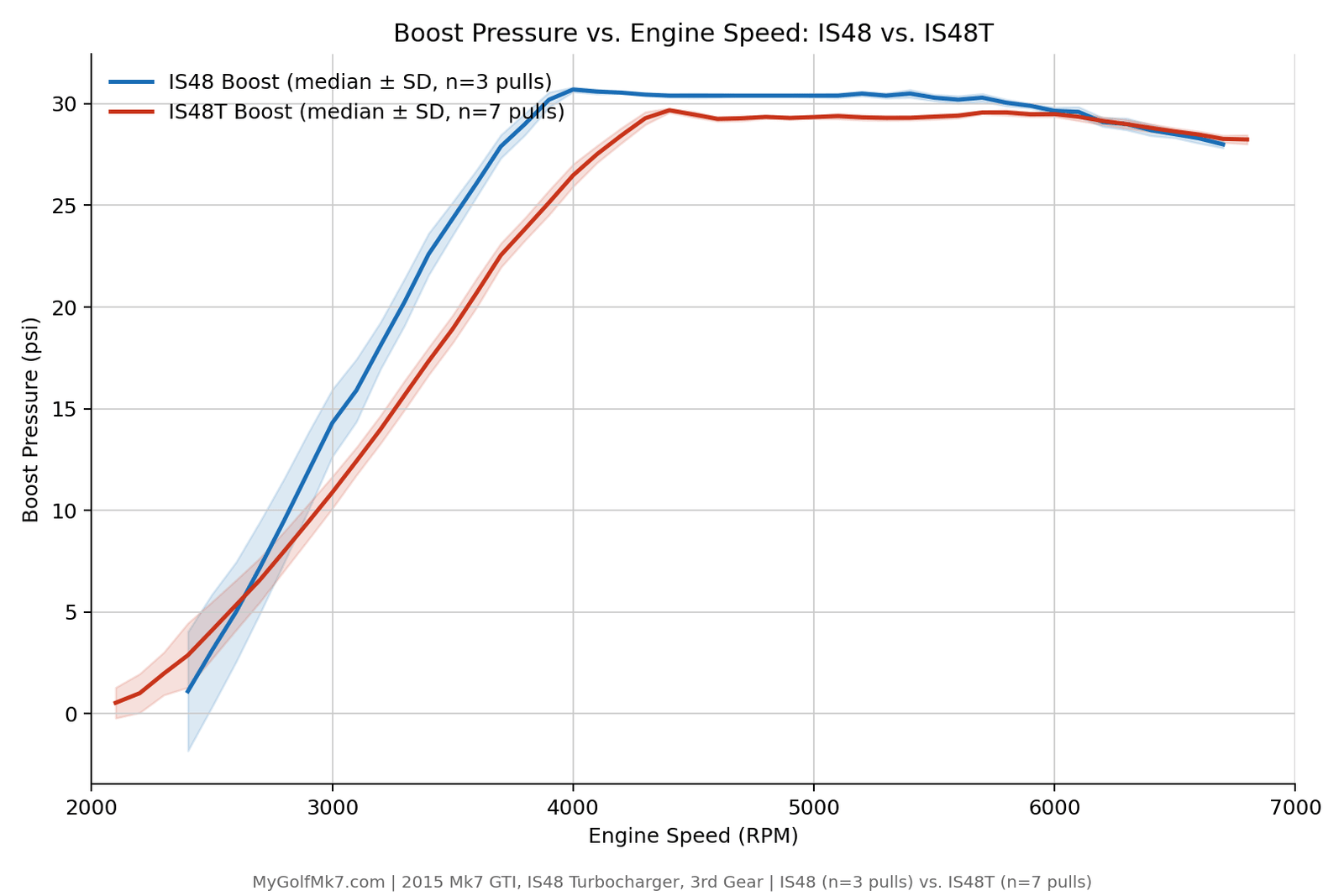
Boost pressure builds more quickly with the IS38 turbine, as has been previously discussed.
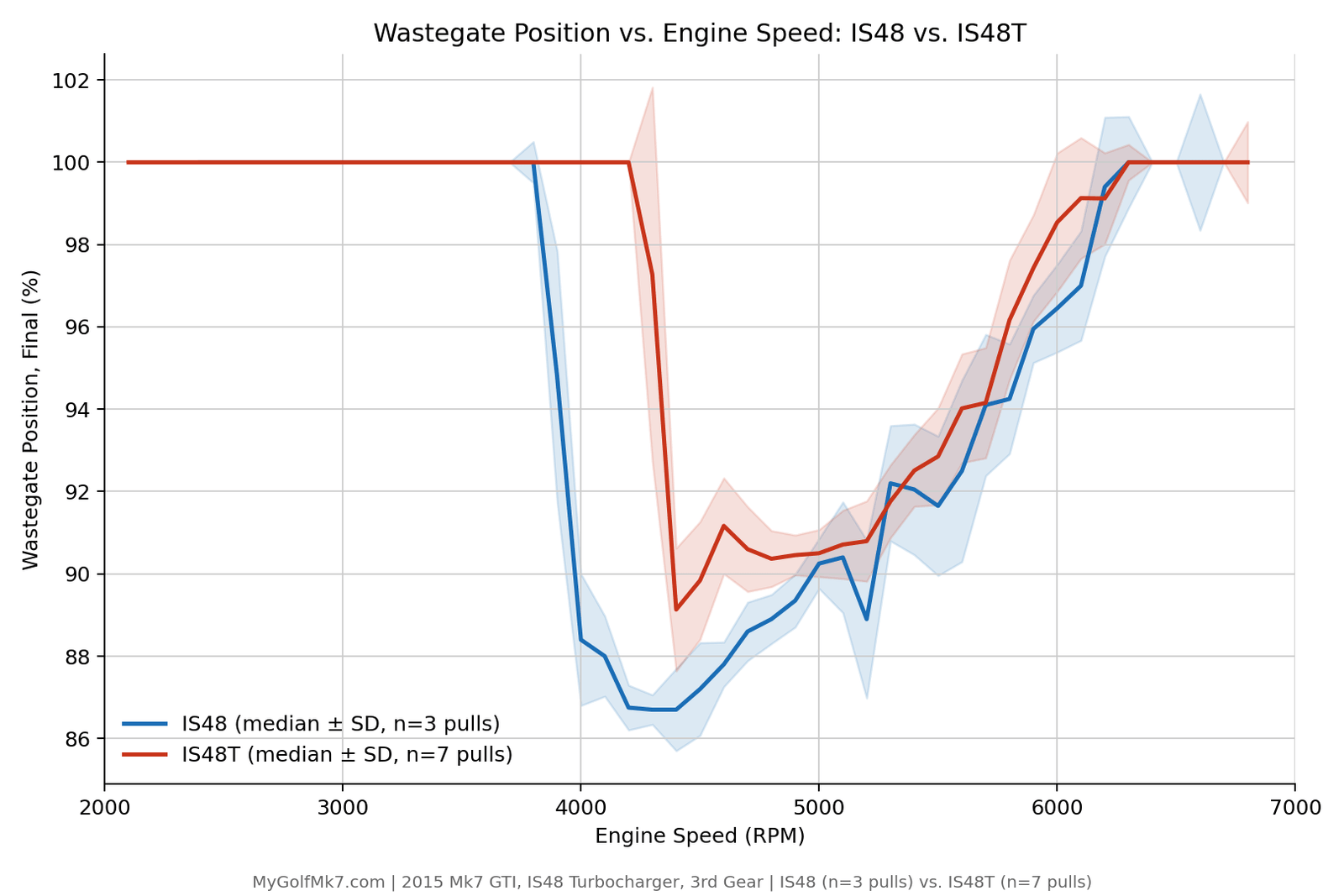
The turbo with the 5+5 turbine wheel requires slightly more WGDC for slightly lower boost pressure, although the slightly higher ambient and IAT are also found with the IS48T case; thus, the temperatures could be affecting the WGDC.
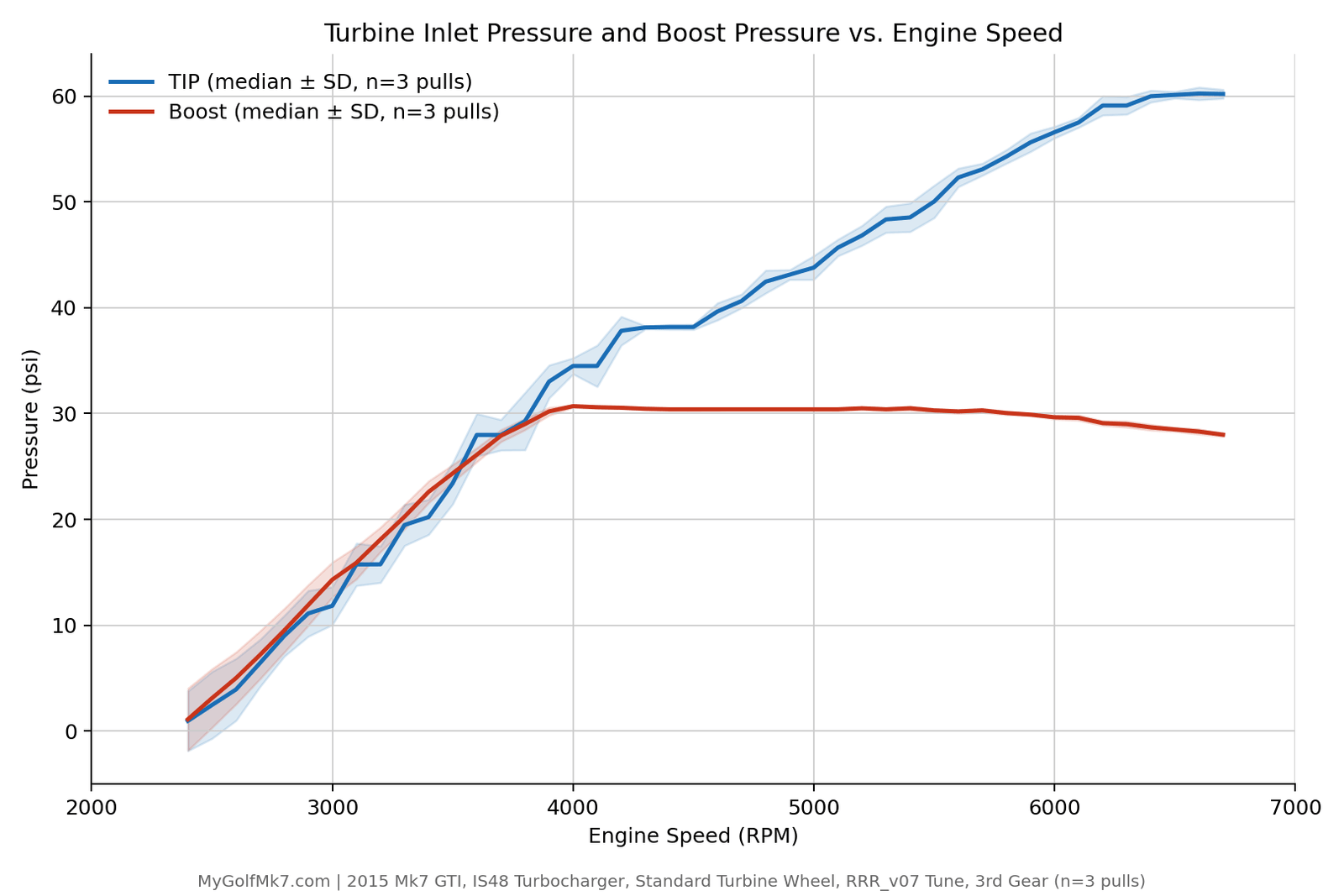
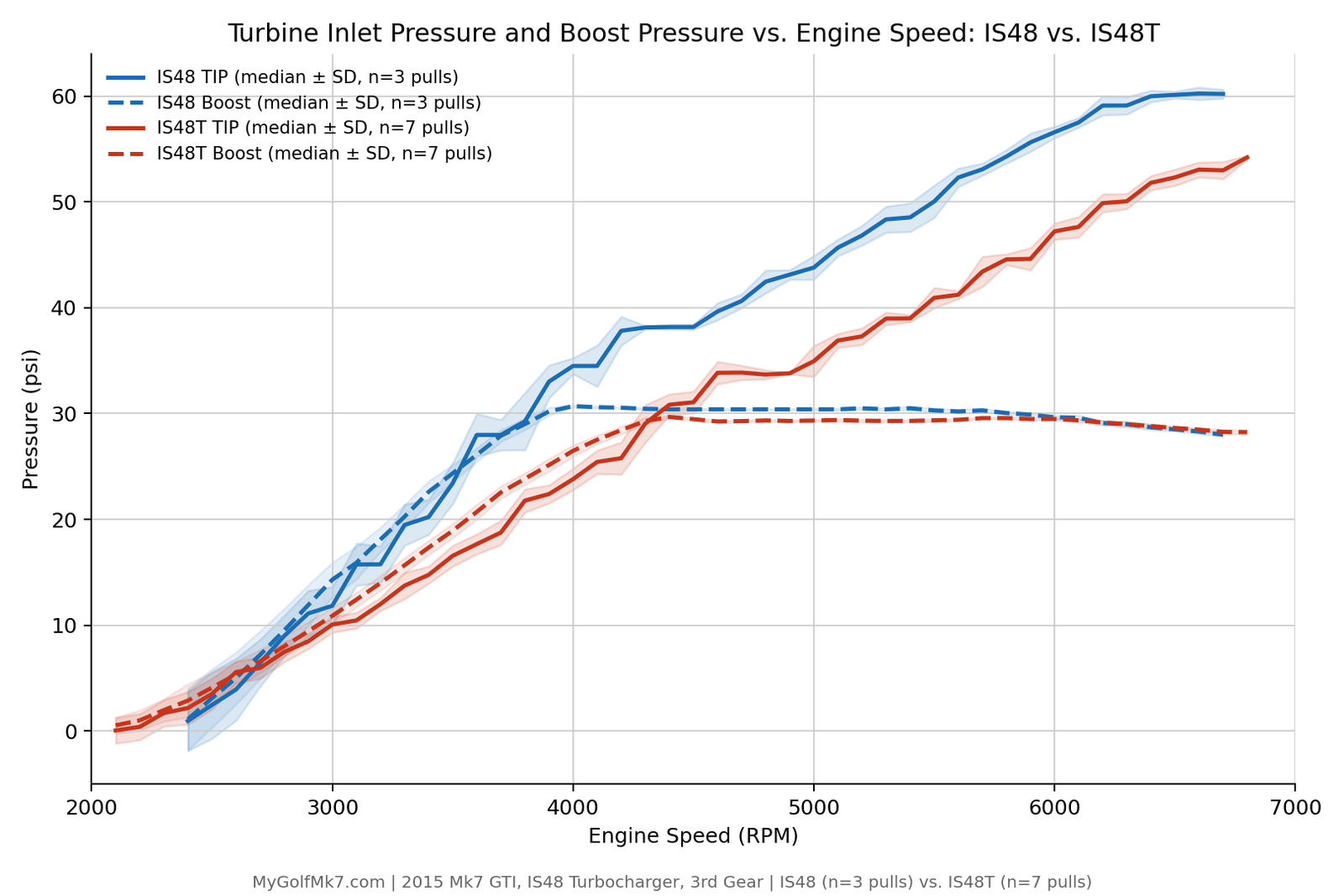
The IS38 turbine configuration Turbine Inlet Pressure and intake manifold boost pressure are shown next:
The next chart compares the Standard IS48 (IS38 turbine wheel) and IS48 5+5 splitter turbine wheel. The 5+5 splitter wheel’s benefit is evident in the lower turbine inlet pressure.
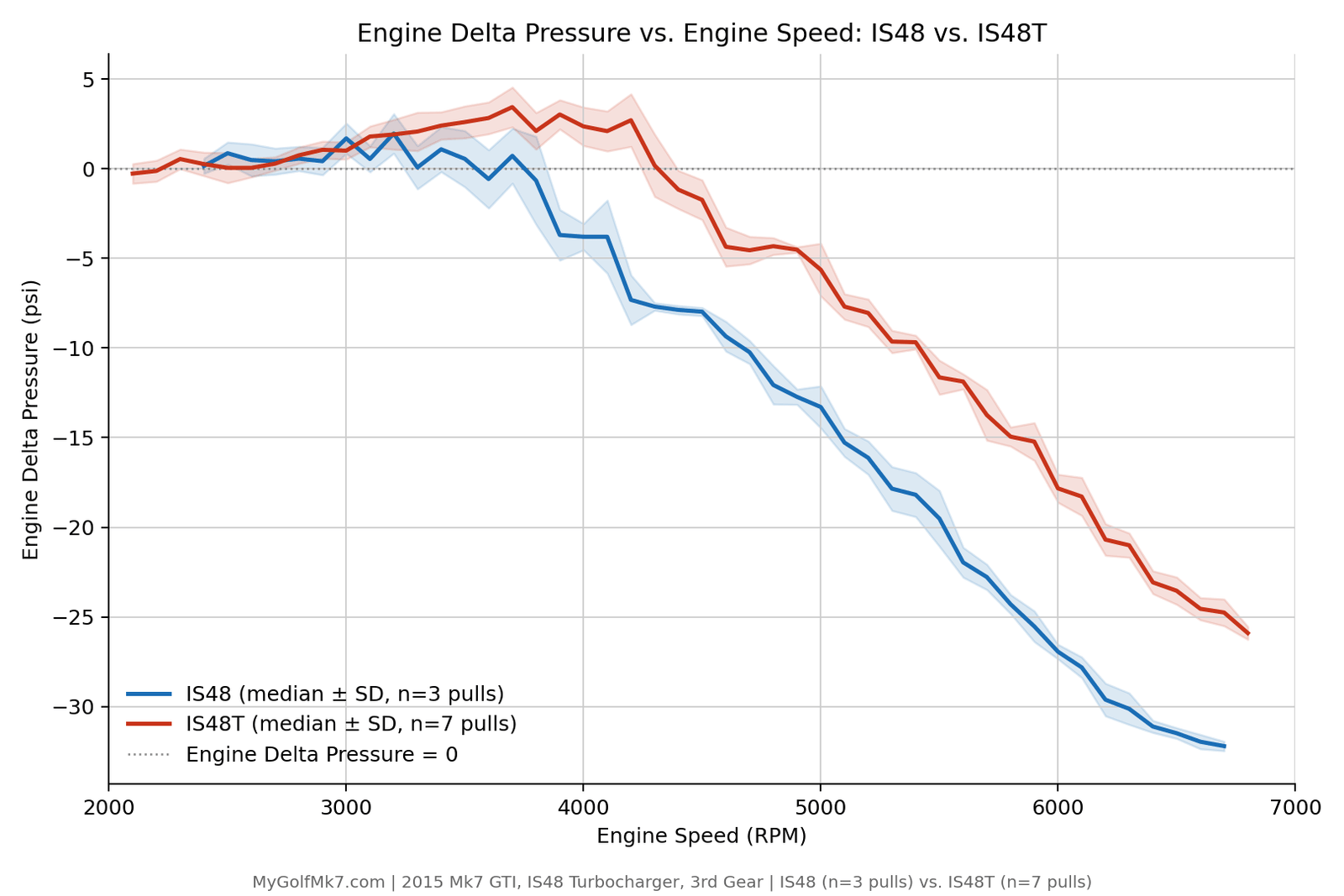
The next chart shows the Engine (DP) Delta Pressure (Boost Pressure − TIP). The full-blade IS38 turbine wheel builds more backpressure relative to boost, resulting in a larger negative pressure differential the engine must push against on the exhaust stroke.
Lastly, the Engine Pressure Ratio for each test case is shown:
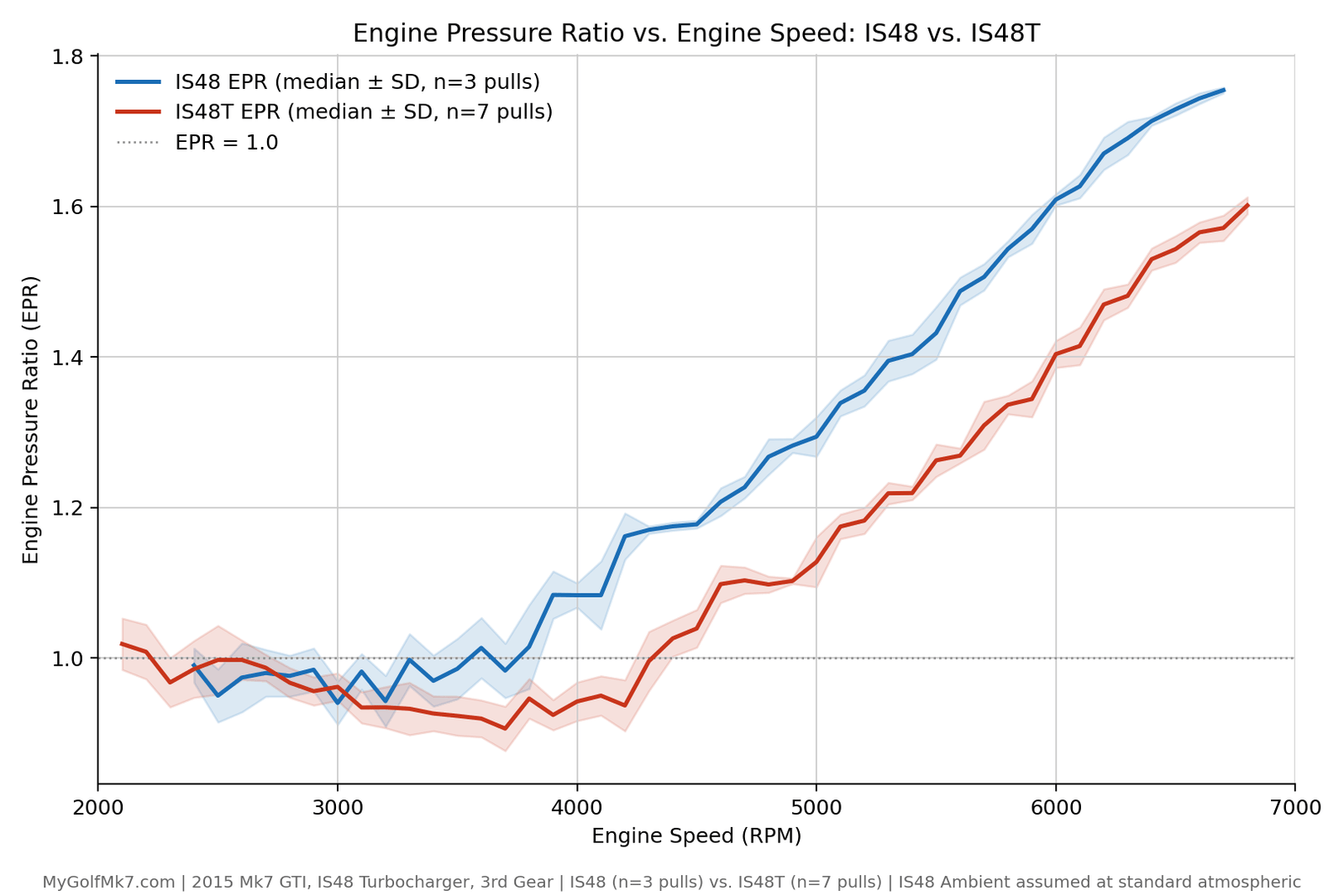
Two main effects are evident with the WGDC and EPR.
WGDC: The splitter blades interact with less of the exhaust flow than a full blade, so they extract less energy from the gas passing over them. To achieve the same total energy transfer to the turbine wheel (and hold the same boost target), more exhaust must be routed through the turbine rather than bypassed. This leads to the higher WGDC shown in the data.
Engine DP/EPR: With less blade area obstructing the flow path, the 5+5 wheel presents less resistance to the exhaust passing through it. That lower restriction helps explain the lower TIP. Even with more total flow through the turbine (higher WGDC), a less obstructive wheel geometry produces less backpressure than a smaller effective flow area (IS38 turbine wheel) does.
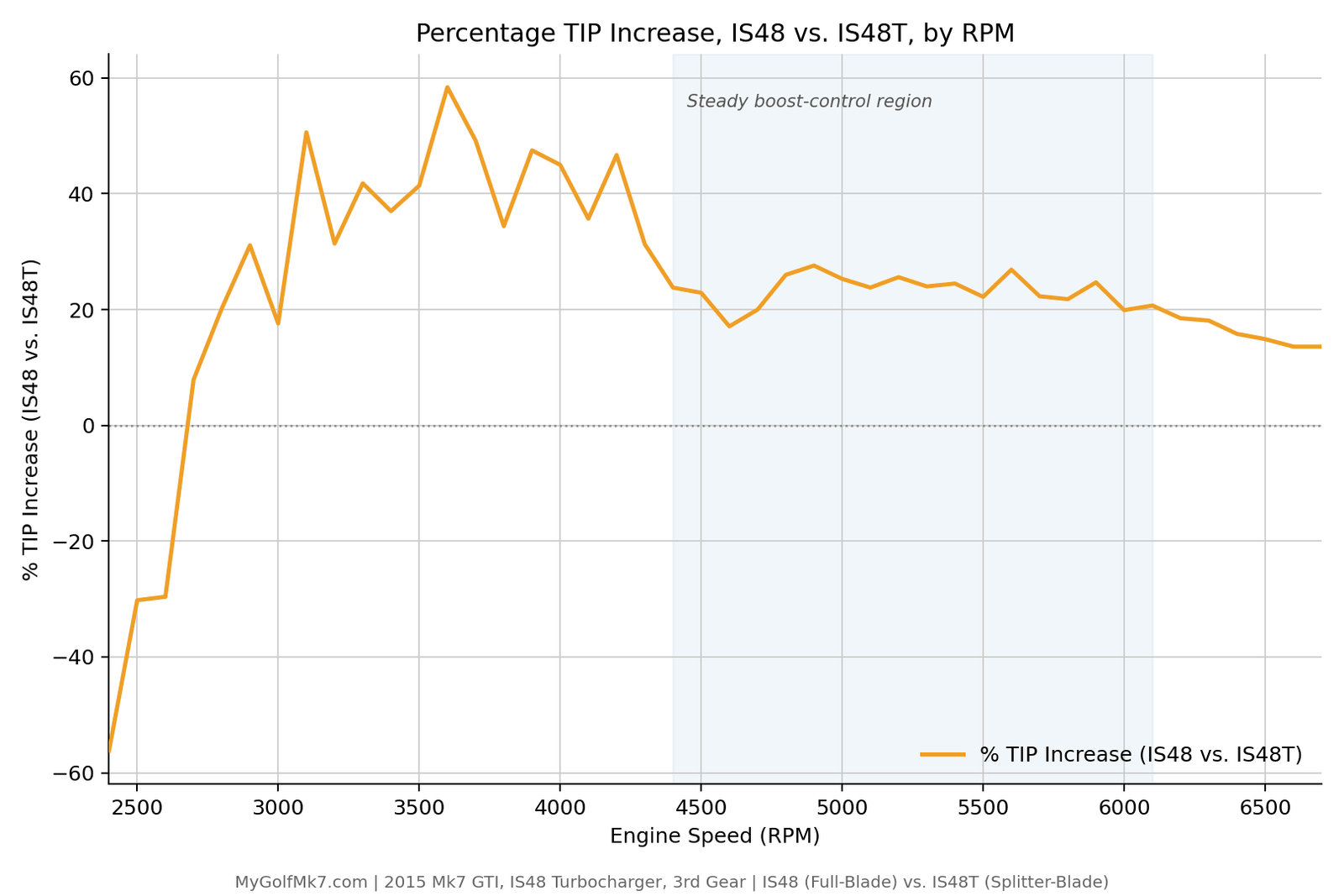
This outcome is directionally consistent with the flow bench measurements of flow rate through the respective turbine housings, discussed in a prior post. Interestingly, the flow bench test showed a 16% difference in airflow rates, and from 6,200–6,700 RPM the gap in TIP Increase narrows down to 14-18%.
Conclusions:
The Shuenk IS48 with IS38 full-size blades extracts more energy per unit of exhaust flow, so it needs less wastegate closure to hit target boost, but the fuller blade coverage restricts the flow that does pass through, resulting in higher TIP/EPR.
The 5+5 splitter wheel trades energy extraction efficiency (producing higher WGDC) for reduced flow restriction, resulting in lower TIP/EPR.