

Background:
While in the process of incorporating Flex Fuel tuning on my Golf R, some updates were being made to the 93-octane setting to account for the current hardware configuration on the car.
I’ve been running the stock airbox and decided to try an aftermarket intake to see if it raised the ceiling on the power the engine could deliver.
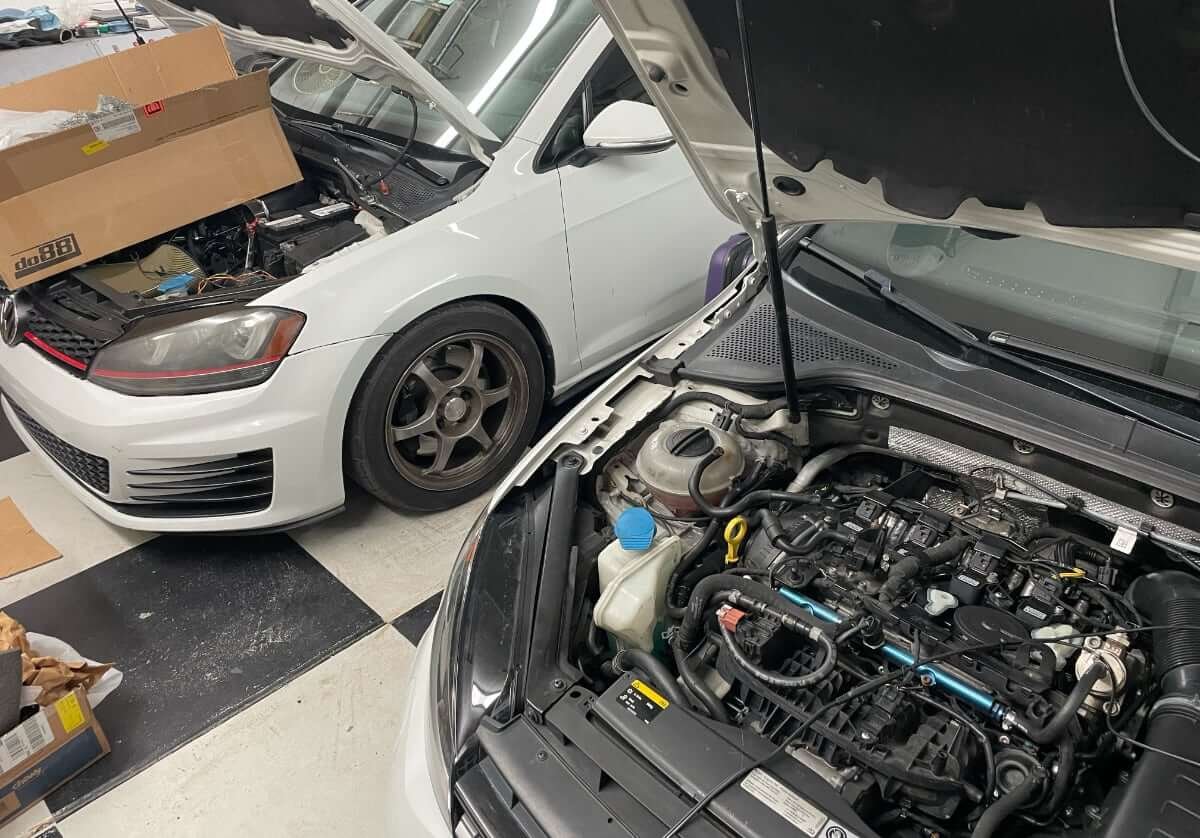
In the following video, I walk through the material discussed in this post.
Test Setup:
As the title suggests, the car is currently running on a RAC 5353 turbocharger.
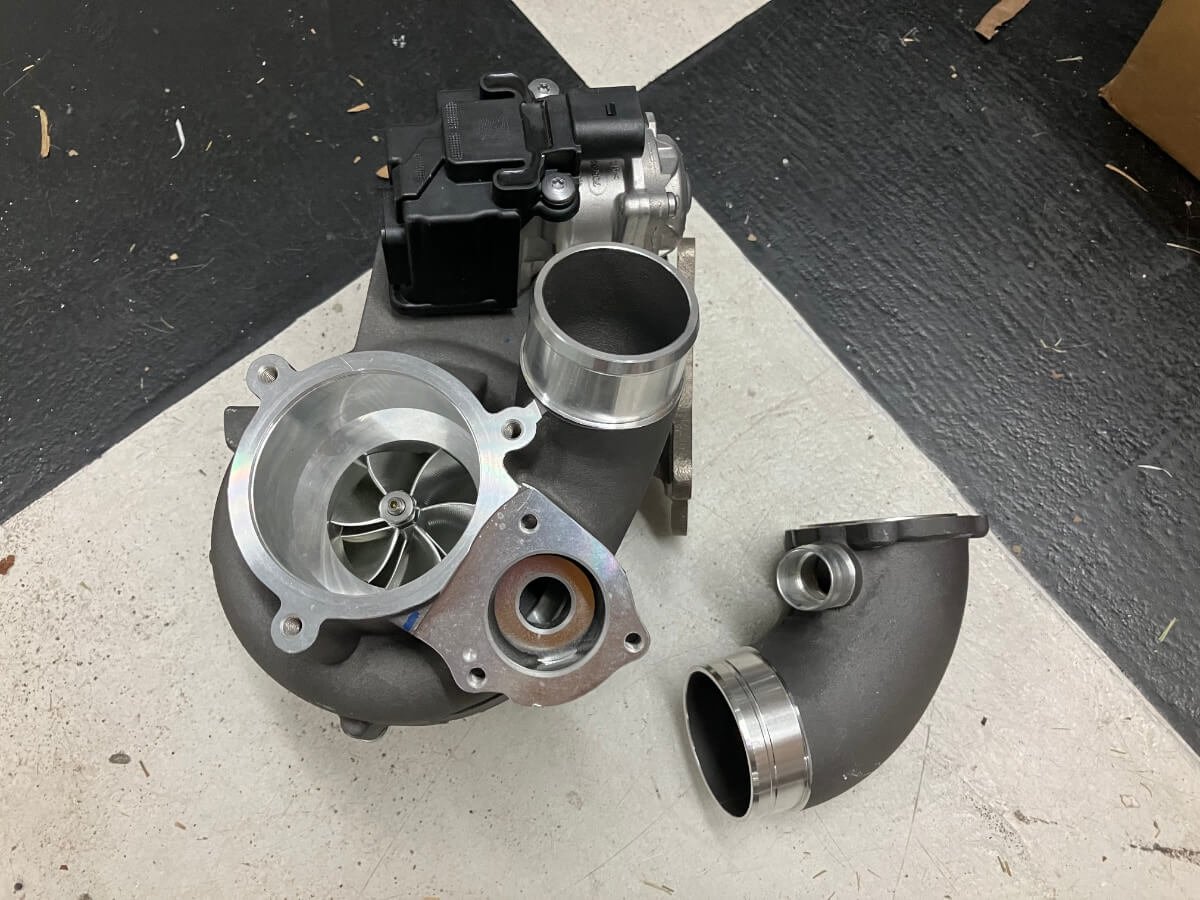
With a compressor size of 53/71, the RAC turbo is slightly larger than the Mabotech M520 turbo I used on the Mk7 GTI and similar to the EM 555 and 3071 turbos.
The RAC has a turbo inlet elbow that matches the compressor opening and, at the inlet end, fits with the stock accordion hose.
The car’s intake setup consists of the stock duct with the front driver’s side opened, the rear passenger’s side covered, the grate removed from the lower half of the airbox, a hole made in the side of the lower airbox about 4 square inches, a Mann air filter, and the stock accordion hose.
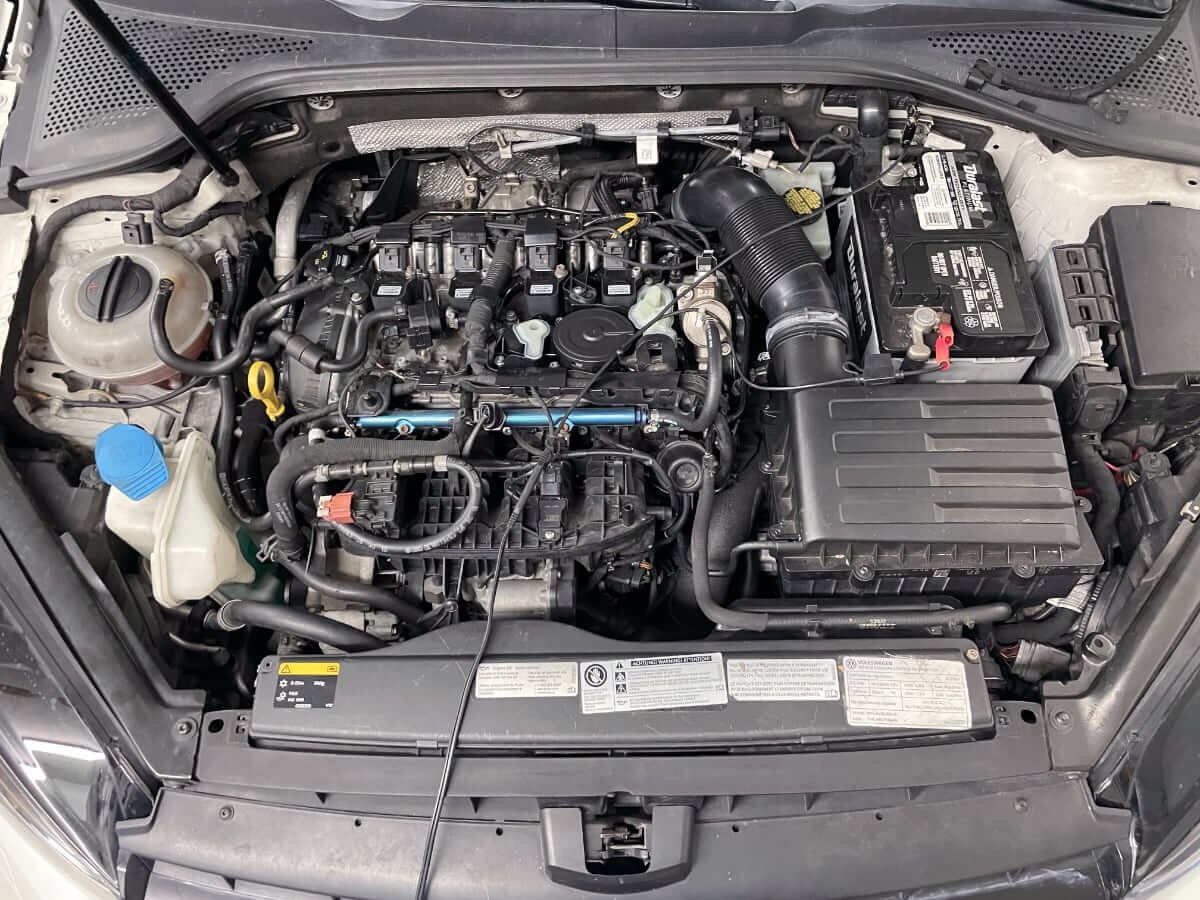
Other relevant modifications are:
- Built engine
- ECS Tuning Charge Pipes
- APR Intercooler
- Stock intake manifold
- Precision Raceworks MPI
- RS3 LPFP
- CC Design 3″ GESi downpipe
- CC Design 3″ resonated midpipe
- Supersprint exhaust
The aftermarket intake I chose to test with for comparison is the Blaze Performance AToM Race V2. The reason is that the Blaze inlet hose partially replaces the inlet elbow, and the only part I would need to design to fit it to the RAC turbo is a flange to connect the Blaze’s silicone hose to the compressor housing.
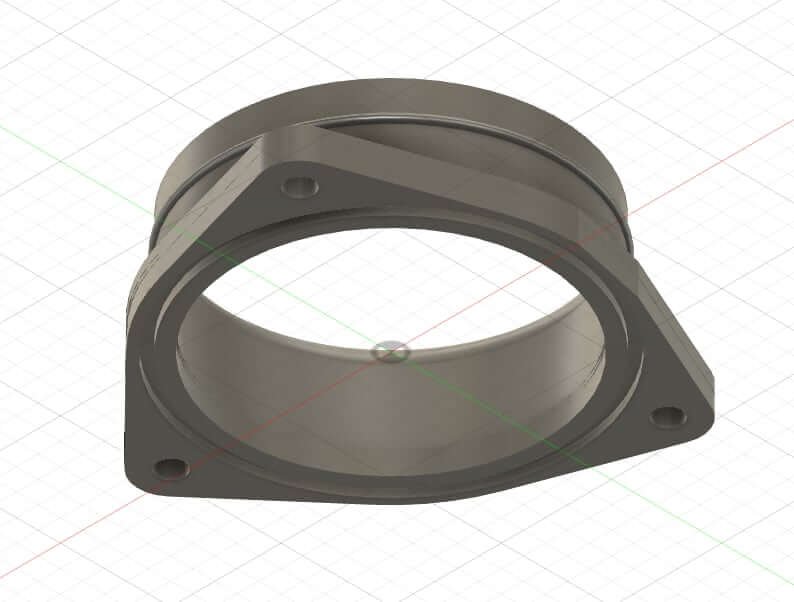
This is a simpler part to make, and also reduces the influence my design has on the outcome. If I had developed a complete inlet elbow, that part could have significantly affected the results.
Developing a part to fit on an installed turbocharger is a bit of a pain, but luckily I had the compressor housing from a Mabotech turbo on hand that has similar elbow attachment points as the RAC turbo.
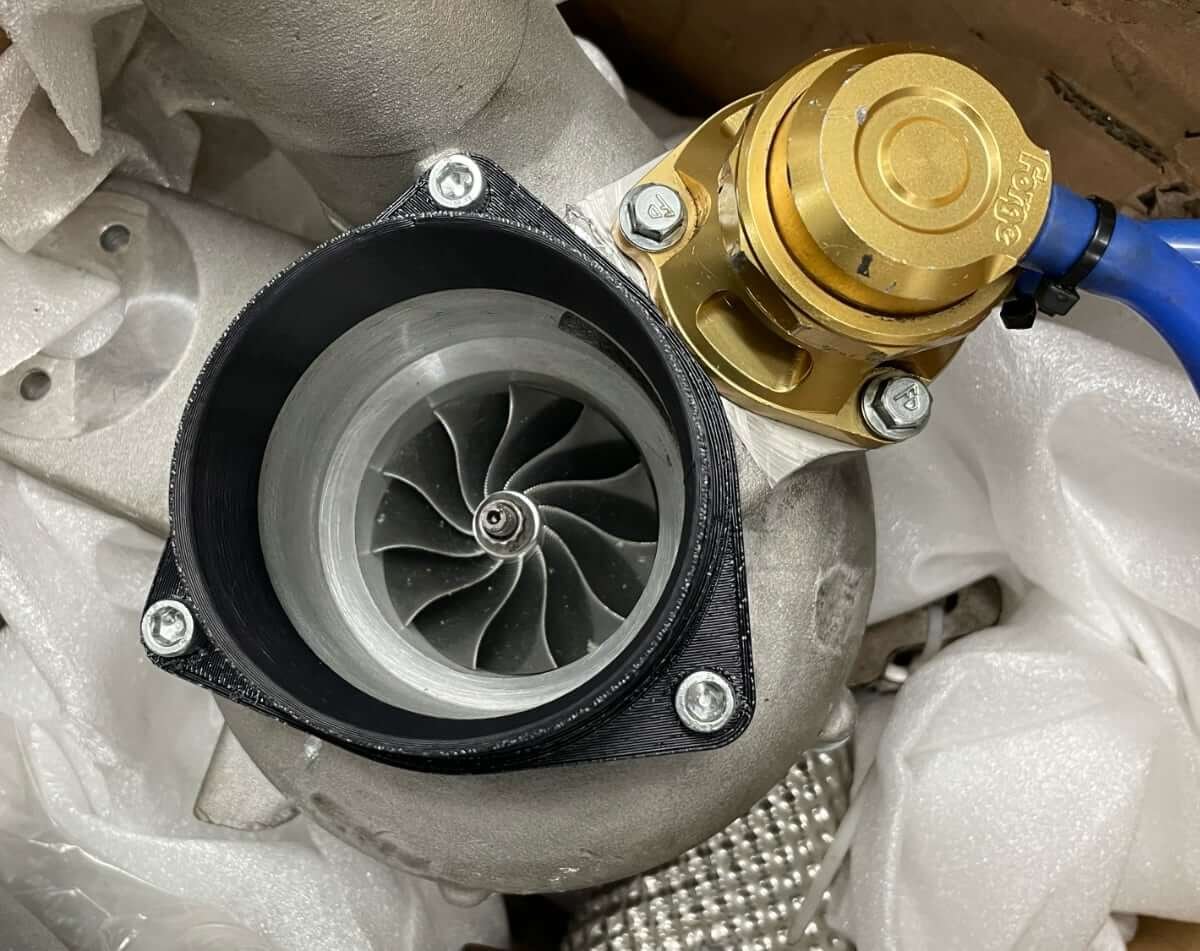
Note: The inlet is the same, but the turbochargers are not: RAC 53/71 & 57/53, while M600 is 57/76 & 60/55
With the adapter designed, I confirmed that the Blaze intake installs correctly.
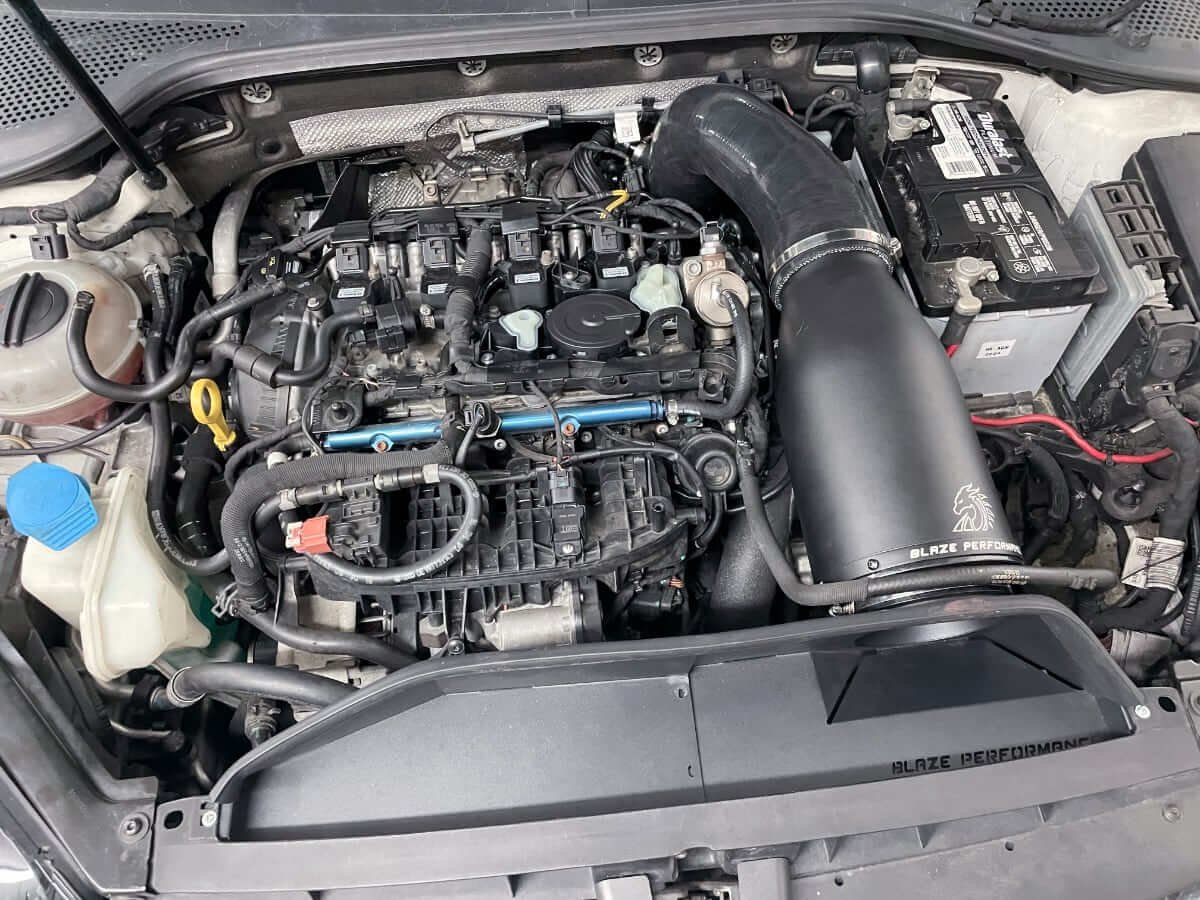
Testing would be conducted on the street by making full-throttle third-gear pulls starting around 2,000 RPM and concluding around 6,500 RPM.
First, I would log the stock intake setup, then install the Blaze intake and repeat the test runs.
Test Results:
Conditions during data collection showed that air temperature was similar between sessions and did not differ enough to skew the results due to ambient temperature.
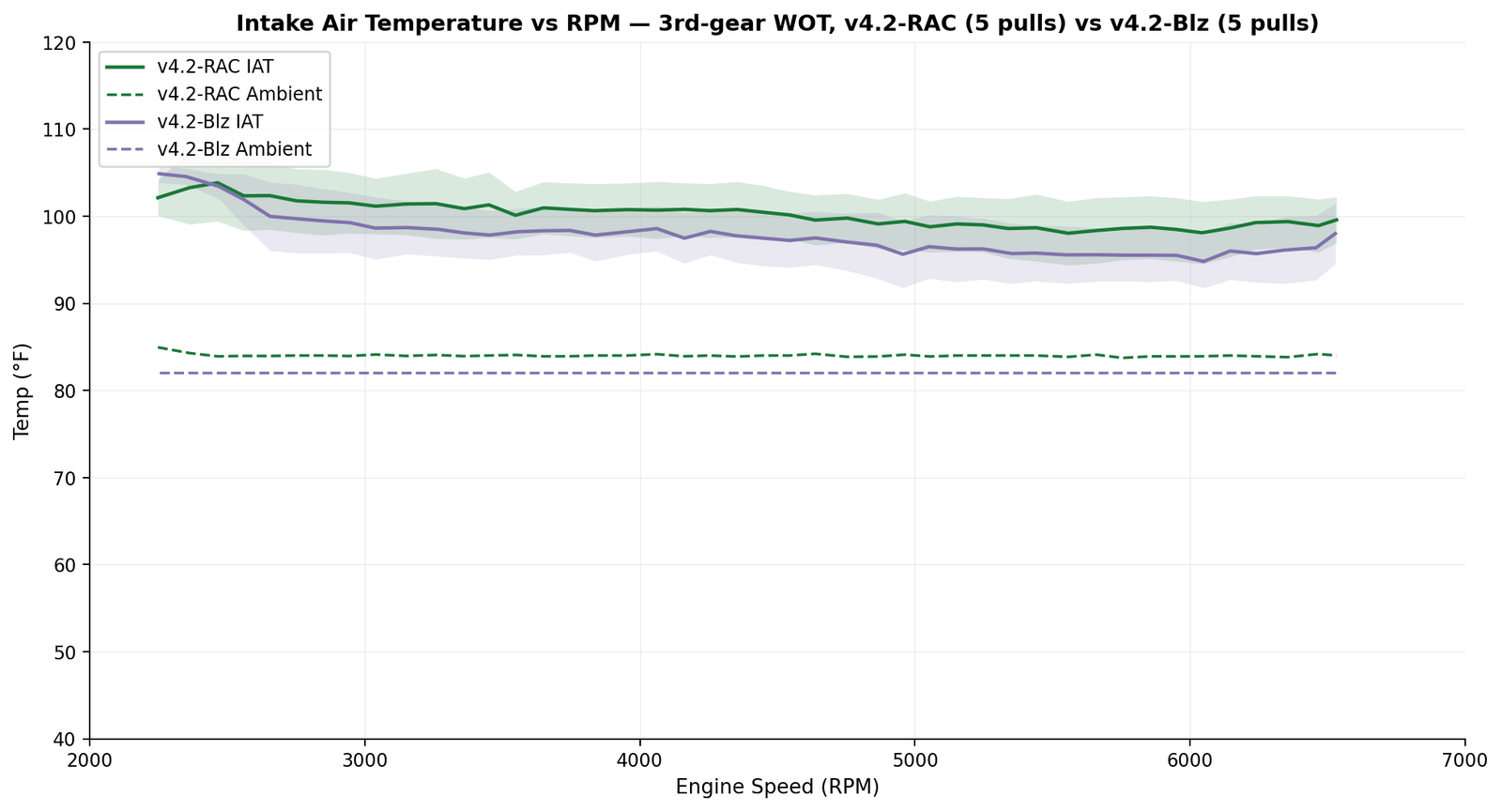
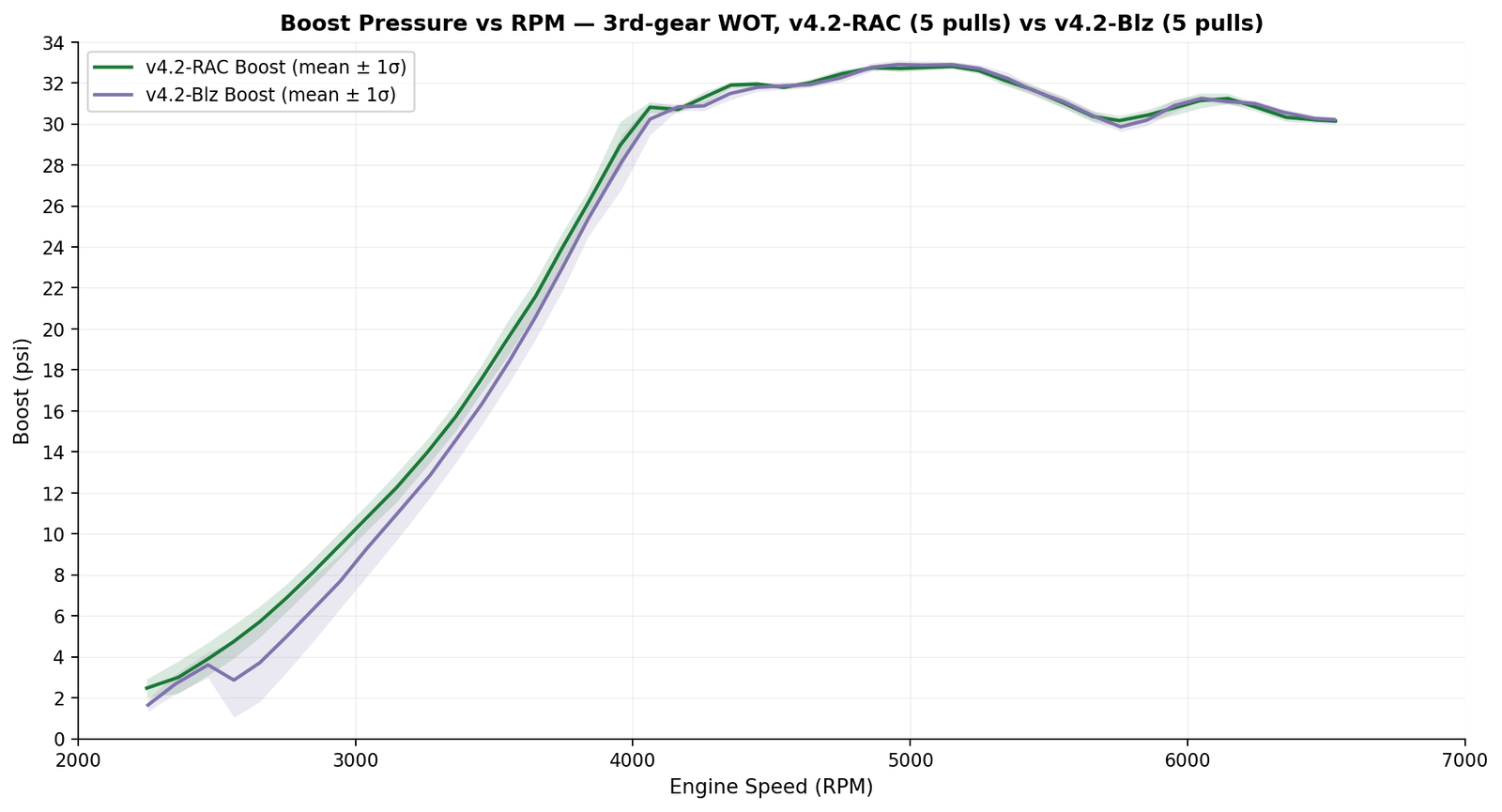
The next chart shows the period during the session when the relevant data is logged.
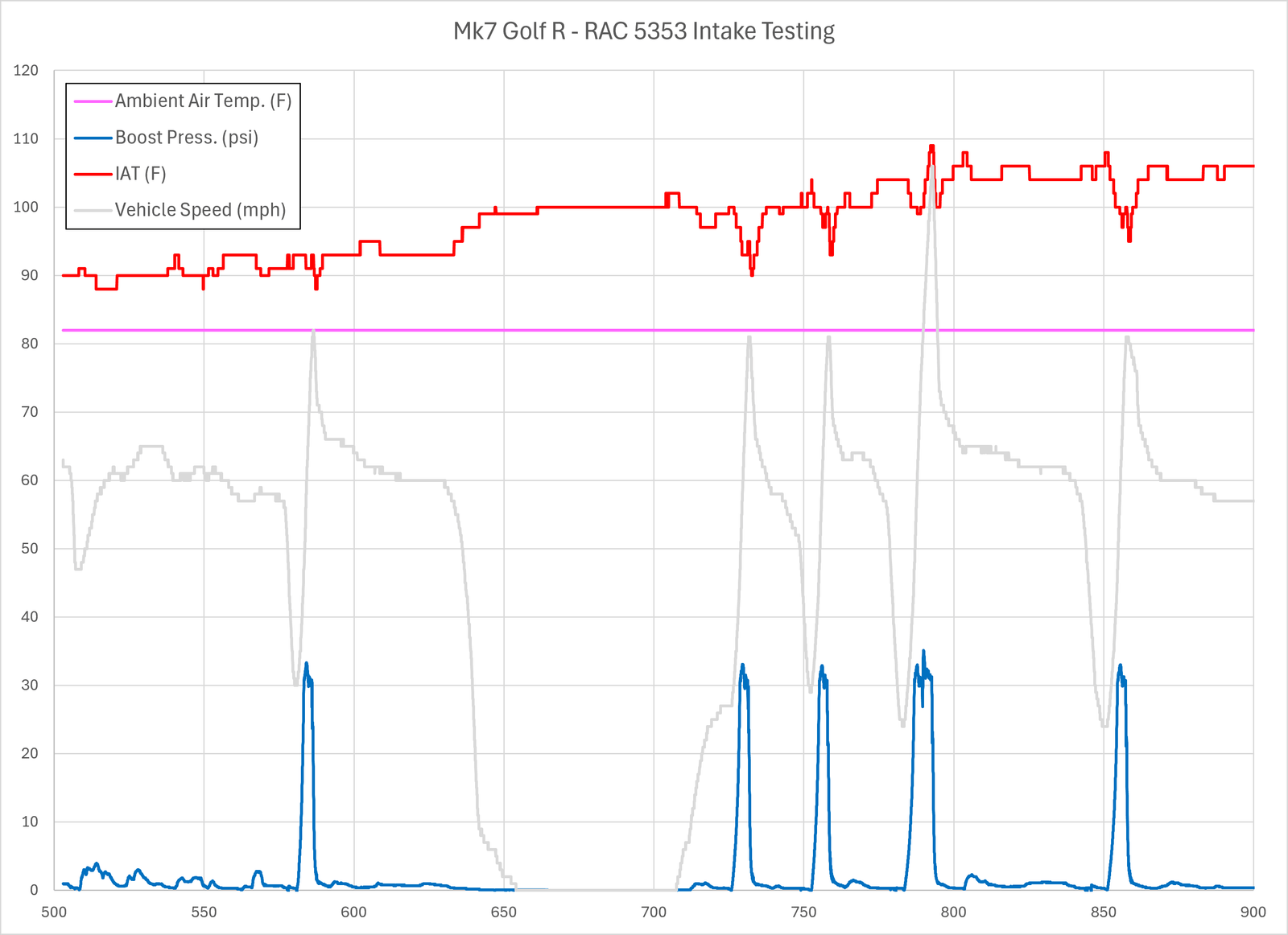
The boost pressure curve is similar for both intakes.
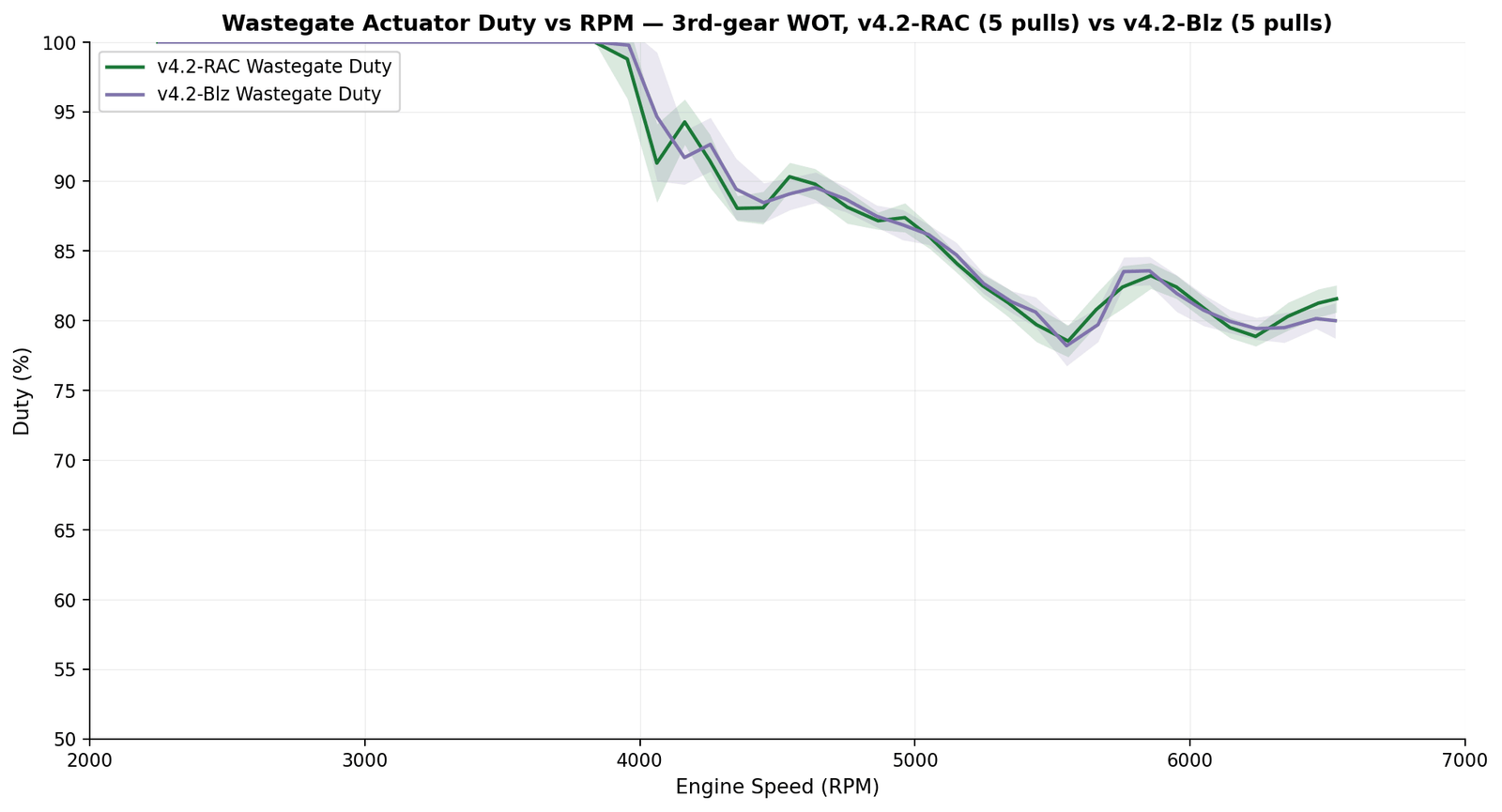
Most notably, the turbocharger wastegate duty cycle (WGDC) is also very similar for both intakes.
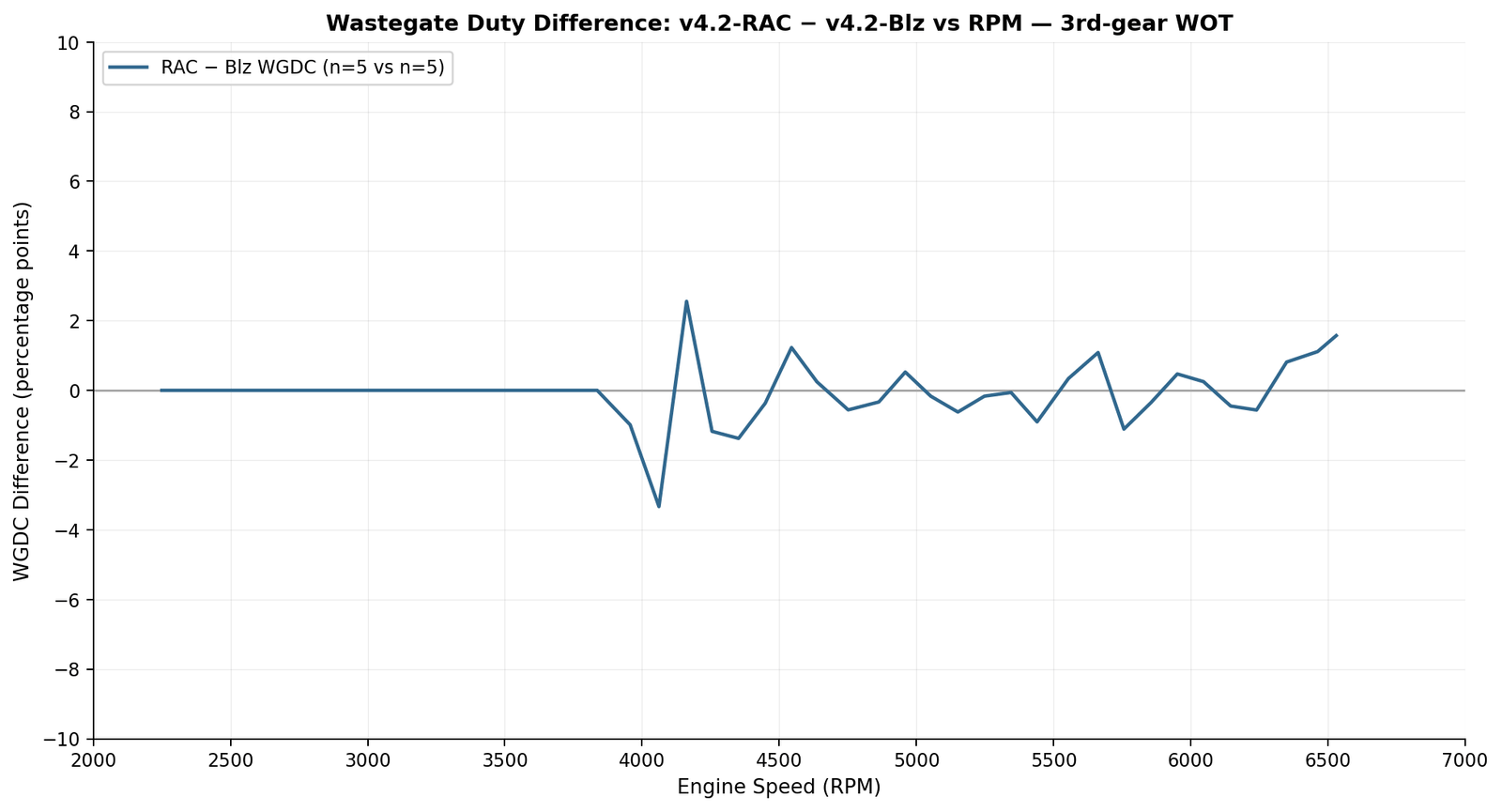
The final chart shows the difference in WGDC between the two intakes versus the engine speed. Any region where there is a significant difference, i.e., greater than ten percentage points, would indicate a potential for exploitation. Changing intakes made no significant difference.
Conclusions:
A comparison test compared a modified stock Golf R intake with a Blaze Performance AToM Race V2 intake on a RAC 5353 turbo-equipped Golf R.
The two intakes produce essentially equivalent boost control once the turbo is fully spooled to a peak boost of around 33 psi. The intakes correlated with the same wastegate duty cycle to within about ±1.5 points across most of the RPM range.
The hardware choice between modified stock and Blaze doesn’t change the steady-state boost level or how it’s controlled.