
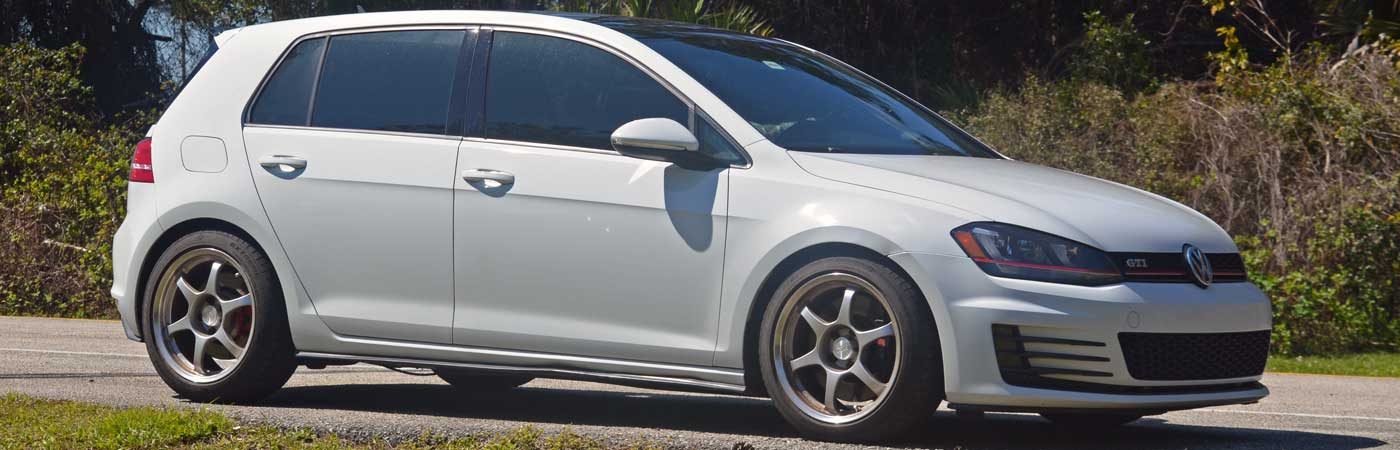

Background:
The MQB community relies heavily on tuners for guidance and technical interpretation. How many times have you seen an answer given such as “Ask your tuner“, or “What did your tuner say?“, or “Tuner XYZ said so“? That’s why professionalism and technical rigor matter.
This post examines a short exchange I had with a tuner named Gary Schultz of GLS Performance, along with publicly available information about his background and business.
The goal isn’t to attack him personally, but to show why professionalism and technical knowledge matter — and why Mk7 owners should evaluate both before treating a tuner’s claims as authoritative.
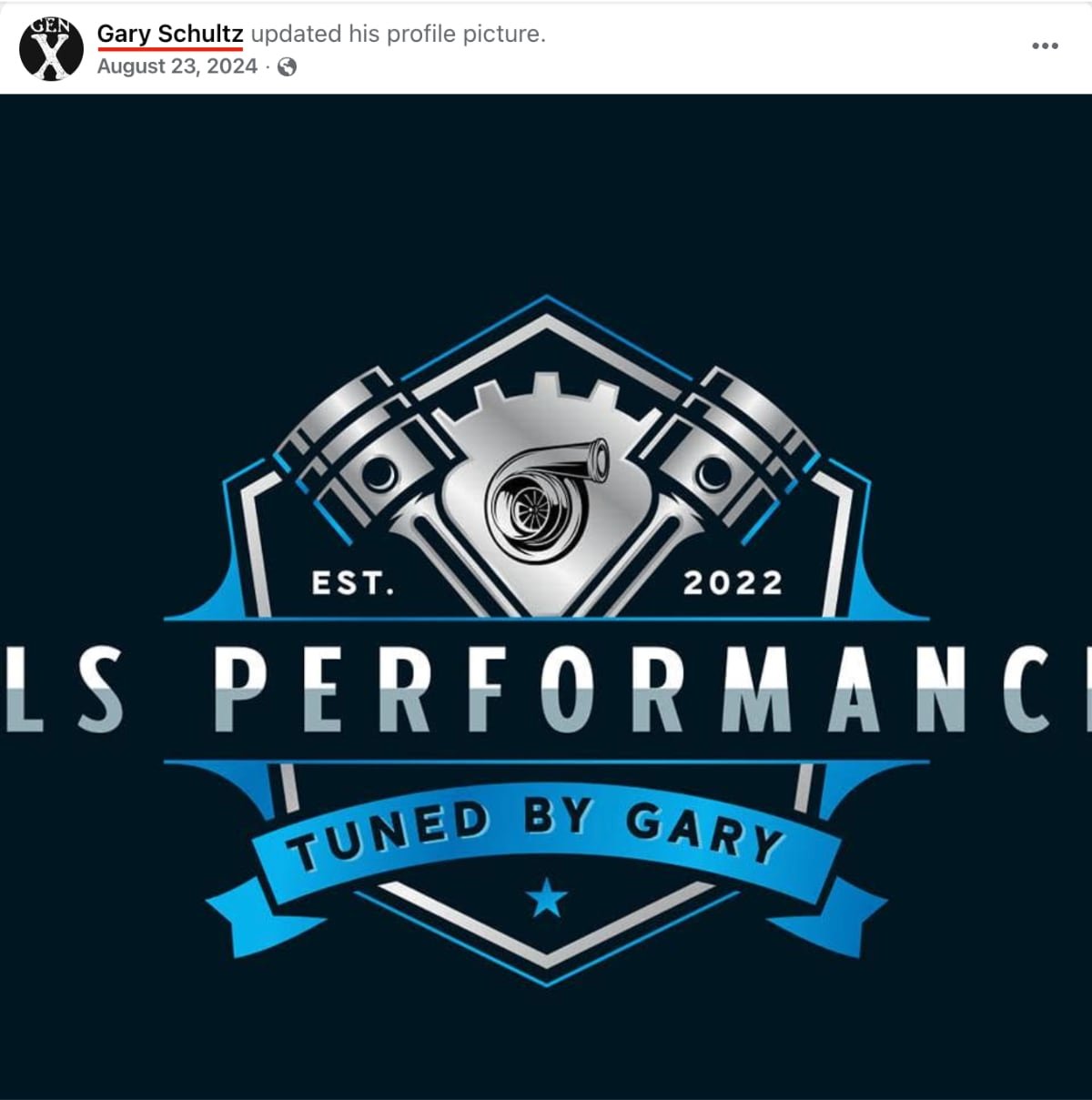
GLS Statements:
A couple of weeks ago, I conducted a test measuring the exhaust gas temperature leaving the Shuenk IS48 turbocharger’s IS38 turbine housing. As I mentioned in that post, I didn’t have much to say about the results because I didn’t have any other data to compare them to.
A short time later, I joined a discussion in a Mk7 Facebook Group where Gary Schultz of GLS Performance said the IS38 turbine housing is inefficient and produces a lot of heat.
Gary’s statements suggested he had measured turbine housing temperatures on different products, which would have made him a good source for learning how turbine housing properties varied between brands.
I asked Gary about what temperatures he had logged with the IS38 turbocharger.
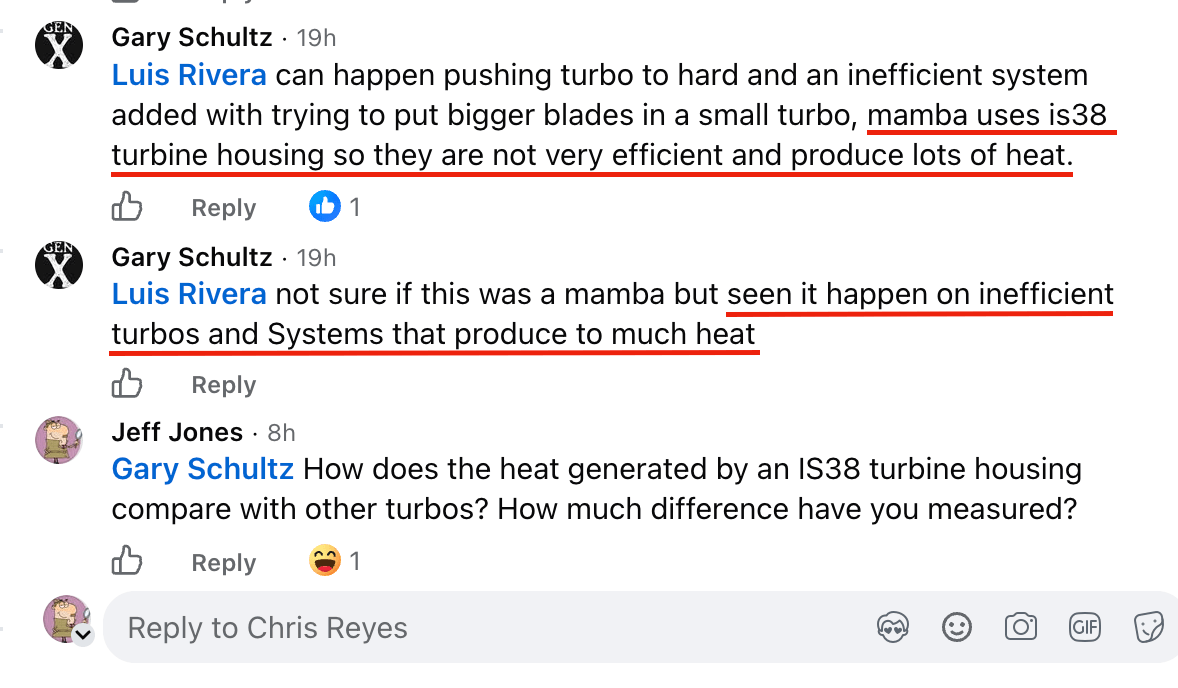
Instead of providing any explanation, data, or even a brief clarification, Gary responded with Facebook’s HaHa emoji — a dismissive reaction.
Characterizing how turbine housing heat output compares across products implies instrumented testing — datalogging across multiple turbo and housing combinations under comparable conditions. That’s not part of a tuner’s day-to-day work; tuning is calibration and sales, not controlled comparative testing.
When asked directly what he’d measured, he offered no data, method, or explanation. A claim that implies testing most tuners don’t do, followed by no substantiation when asked directly, is consistent with a claim that exceeds what the person making it can actually support.
Background Check:
Since I knew little about Gary’s background, I searched to learn more. One image I reviewed shows Gary’s own autobiographical post. In it, he describes:
- He was tuned by a third party (‘Moose,’ using Eurodyne Maestro) in 2019; opened GLS Performance, selling tuning services in 2022
- A career path from firefighter to railroad conductor
- Hobbyist automotive experience
- A background centered on carbureted engines
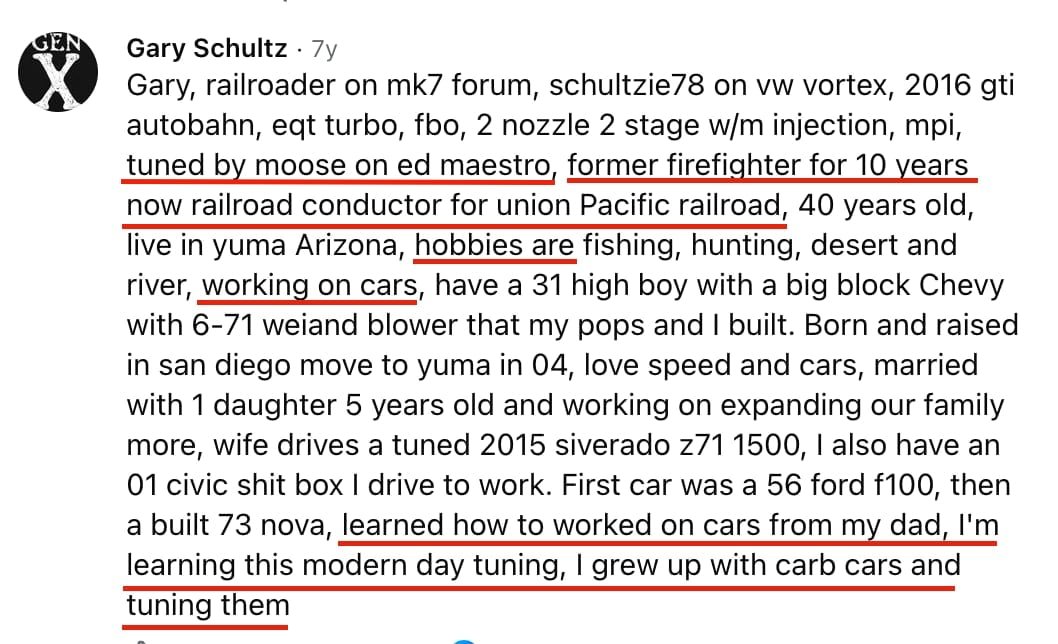
A self‑taught background isn’t inherently negative, but it also doesn’t establish the technical foundation needed to make authoritative claims about turbine heat generation or turbocharger efficiency.
When someone presents themselves as a professional tuner, their ability to explain mechanisms, cite data, and respond professionally becomes even more important.
Why this matters:
When tuners make vague statements like “inefficient turbos produce lots of heat” without data or mechanisms, owners may make decisions based on misinformation.
Professionalism matters; a tuner who responds to technical questions with a HaHa emoji instead of an explanation fails to demonstrate the respect or rigor Mk7 owners should expect.
Conclusions:
This post is not meant to disparage Gary personally. It shows how a single interaction—a technical question met with a dismissive emoji—can reveal deeper issues with professionalism and technical background.
Combined with his self‑described background, the exchange suggests his authoritative statements about turbocharger heat aren’t supported by the technical foundation required to make them.
Mk7 owners deserve tuners who engage respectfully, answer technical questions, and welcome scrutiny.