

Background:
In this post, I discuss conducting an insert test with the Shuenk ported shroud turbocharger. The inlet to the compressor wheel is modified to determine the effect on the turbocharger operation.
A ported shroud in a compressor inlet functions to alleviate issues related to compressor surge. Increased air pressure downstream of the compressor exducer can arise, creating an adverse pressure gradient that flows upstream to the compressor and causes surge. The ported shroud provides a pathway for the higher-pressure air to escape without affecting the compressor wheel.
There’s no free lunch, and the ported shroud slightly reduces the compressor efficiency. Another potential issue is disrupted airflow to the compressor inducer. I previously investigated this with the Mabotech M720 turbocharger (link to post).
A little over a year ago, Shuenk was finalizing the design of a ported shroud for the IS48 turbocharger and had shared a picture of a prototype model with me.
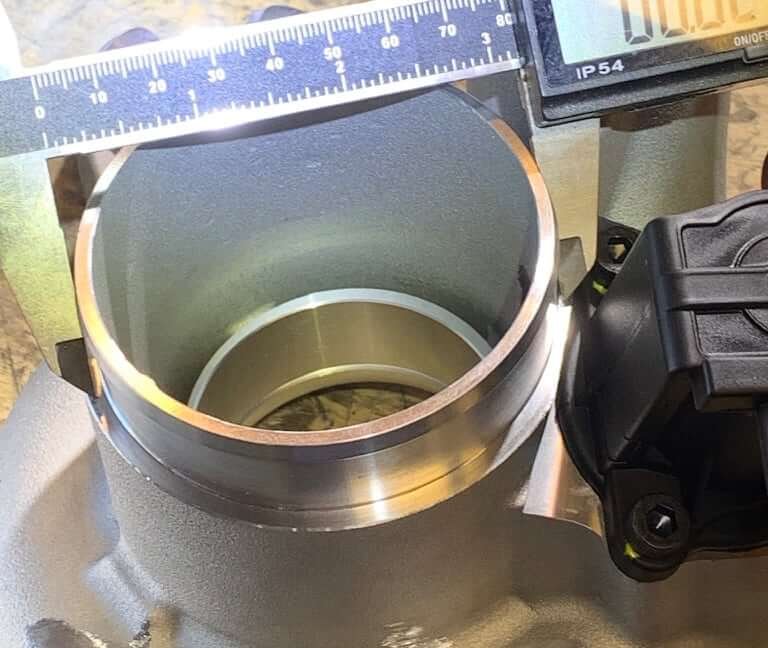
I noted that the shroud’s leading edge was uniformly squared and expressed concern about the adverse effect this could have on airflow. Shuenk changed the design and chamfered the edge to help reduce potential disruption to the airflow.
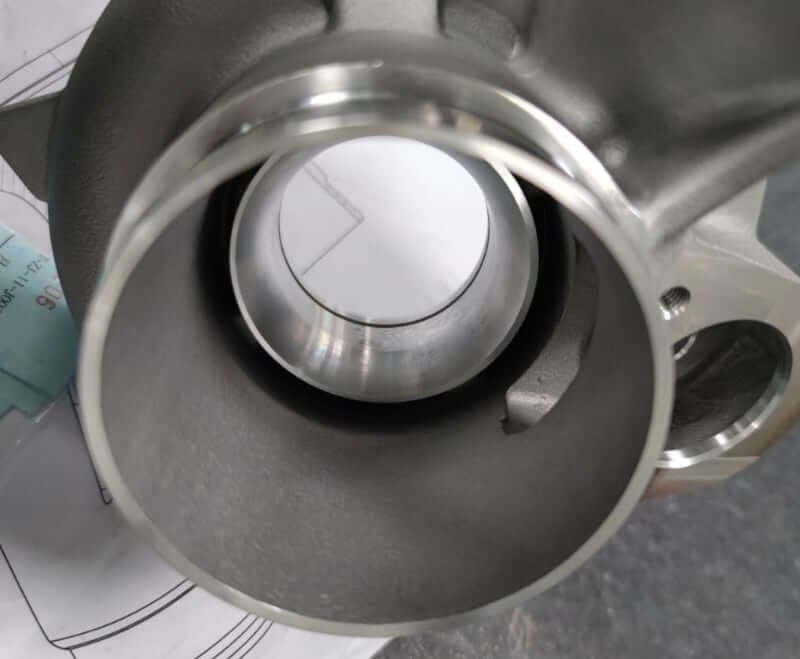
I still had a question about the shroud’s effect on airflow and was determined to test how much it affects it.
Insert Design:
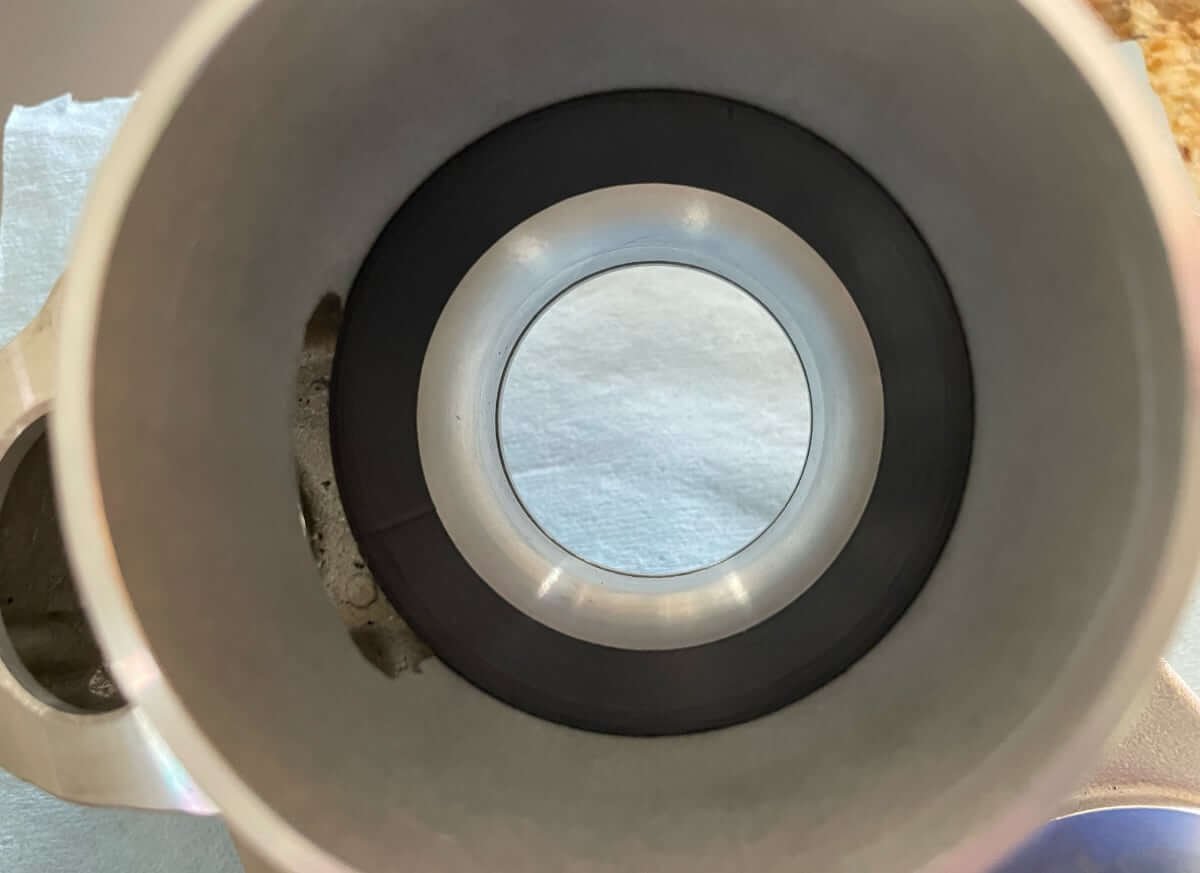
I designed an insert that fits snugly against the inlet wall and provides a tapered transition to the bore leading to the compressor inducer. The insert is short enough not to obstruct the DV discharge on the side of the housing inlet.
First Test:
With the insert in place, I set out to log boost onset and full-throttle data.
This data collection was cut short when I felt the car wasn’t accelerating as quickly as usual. Even if the insert wasn’t helping, I shouldn’t have felt a difference.
Removing the inlet hose confirmed that testing had encountered, in SpaceX terminology, an “anomaly“.
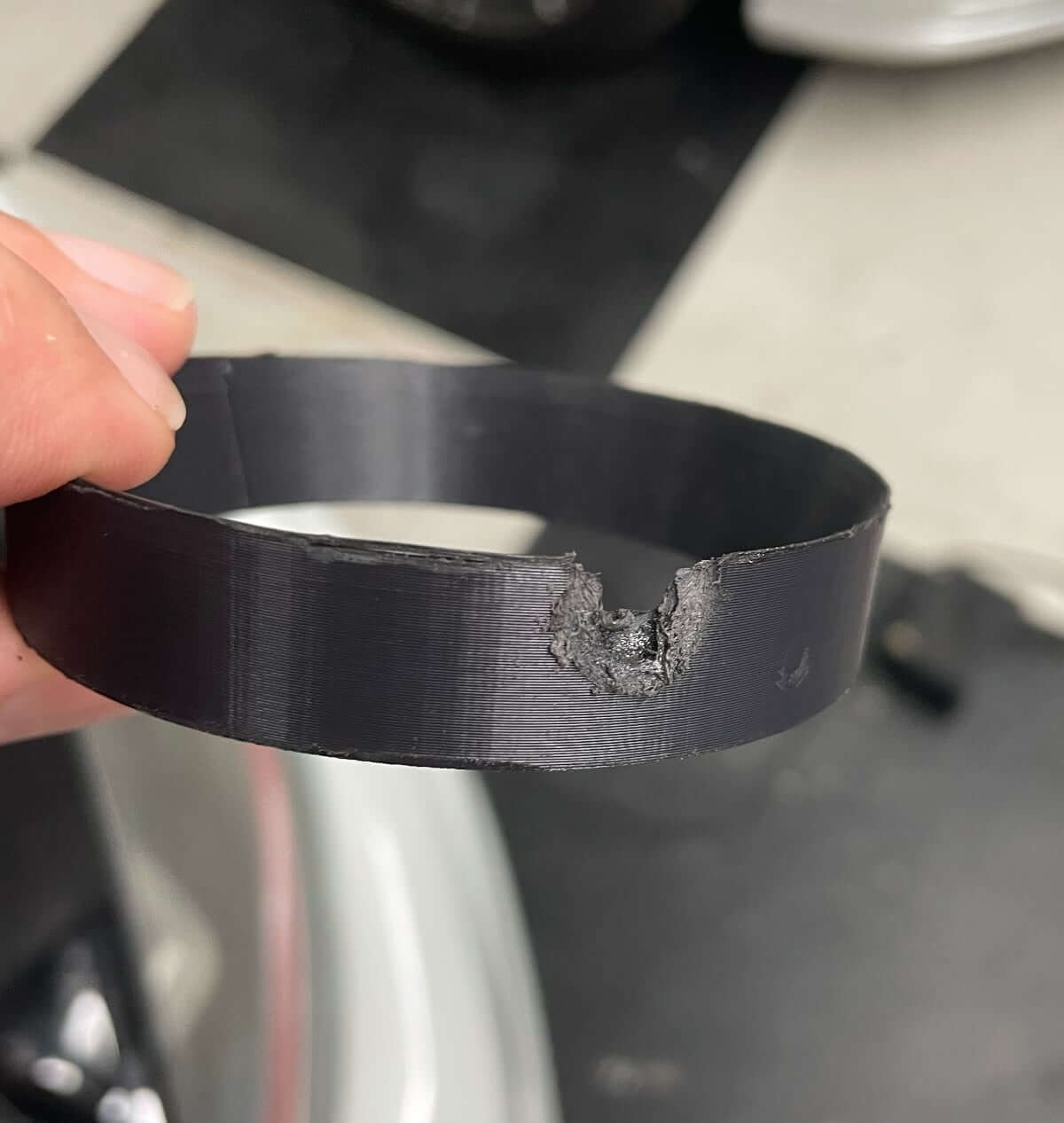
Somehow, the insert had managed to become dislodged, moved up the inlet to where it is wide enough to rotate, rotated 90 degrees, and then began moving back down the inlet towards the compressor wheel.

Luckily, because the insert and the compressor inlet are nearly the same diameter, it was forced to stay centered in the compressor inlet, and only the edge of the insert contacted the nut holding the compressor wheel in place. This created drag on the nut and wore down the ASA (Acrylonitrile Styrene Acrylate – thermoplastic) insert material, but didn’t damage the turbocharger.
Second Test:
Determined to not have a repeat I change the insert design to extend all of the way up the compressor inlet, and extend a few millimeters into the inlet hose.
In this way, it would have to force its way into the silicone inlet hose just to move, and even then the insert was longer than it was wide to keep it from getting out of alignment.
I theorized that the “blow-off” air exiting through the compressor ported shroud slot pushed the small insert upward, and then the DV discharge acted on the side of the insert to rotate it.
To mitigate these forces, I added cutouts to the bottom of the new insert so that the air could escape.
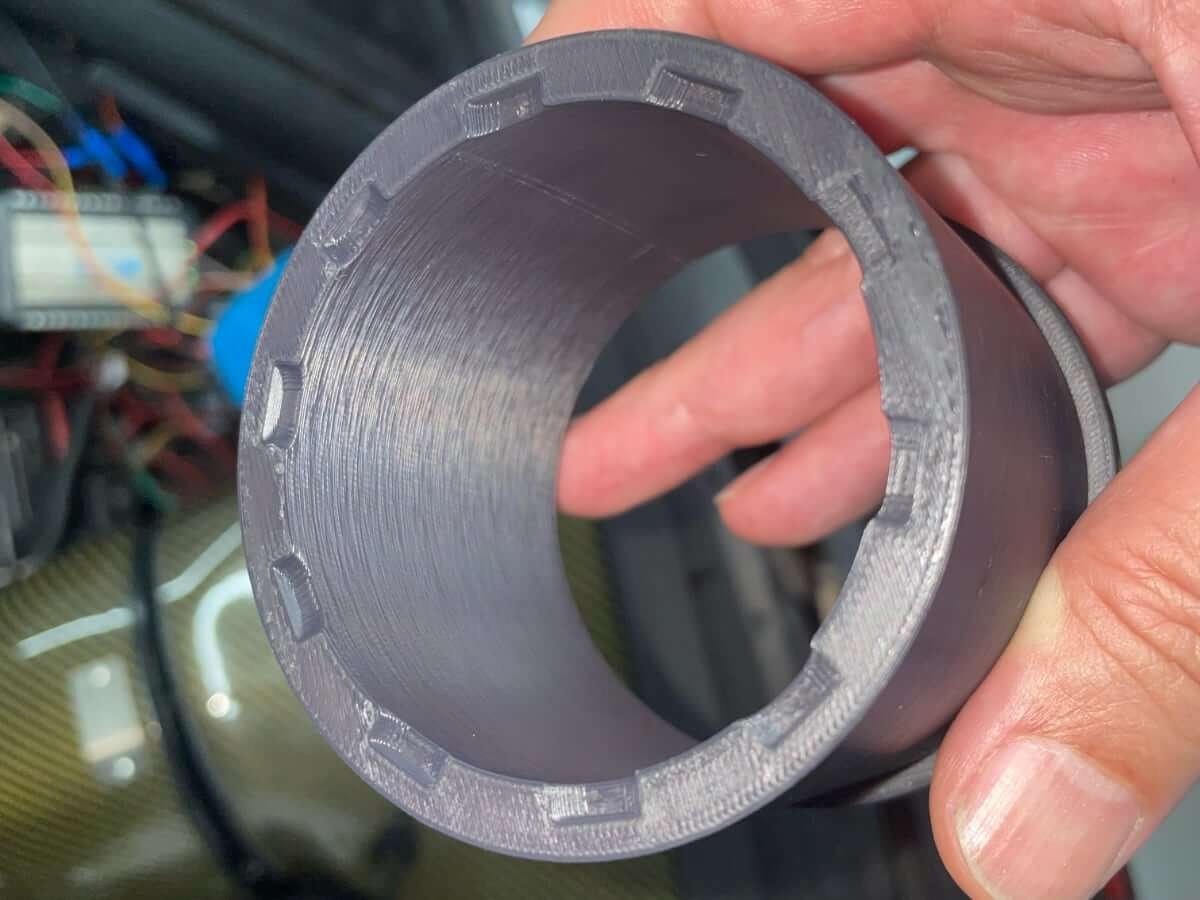
The DV port was now being blocked, so I needed an alternate escape path for that air. The Forge vent-to-atmosphere BOV was the solution.
The new insert was ready for operational testing.
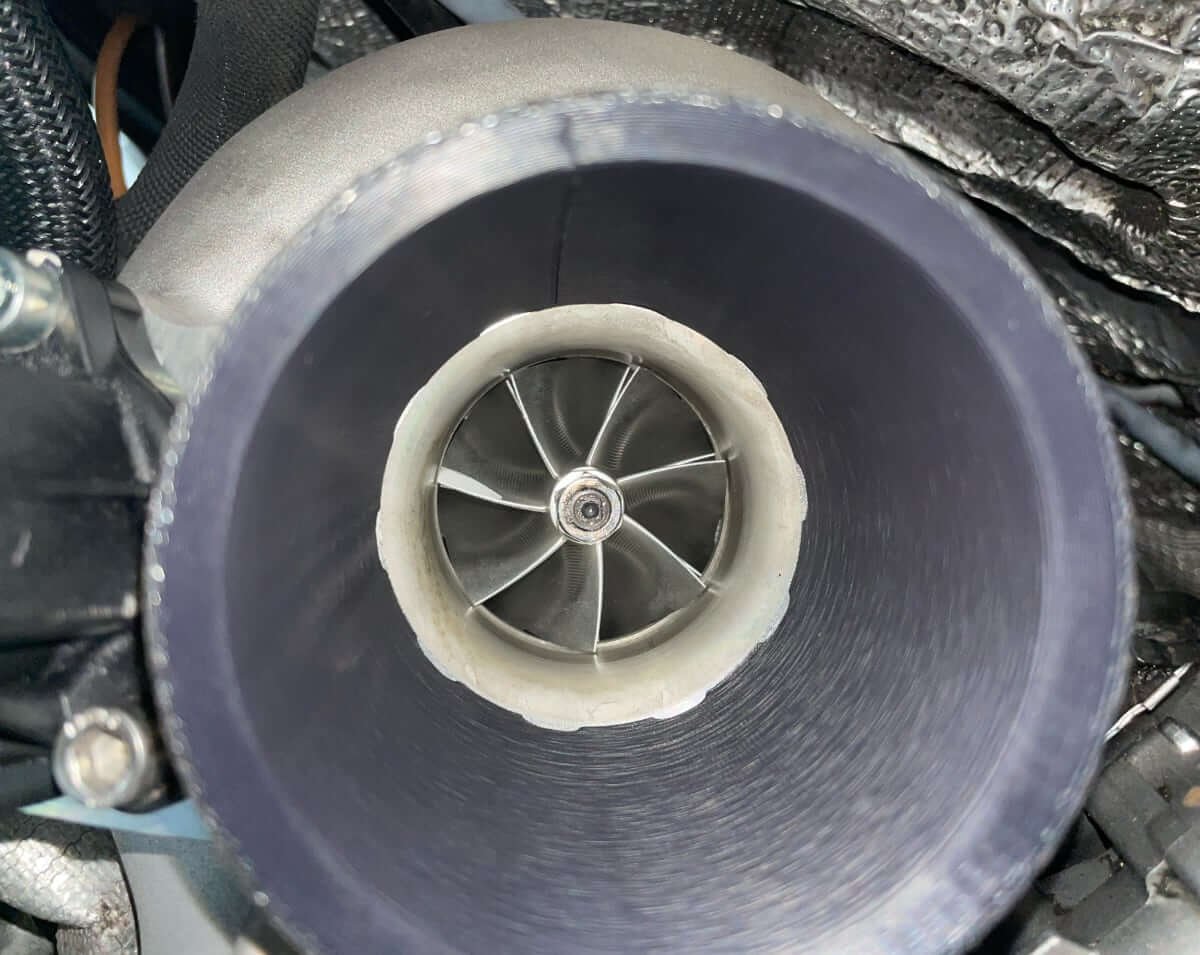
Test Results:
Low Boost
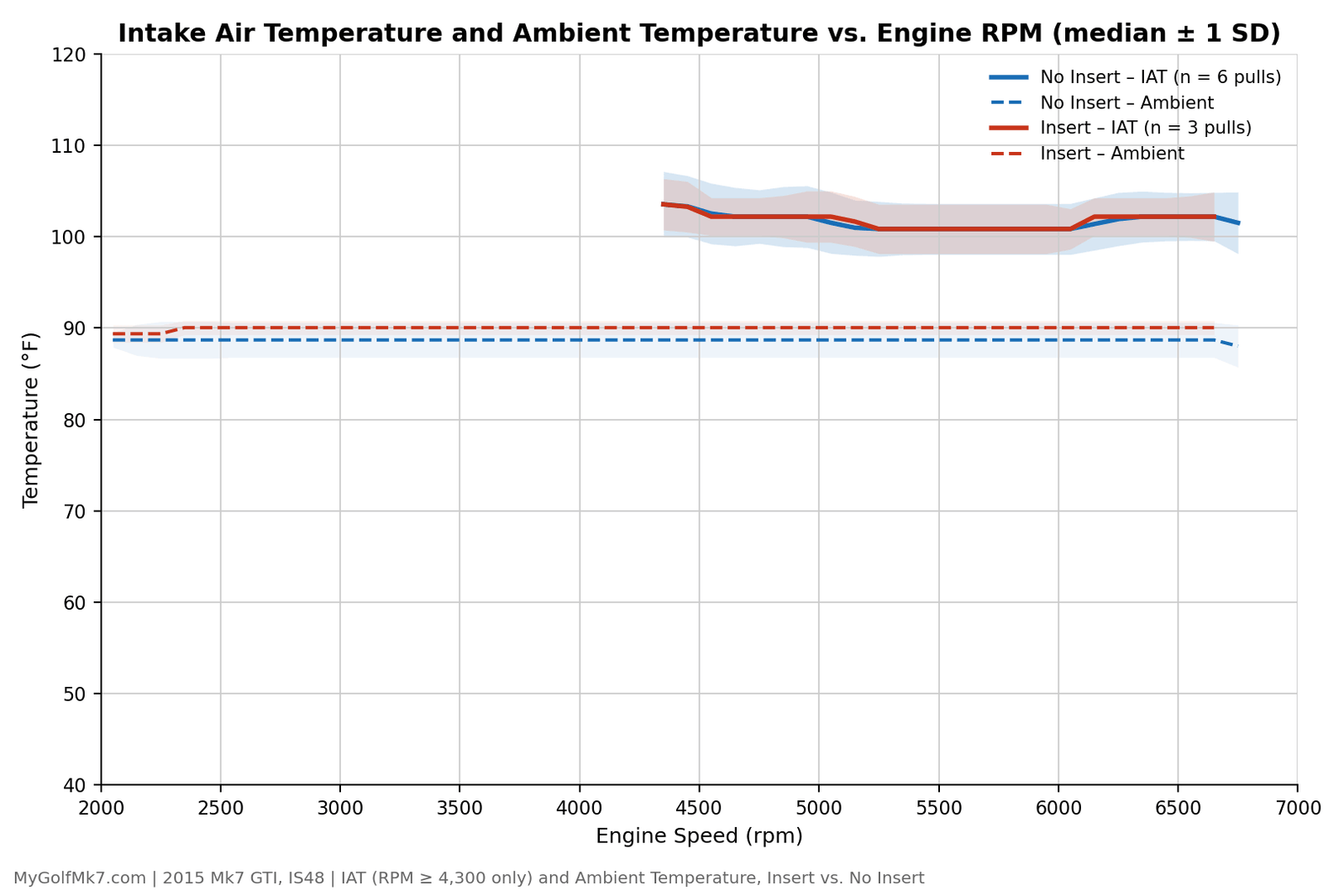
The first test with the new insert was conducted at relatively low boost, 27 psi peak.
Ambient and intake air temperatures are very similar in both test cases.
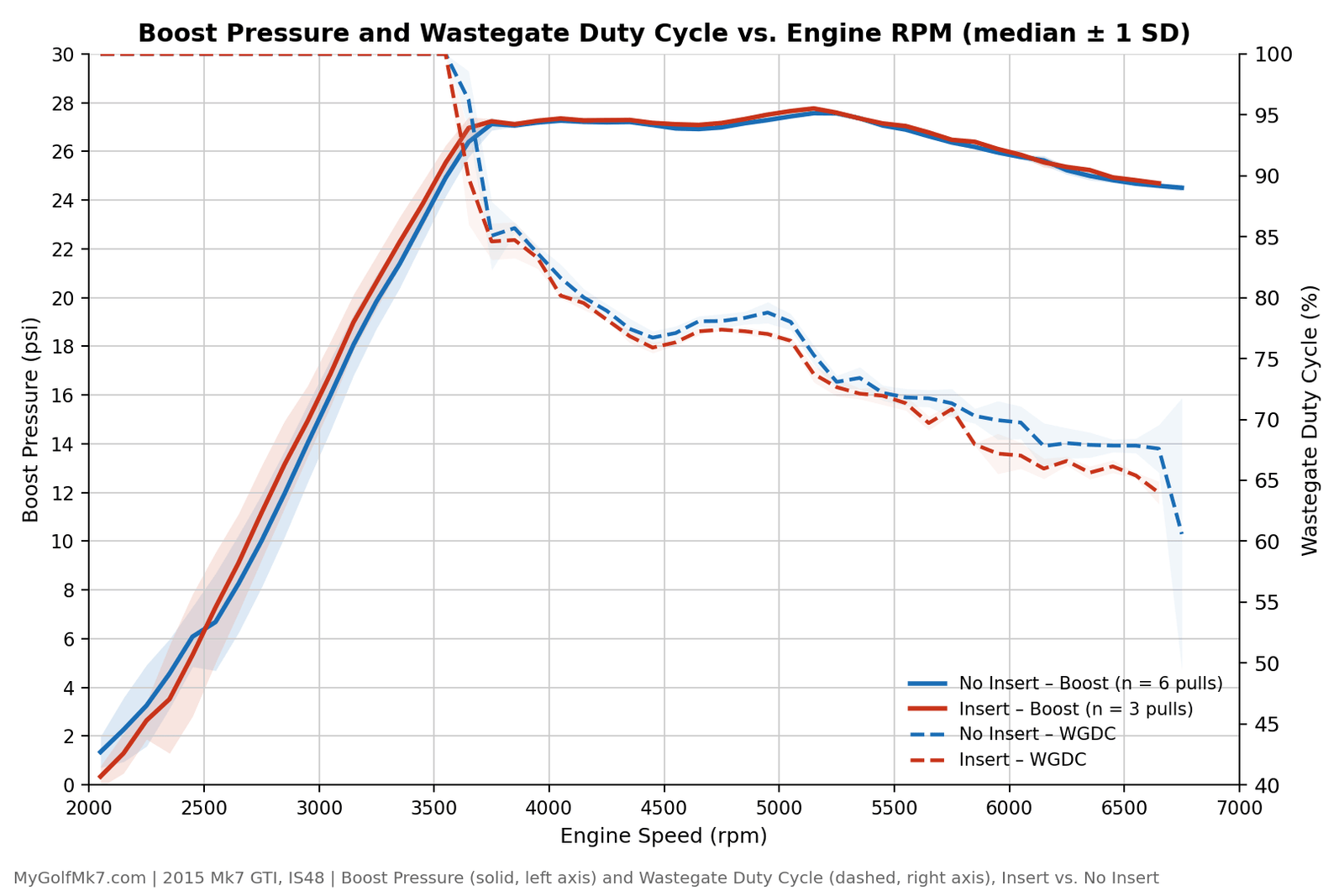
Boost pressure is unchanged, but the wastegate duty cycle is slightly reduced.
High Boost
The second test with the new insert was conducted at higher boost pressure, approximately 30 psi.
Ambient air temperature was approximately 8 degrees higher during this session.
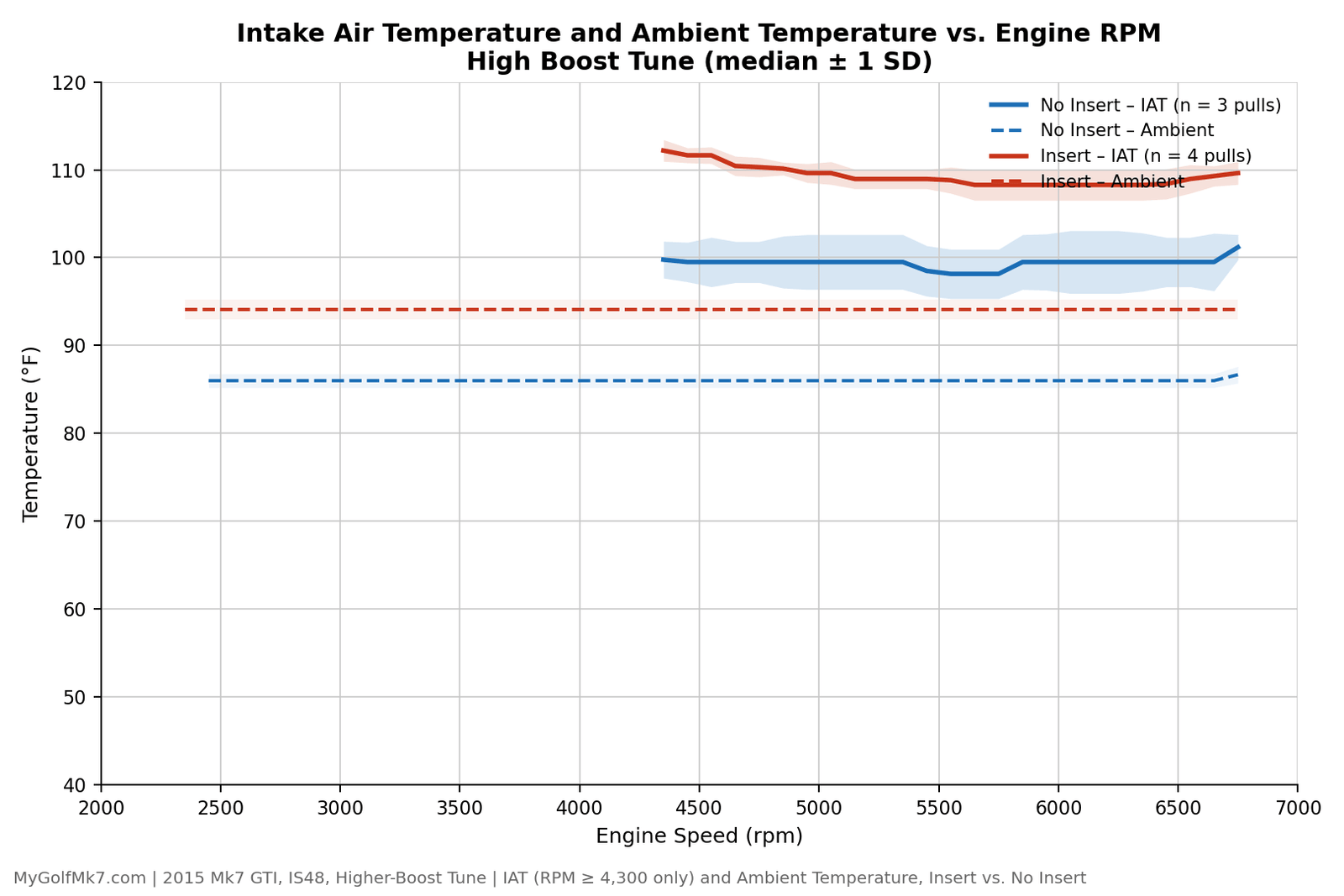
At the higher boost pressure, the intake setup and 90+ degree ambient temperature combine to raise the WGDC, which begins to affect the boost pressure level.
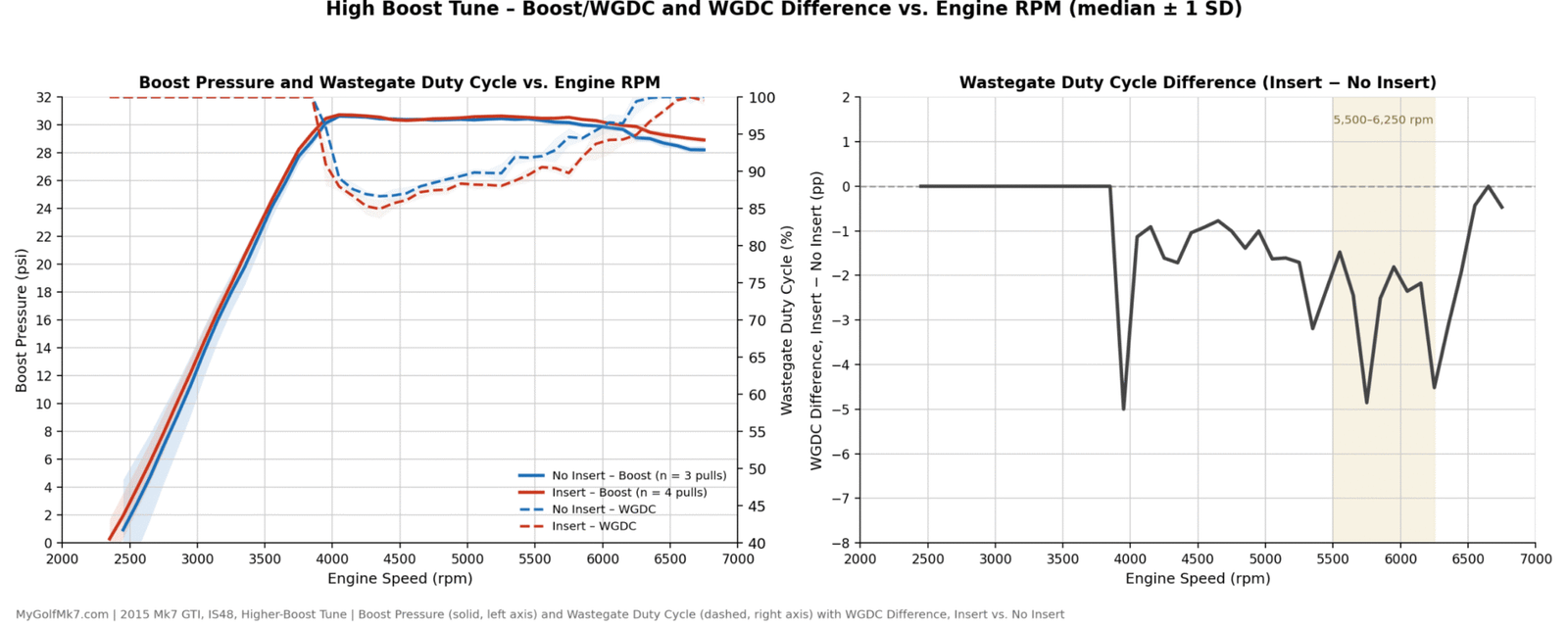
The insert correlates with a lower WGDC and, consequently, slightly higher boost pressure past ~5,500 RPM.
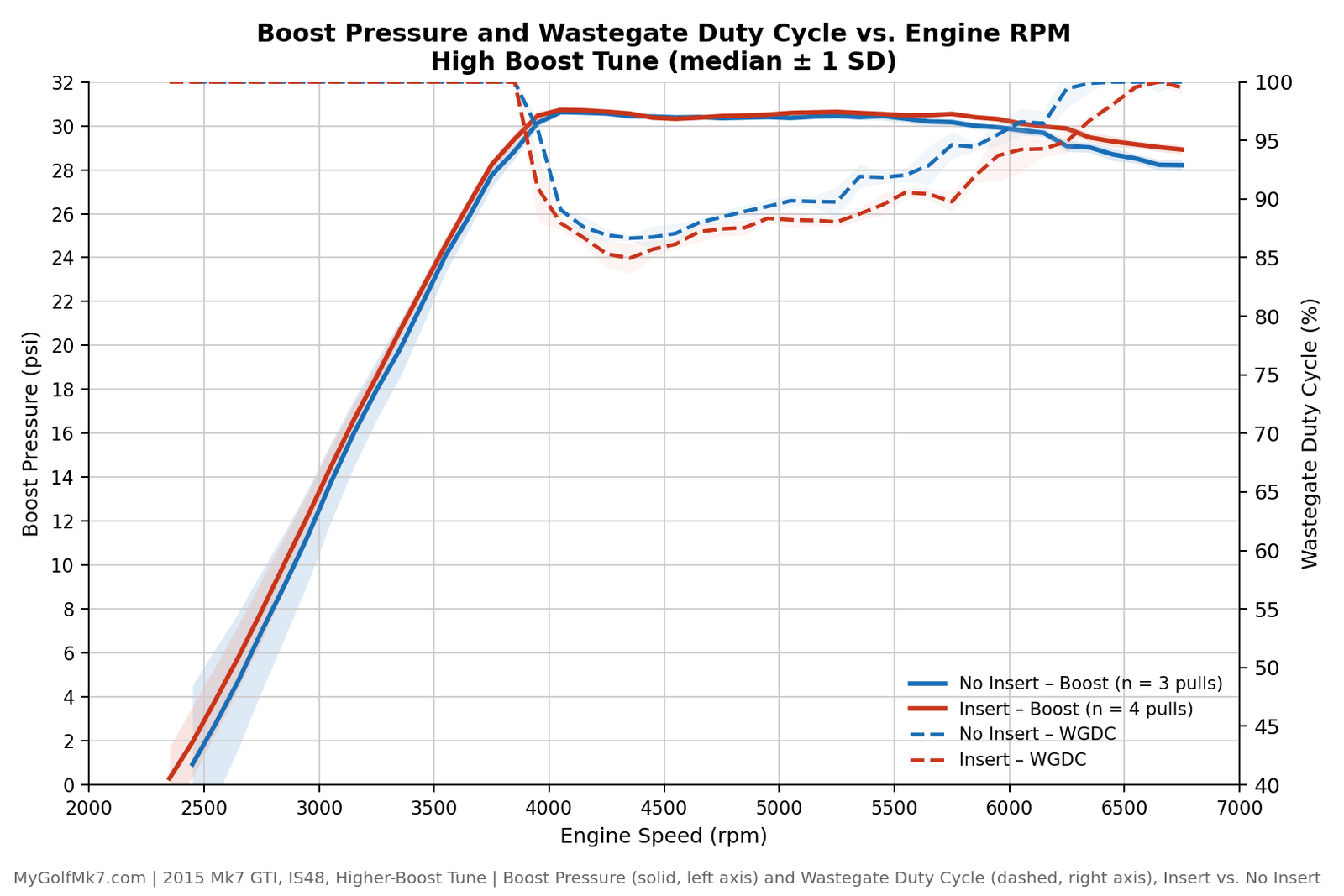
The chart to the right shows the difference in WGDC for each configuration.
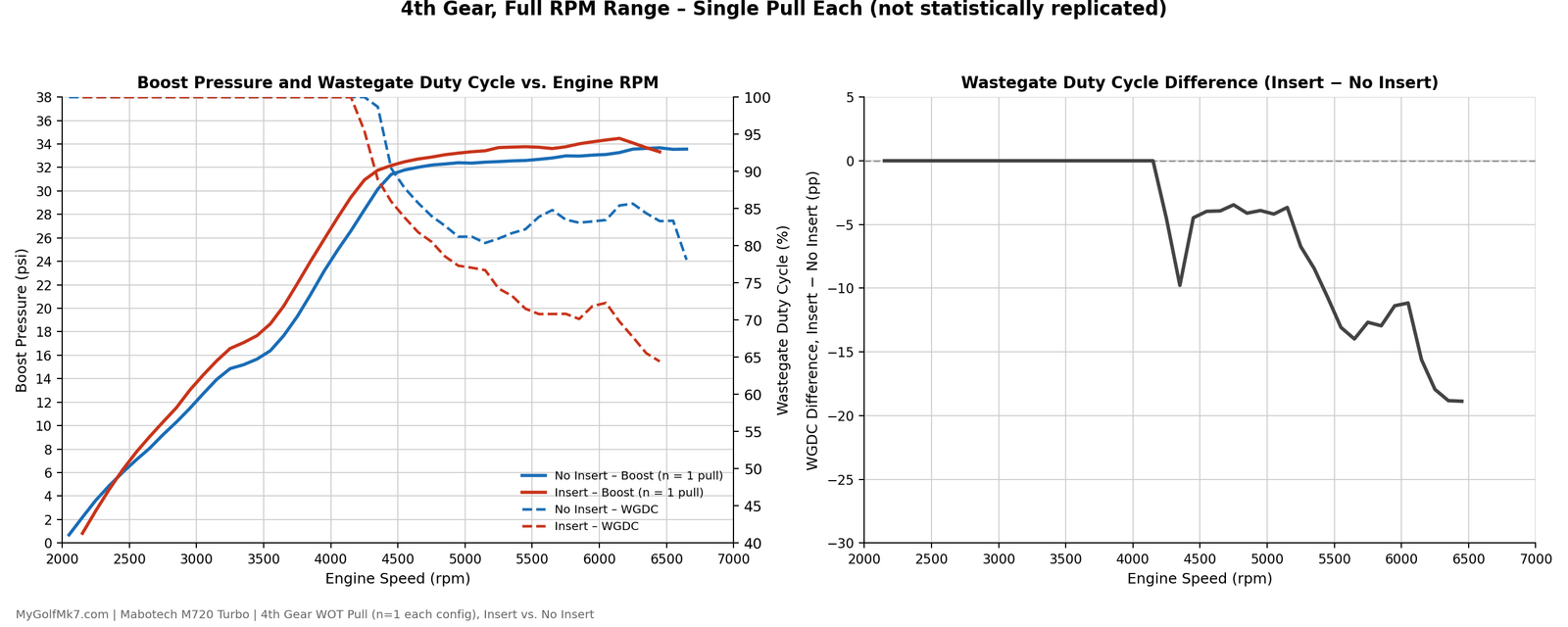
Interestingly, a similar test with the Mabotech M720 turbocharger showed a larger effect on WGDC. Presumably, the chamfer of the Shuenk IS48 shroud contributed to closing the gap somewhat.
Conclusions:
With the insert installed, the IS48 holds equal or slightly more boost on the higher-boost tune while requesting noticeably less WGDC. The WGDC runs 1–5 percentage points lower through most of the pull, averaging about 2.8 points lower in the 5,500–6,250 RPM range.
Given the insert shape inside the compressor cover inlet, the mechanism behind the WGDC change has to be improved airflow into the compressor wheel.
That said, this isn’t a fully controlled result. The two test sessions ran about 8°F apart in ambient temperature, and the sample size is small (three pulls vs. four). Treat the magnitude as preliminary pending additional testing under matched conditions.