
Background:
Last July, Russel Road and Racing provided me with a high-boost tune for the Shuenk IS48 turbocharger to gauge how close to the system limits I was operating. That E50 tune produced a boost pressure of 29.5 psi at redline at a wastegate duty cycle of 85%, which I felt was “enough“.

We lowered the boost at the top end, slightly increased ignition timing, and called the tune done. Fast forward nine months, and a few significant hardware changes have been made to the GTI, along with the development of the MGM7 intake, raising the possibility of a higher boost profile.

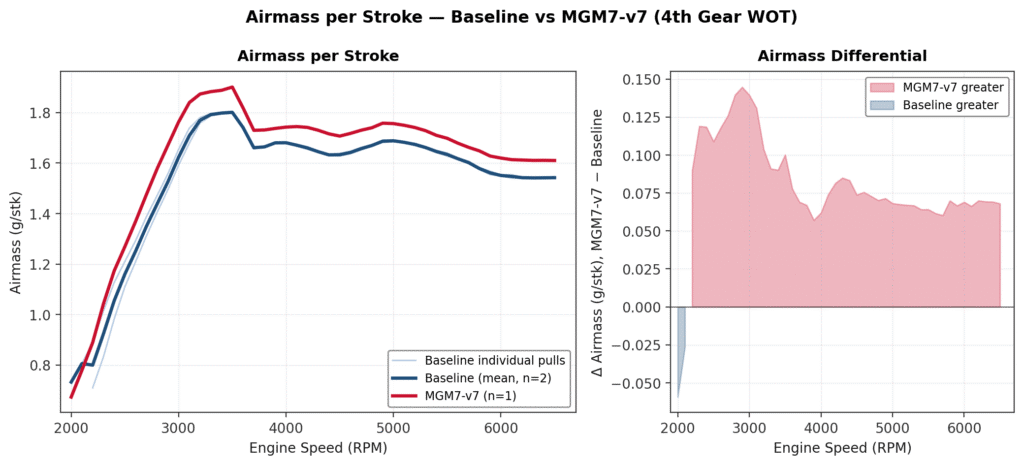
I contacted Shuenk to inform them of the potential for pushing the turbo further, and they responded that they would like to see how much power the turbo could support with an (estimated) airmass flow rate of 1.6 grams per stroke (g/stk) [ ~349 grams per second (g/s) ]. The tune from July (RRR v4) had made 1.54 g/stk [ ~ 334 g/s ].
Updates:
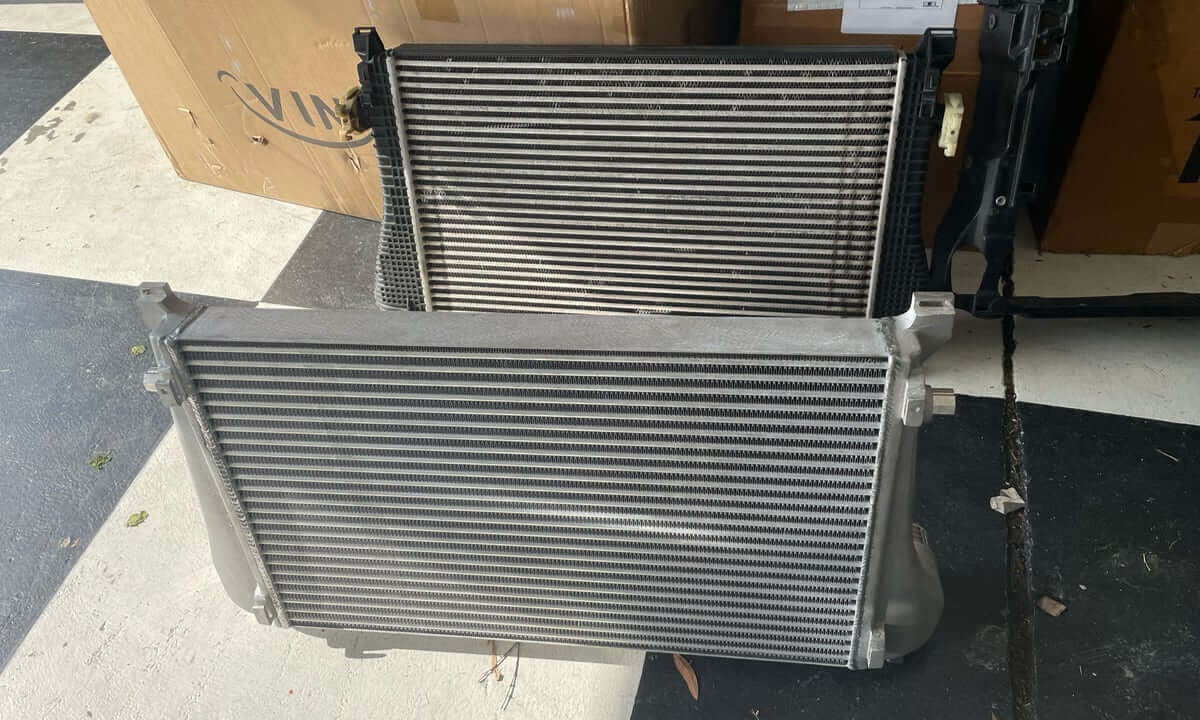
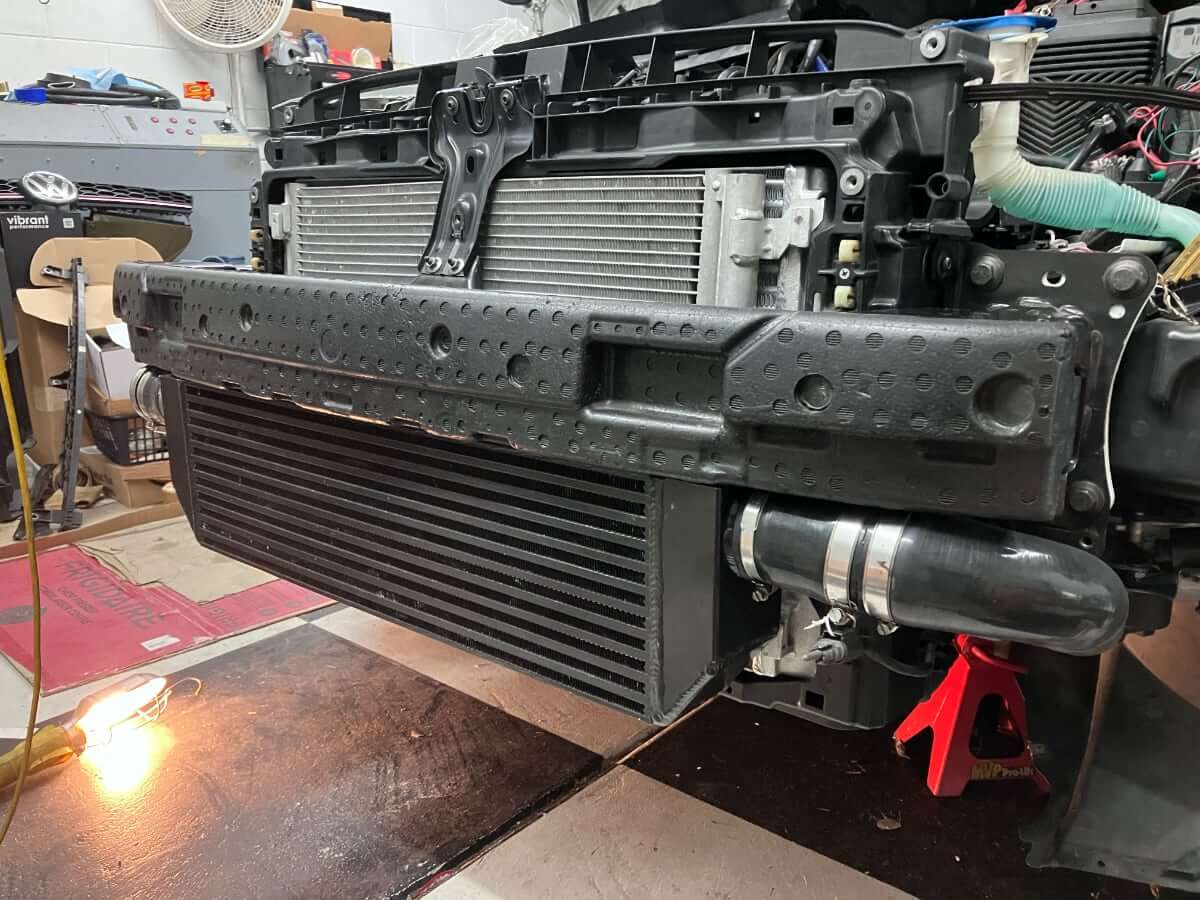
Since July 2025, the intercoolers have been changed to the current Majesty Competition tube-and-fin stock location IC and the Majesty bar-and-plate front-mount, configured as a bicooler.
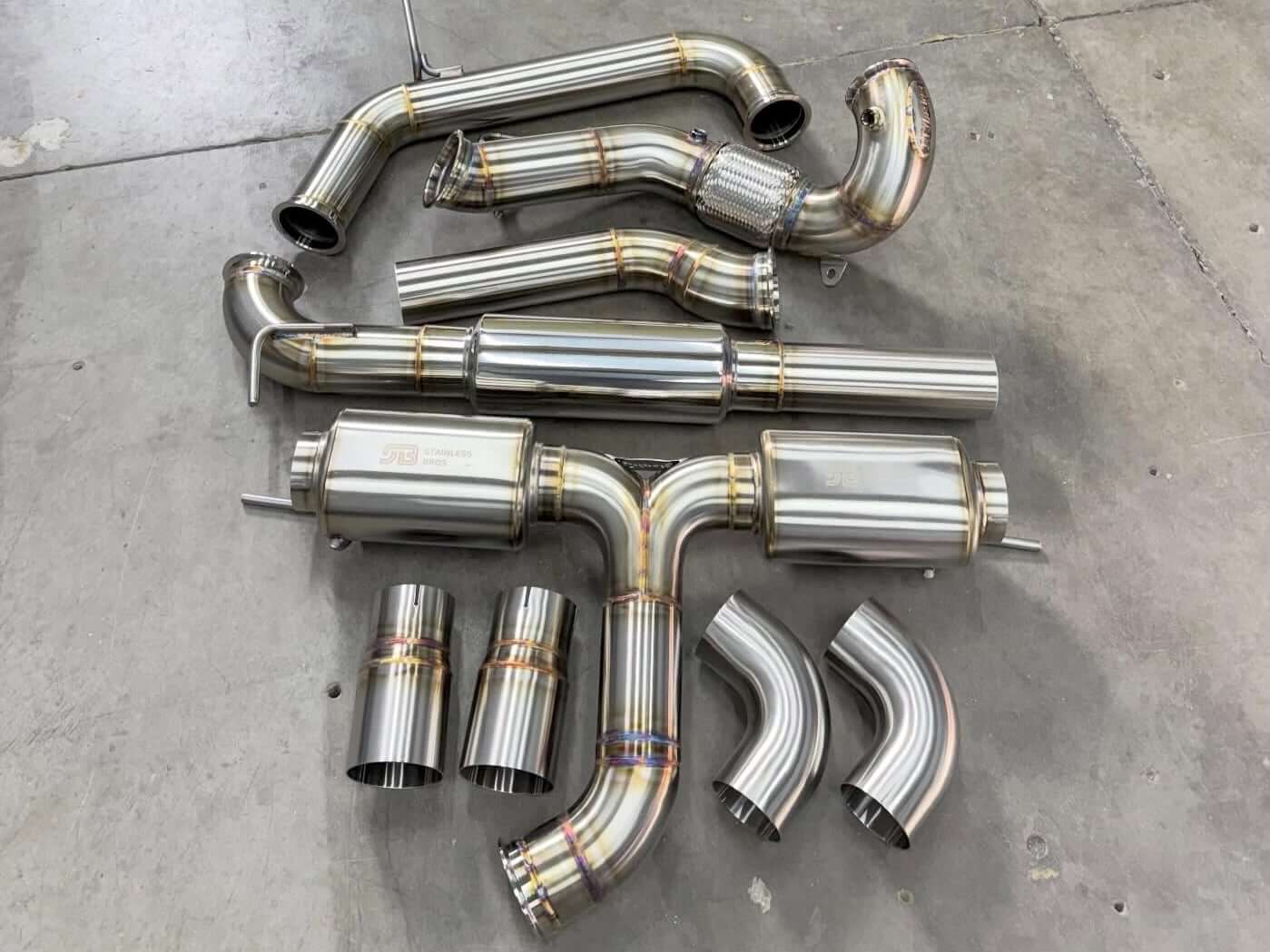
On the exhaust side, a CC Design setup has been installed:
I had also switched from using the Eventuri intake to the Racingline R600.
Initial performance check:
v4 Tune with IC and Exhaust changes:
To assess whether the hardware changes had created any headroom to raise the boost pressure, I reinstalled the Russel Road and Racing v4 tune used for the high-boost check. I logged a full-throttle pull with the current hardware to compare with the earlier data.
The July 2025 data is labeled Baseline in the charts, and the current IC and Exhaust hardware with the v4 tune is labeled Treatment.
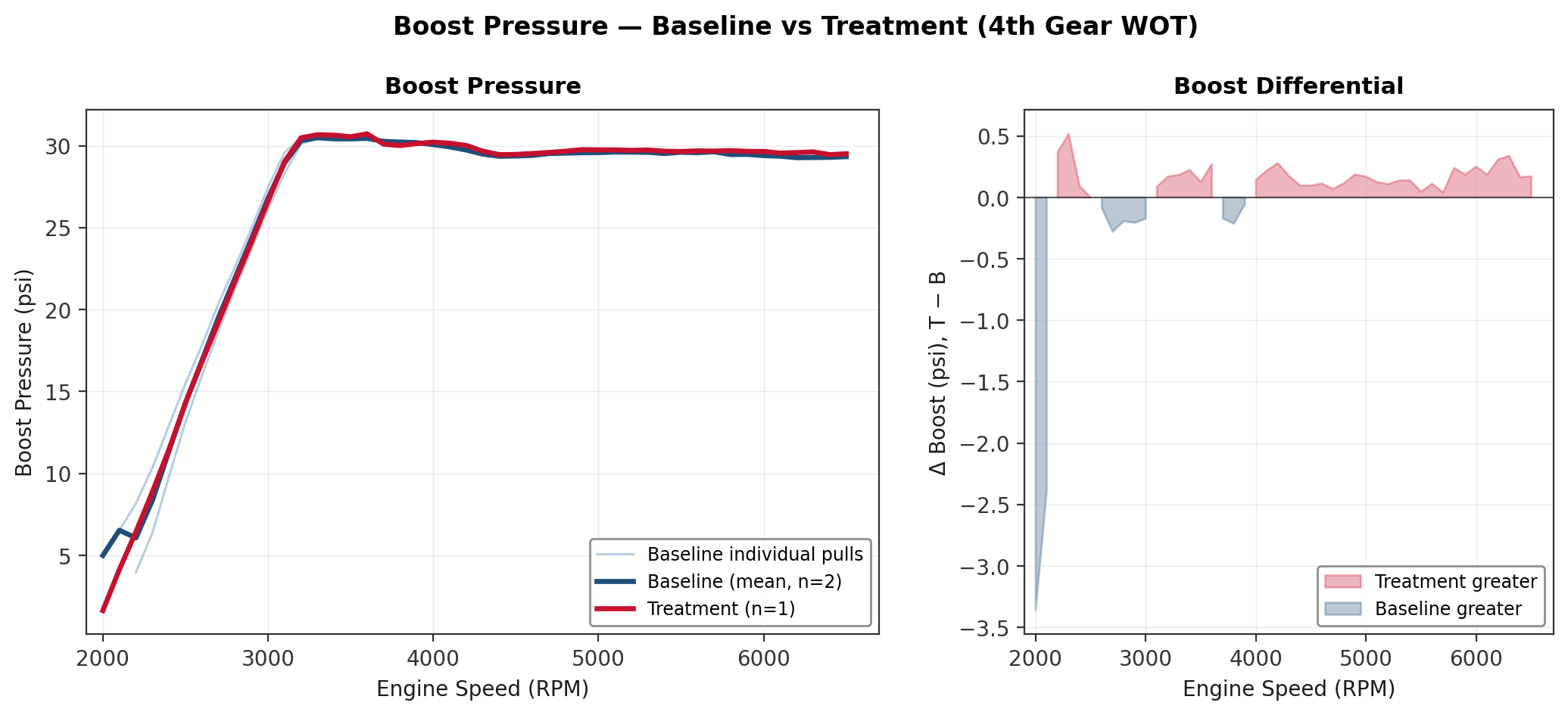
There is some reduction of the wastegate duty cycle, approximately two (2) percentage points at the top end.
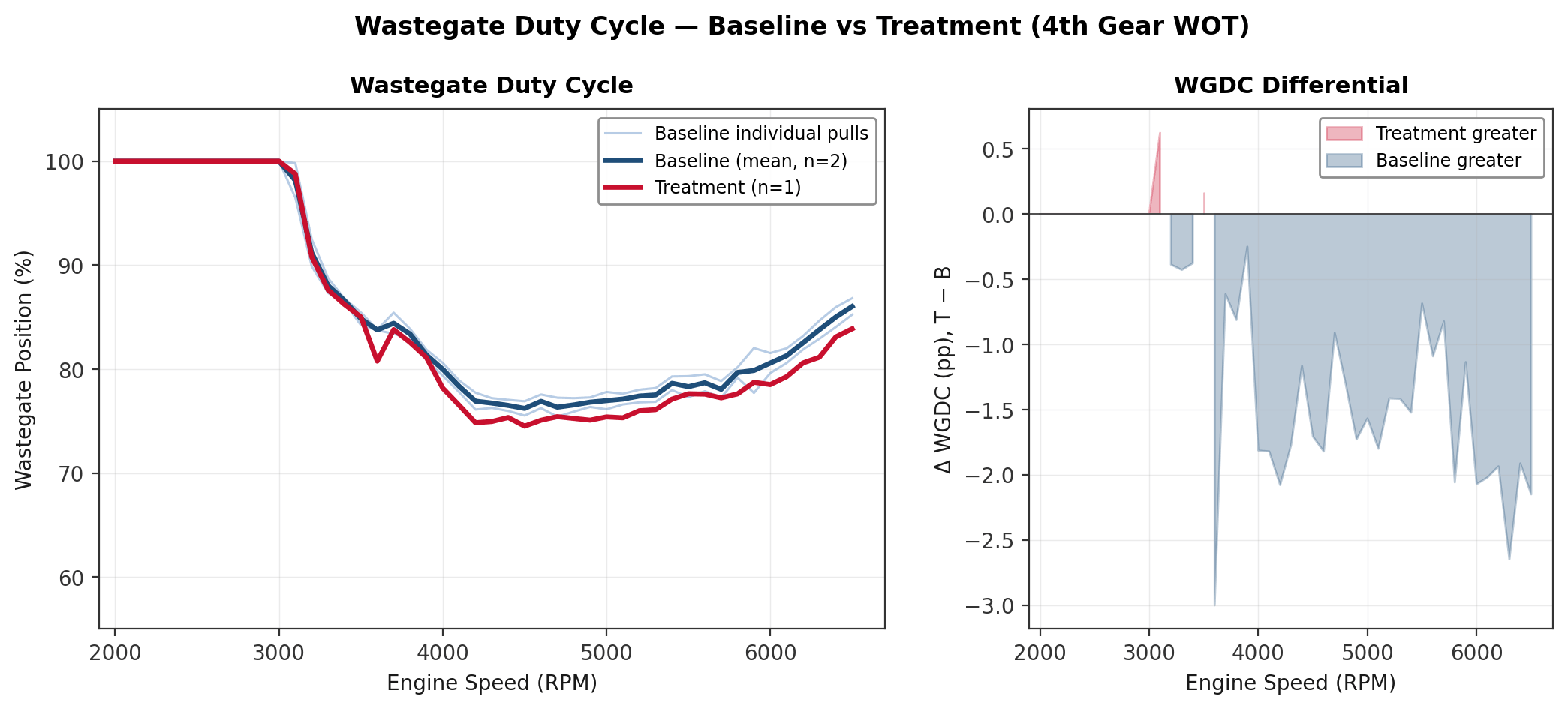
While two percent was something, it wasn’t enough of a reduction to make revising the tune worthwhile. The only segment of the system that still had the potential to make a difference was on the intake side, where the turbocharger was being fed by the Racingline R600 intake and Shuenk inlet hose.
v4 Tune with MGM7 Intake and TIP:
I’ve been working on and off for a couple of years on an intake I refer to as the MGM7. The ported shroud on the Shuenk IS48 forced me to develop an inlet elbow as well, or the MGM7 would not fit with this turbo.
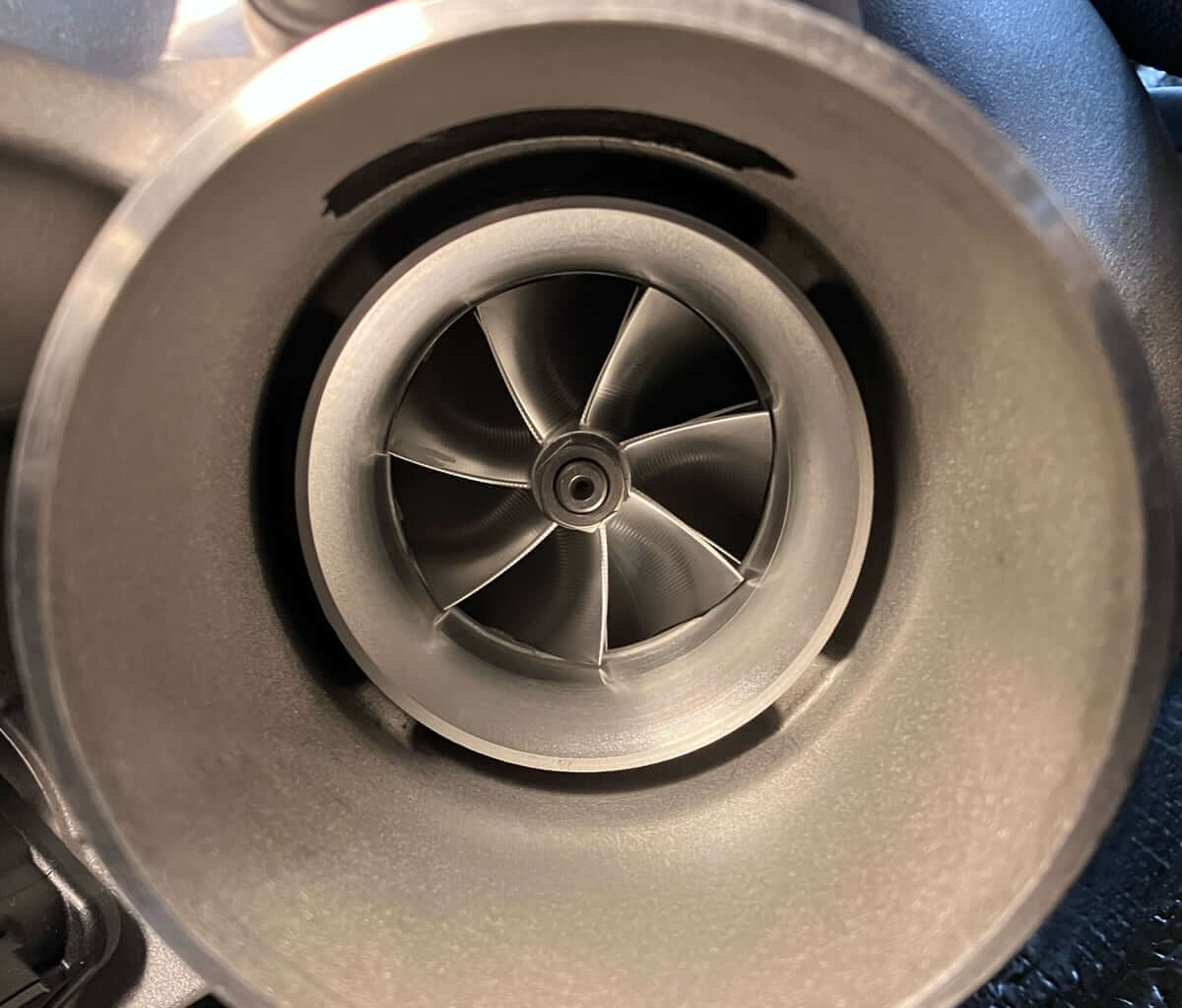
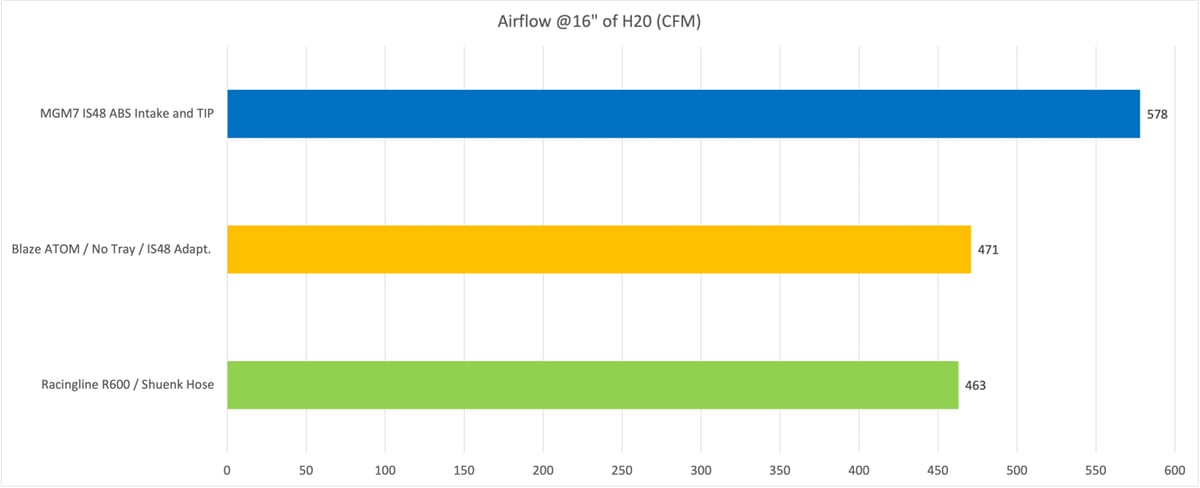
Both intake and elbow are still what I consider prototypes, but flow bench testing during development has shown the MGM7 design outperforms the Racingline R600 by over 20%. There’s also a Blaze ATOM intake on hand that I could get to work with the Shuenk IS48 housing, but it flows effectively the same as the R600 and would not increase the wastegate duty cycle gap to the extent I needed.
With the MGM7 intake as the best candidate, I installed it using the lower half of the R600 airbox and some cardboard to help isolate the air filter from the engine compartment – making an airbox for the MGM7, on top of designing the elbow, and modifications to the intake itself, was a bridge too far at this time. The R600 lid is omitted because the Vibrant filter on the MGM7 doesn’t fit inside the sealed R600 airbox.
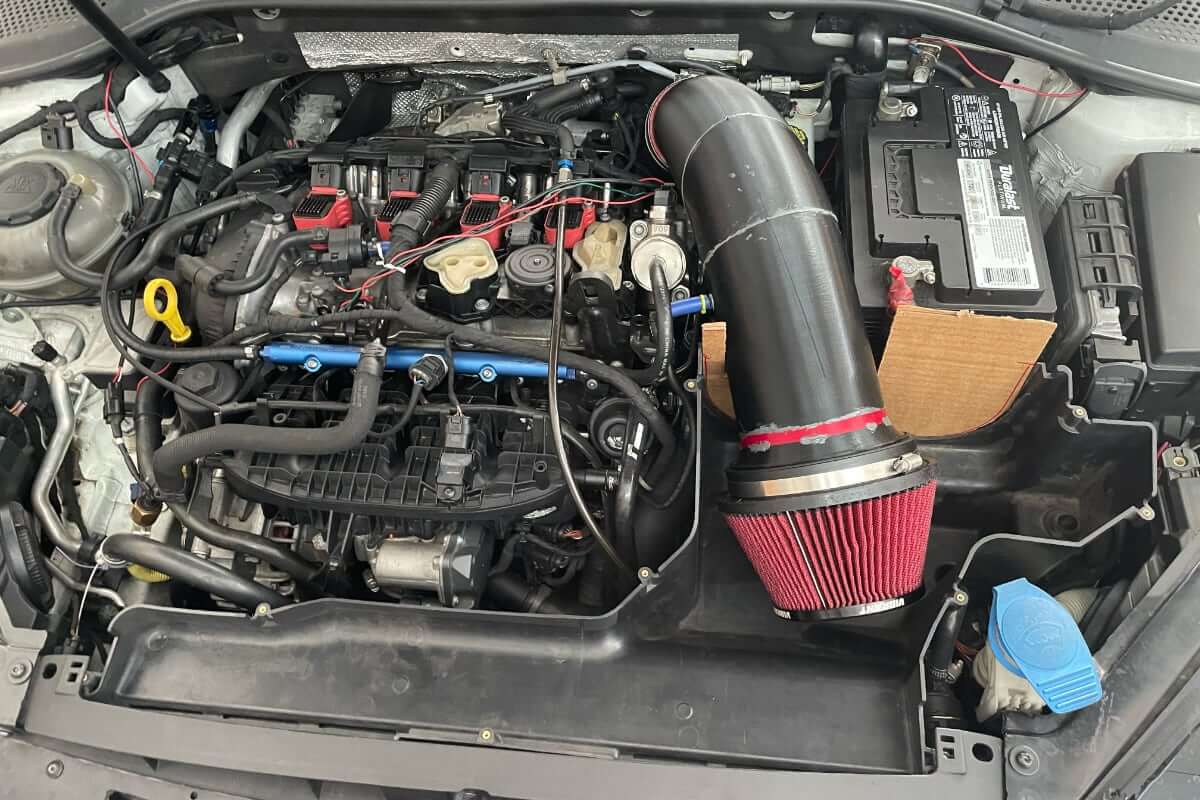
With the MGM7 intake and elbow installed, the hardware changes to the GTI were as follows:
| Component | Previous (v4 Tune) | Current |
|---|---|---|
| Intake | Eventuri | MGM7 |
| Inlet Pipe | Shuenk | MGM7 |
| Intercooler | IE V1 plus Vibrant FMIC | Majesty Competition plus Majesty FMIC |
| Downpipe | Trackslag 3″ catless | CC Design Catless 4″ |
| Midpipe | Baun 3″ Vibrant resonated | CC Design 3.5″ Stainless Bros. resonated |
| Exhaust | Baun 3″ Borla muffler | CC Design 3.5″ custom muffler |
I then took the GTI out to log the car with the v4 ECU tune.
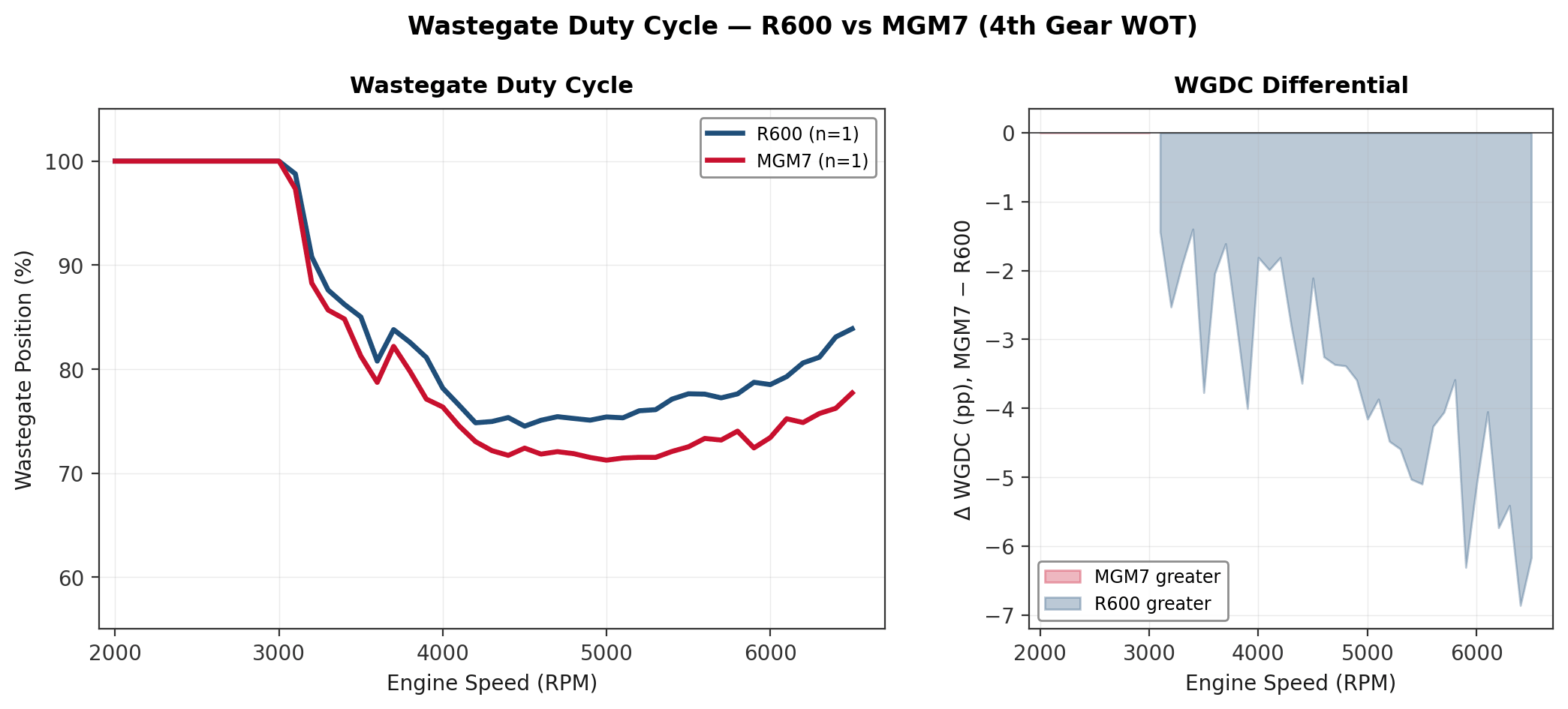
With the only changes being the swap from the R600 intake to the MGM7, I compared the data logs.
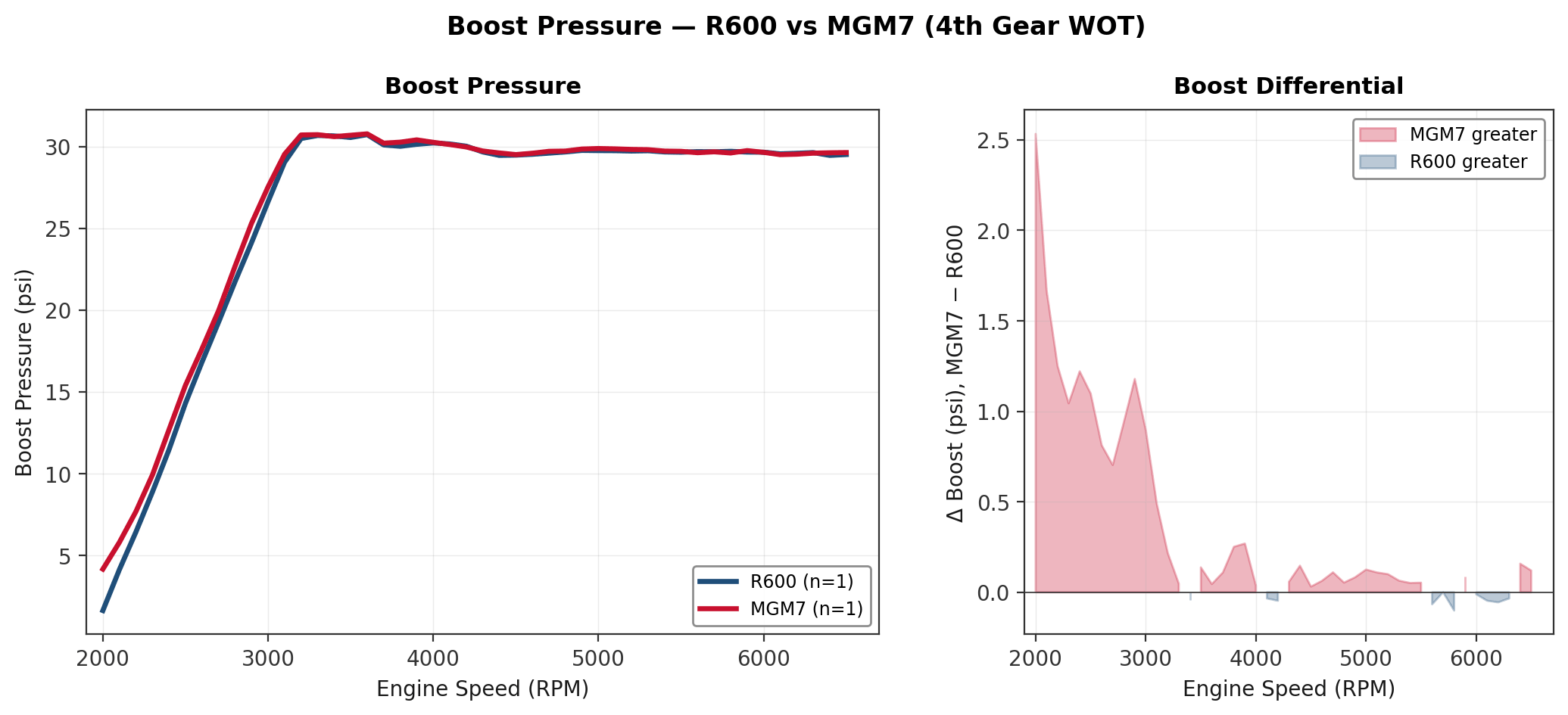
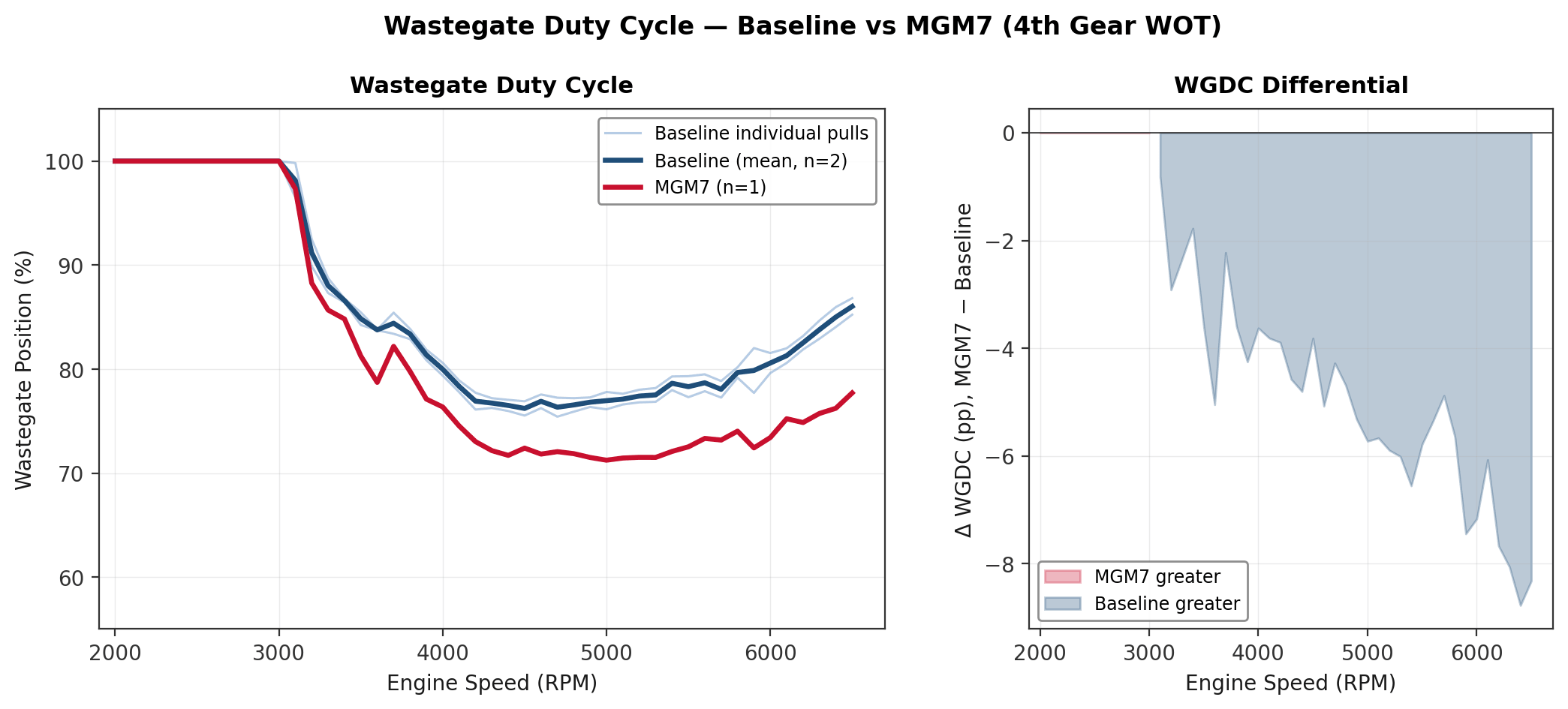
A decent improvement of the WGDC was produced, just over a six (6) percentage point reduction at the maximum RPM.
Compared to the hardware configuration from July 2025, the improvement was larger:
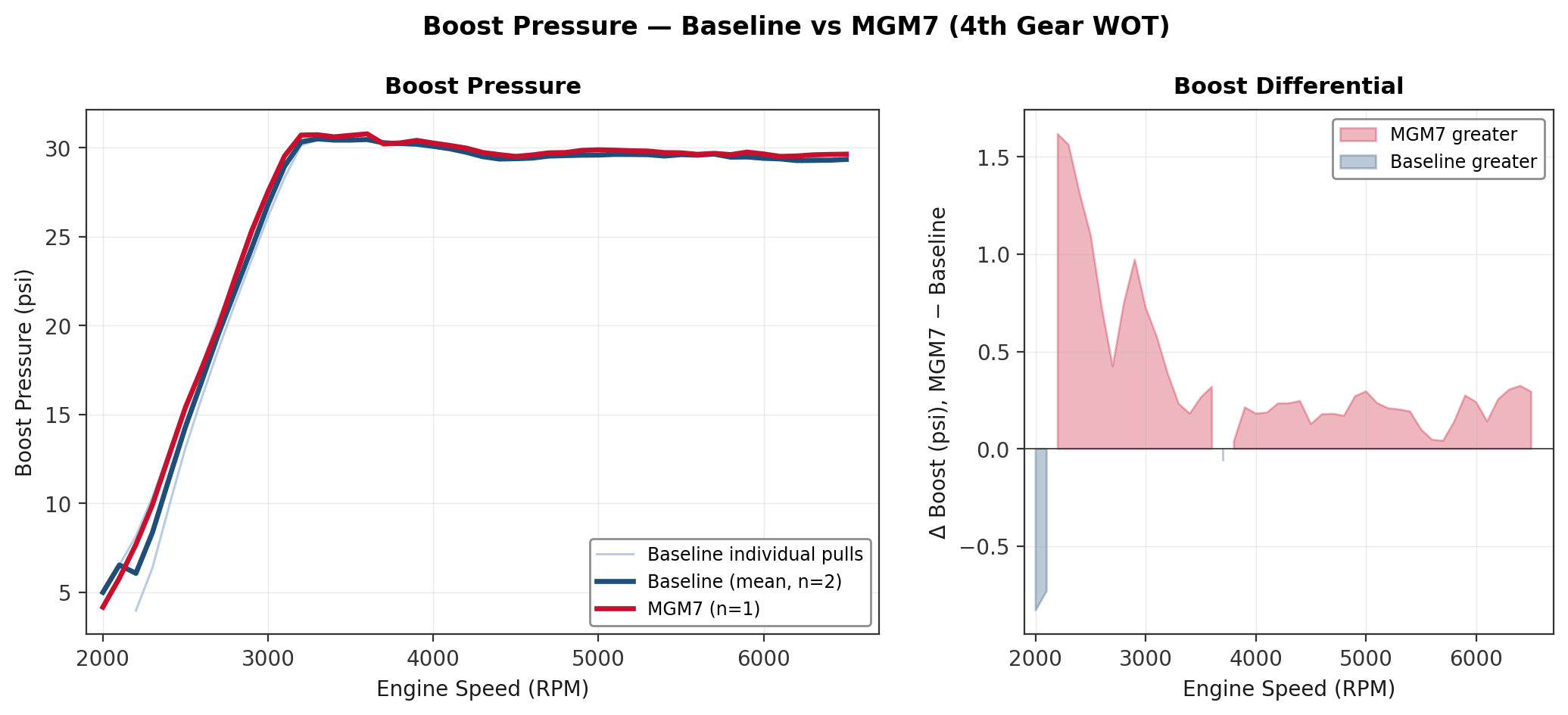
The wastegate duty cycle had decreased by nine (9) percentage points at the maximum RPM.
v7 Tune with updated hardware:
Based on the data I had recorded with different hardware and software configurations, I had a good idea that the turbocharger should be able to hold 31 psi to redline at my ceiling of 85% wastegate duty cycle.
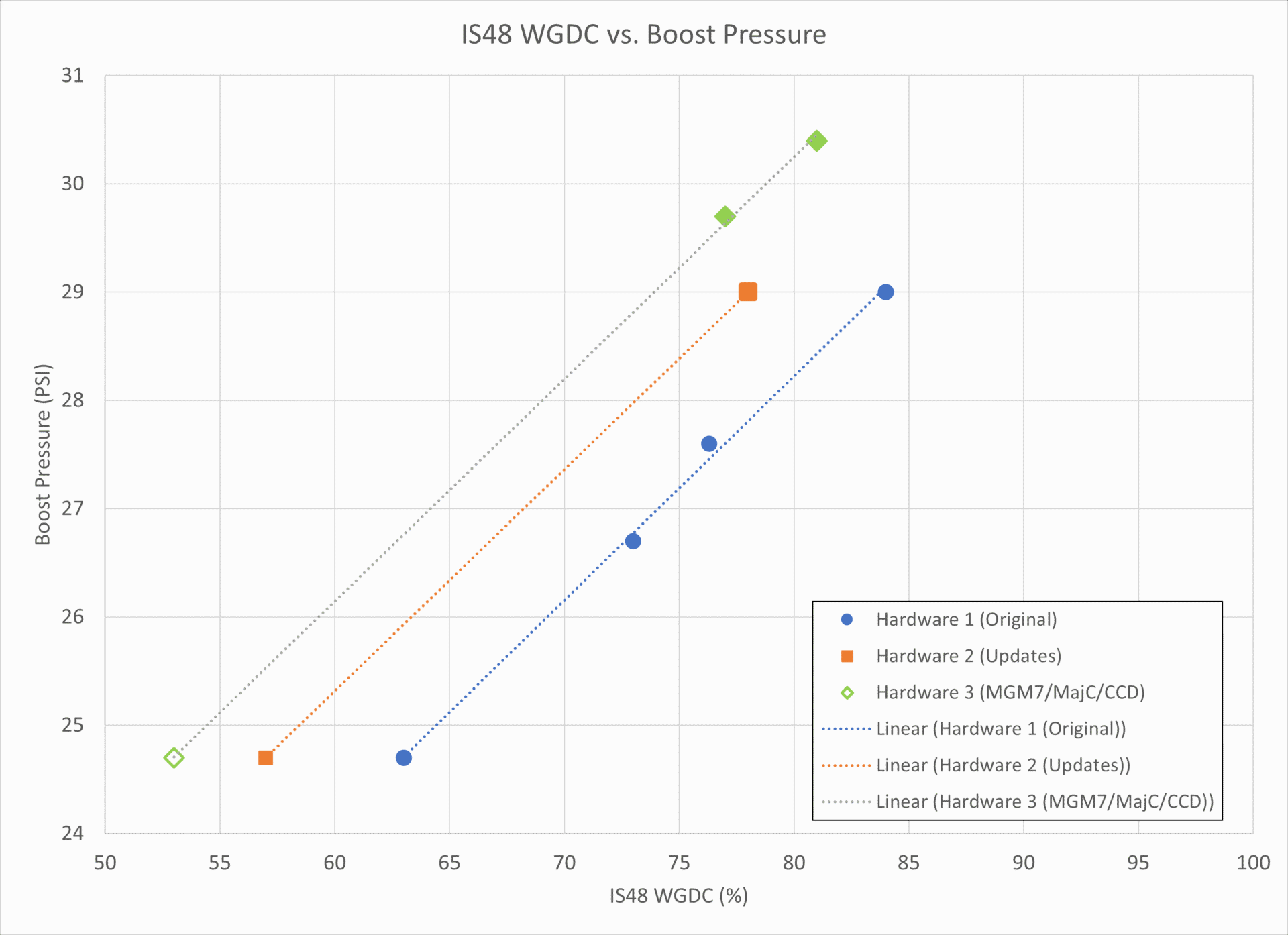
I contacted Russel Road and Racing and requested that they revise the v4 tune to hold around 31 psi through to redline. About 10 hours later, I had a new tune and set out to log the GTI.
Russell Road & Racing v7 Summary
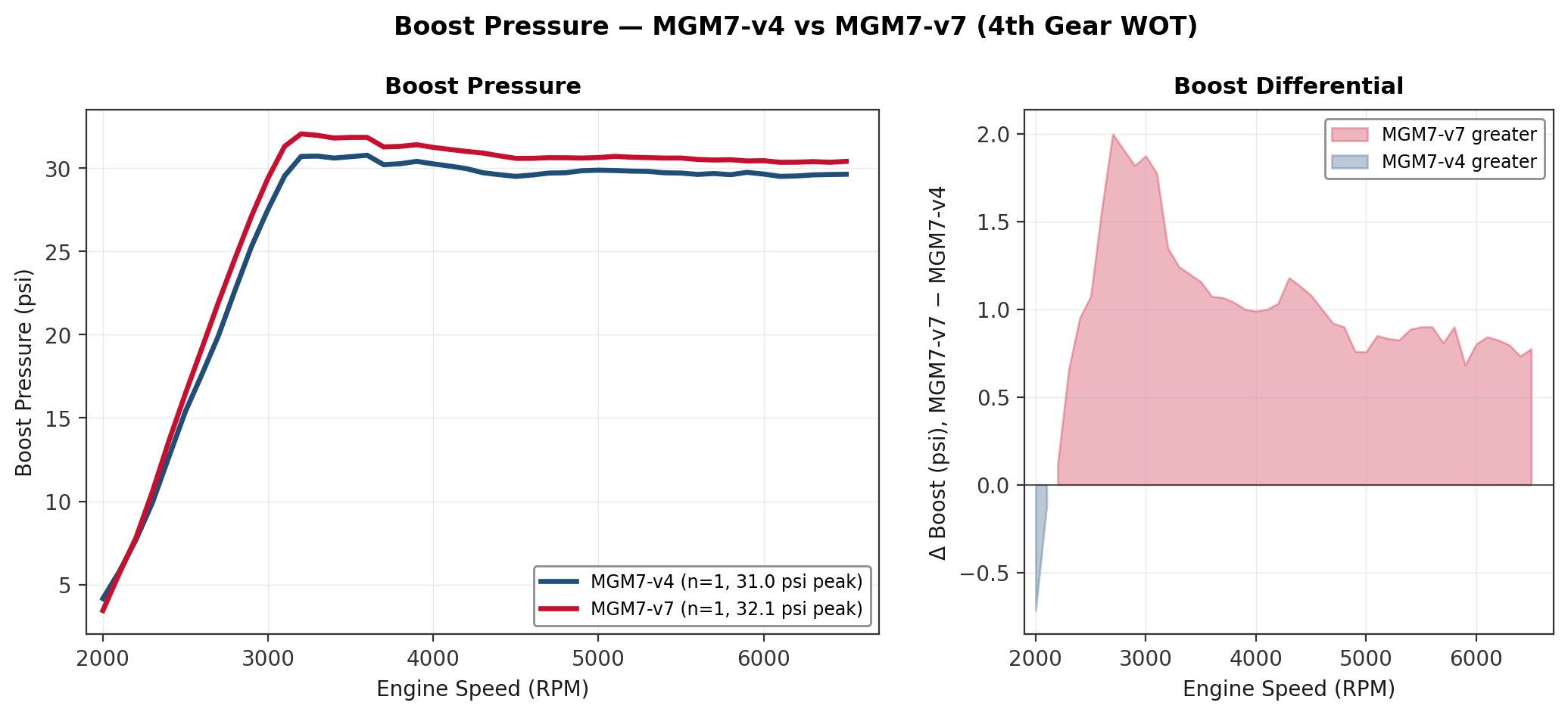
The boost pressure was raised approximately 1 psi, now holding around 30.4 psi through redline.
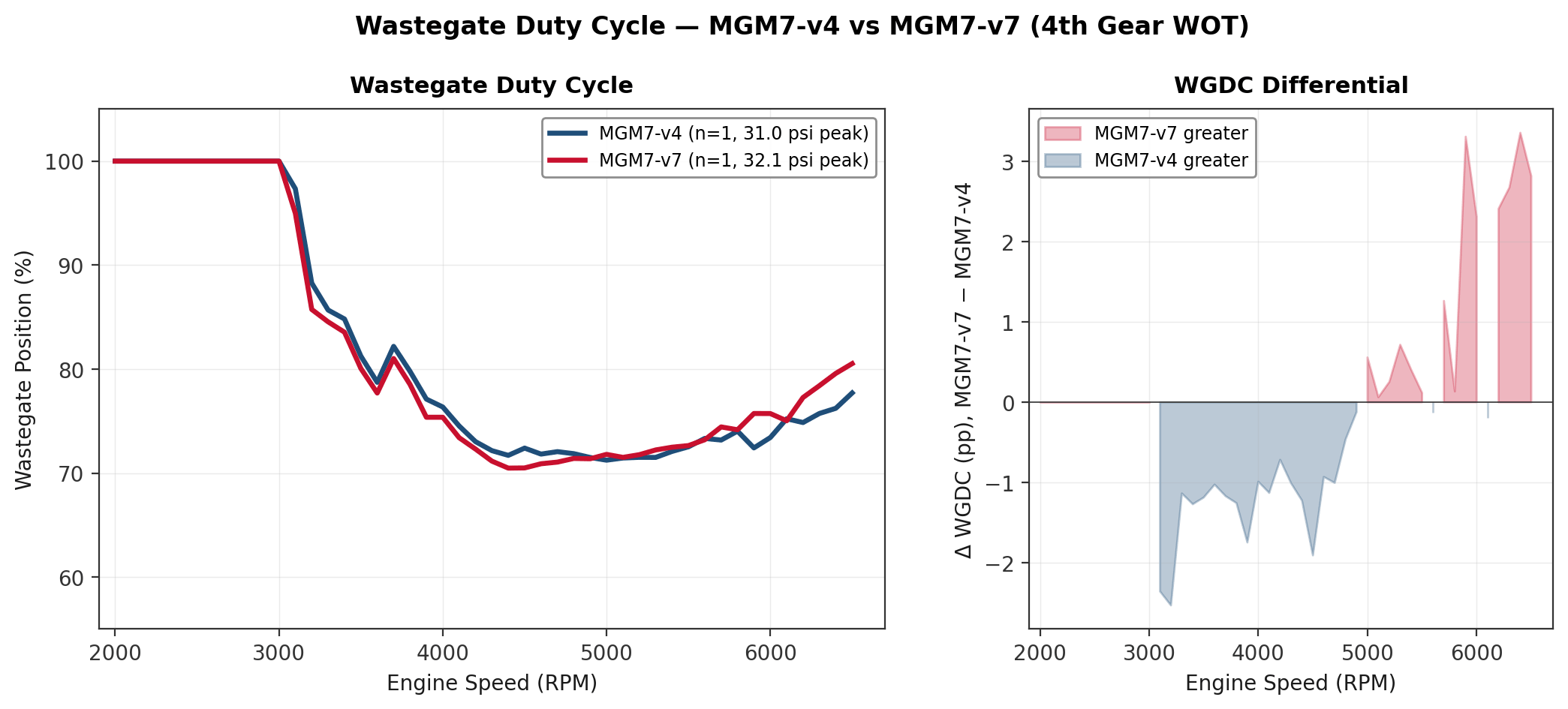
Interestingly, the wastegate duty cycle is still comfortably below my arbitrary ceiling of 85%.
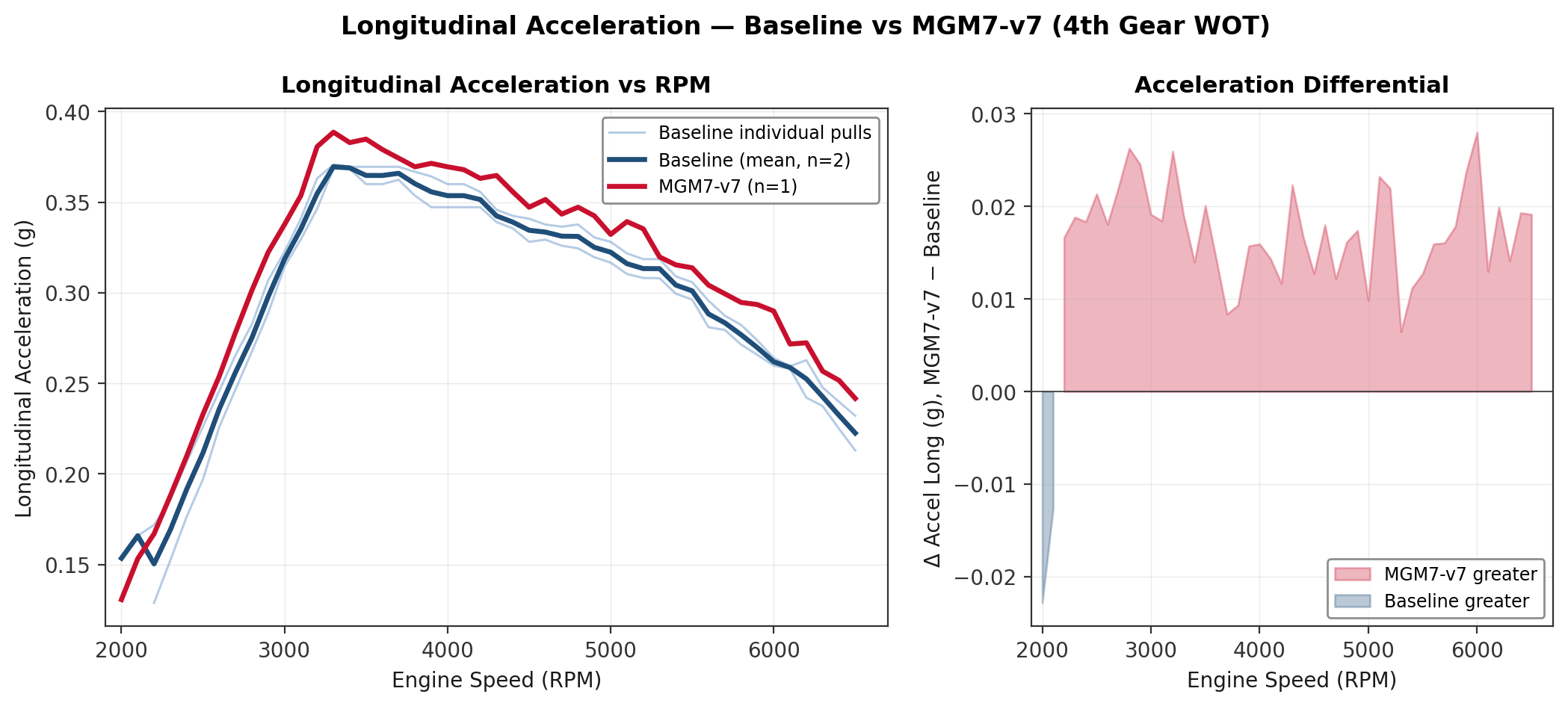
Looking at where the latest v7 tune and hardware changes put the car compared to where it was last summer, the acceleration rate has increased throughout the measured range.
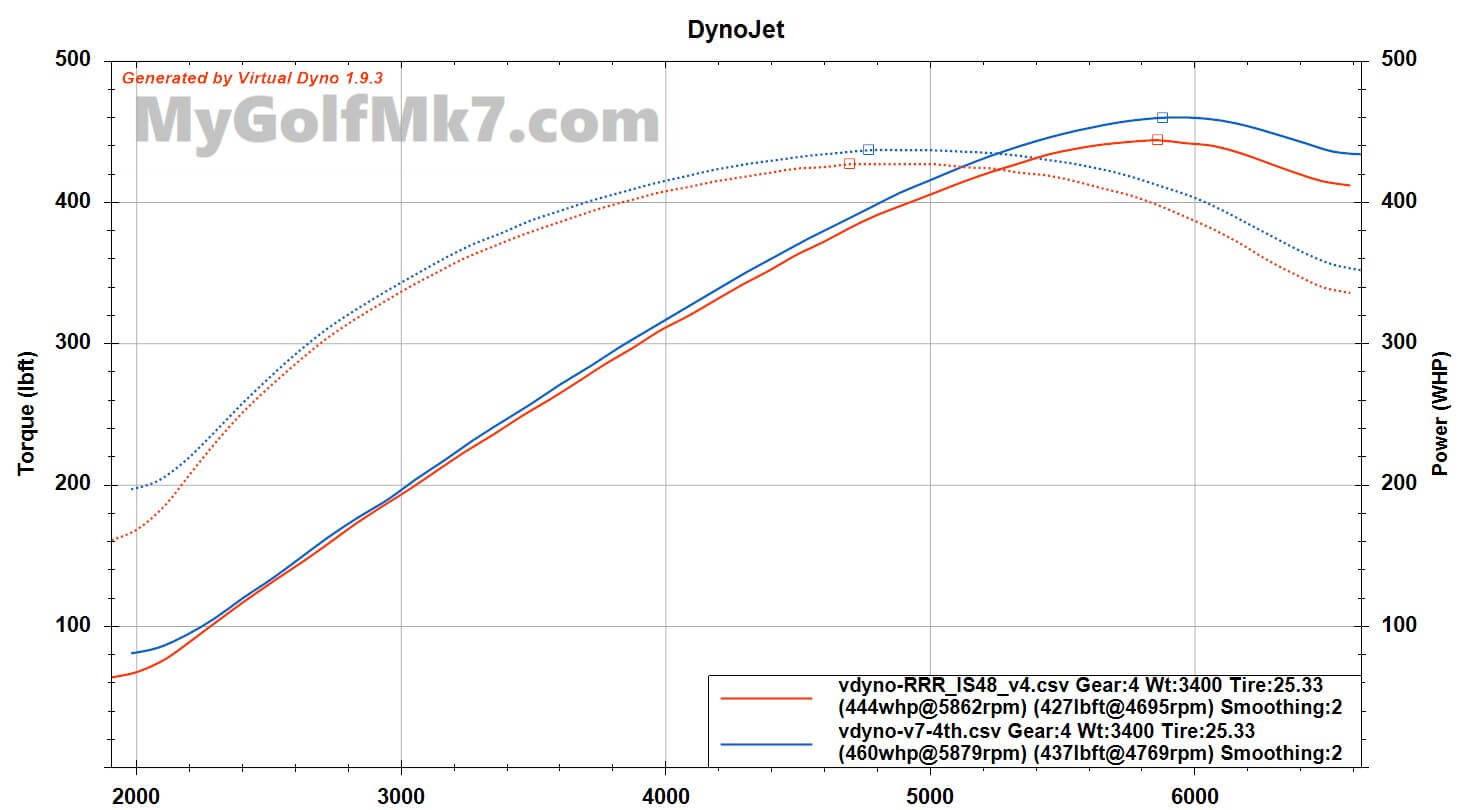
The estimated peak WHP has increased to 460 from 444.
Next Steps:
With the Airmass now sitting at the desired level of 1.6 g/stk at redline, shifting to optimizing power output will be the goal of the next tune revisions.
Once that tuning is complete, I intend to bring the GTI to a dyno to measure the performance on the 93 octane and E50 ethanol tunes.