
Background:
Previously, I discussed the advertising for the Velossa Tech intake product, identifying several concerns about whether the product delivers the advertised performance.
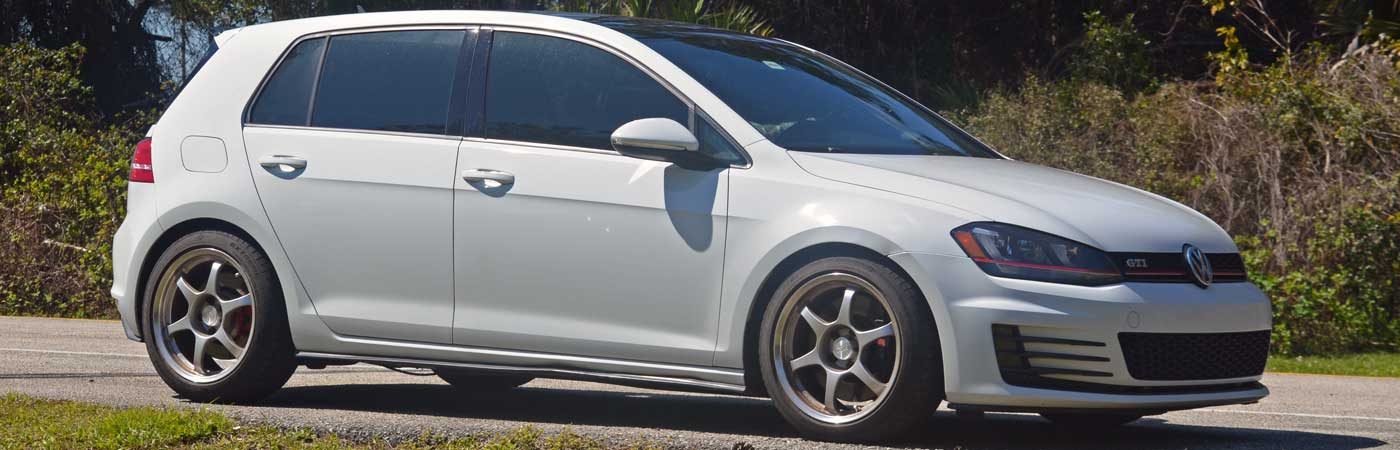
To determine the validity of the product claims, I ordered the Velossa Tech intake snorkel for the Mk7 GTI and set out to perform a street test.
Installation:
The installation was straightforward, requiring cutting the slats on the passenger side.
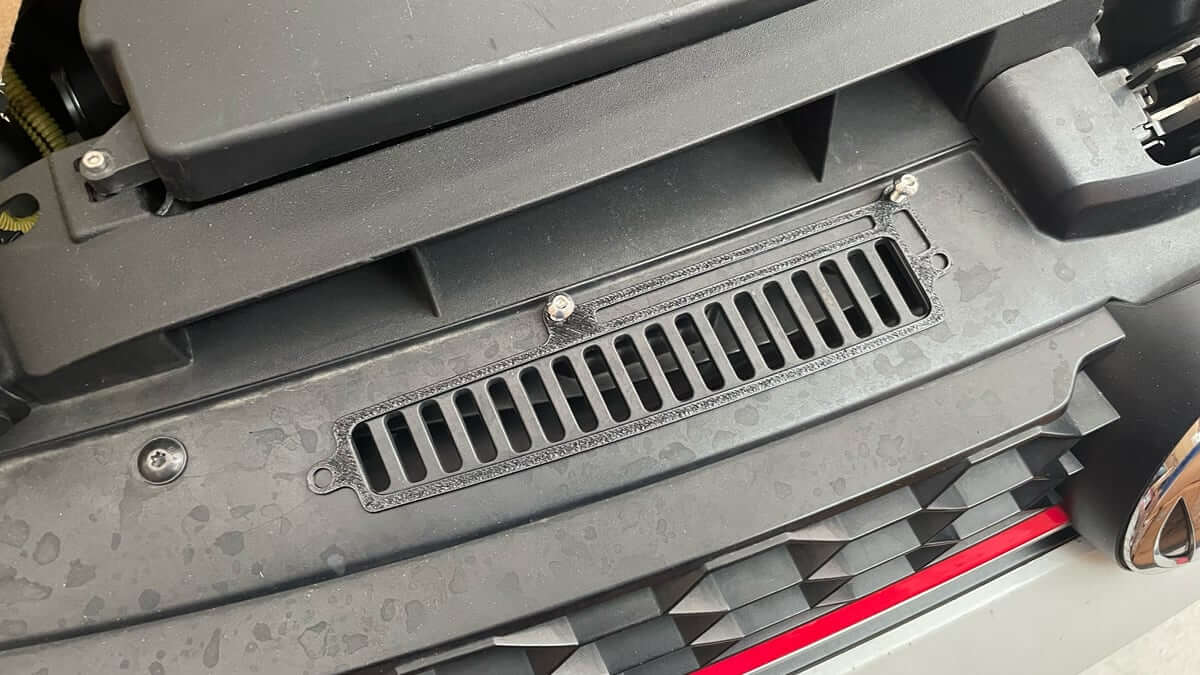
On the driver’s side, I have used the Eventuri intake in the past, which itself utilizes an air duct (for which I have not measured any performance benefit across multiple tests), necessitating a small adaptation to secure the Velossa Tech snorkel in place.
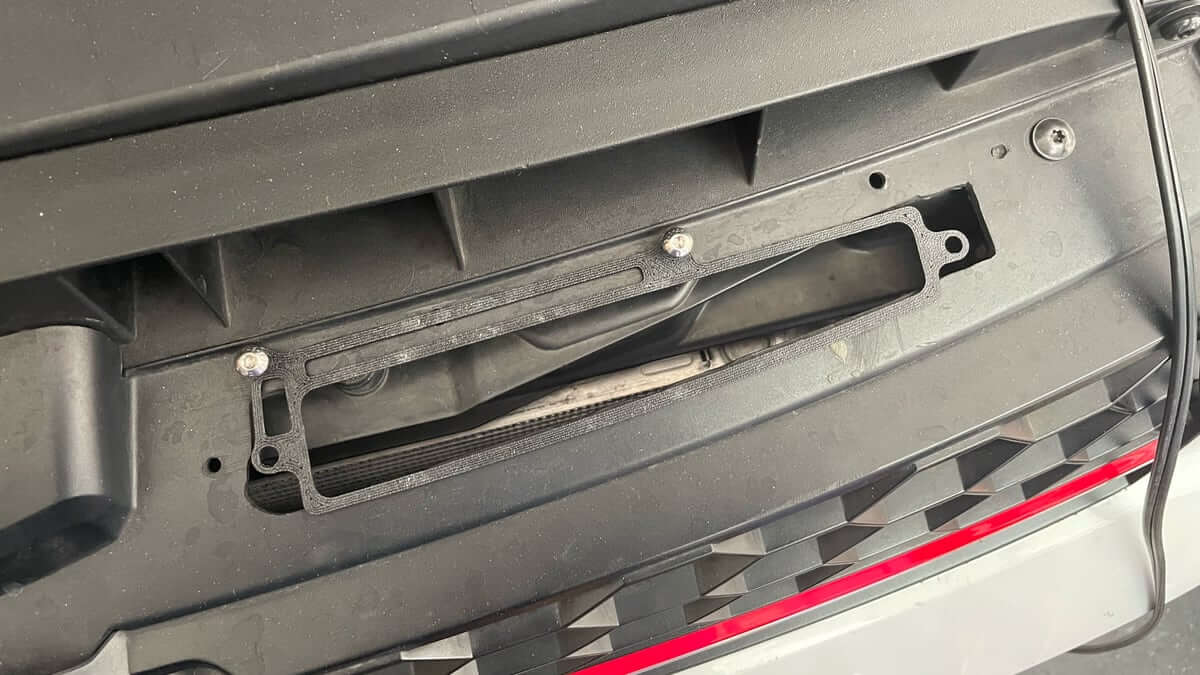
With the Velossa Tech snorkel installed, the design intent is clear: the air passing through the grill should be deflected upward into the intake duct opening.
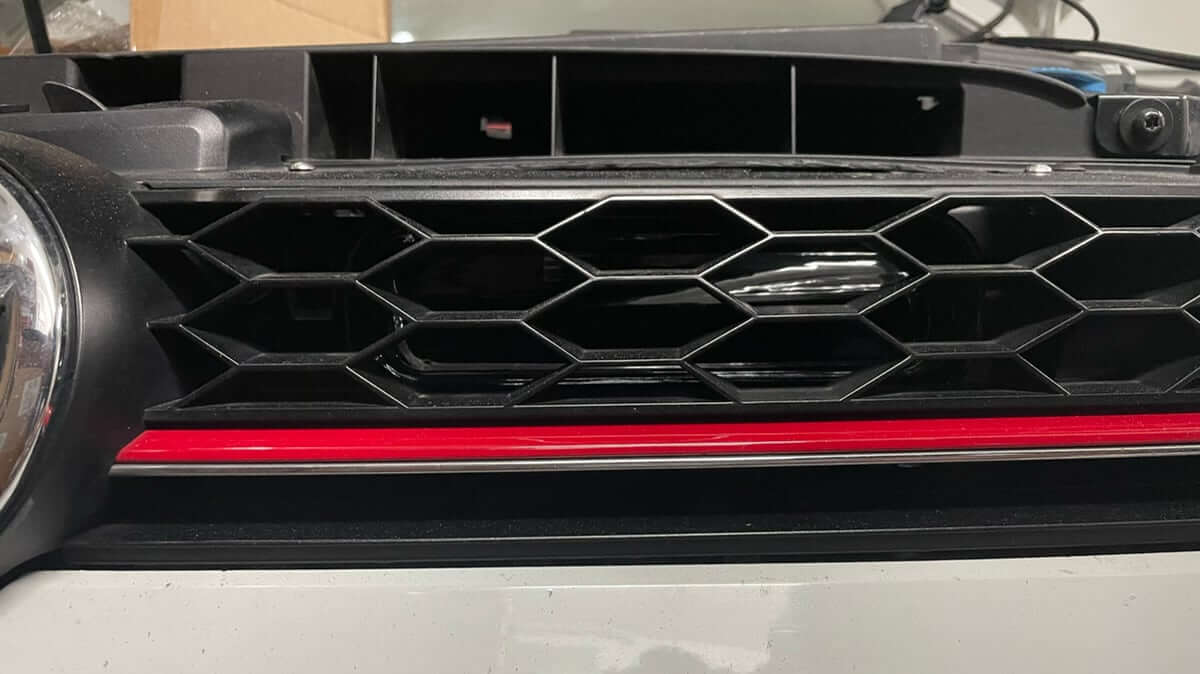
This is similar to the design concept of the Eventuri duct, and both products face the same obstacle to achieving the design intent: the open space between where the snorkel/duct discharges air and the intake duct opening.
In the picture below, the green arrows indicate the design-intended flow path of the air, but the yellow arrows indicate alternative flow paths that are equally available.
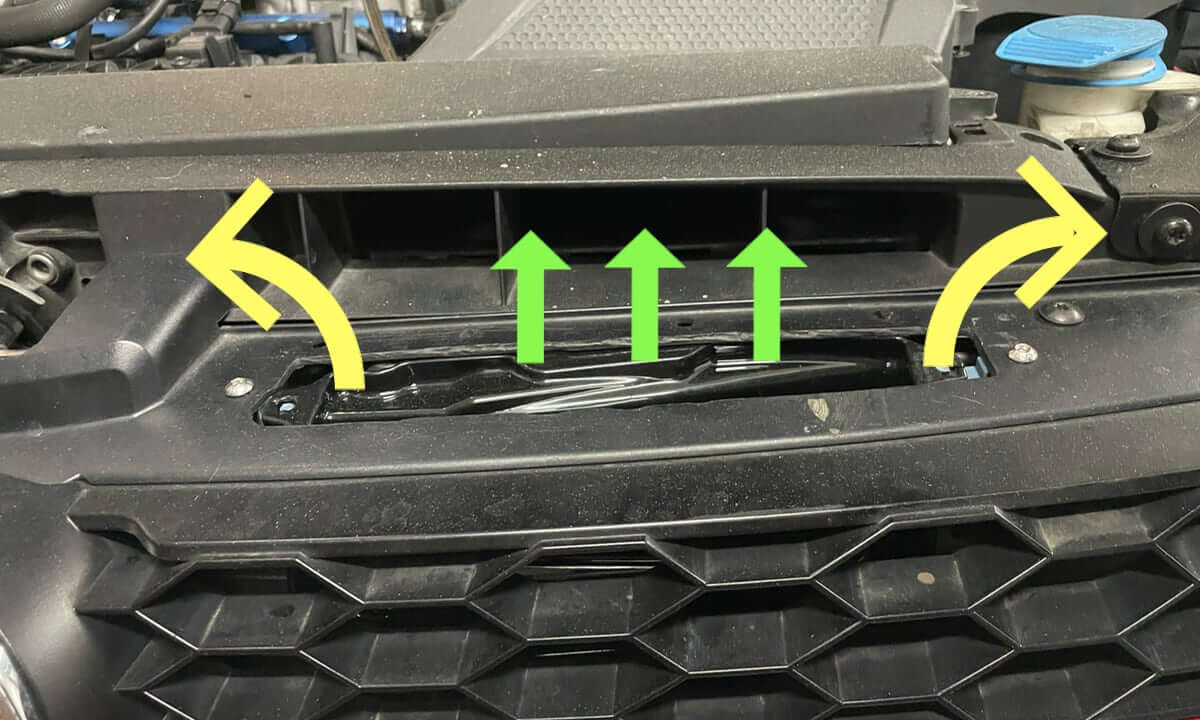
Because the snorkel does not form an enclosed volume with the intake duct, there is no mechanism to contain any pressure increase that the snorkel might provide.
Test Procedure:
Testing of the Velossa Tech was done by accelerating the GTI at full throttle in third gear from approximately 2,000 to 6,500 RPM several times. This was done in a baseline configuration without the Velossa Tech snorkel, then with it installed.
Engine and vehicle performance data are recorded using the SimosTools datalogger, OBD2 adapter, and RaceBox Pro GPS/Accelerometer.
The GTI is currently outfitted with a Shuenk IS48 turbocharger operating on a 93-octane custom Russell Road & Racing ECU tune. The intake is a Racingline R600, which connects to the turbocharger using Shuenk’s inlet hose for the ported shroud version of the IS48.
Test Results:
There were 11 separate full-throttle pulls recorded without the Velossa Tech snokel installed, and 8 full-throttle pulls with it installed.
Acceleration Time
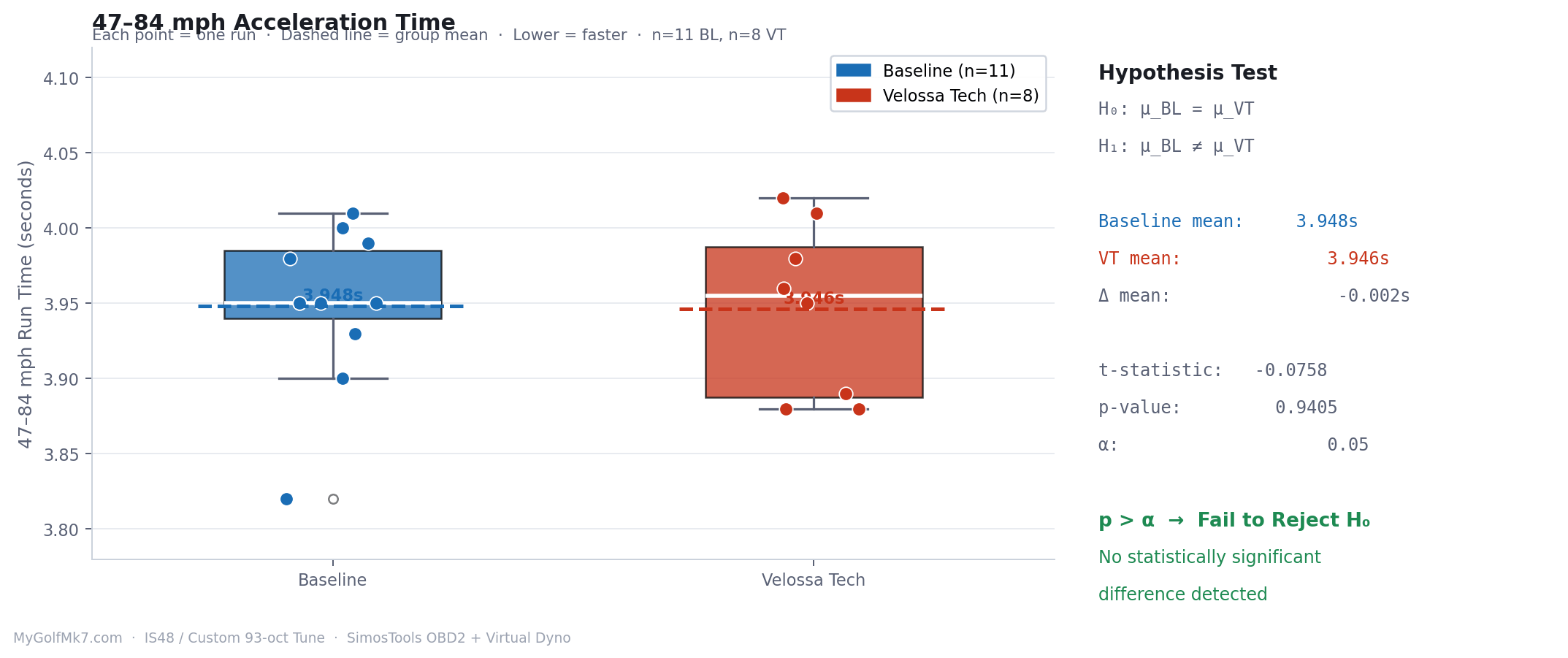
There was no statistically significant difference in the vehicle’s acceleration time from 47 to 84 mph between configurations. (Velossa Tech – 3.95s, Baseline – 3.95s)
Peak WHP
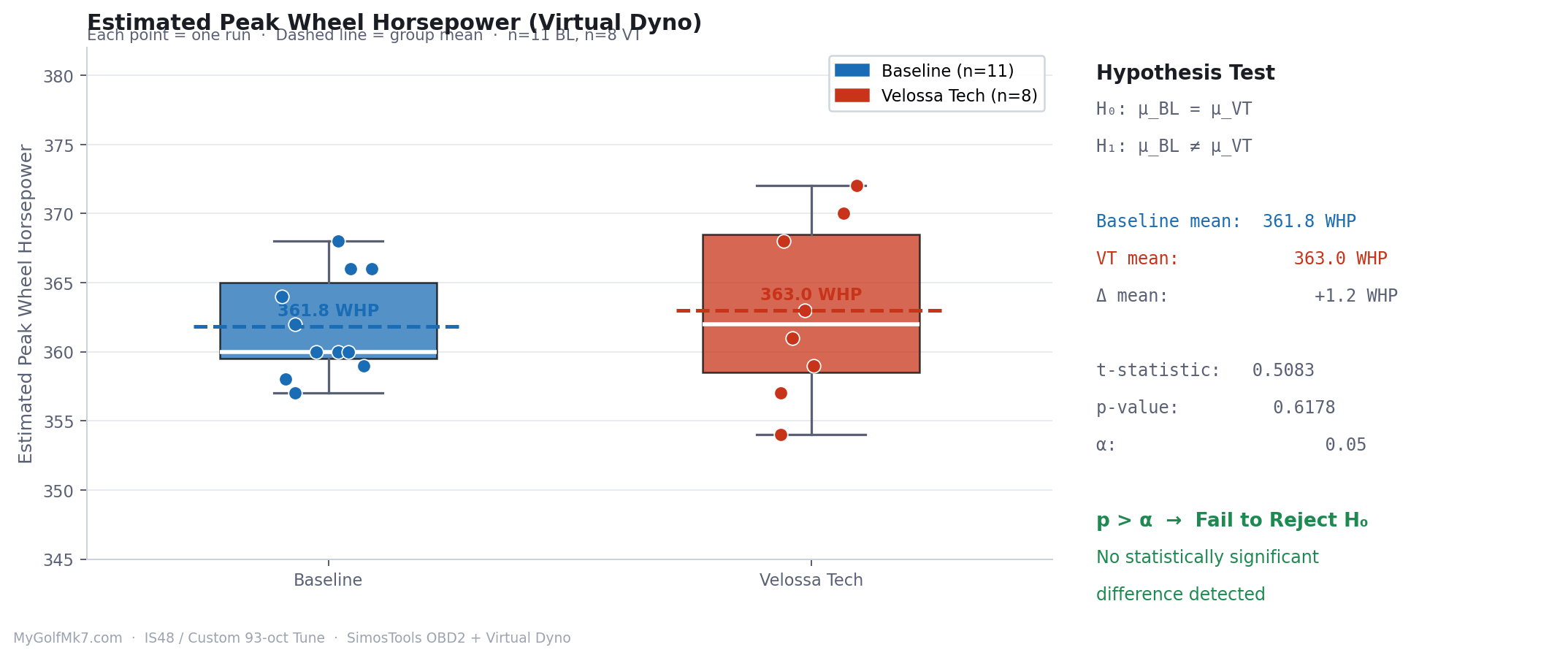
There was no statistically significant difference in the estimated peak WHP between configurations. (Velossa Tech – 363 whp, Baseline – 362 whp)
Boost Curve
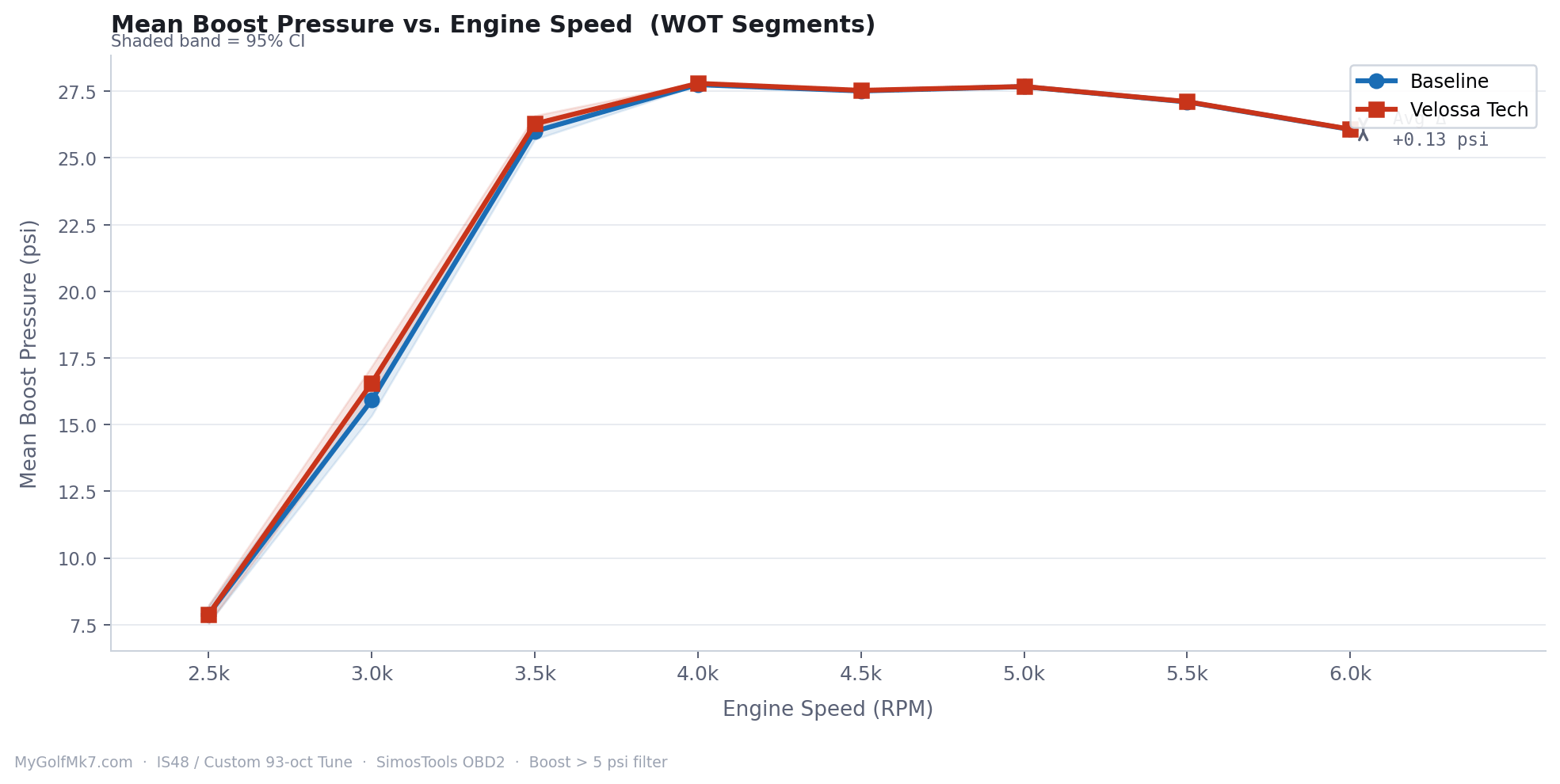
The average boost pressure across pulls for each configuration was the same.
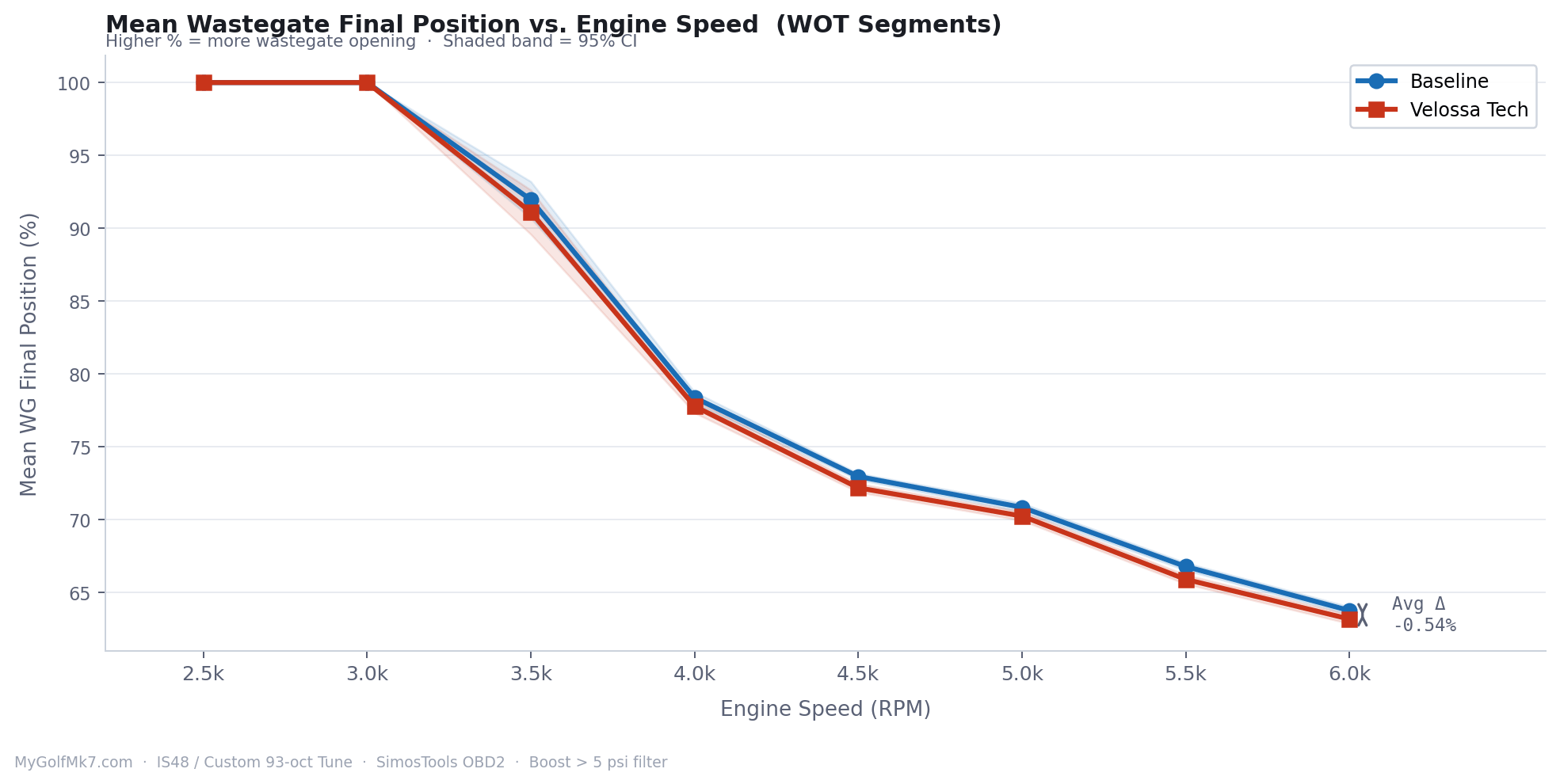
WGDC
The turbocharger wastegate duty cycle was essentially the same across both configurations.
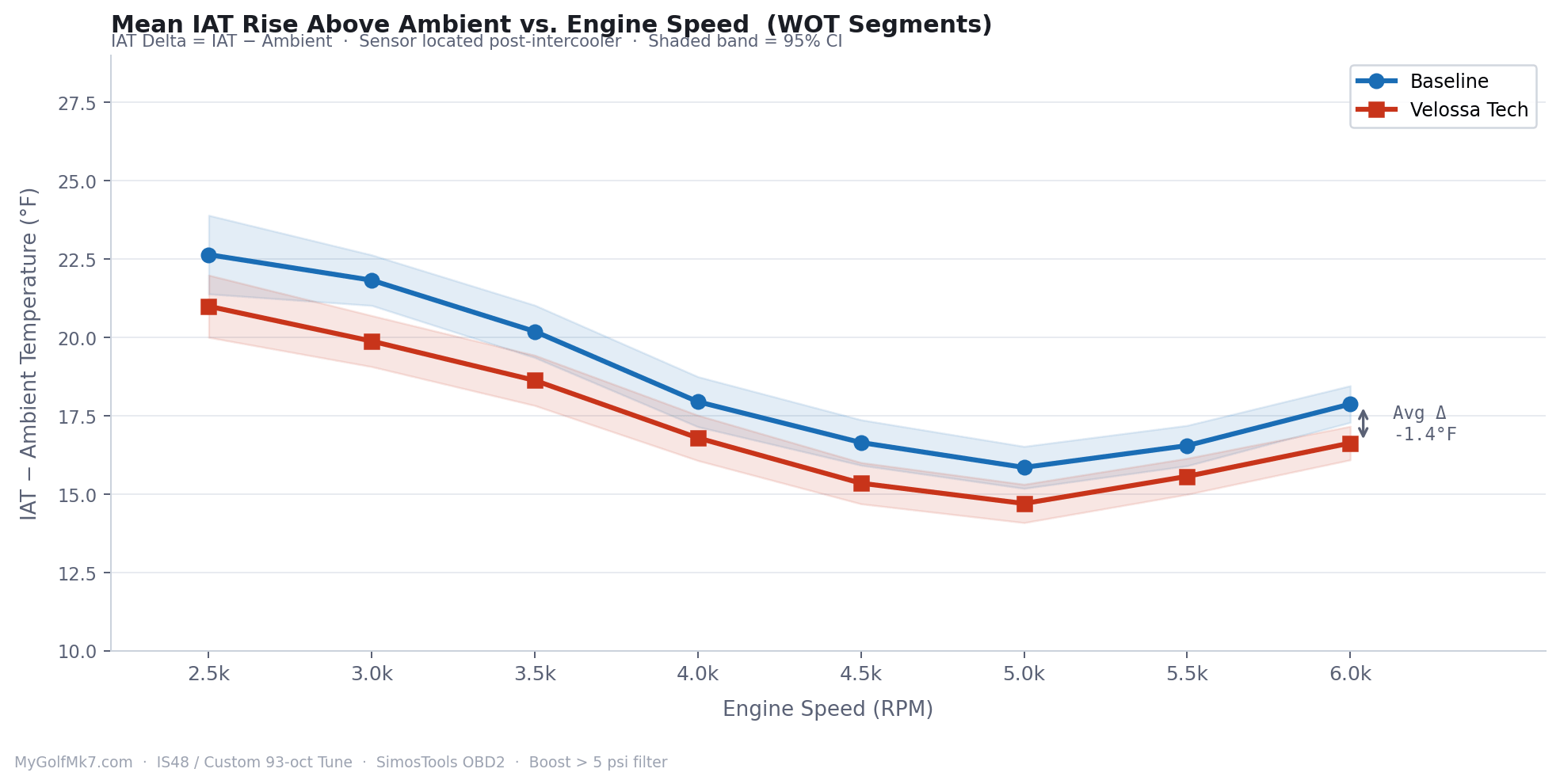
IAT
The average difference of the intake air temperature at the intake manifold was within 1.4 degF – a negligible difference.
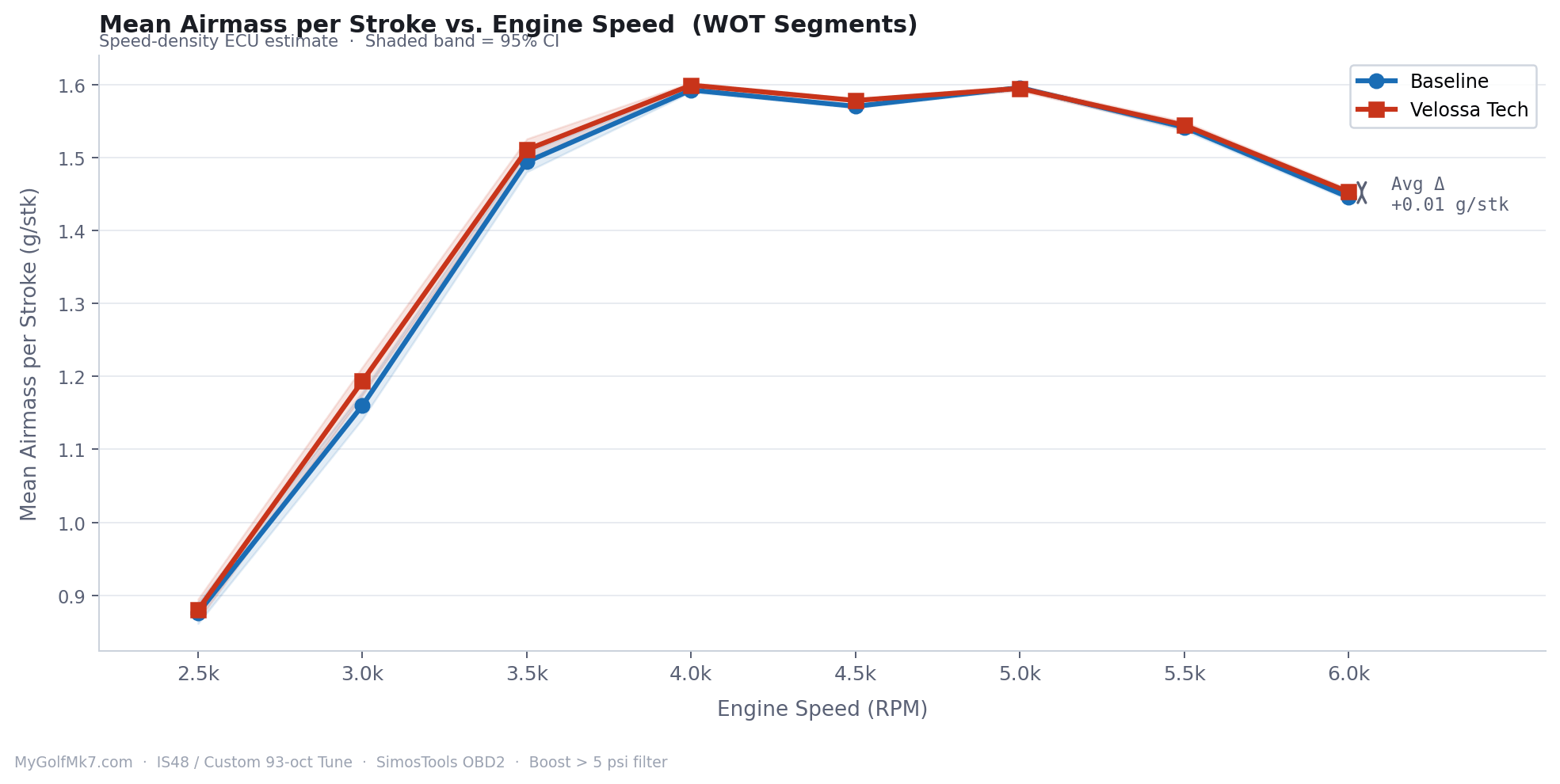
Airmass
Note: Airmass is an estimated value and not a measurement of the actual airmass. The Mk7 GTI does not have a Mass Airflow Sensor. The value is being shown because the vendor includes this estimate with the product advertising.
The average airmass per stroke across pulls was the same for each configuration.
Conclusions:
Testing was conducted on a 2015 Mk7 GTI equipped with a Shuenk IS48 turbocharger and a custom 93-octane ECU tune — a configuration that represents a higher-output build. Ambient temperature was 81°F across all runs. Nineteen full-throttle acceleration passes were recorded across both configurations using a RaceBox Pro GPS datalogger and SimosTools OBD2 datalogs.
No measurable performance improvement attributable to the Velossa Tech Big Mouth snorkel ducts was detected under these test conditions.
Acceleration time over the 47–84 mph speed range averaged 3.948 seconds without the snorkel and 3.946 seconds with it — a difference of 0.002 seconds.
Estimated peak wheel horsepower derived from Virtual Dyno averaged 361.8 WHP without the snorkel and 363.0 WHP with it — a difference of 1.2 WHP. This difference is statistically indistinguishable from noise and falls well within the run-to-run variation observed across the 19-pull test sessions.
The bottom line for Mk7 GTI owners considering this product: under the conditions of this test, the Velossa Tech Big Mouth snorkel ducts produced no detectable improvement. The product may have aesthetic value for owners who want to customize the front end of their vehicle.