
Background:
A few months ago, I conducted an airflow test on the Majesty Competition intercooler, a tube-and-fin core from a company that sells cheap intercoolers on eBay, which are most likely copied from a name-brand manufacturer.
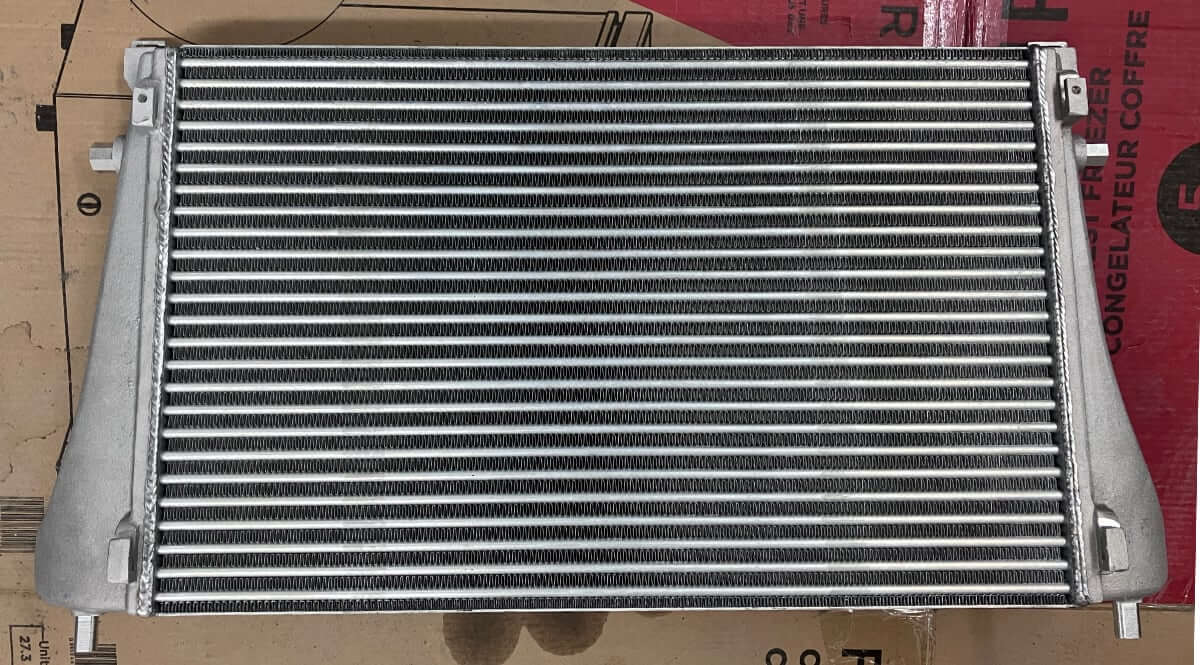
I presume they copied somebody’s design since their advertising includes a picture of my car from this blog that they haven’t been given permission to use.
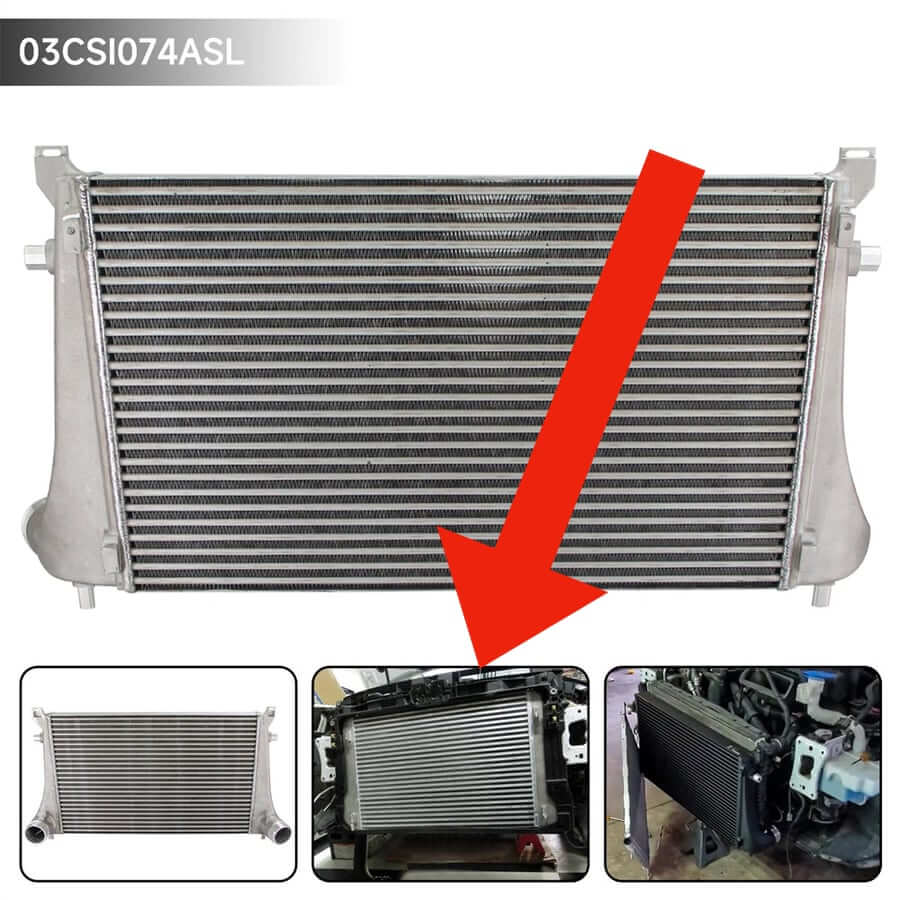
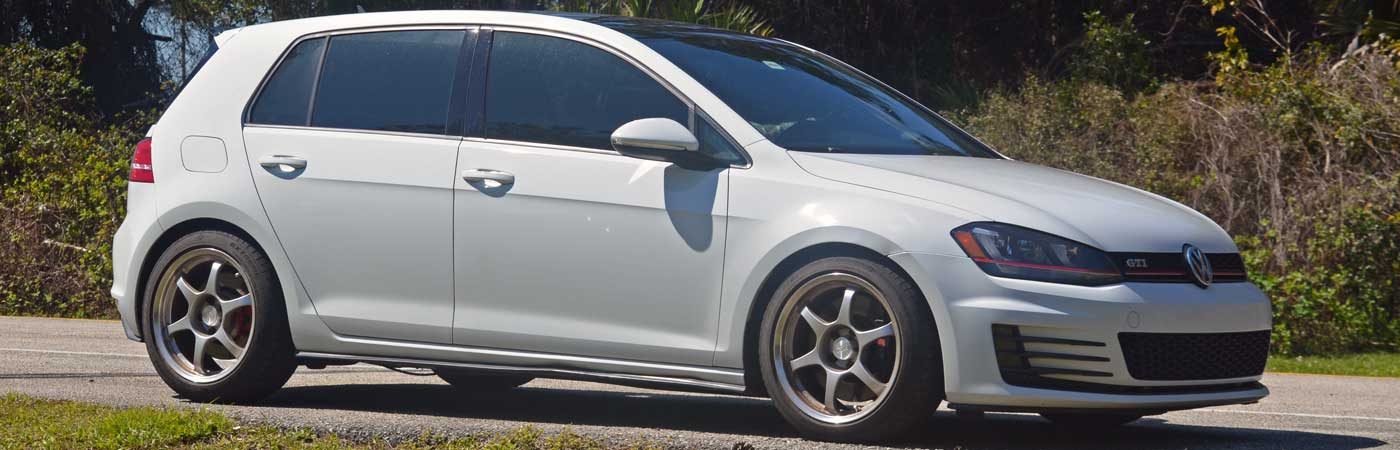
Amusingly, that’s a picture from when I used Integrated Engineering’s V2 intercooler, not the Majesty Competition Intercooler.
In this post, I discuss the GTI’s intake air temperature using this IC on the street.
Test Procedure:
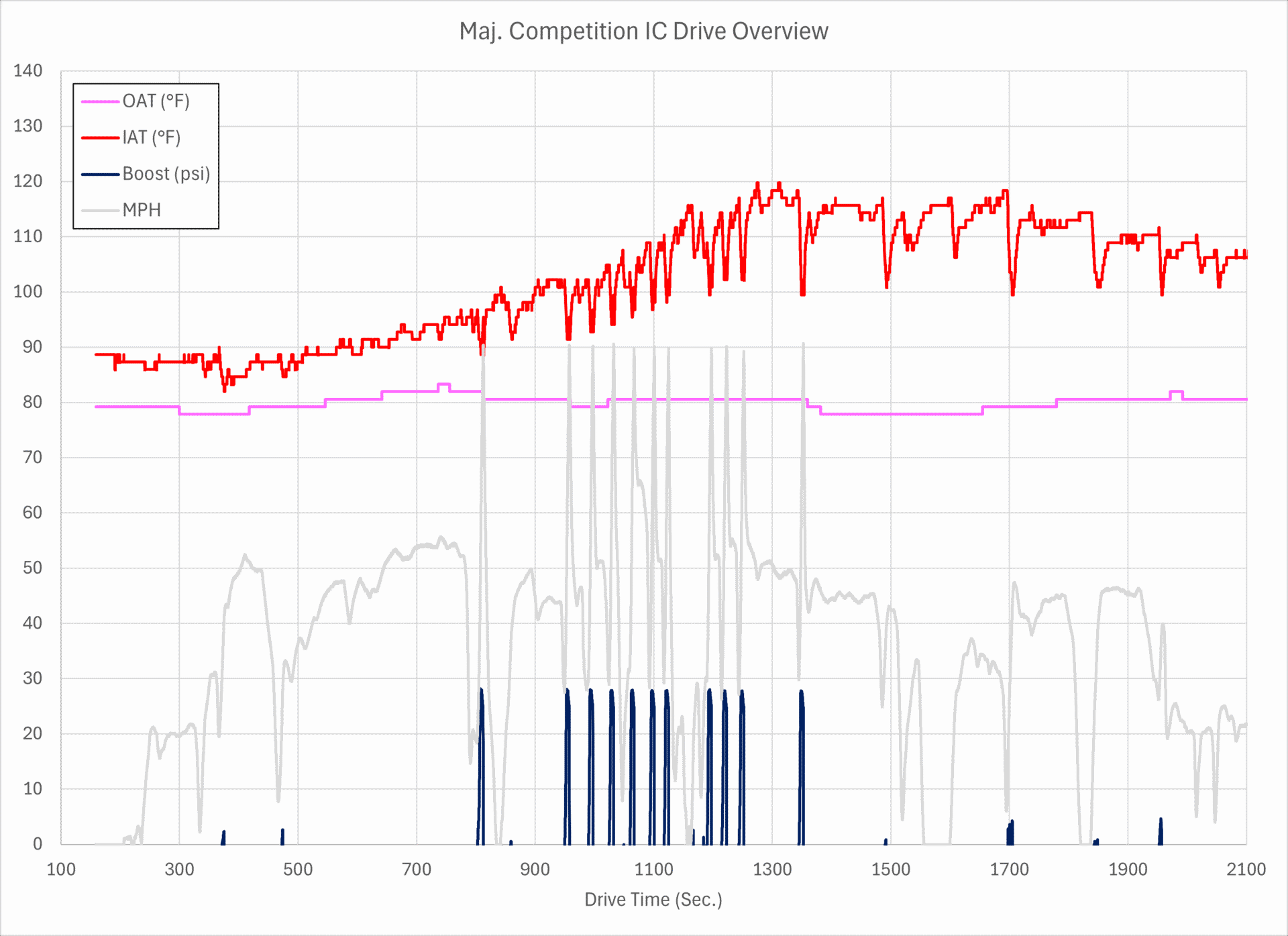
The car accelerates at full throttle in third gear, starting at around 2,000 RPM and finishing at around 6,500 RPM. This is repeated for a total of eleven pulls with a short recovery time between pulls.
Test Results:
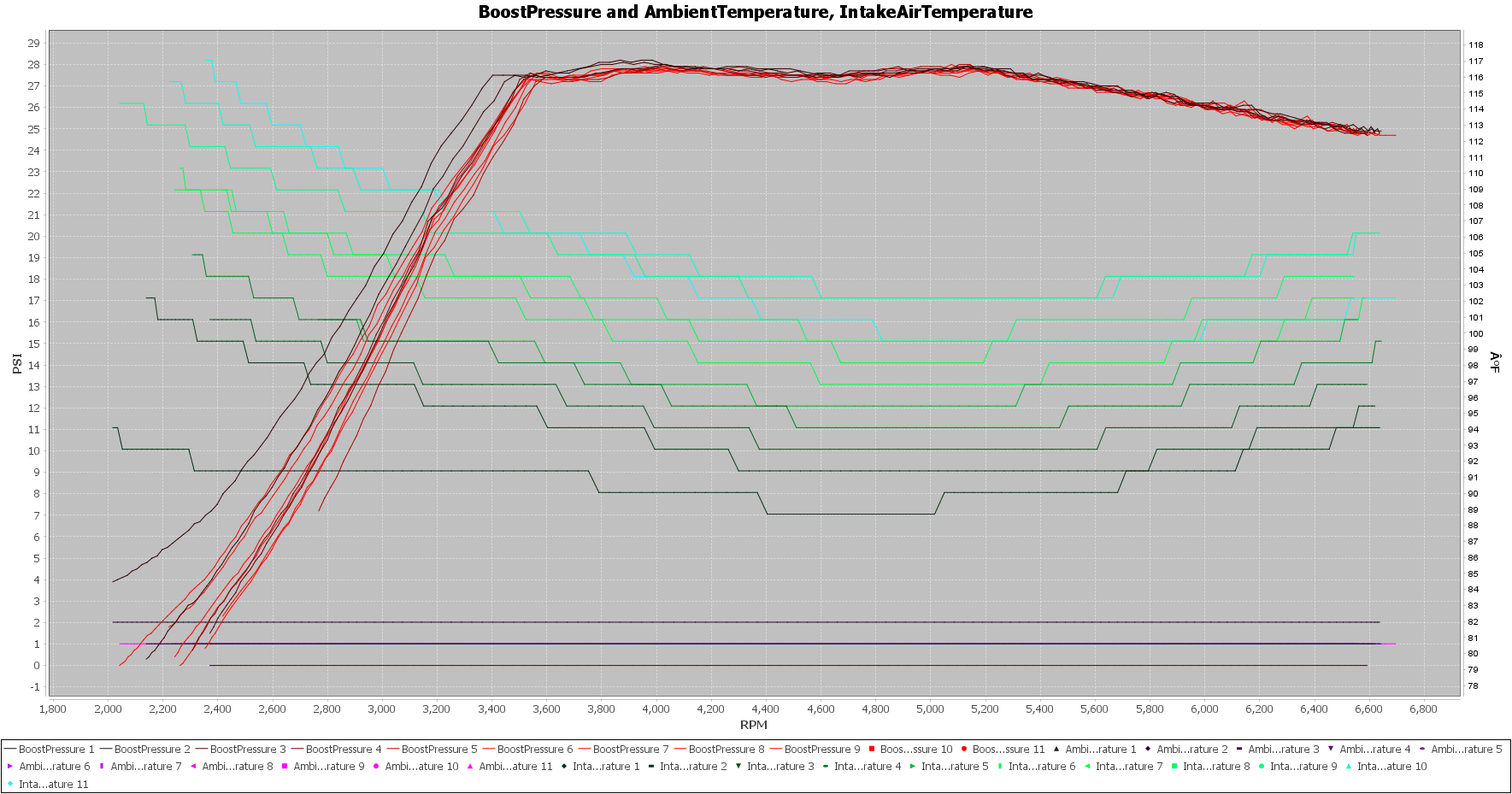
The boost profile and intake air temperature during the pulls are shown below:
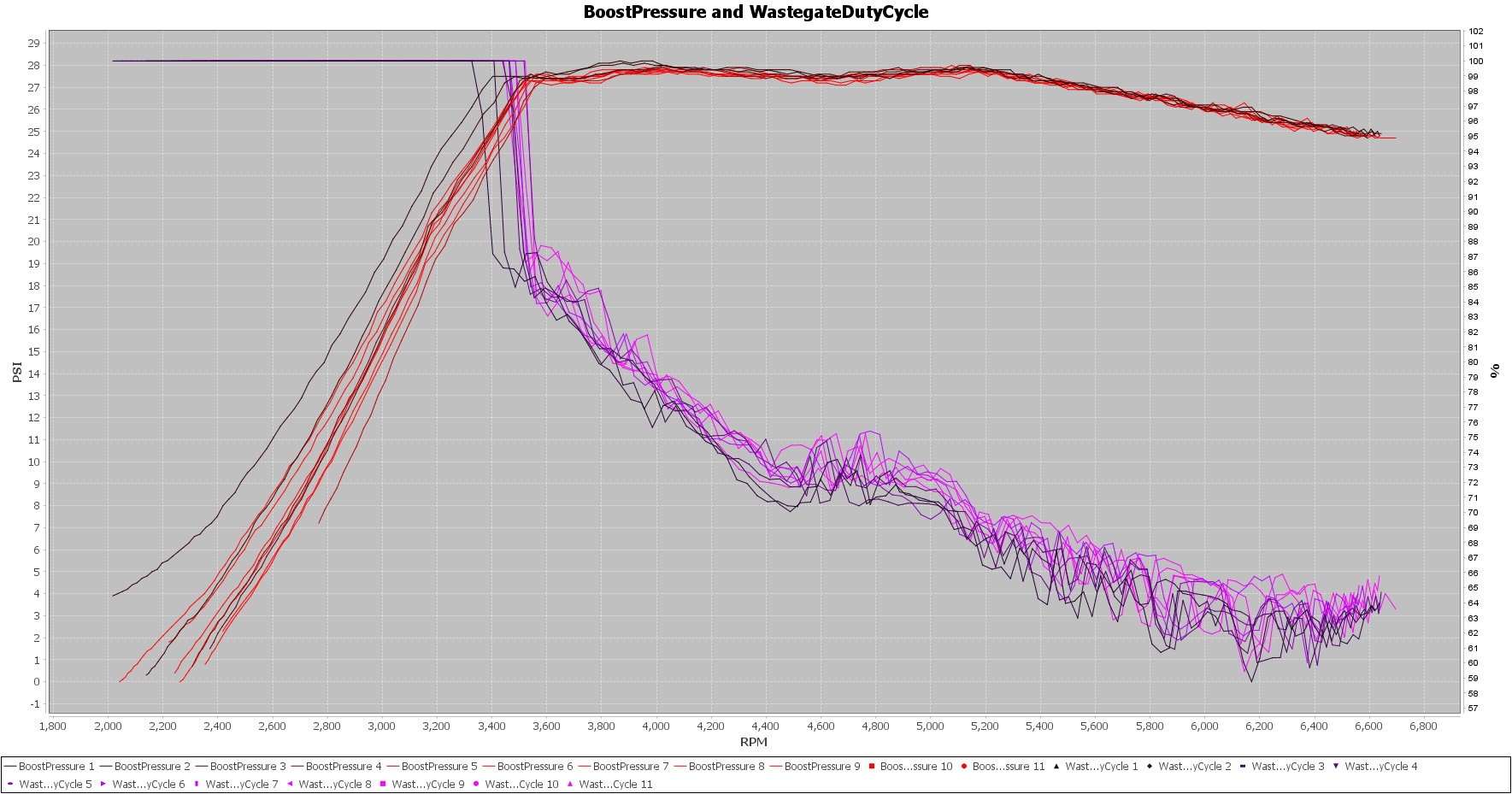
The boost pressure and wastegate duty cycle are shown in the next chart. Consistent with the flow test that showed the Competition IC has a relatively low pressure drop compared to other intercoolers tested, the wastegate duty cycle trends downward as engine speed increases.
The intake air temperature above ambient is calculated when the engine RPM is approximately 6,000 and is plotted for each pull. Similar to other intercoolers tested, there is a gradual increase in the temperature delta as the pulls progress.
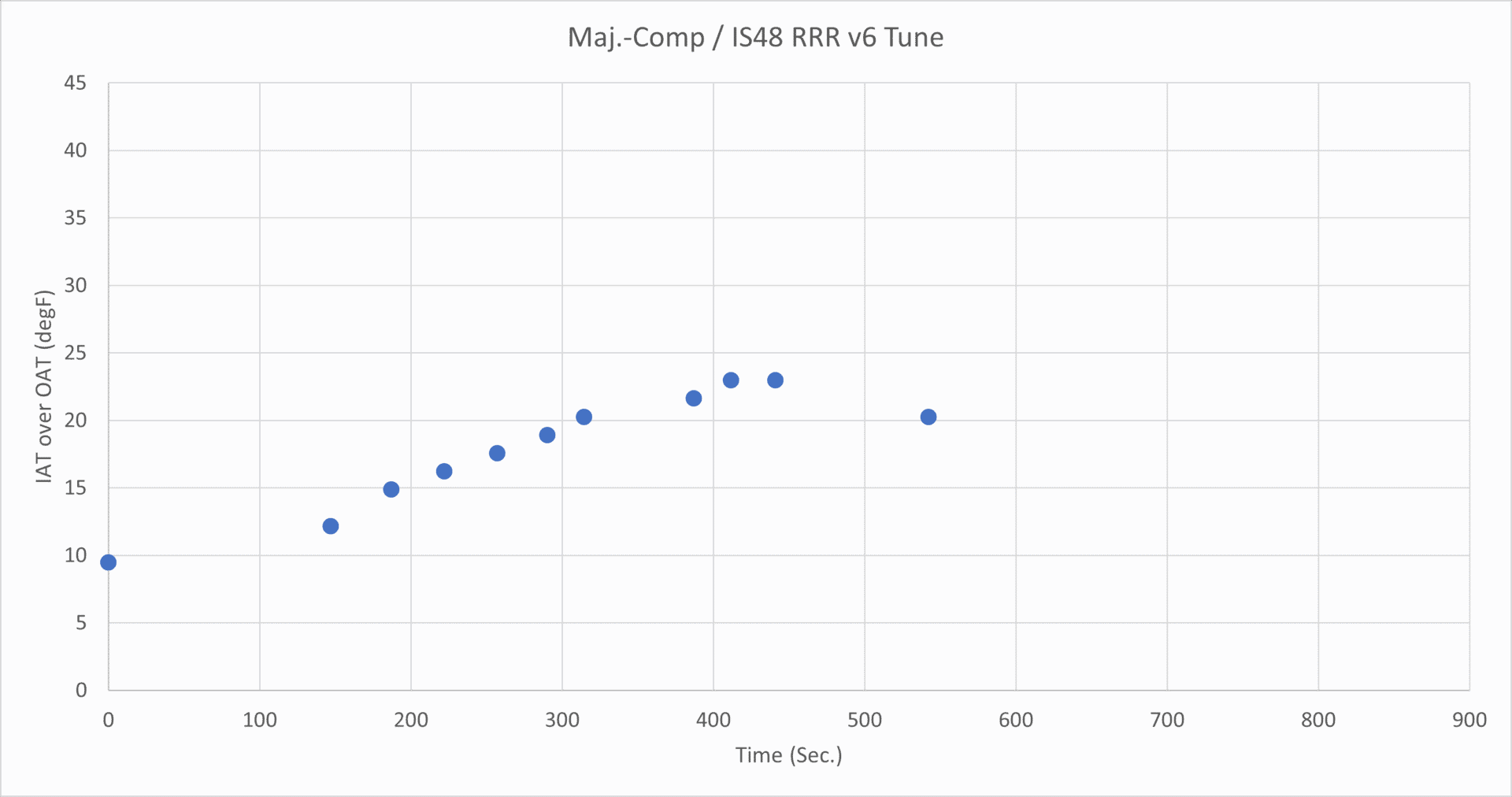
The session consisted of 11 WOT pulls over roughly nine minutes. By pull 9, the IAT had climbed to 23°F above ambient — more than double the beginning-state reading.
Pulls 9 and 10 plateaued near 22–23°F above ambient, suggesting the IC core was essentially at a point of stability where the heat rejection rate was equal to the heat addition rate. Recovery periods of 20–30 seconds between pulls did not meaningfully reduce IAT. A 95-second recovery before Pull 11 recovered about 3.1°F — partial, not full, recovery.
The Virtual Dyno estimated peak WHP varied within a 12 WHP window (357–369 WHP), with a standard deviation of only 3.7 WHP — consistent performance across all pulls, regardless of heat-soak state.
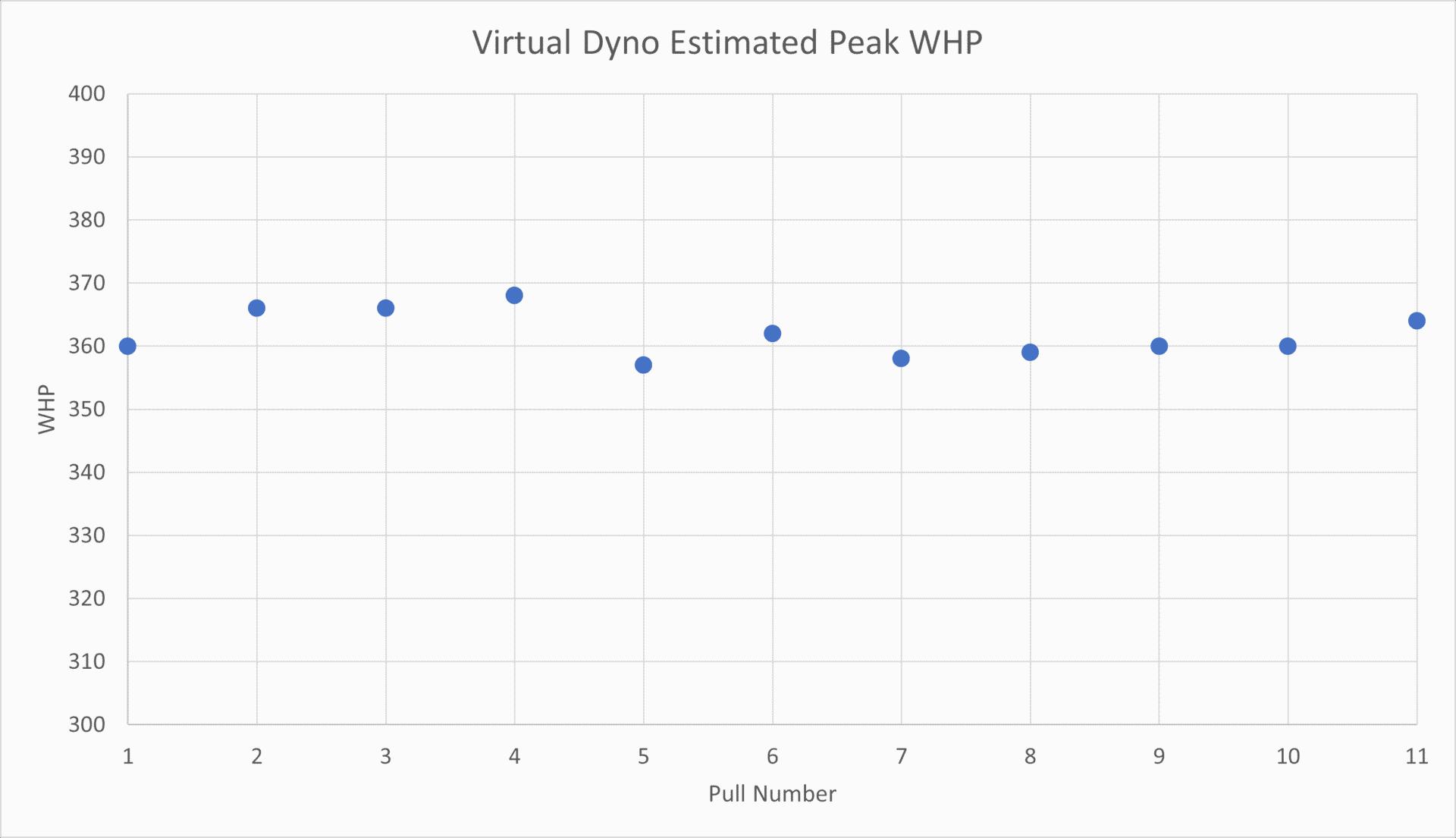
Pull 1 at 10°F above ambient averaged 0.440g longitudinal acceleration. Pulls 9 and 10 at 22–23°F above ambient averaged 0.435g. That’s a delta of 0.005g, or roughly 1.1% — statistically marginal. The IC accumulated 13°F of heat soak above the beginning state across nine minutes of back-to-back pulls, and measurable acceleration degraded by only 1.1%.
The next chart compares the stock location intercoolers that have been tested in this fashion. Importantly, the number and intervals between pulls have not been consistent, so the chart should only be used as a rough guide.
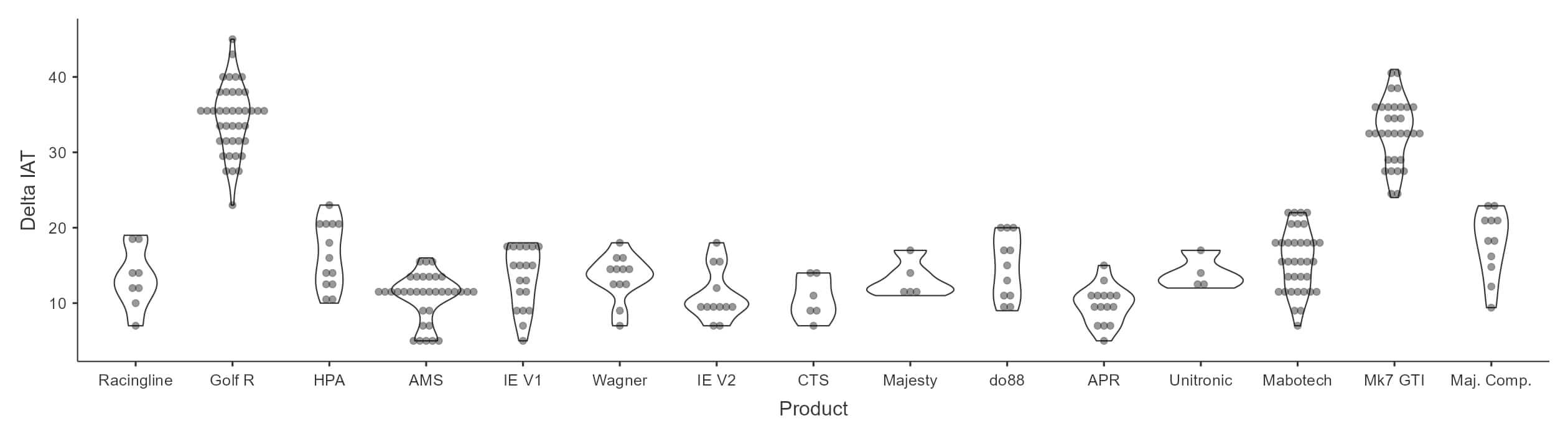
The Majesty Competition IC performs similarly to the other aftermarket intercoolers.
Conclusions:
The Majesty Competition IC was the subject of a street test to record changes in intake air temperature during a series of full-throttle pulls. The intake air temperature delta over ambient increased progressively with consecutive pulls, similar to other aftermarket intercoolers tested in this manner.
Overall, the Majesty Competition IC performs on par with other aftermarket intercoolers tested.