

Part of the ongoing EQT Business Practices series – This analysis is based solely on publicly available advertisements and documented statements.
What This Post Covers
- What EQT claimed about the SMD
- What the evidence shows about its origin
- How Ed Susman responded
- Why this matters for consumers
Note: This post is not evaluating whether the SMD works. It examines whether EQT’s advertising accurately represents the product’s origin.
Introduction
When a performance company announces a new product, consumers reasonably assume they’re getting something that the company designed and developed. That assumption — product origin matches product branding — is so basic that most buyers never think to question it. Which is exactly what makes its violation so effective.
This post examines EQT’s recent announcement of the “Sauce Management Device” (SMD), what the advertising tells consumers versus what the evidence shows, and why the pattern it represents matters.

What Accurate Product Advertising Looks Like
When a company develops a product from the ground up, advertising it as its own is straightforwardly accurate. When a company licenses or co-develops a product built on another company’s platform, accurate advertising says so — “built in partnership with X” or “powered by X’s platform.“
Product origin is material information. It affects how you evaluate quality, uniqueness, and value. A consumer choosing between two products built on the same underlying platform is making a different decision than one choosing between two independently developed products.
The SMD Announcement
In April 2026, EQT announced the “Sauce Management Device” — an OBD-II dongle paired with a smartphone app for flashing tunes, data logging, and map management. The announcement framed it as EQT’s own creation:
“After more than a year of intensive development, real-world testing, and refinement, we’re proud to unveil the next generation of EQT tuning hardware and software.“
Equilibrium Tuning Inc. Advertisment
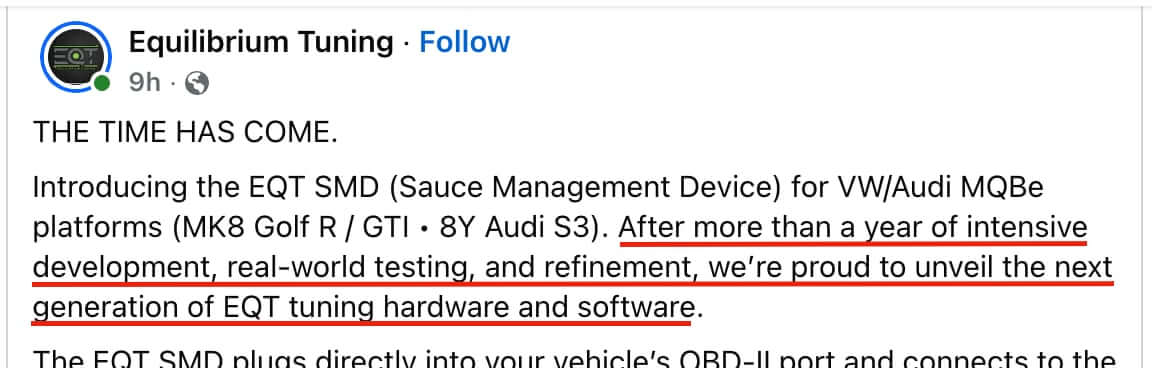
A consumer reading that has every reason to believe they’re looking at an original EQT product. That impression is inconsistent with the evidence.
What the Evidence Shows
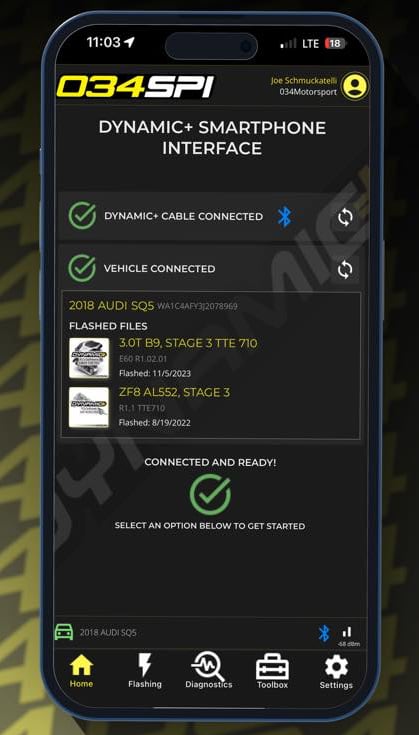
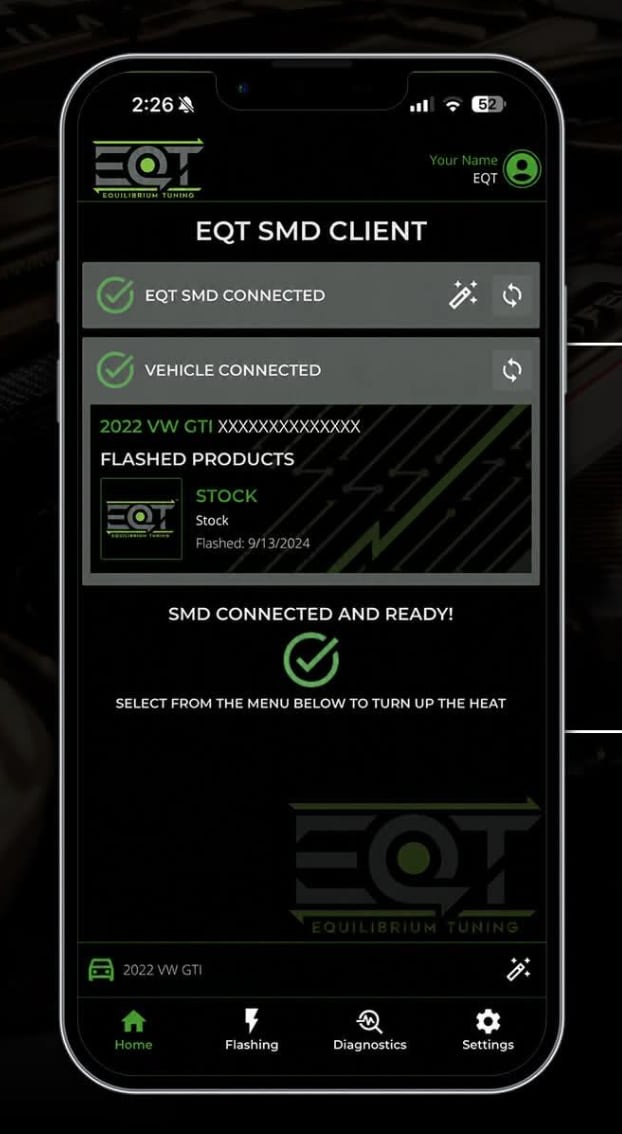
Community members quickly noted that EQT’s app was nearly identical to the 034SPI — 034 Motorsport’s smartphone interface product that had been in active development for at least two years. The similarity wasn’t cosmetic.
Note that the component structure, connection status layout, vehicle and VIN display, list of flashed files, status screen, and bottom navigation bar are architecturally identical. Logos and colors differ. The underlying application framework does not.
When consumers raised this, Ed Susman responded publicly:
nothing is ‘copied.’ We worked with 034 and their parent company to develop our app. We’re also not the only other tuner using this architecture.
Ed Susman – Owner of Equilibrium Tuning Inc.

That last part is accurate. Racingline Performance — also owned by Euro Motorparts Group (linked), 034 Motorsport’s parent company — runs an app with the same architecture. Connection status rows, vehicle and VIN display, “Flashed Products,” “Connected and Ready,” and the Home / Flashing / Diagnostics / Settings navigation bar are all present and structurally identical across all three brands.
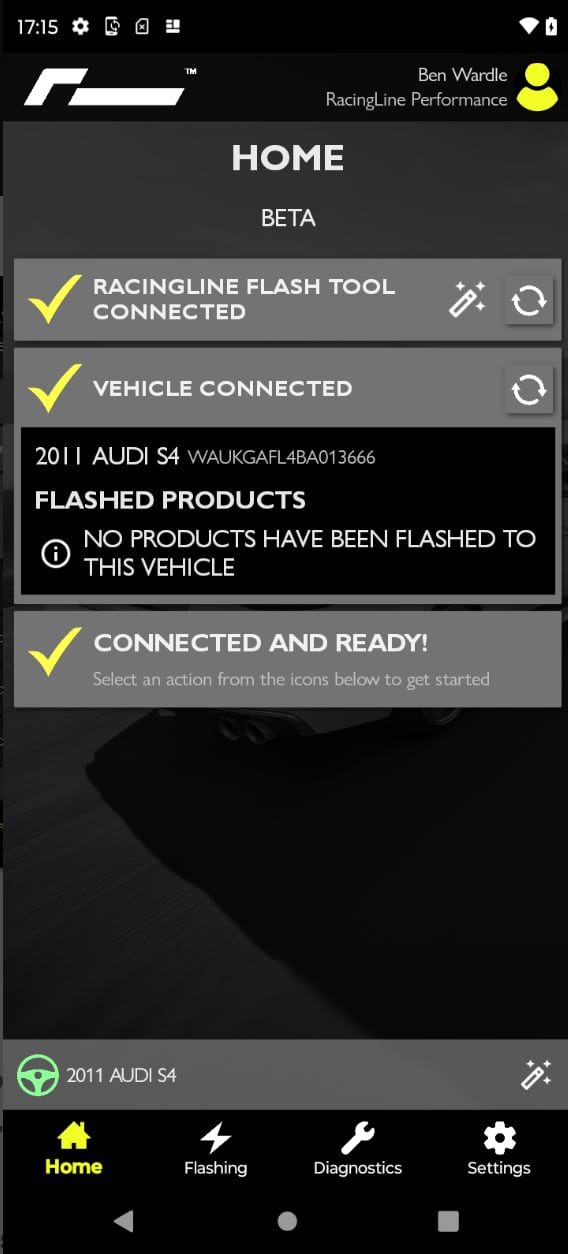
The same platform architecture runs across at least two Euro Motorparts Group brands, and Susman confirmed EQT worked with 034 and Euro Motorparts Group to implement their version of it.
What that admission doesn’t explain is why EQT’s advertising described the result as “the next generation of EQT tuning hardware and software” developed through “more than a year of intensive development” — or why the product’s feature graphic prominently advertised a “COMPLETE EQT ECOSYSTEM.”
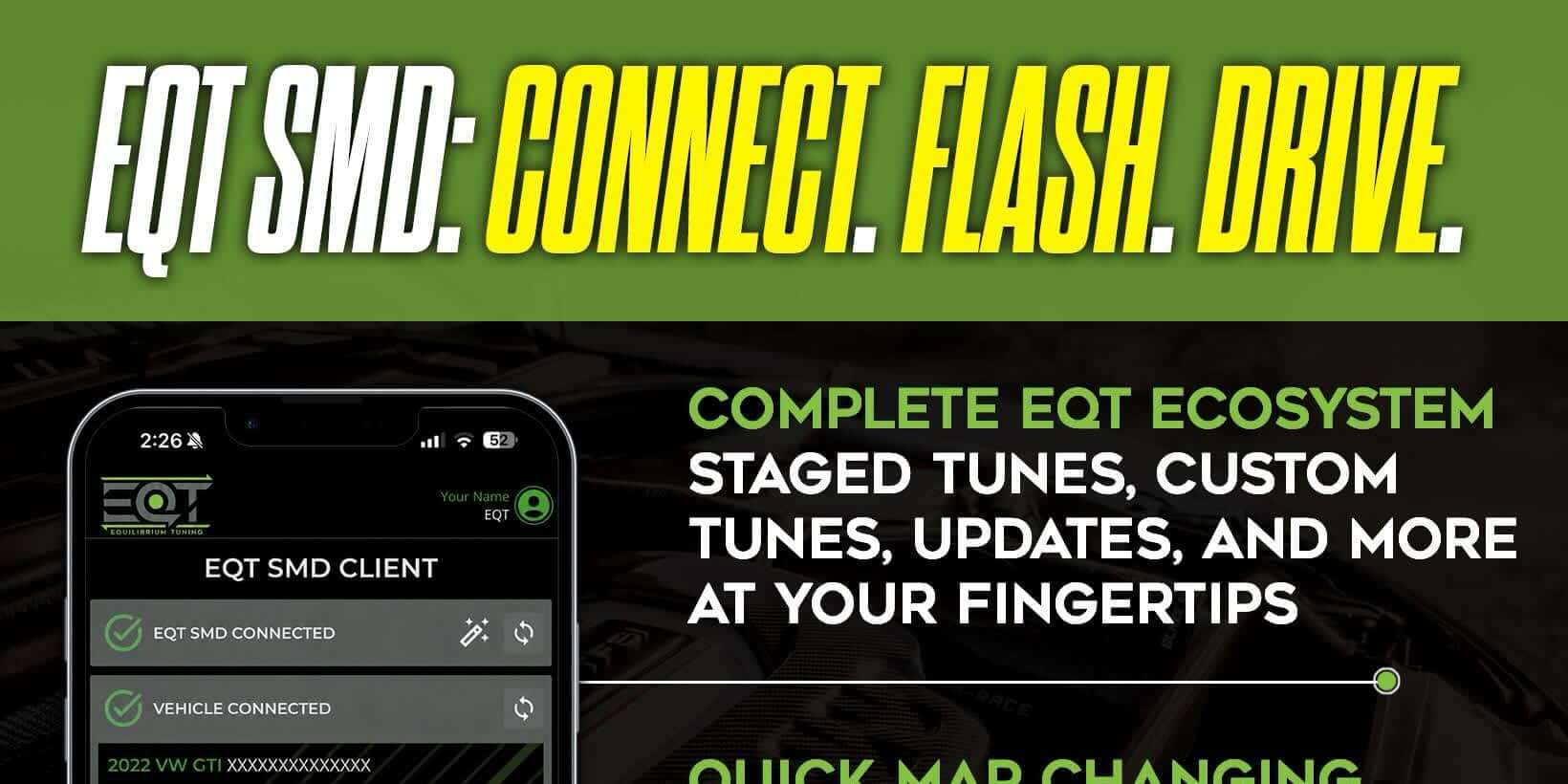
A platform whose architecture is shared across at least three brands, including two under the same parent company, is not a proprietary EQT ecosystem. The advertising framed it as one.
This Is Not the First Time
In February 2026, I documented that EQT’s engine mount kit bore structural similarities to Black Forest Industries‘ established product. When confronted, Susman acknowledged taking “inspiration” from BFI’s design — disclosed nowhere in the advertising.
EQT’s branded charge pipe kit similarly shares the same curve geometry, bracket placement, and silhouette with Neuspeed’s product. No supplier relationship with Neuspeed exists, so no supply chain narrative is available.
Three product categories. Three originating manufacturers. Three advertising presentations that gave consumers no basis for understanding the product’s actual origin.
The Technique Worth Recognizing

Research on correcting misinformation consistently shows that understanding how a misleading technique works is more helpful than knowing the conclusion in any single case — because it equips you to recognize the same move the next time, from any vendor.
The technique here is the omission of product provenance (origin, source), combined with original-development framing.
It works because “new product” language automatically implies original development. Nobody reads “the next generation of EQT tuning hardware and software” and wonders whether it’s a licensed implementation of a competitor’s existing platform. The advertising exploits that default assumption without making a technically false statement.
The corrective question — worth applying to any branded product in this market — is: Where did this design or platform actually come from, and what was this company’s role in developing it?
The Bottom Line
This post isn’t evaluating whether EQT’s SMD works as described. The question is narrower: does the advertising accurately represent what you’re purchasing? Based on Susman’s own public admission, it does not in this case.

If you’re considering a purchase from EQT, the question worth asking isn’t only “does this product work?” It’s “do I know what I’m actually buying, and where it came from?“
Update: When Community Moderation Becomes Silent Censorship
A few hours after I shared this analysis in a large MQB Facebook group, the post was removed without explanation. It didn’t violate any rules, and no moderator contacted me — it was simply taken down.
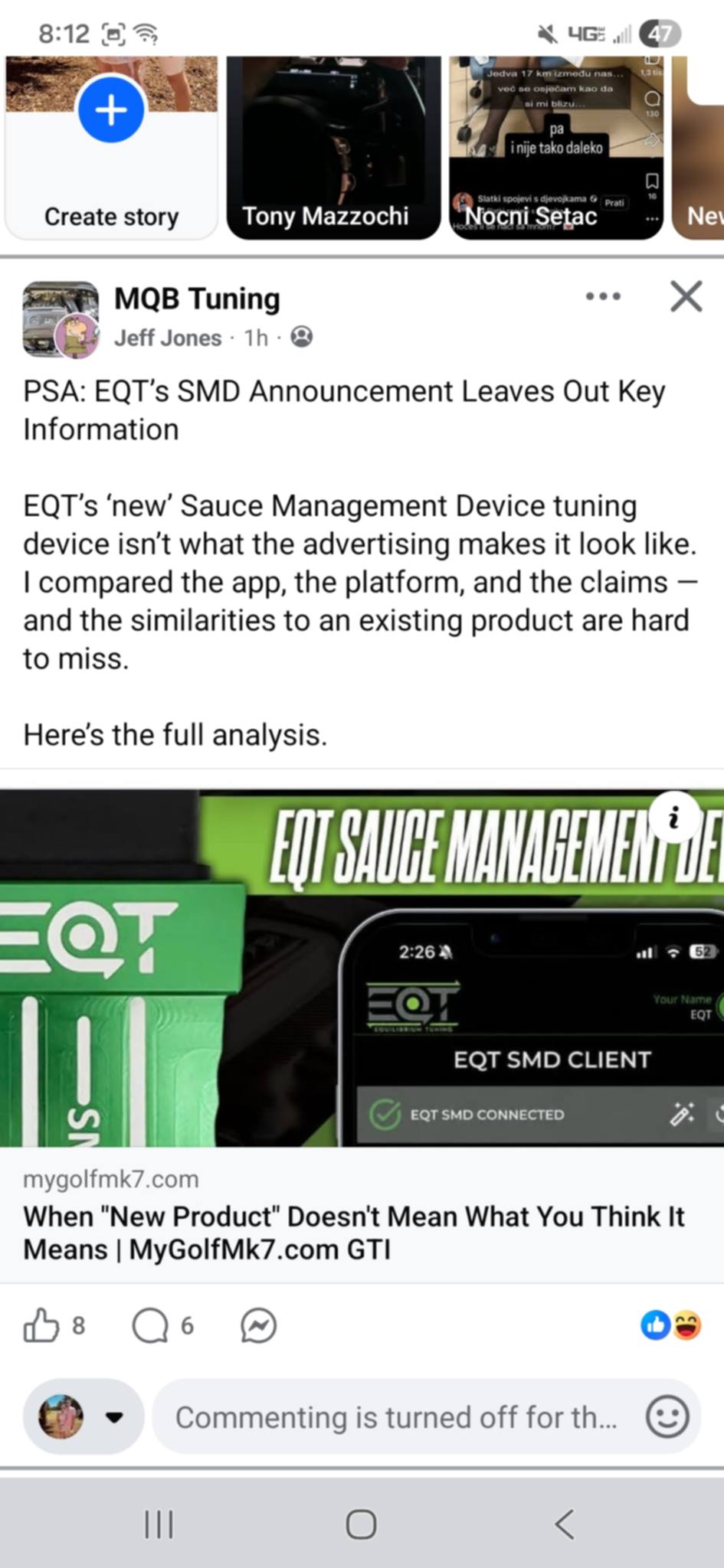
I don’t know who requested the removal, but the effect is the same either way: information that helps consumers make informed decisions was quietly taken off the table.
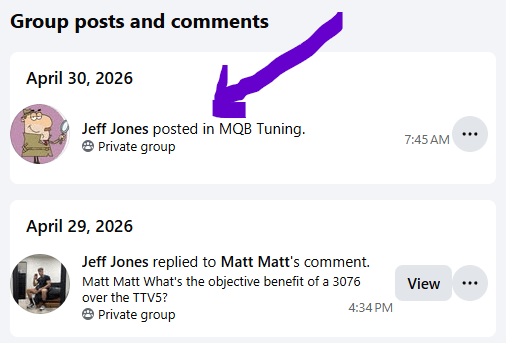
That kind of silent moderation does help the vendor whose practices are being questioned, because it removes uncomfortable facts from public view. But it hurts the community, because owners lose access to information that could affect their buying decisions.
Enthusiast groups work best when information — good, bad, or inconvenient — is allowed to stand on its own. Quietly removing factual analysis doesn’t protect anyone except the company being shielded.
References:
Disclaimer:
This post is part of an ongoing series examining EQT’s business and advertising practices. Prior posts in the series can be found [here]. All statements are based on publicly available advertisements and documented public comments. This analysis reflects my own assessment and is not legal advice.