
Background:
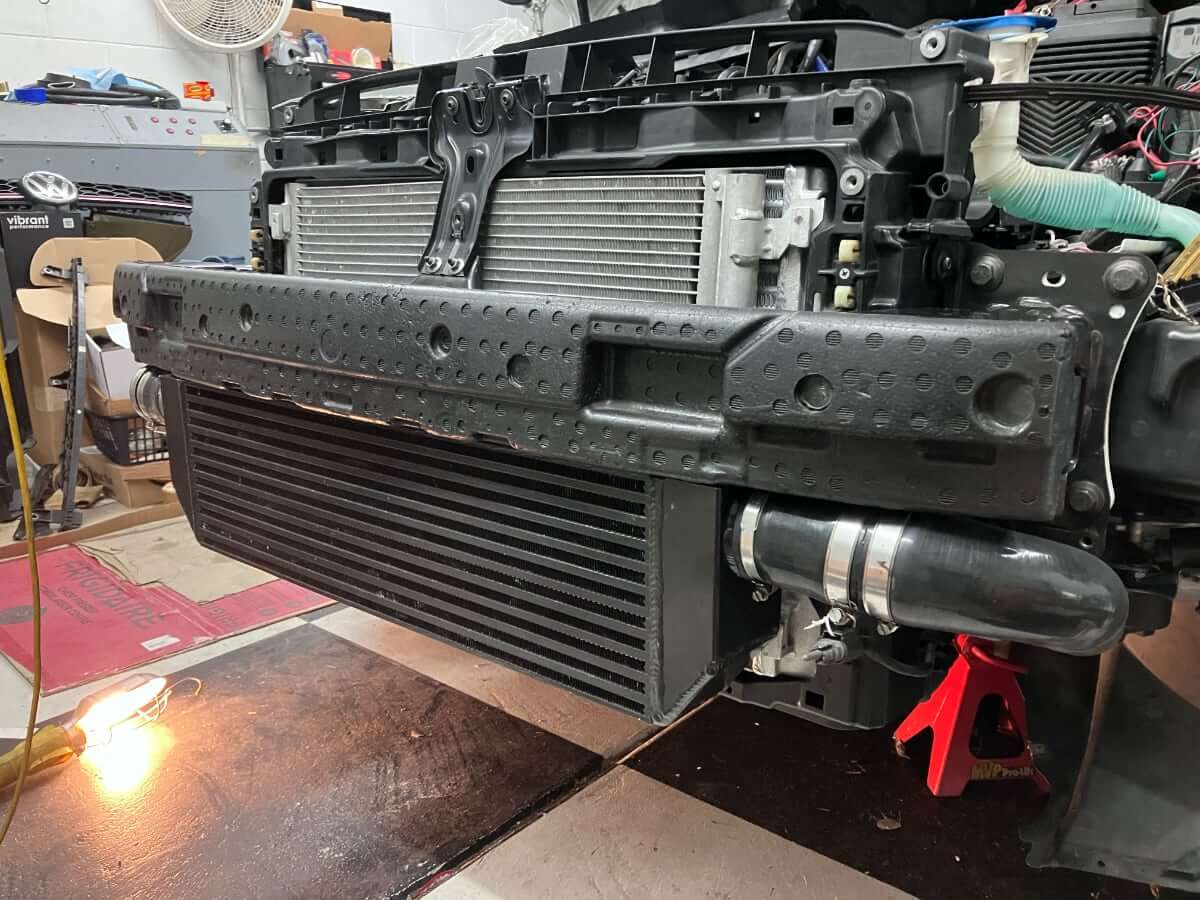
The question of whether it is useful to pair an aftermarket stock-location intercooler with a front-mount IC (FMIC) in a bicooler configuration has been posed to me several times.
I’m a fan of bicoolers because, from a heat transfer standpoint, the increased overall area (A) supports a greater Rate of heat transfer (Q).
Q = U × A × ΔTlm
And from a fluid dynamics standpoint, reducing the mass flow rate (m) through each individual core lowers the flow velocity (v) through that core,
v
=
m
/
ρ
A
which in turn reduces the pressure drop (ΔP) across the cores.
ΔP = f * (L/D) * (ρ * v² / 2)
With a solid physics basis, looking at some data logs for the impact of the Maj. Bicooler on the vehicle performance made sense.
Test Process:
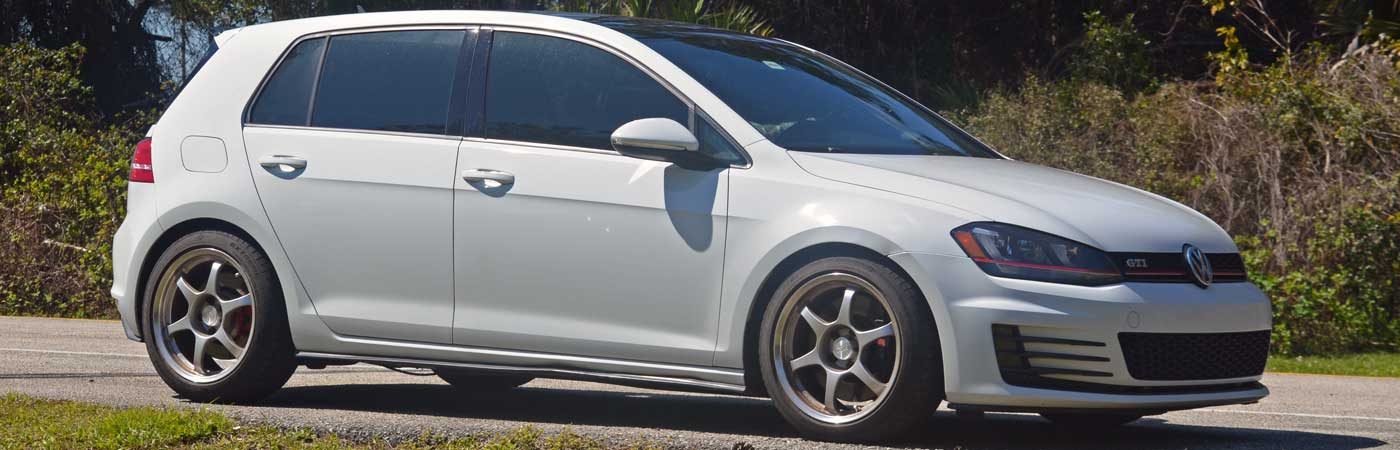
The Majesty Competition stock-location intercooler is a stand-alone configuration, and the same intercooler, paired with a Majesty FMIC, constitutes the Bicooler configuration. They are installed on a Mk7 GTI using a Shuenk IS48 turbocharger with a 93-octane custom tune.
Data is logged during a series of full-throttle 3rd gear pulls that start around 2,000 RPM and conclude around 6,500 RPM.
Test Results:
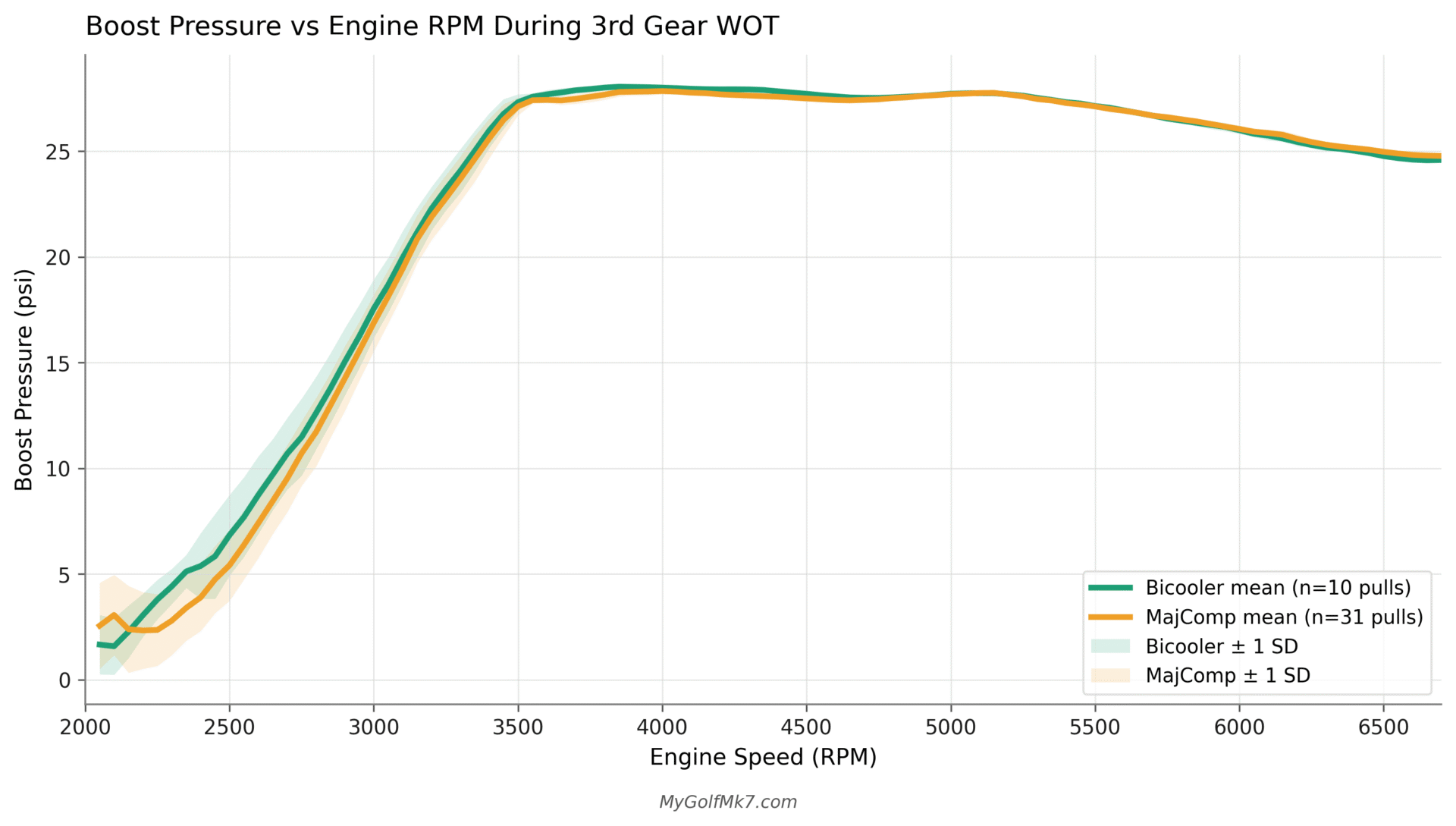
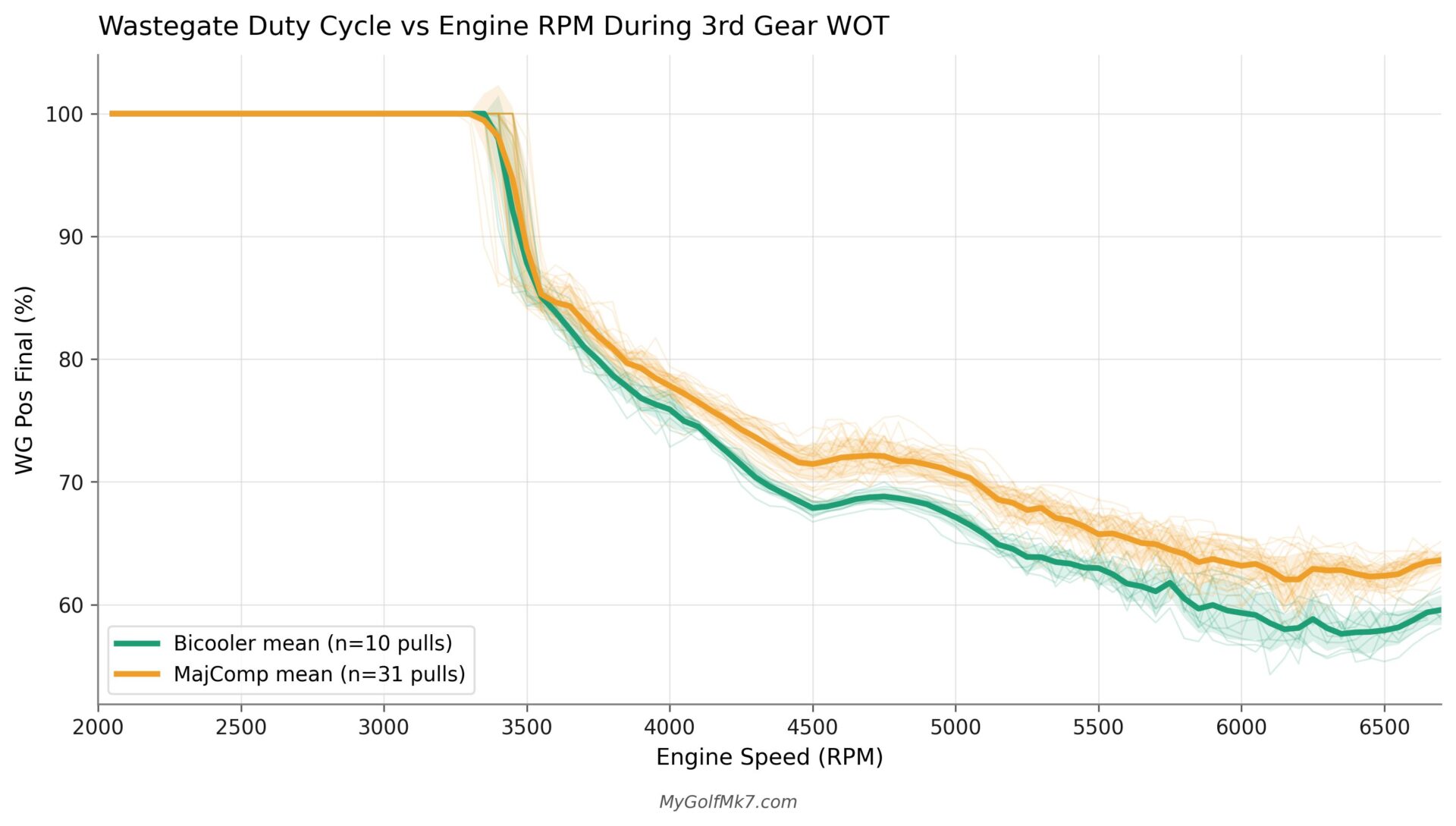
Note: Several of the charts show an averaged “mean” result along with a Standard Deviation band representing the variation that occurred during several pulls. Many of the charts are based on 10 data points (pulls) using the bicooler and 31 using the standalone IC.
The boost pressure curve for each configuration is very similar.
As expected, there is a small reduction in the wastegate duty cycle with the bicooler setup, since the bicooler causes a smaller pressure drop across the pair of cores compared with the single stock-location IC.
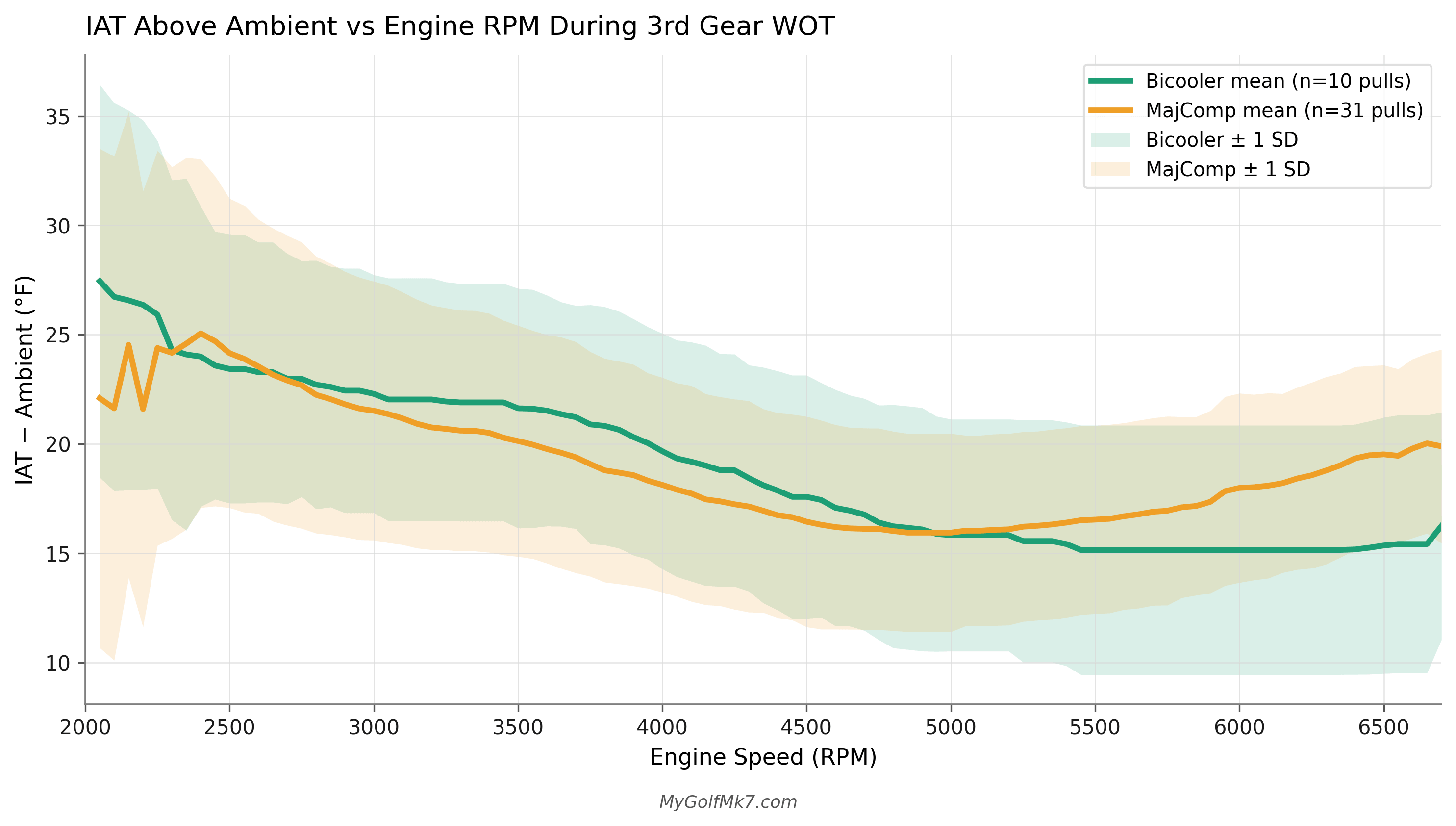
Also, as expected, the bicooler pair holds the intake air temperature lower as the pull progresses. Notably, there is substantial overlap between the IAT curves, suggesting the average IAT difference towards the upper RPMs is small.
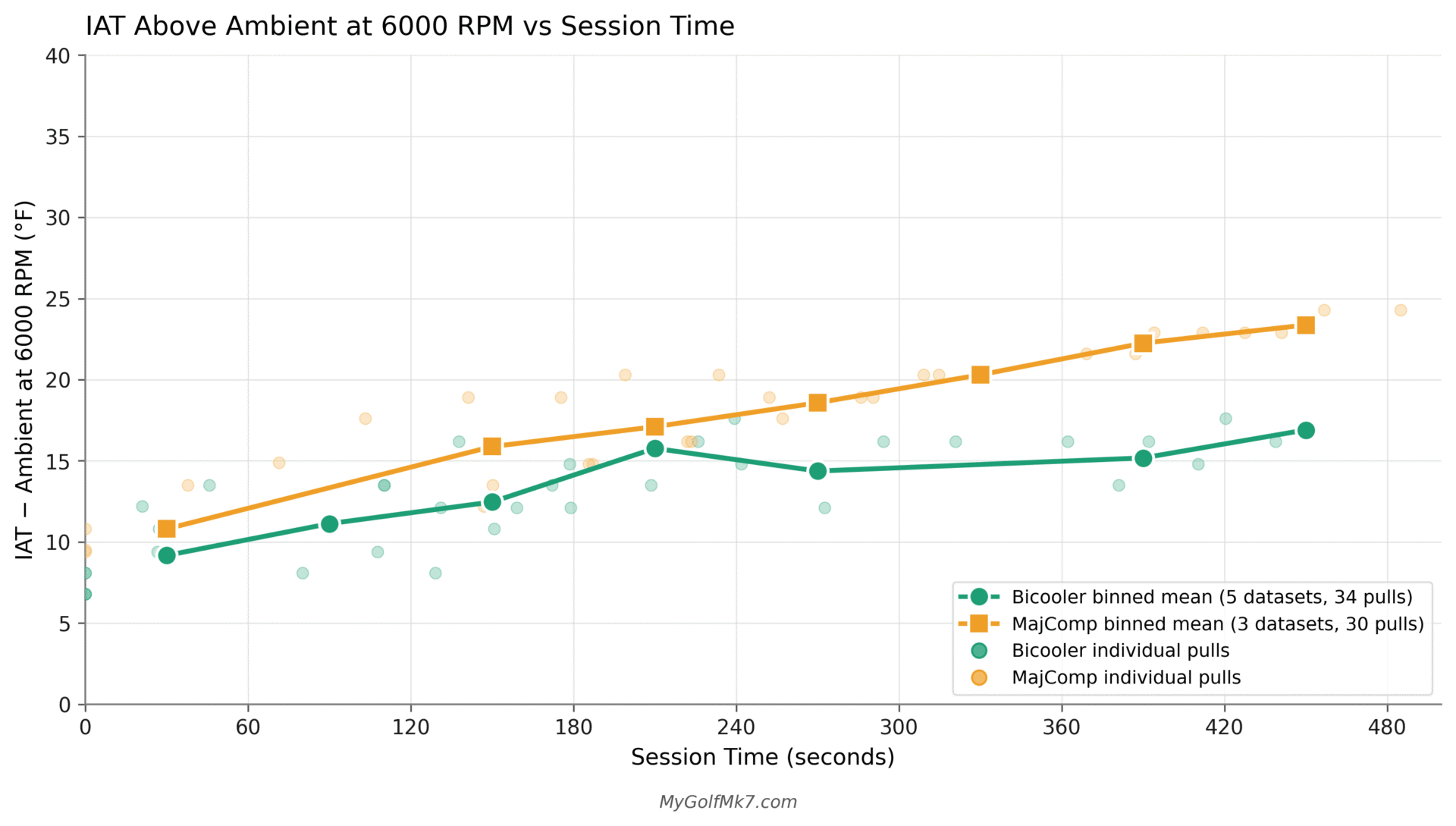
The IAT trend over successive pulls favors the bicooler. This is expected due to the larger mass of the bicooler pair, which allows it to absorb more heat and keep the IAT lower than the single-stock location IC.
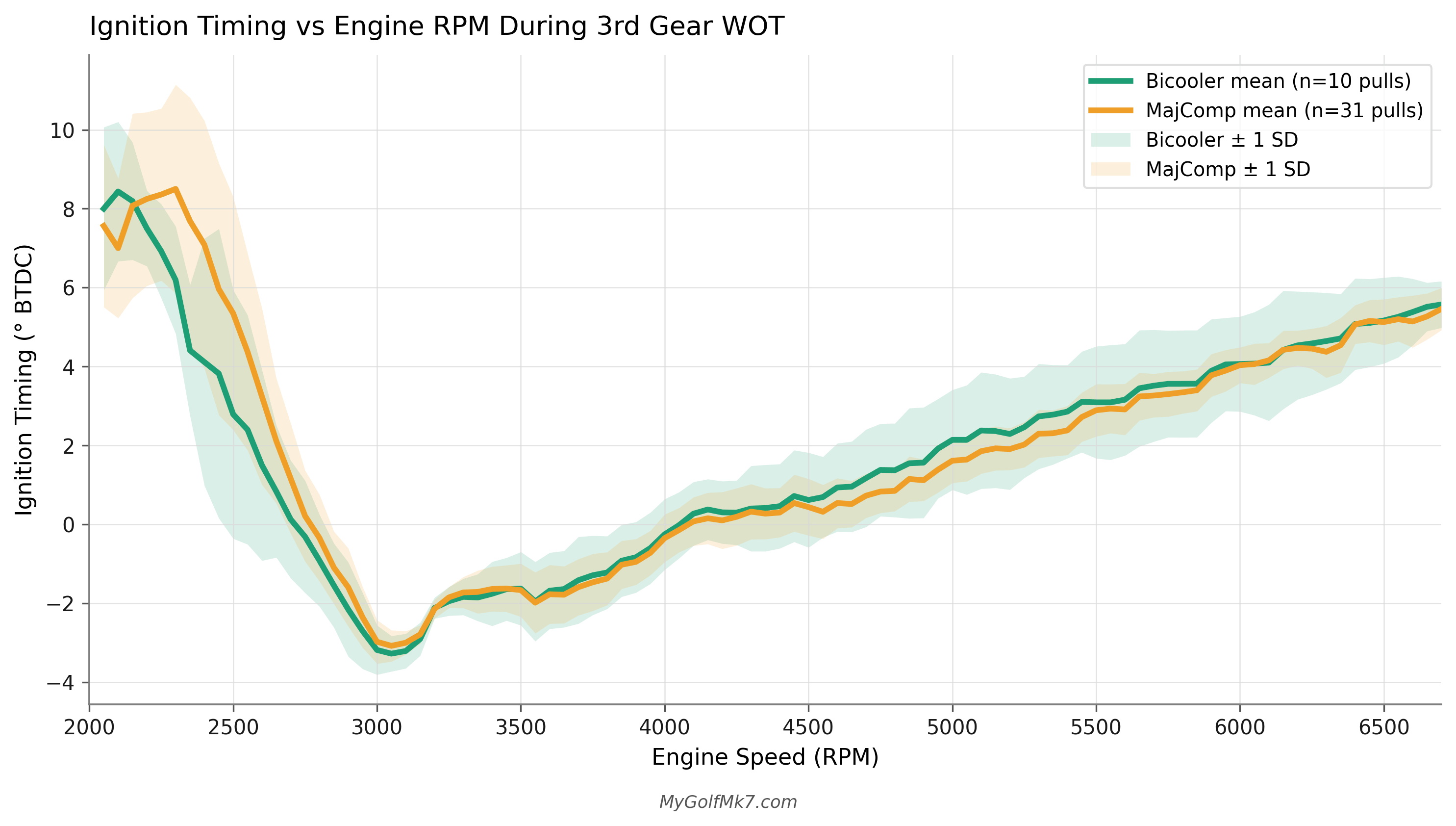
The differences in the IAT are not large enough to produce more than a slight difference in ignition timing from 4500 to just past 5500 rpm.
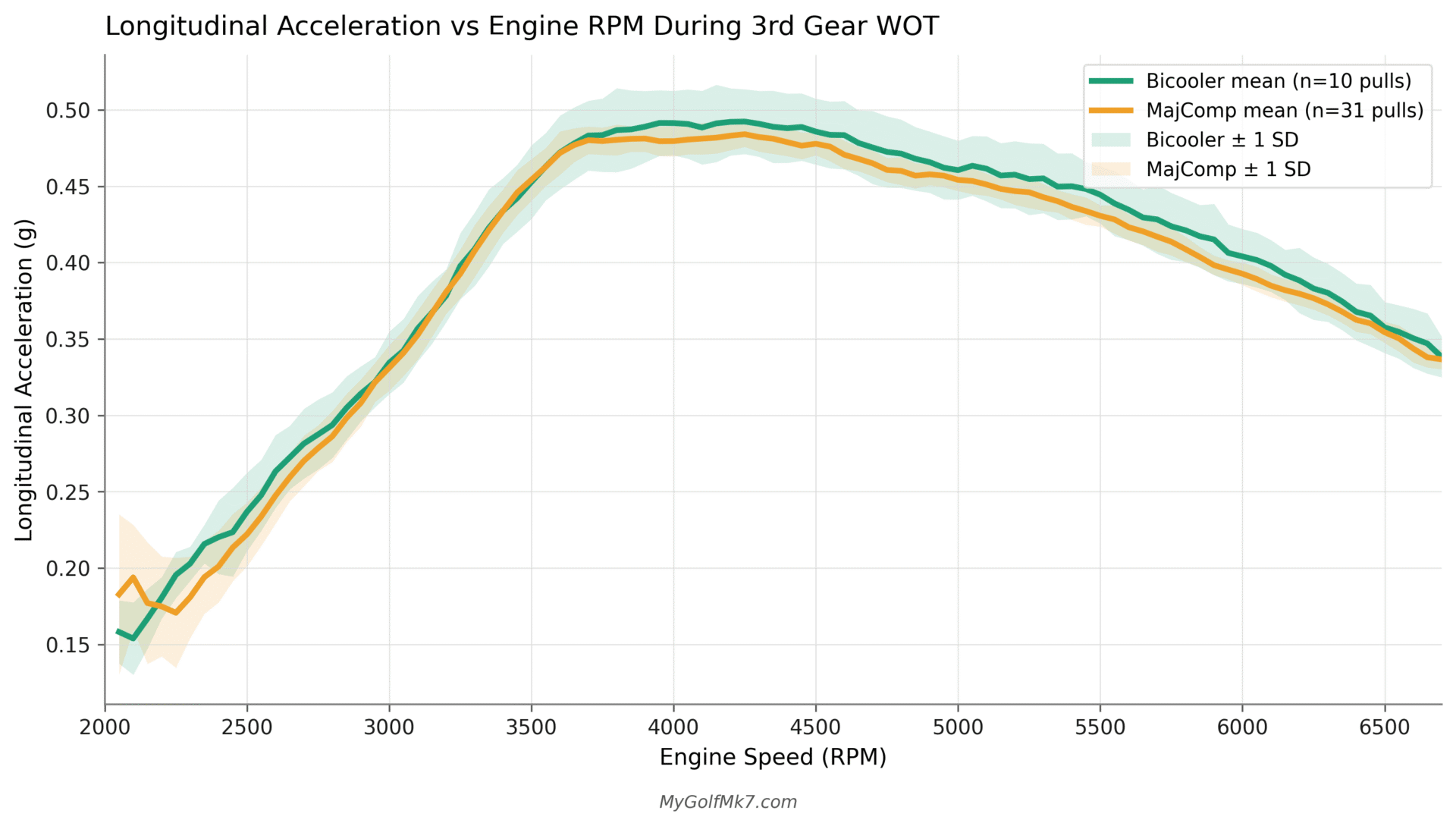
The mean acceleration rate is slightly higher during the pulls with the bicooler, but the standard deviation bands show substantial overlap.
Estimating the peak wheel horsepower using Virtual Dyno indicates that the bicooler configuration manages a small increase of WHP by approximately 7 whp peak.
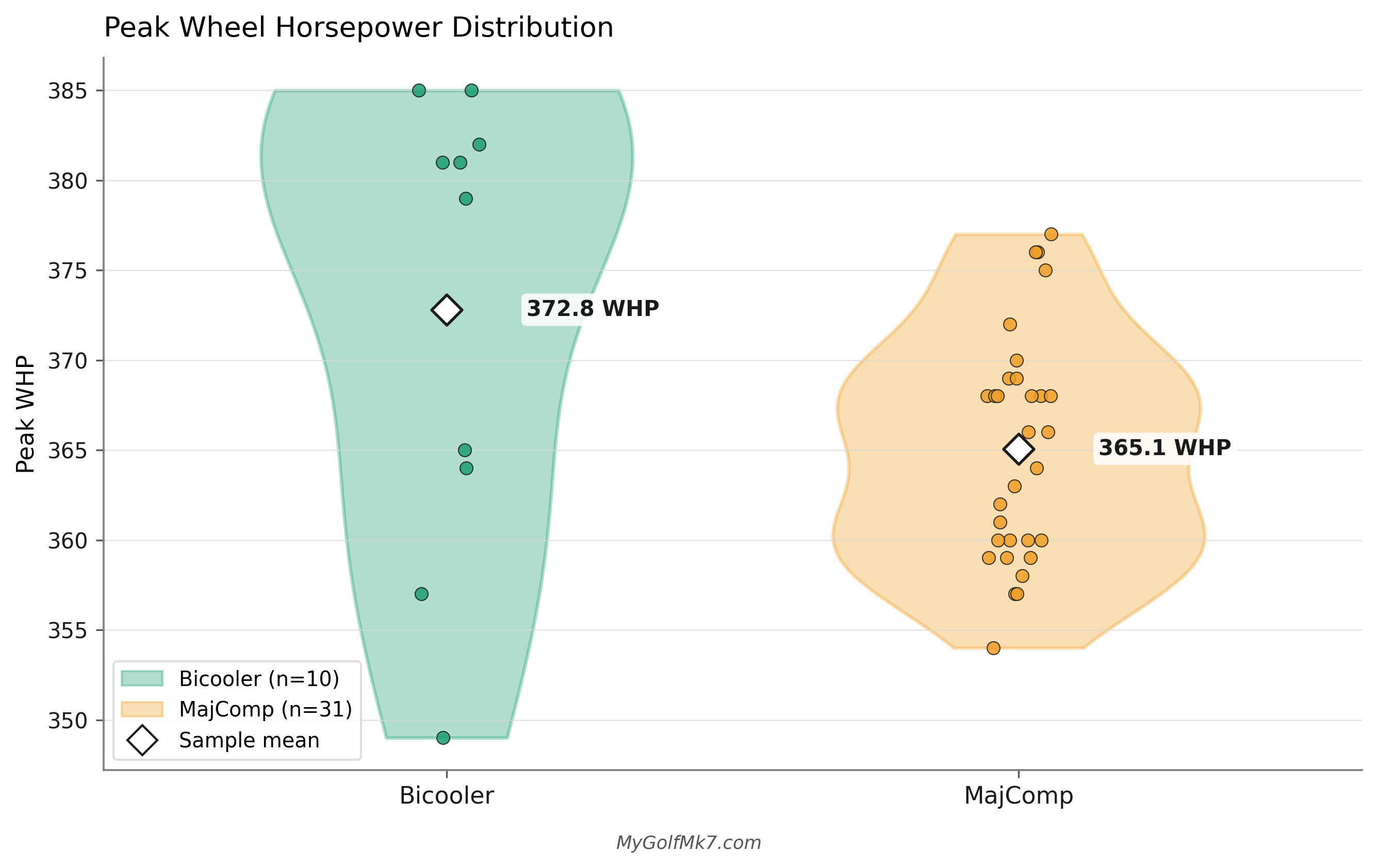
Importantly, the peak WHP comparison has significant variation among the bicooler data points. More data is needed to determine if there is a statistically meaningful difference between the two configurations. Based on the available data, there is not a statistically significant difference in the mean peak WHP.
Conclusions:
The Majesty Bicooler configuration achieves the same boost pressure with less wastegate than the Majesty Competition alone. The reduction is 2 to 4 percentage points across the 3500 RPM to redline range, growing to about 4.4 percentage points at 6500 RPM.
Peak WHP averaged ~7 WHP higher on the Bicooler, but the comparison does not reach the 0.05 significance threshold. Longitudinal acceleration is directionally consistent with the WHP finding, although the magnitude of the advantage is modest.
The Bicooler substantially reduces heat-soak accumulation across multiple pulls.
These findings apply to the Mk7 GTI with the IS48 turbocharger and a custom 93-octane tune calibration, with peak boost at approximately 27 psi.